Thrips on Alocasia Stingray: Ray-Tail Checks & Fixes
Quick answer
Thrips on Alocasia Stingray rasp tender unfurling ray-tail leaves and scar glossy round blades with silvery streaks, black frass specks, and kinked tail tips—usually after hitchhiking on new plants or cut flowers. First step: isolate the plant and rinse every leaf underside, petiole base, and rolled spear in lukewarm water before applying any spray.
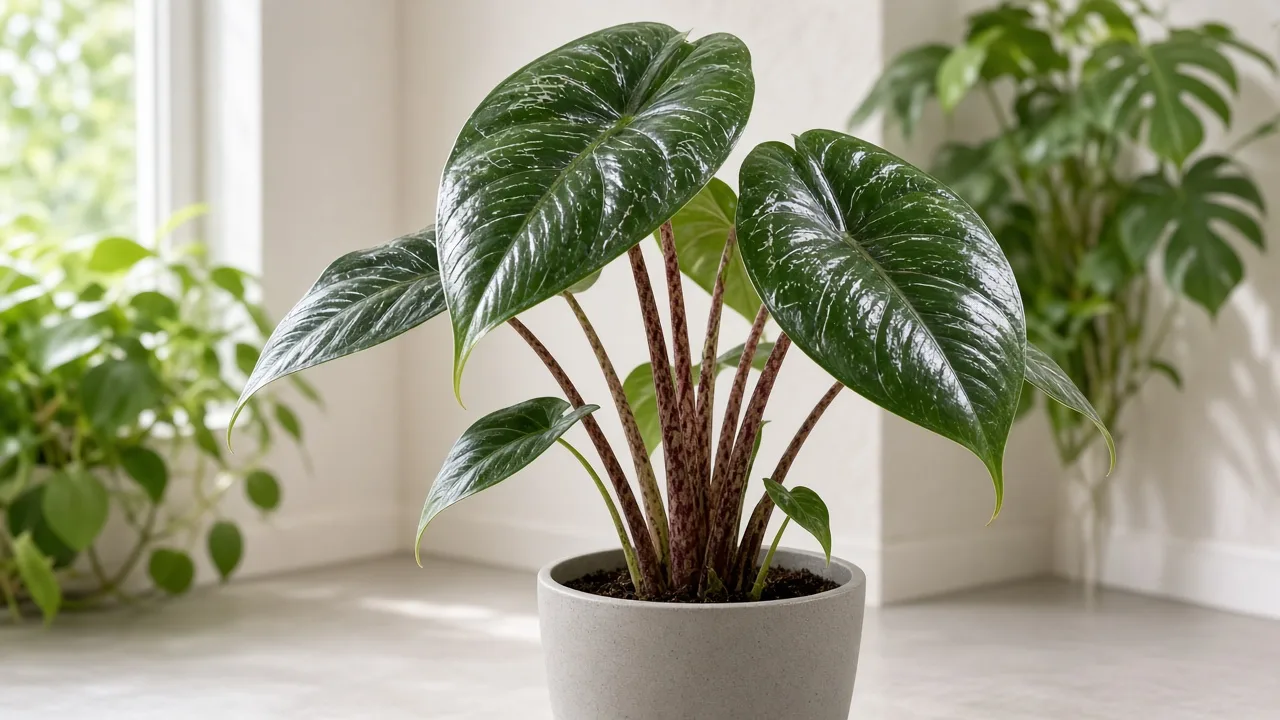
Thrips on Alocasia Stingray: Causes, Checks & Fixes
This guide covers thrips on Alocasia Stingray. See also the general Thrips guide, watering, and light pages for this plant.
Thrips on Alocasia Stingray: Causes, Checks & Fixes
Quick answer
Thrips on Alocasia Stingray (Alocasia macrorrhizos ‘Stingray’) are small, slender insects with rasping-sucking mouthparts that scar tender unfurling ray-tail leaves and leave silvery streaks, black frass specks, and kinked tail tips as each round blade opens from the central corm. Indoor outbreaks usually trace to new plants, cut flowers, open windows, or shared shelves—not chronic Alocasia weakness.
For general thrips biology and control options, see our thrips guide. On Alocasia Stingray, damage concentrates inside rolled unfurling spears, on glossy undersides of large round blades, and along red-mottled petiole bases on a tall floor specimen—places a quick glance at the glossy leaf tops never catches.
First step: isolate the plant and rinse every leaf underside, petiole base, and rolled spear thoroughly in lukewarm water before applying any spray. Wear gloves because Alocasia contains insoluble calcium oxalate crystals that irritate skin and are toxic to cats and dogs if chewed.
For overlapping stippling with webbing instead of silver streaks, see spider mites on Alocasia Stingray. For sticky honeydew on new growth, check aphids on Alocasia Stingray or mealybugs on Alocasia Stingray.
When to use this page vs other Alocasia Stingray guides
| Pattern | Read next |
|---|---|
| Silvery streaks, black frass specks, scarred unfurling ray-tail spears | This page |
| Fine webbing and yellow stippling on undersides | Spider mites |
| Rippled new leaves without silver streaks or insects | Distorted leaves |
| Pale winding tunnels with dark frass inside leaves | Leaf miners |
| White cottony clusters in the crown | Mealybugs |
| Soft mushy petioles, wet mix, no silver above | Root rot or overwatering |
What thrips look like on Alocasia Stingray
Thrips are generally less than one-eighth inch long with elongated bodies—more like a grain of rice than round aphids. UF/IFAS notes that thrips feeding causes leaves to dry out and develop a scarred or silver-flecked appearance, with small brownish specks of excrement on undersides.
On Stingray’s upright floor alocasia form, the large glossy round blades hide early damage until you inspect undersides, back-light the tissue, or open a rolled unfurling spear.
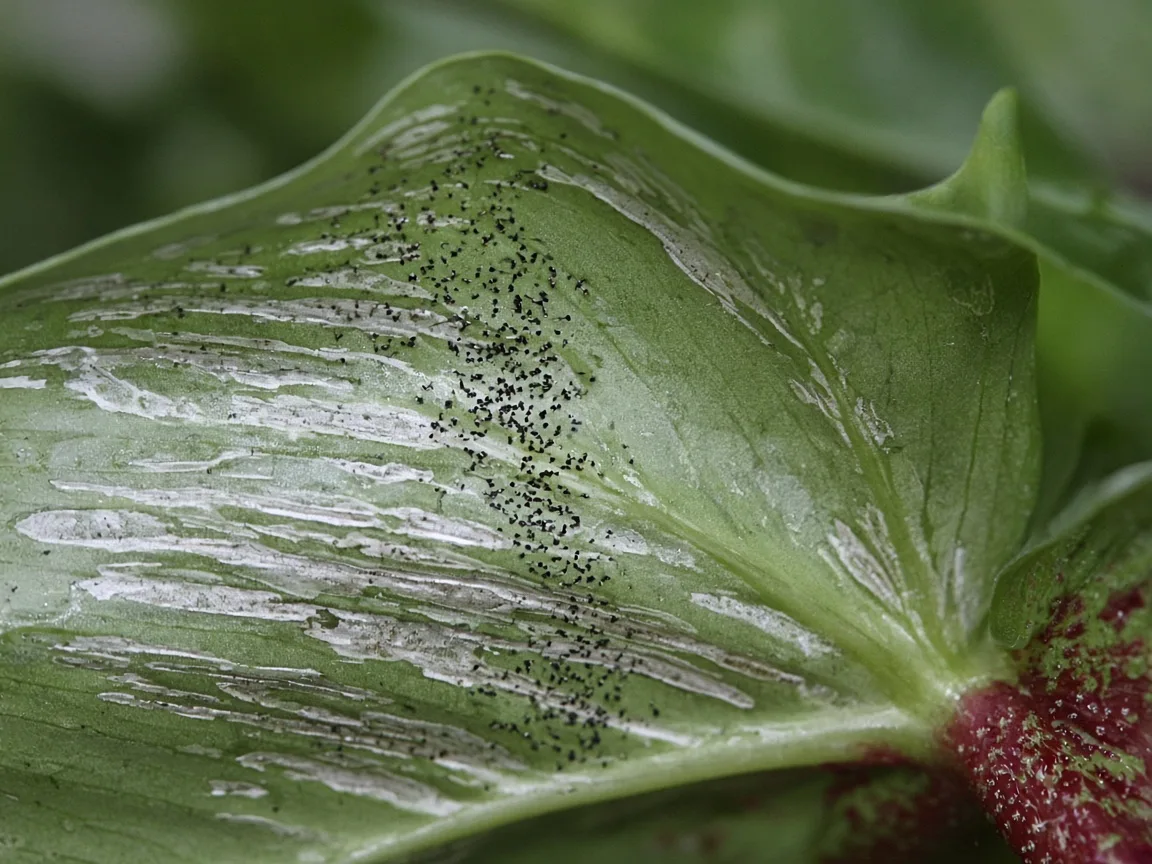
Silvery rasp marks and tiny black frass specks on a glossy ray-tail underside—compare with an intact round blade on the same plant.
Early feeding on unfurling ray-tail spears:
- Pale silver or bronze streaks across soft new leaves still rolled like a scroll at the crown
- Tiny black dots (frass) scattered on glossy undersides along midribs and at the elongated tail tip
- Slight dulling of the glossy surface while red-mottled petioles stay firm and upright
- Damage often starts on one outer ray-tail blade before spreading inward toward the crown
Established infestation on the floor specimen:
- Scarred, narrow, or kinked ray-tail tips that never extend to the signature pointed tail
- Silvery patches that look like dust until viewed in angled side light on glossy green tissue
- Distorted unfurling round blades with rippled edges where the spear opened unevenly
- Slender yellow, brown, or black insects on a white-paper shake test
What Alocasia Stingray thrips damage is not:
- Fine yellow stippling with silk webbing—spider mites on undersides, not thrips
- Uniform crispy brown margins only—low humidity edge damage without frass or insects
- Pale winding tunnels with a dark frass line inside—leaf miners
- White cottony wax in the crown—mealybugs
- Whole plant collapse with sour wet mix—root rot, not sap feeders alone
Damaged ray-tail tissue stays scarred permanently. New round blades opening clean from the crown after treatment are your recovery signal.
Where thrips hide on Stingray’s ray-tail spears and glossy undersides
Alocasia macrorrhizos ‘Stingray’ grows upright to 60–150 cm indoors with round glossy leaves on long red-mottled petioles that taper to an elongated ray-tail point. Thrips follow the protected spaces where new round blades unfurl and where undersides meet petiole bases—not the glossy tops you see from across the living room.
Work from crown outward on a floor specimen:
- Central rolled spear — unfurling ray-tail leaves are softest and show silver scarring first inside the scroll
- Glossy undersides along midribs — tilt each large round blade gently and scan the back in angled light; use a step stool if needed
- Red-mottled petiole bases where each stalk meets the central corm
- The elongated ray-tail tip on the youngest blade, still soft and expanding
- Lower mature leaves only after the crown is clean — populations drop outward as new tissue hardens
Because Stingray may shed outer leaves during winter dormancy, a few old scarred ray-tail blades low on a firm corm matter less than fresh silver streaks at every unfurling spear. Inspect remaining green petioles and the corm area weekly through dormancy—thrips can persist on tissue you are about to discard.
Crowding Stingray against a wall or shelf bends petioles and traps rolled spears where rinse water and casual inspection miss colonies. Give the plant clearance so each new round blade can open without scraping adjacent surfaces—a common trigger for distorted leaves that overlaps with thrips scarring.
Why Alocasia Stingray gets thrips
Stingray wants 60–75% relative humidity for healthy foliage, yet thrips are mobile pests that feed on young leaves, buds, and tender growth regardless of how carefully you water. A humidifier can lift room RH while the microclimate beside a heat vent or sun-heated window pane stays dry enough for thrips to thrive alongside spider mites.
Several factors make Stingray a frequent indoor target:
Fast macrorrhizos seasonal growth. During warm months, Stingray can push a new ray-tail leaf every one to two weeks when light, humidity, and watering align. Each emerging round blade is a fresh food source inside a rolled spear thrips can feed on undisturbed.
Large floor-leaf architecture. A single Stingray blade can reach 60 cm across with a long ray-tail extension on upright red-mottled stalks. More surface means more edge tissue for thrips to colonize—and more visible scarring if you miss an early cluster on a specimen you cannot easily lift overhead.
Tall placement hides the crown. Unlike compact jewel alocasias at eye level, Stingray’s crown sits above most people’s sightline. Weekly checks require tilting the pot, using a step stool, or enlisting a second person to see petiole bases and rolled spears clearly.
Introduction from new plants or cut flowers. Thrips hitchhike on nursery stock, bouquets, and infested shelf mates. Skipping quarantine is the most common entry route into a collection.
Warm indoor rooms. Thrips can complete multiple generations per year when temperatures stay in Stingray’s comfort zone of 18–26°C (65–80°F). Outbreaks often appear between late spring and early autumn, but heated winter rooms sustain colonies year-round.
Stressed plants show damage faster, but are not the only targets. Inconsistent watering, draft stress, or low light slow replacement of scarred foliage, so the floor specimen looks damaged longer even after pests are controlled. Focus on removal first, then review care if growth stalls after treatment.
How to confirm the cause
Use a white-paper shake test: hold a suspect ray-tail leaf over white paper and tap the petiole sharply. Thrips fall as tiny moving specks. UC IPM recommends shaking foliage over light-colored paper to dislodge adults and larvae before treating.
Work in this order:
- Newest rolled spear at the crown — look for scarred, silvery, or narrow ray-tail blades still unfurling
- Glossy undersides — scan round backs for metallic streaks in angled light against a lamp or window
- Petiole bases and midrib grooves — check rolled or unfurling tissue for black frass specks
- White-paper shake — confirm live thrips on damaged leaves; slow specks that smear green on crush suggest mites instead
- Crown during dormancy — when outer leaves yellow and drop in winter, inspect remaining green petioles
- Neighboring plants — inspect anything recently purchased or placed nearby
- Yellow sticky traps — hang near the pot to catch adult thrips and monitor population trends
Rule out lookalikes. Mineral dust or hard-water dried spots wipe off; thrips scarring is embedded in tissue. Spider mites leave fine webbing and yellow stippling without silvery streaks or frass specks. Mechanical scratches from moving the pot are linear and do not include black dots.
If streaks are present but no thrips appear on repeated shake tests, consider whether damage is old from a cleared infestation—monitor new crown spears for fresh scarring.
Symptom lookalike comparison
| What you see | Likely cause | How to tell apart |
|---|---|---|
| Silvery streaks with black frass on undersides | Thrips (this page) | Shake test shows slender moving specks |
| Fine stippling with webbing | Spider mites | Paper tap shows mites; no silver streaks |
| Crispy brown margins only | Low humidity | Uniform edge damage; no moving specks |
| Rippled ray-tail blades, no frass | Distorted leaves | Magnify crown; no insects on shake |
| Sticky surface, pear-shaped insects | Aphids | Honeydew on new growth |
| White cottony clusters in crown | Mealybugs | Wax does not move on paper |
| Uniform yellowing of outer leaves in winter | Dormancy | Natural senescence; no silver streaks on green tissue |
First fix for Alocasia Stingray
Isolate the plant and rinse every leaf underside, petiole base, and rolled spear thoroughly in lukewarm water.
Move Stingray away from other plants immediately. Thrips spread to nearby houseplants quickly, especially in warm rooms with shared air. In a bathtub or shower, support the pot so it does not tip on a tall floor specimen. Spray leaf tops, undersides, red-mottled petioles, and the crown center until water runs clear. Use enough pressure to dislodge thrips but not so hard that you tear soft unfurling ray-tail spears.
Why rinse first:
- Physically removes thrips and debris before any chemical treatment
- Clears dust that would block soap contact on glossy blades
- Lets you reassess colony size before adding sprays
- Reduces spread to neighboring plants during handling
After rinsing, let foliage air-dry out of direct sun. Wet Alocasia leaves in a bright window can scorch.
If live thrips remain after the rinse, apply insecticidal soap or horticultural oil labeled for houseplants and thrips. Coat undersides, petiole bases, and rolled spears thoroughly—soaps and oils only kill on contact. Repeat applications are necessary because thrips eggs hide inside plant tissue and hatch on staggered schedules.
Test one ray-tail blade and wait 24 hours before spraying the whole plant if you are unsure about sensitivity on glossy foliage.
Do not repot, fertilize, or prune heavily on day one—those add stress without addressing the pest. Do not let rinse water pool in the central corm; Stingray’s upright crown can hold water at the base, inviting rot.
Step-by-step recovery
After the initial rinse:
- Repeat water rinses every five to seven days for at least three cycles to catch newly hatched thrips.
- Apply insecticidal soap if live thrips persist after two thorough rinses. Spray undersides, petiole bases, and crown spears until runoff. Use products labeled for thrips; do not mix homemade soap, which can burn sensitive leaves.
- Treat neighboring plants on the same shelf or in the same room at the same time. Thrips reinfest from asymptomatic neighbors quickly in dry indoor collections.
- Place yellow sticky traps near the pot to monitor adult thrips and confirm populations are declining.
- Remove severely scarred leaves only if they are mostly dead tissue—trim with clean shears. Leave green stippled ray-tail blades; they still photosynthesize until Stingray drops them naturally.
- Wash hands and tools after handling infested plants. Alocasia sap irritates skin; wear gloves when rinsing or spraying.
Horticultural oil can work on thrips but test one leaf first—oils on heat-stressed plants in hot afternoon sun can cause damage. Avoid oils when temperatures exceed 27°C (80°F).
For severe persistent cases, labeled spinosad products may be considered where indoor use is permitted—always read the label and re-entry intervals.
Repeat treatment schedule
Follow this cadence after the first rinse:
- Day 1: Rinse thoroughly; apply soap or oil if live thrips remain.
- Days 5–7: Rinse again, then reapply the same product.
- Days 10–14: Third application—inspect the crown with magnification before deciding whether a fourth cycle is needed.
- Week 3–4: Continue weekly checks; one missed hatch cycle can restart the infestation.
Recovery timeline
Silvery streaks on existing ray-tail blades are permanent. Expect to judge success by new round leaves opening clean from the crown over three to six weeks after consistent treatment.
- Days 1–3: Active thrips movement drops after the first thorough rinse
- Week 1: Silver streaks stop spreading on new tissue after rinse plus first spray
- Weeks 2–3: Clean new ray-tail blades emerge from the crown without fresh scarring
- Week 4+: Old scarred leaves remain blemished, but the plant produces normal glossy foliage
Heavily scarred or kinked ray-tail tips do not revert to perfect gloss—judge success by clean new growth, not old damaged tissue. Stingray may drop an older leaf during recovery; that is common if the center keeps producing green shoots.
If silver streaks continue on new leaves after three treatment cycles, re-inspect the crown—you may have missed colonies in unfurling spears or confused spider mites with thrips.
Mistakes to avoid
- Spraying soap or oil in direct sun. Wet Alocasia foliage in a bright window burns easily. Treat in indirect light and let leaves dry first.
- One-and-done treatment. Thrips eggs survive most contact sprays. A single application misses the next generation.
- Homemade dish soap mixes. Unlabeled detergents can strip the waxy cuticle and cause permanent spotting on glossy leaves. Use products sold as insecticidal soap for plants.
- Letting rinse water pool in the central corm. Rinse at an angle and let the plant drain—do not soak the crown repeatedly.
- Ignoring neighboring plants. Thrips spread to any species in warm indoor air. Check plants on the same shelf or windowsill.
- Fertilizing during active infestation. Soft new ray-tail spears give survivors fresh feeding sites. Wait until insects are gone per the fertilizer guide.
- Returning from isolation too soon. Wait at least two weeks after the last live thrips before placing Stingray back with your collection.
Alocasia Stingray care cross-check
After pests are controlled, confirm the growing conditions that keep Stingray resilient:
- Light: Bright indirect light per the Alocasia Stingray light guide—not so harsh that sun-heated glass dries leaf edges
- Humidity: 60–75% supports healthy leaf texture; pair a humidifier with good air circulation away from heat blow paths
- Watering: Top 2–3 cm dry before watering per the watering guide—avoid soggy mix that stresses roots while you fight foliage pests
- Soil: Chunky aroid mix per the soil guide so the root zone drains between rinses
A plant pushing steady, moderate new growth from the crown is easier to inspect than one cycling between flush and stall.
How to prevent thrips next time
Prevention is mostly about early detection and limiting introduction:
- Quarantine new plants and cut flowers for at least two weeks before placing them near Stingray
- Inspect crown spears and undersides weekly during active growth—make the unfurling center the first place you look whenever you water
- Rinse foliage monthly with lukewarm water to dislodge early colonists and dust
- Use yellow sticky traps near collections as early warning during warm months
- Keep floor clearance so ray-tail petioles do not bend against walls and trap thrips in rolled spears
- Run a humidifier through winter, but verify RH at leaf height—not just across the room
- Inspect plants thoroughly before bringing them indoors after summer outdoors or from a nursery bench
Thrips rarely disappear on their own indoors. Catching silver streaks on a single unfurling ray-tail spear takes minutes; treating a full floor specimen and neighbors takes much longer.
When to worry
Escalate treatment if fresh silvery scarring spreads despite four soap or oil cycles, multiple plants in the same room are affected, or new ray-tail spears keep emerging with fresh damage after a month of consistent care.
Systemic insecticides labeled for ornamental indoor use are a last resort—read labels carefully and keep treated plants away from pets and food-prep areas.
Pet and handler safety: Alocasia contains insoluble calcium oxalate crystals toxic to cats and dogs if chewed, causing oral irritation, drooling, and vomiting. That toxicity exists whether or not the plant has pests—spray residues add another reason to keep treated Stingray out of reach until foliage is fully dry.
Wear gloves when rinsing or spraying because broken petioles release sap that irritates skin. Contact your veterinarian or the ASPCA Animal Poison Control Center at (888) 426-4435 if a pet ingests any part of the plant.
Related Alocasia Stingray guides
- Alocasia Stingray overview
- Alocasia Stingray watering
- Alocasia Stingray light
- Alocasia Stingray soil
- Low humidity on Alocasia Stingray
- Spider mites on Alocasia Stingray
- Distorted leaves on Alocasia Stingray
- Alocasia Stingray problems hub
Related tool
Use the Pest Identifier Tool to narrow causes for thrips on this plant before changing multiple variables at once.