Alocasia Zebrina Brown Tips: Humidity & Water Checks
Quick answer
First, lift the pot and pinch the oldest arrow leaf tip. Dry crispy tips on a very light pot usually mean underwatering; crispy margins with appropriate moisture and firm striped petiole bases usually mean dry indoor air or hard water — not a calendar watering mistake.
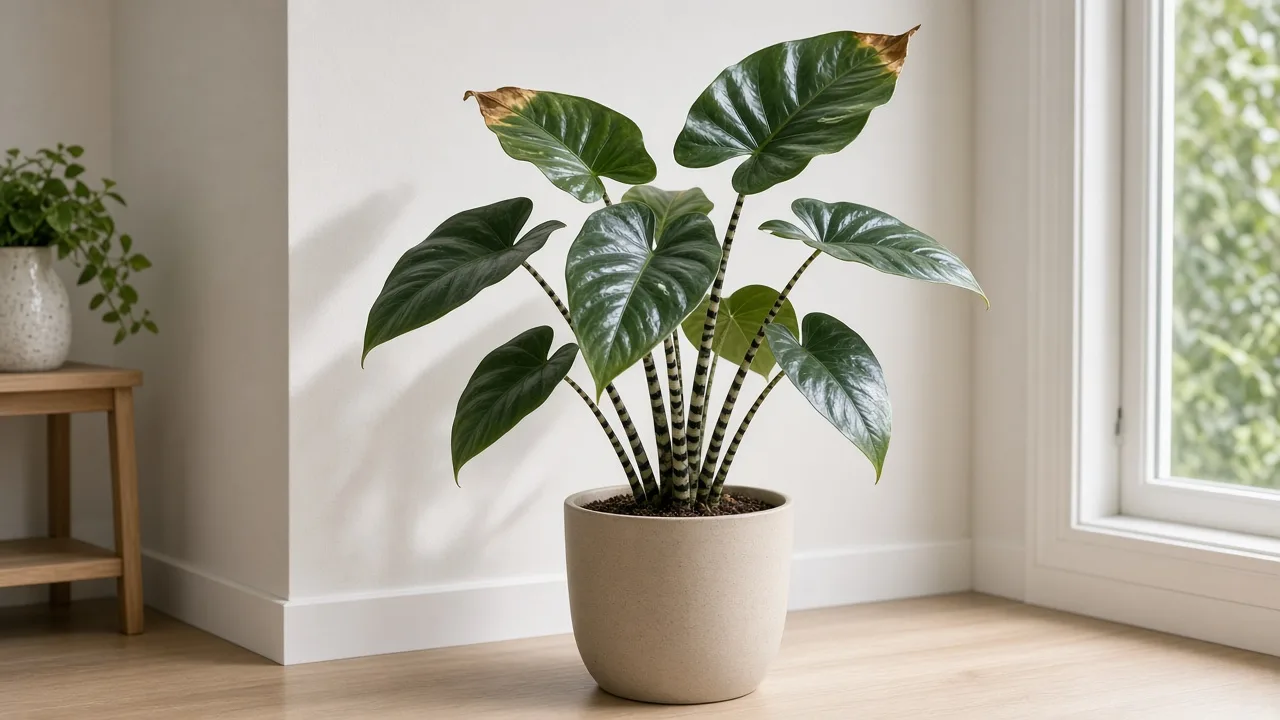
Brown Tips on Alocasia Zebrina: Causes, Checks & Fixes
This guide covers brown tips on Alocasia Zebrina. See also the general Brown Tips guide, watering, and light pages for this plant.
Brown Tips on Alocasia Zebrina: Causes, Checks & Fixes
Quick answer
First, lift the pot and pinch the tip of the oldest arrow leaf. Do not mist, repot, or fertilize from brown edges alone. This single check separates thirst from dry air — the two most common opposite causes on Alocasia Zebrina.
For how tip burn works on houseplants in general, see our brown tips hub. On Zebrina, brown tips mean dry tan tissue at the pointed end of a glossy arrow blade while the black-and-white striped petiole stays firm — not rot at the soil line and not whole-leaf collapse unless the problem has already escalated.
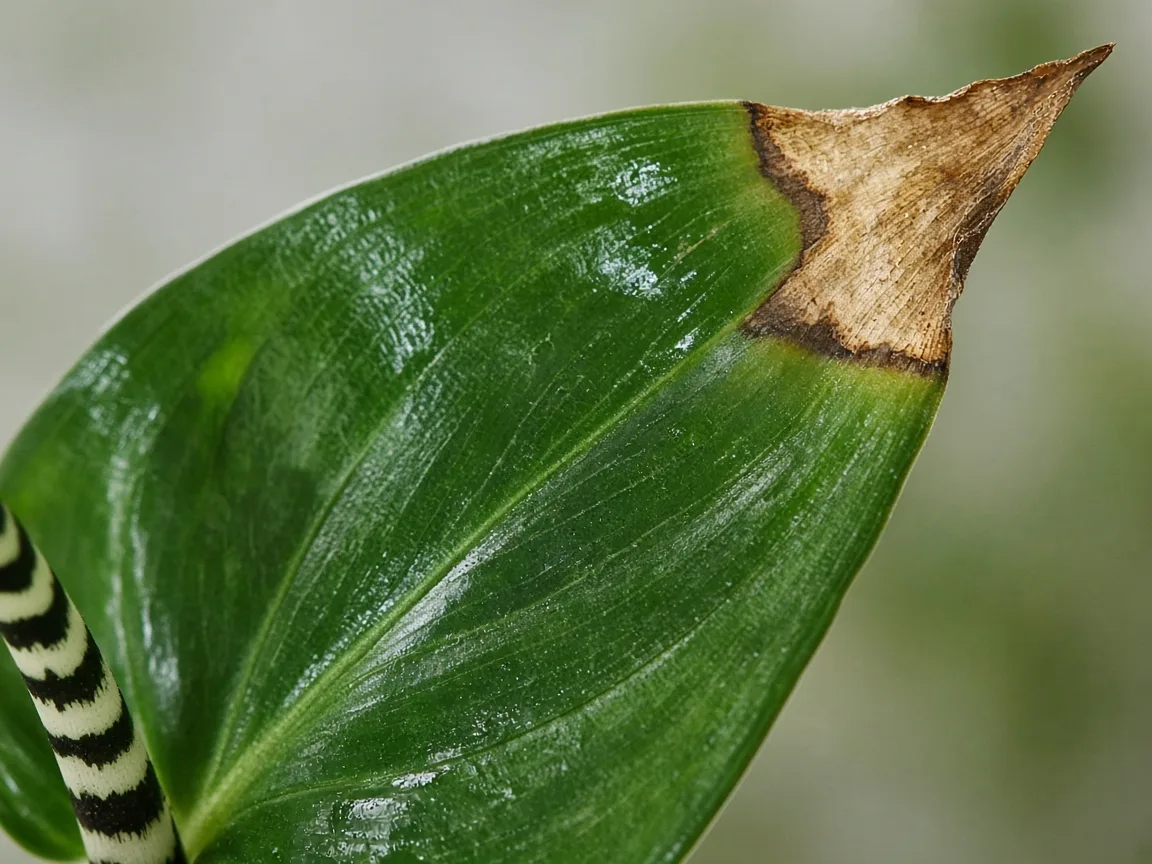
Illustrative generated diagnostic image, not a photograph of a documented case. Compare the pattern with your plant and confirm it using the pot-weight and humidity checks below.
When to use this page vs other Alocasia Zebrina guides
| Pattern | Read next |
|---|---|
| Dry tan tips only, firm striped petioles | Stay on this page |
| Whole arrow blade brown and soft | Brown leaves |
| Very light pot, drooping spears | Underwatering |
| Heavy wet pot, soft petiole bases | Overwatering |
| Crispy margins despite good watering | Low humidity |
| Bleached patches after a sunny move | Light guide |
| Fine stippling with webbing | Spider mites |
What brown tips look like on Alocasia Zebrina
Unlike compact jewel alocasias, Zebrina carries a small display of large, arrow-shaped leaves on long black-and-white striped petioles. Tip burn shows at the pointed distal end of the blade first:
- Dry tan or brown tissue that feels papery or crispy when pinched — not soft or translucent.
- Green leaf base and firm striped petiole — the crown junction should not soften.
- Often the oldest or outermost blade — Zebrina drops older leaves as new ones emerge, so one fading tip on a lower leaf can be aging rather than a crisis.
- Symmetrical margin browning on several blades at once — more typical of dry air, hard water, or drought than a single sun spot.
Sun scorch differs: it often appears as bleached or tan patches on the side facing harsh glass, not an even crisp band around the entire tip. Whole-leaf brown with limp tissue on wet mix belongs on the brown-leaves page, not here.
Why a small leaf count makes tip damage look worse
This section is Zebrina-specific — it would not apply to a bushy pothos or a multi-rosette succulent.
Indoors, Zebrina may hold only a handful of large blades at a time. Losing clean margins on one arrow leaf can look like the whole plant is failing even when the underground storage stem and striped petiole bases are firm. Read tip damage together with whether a new spear is rising and whether unaffected blades still hold their posture.
Normal turnover is plausible when:
- only the oldest blade shows tan tips while a new spear is developing;
- striped petiole bases remain firm;
- the pot dries on a predictable schedule; and
- no sour odor comes from the mix.
A care problem is more likely when tip burn appears on every visible blade, the newest spear stalls or browns before opening, or tips turn soft while the pot stays heavy and wet.
The pot-weight and tip-texture split
Before you buy a humidifier or change the watering calendar, run this Zebrina-specific check:
- Lift the pot when you think it is dry versus two days after a thorough watering. Learn your light and heavy weights.
- Probe 2–3 cm below the surface with a finger or chopstick. The RHS Zebrina profile calls for moist but well-drained mix — surface dust-dry bark can still hide wet centre if drainage is poor.
- Pinch the brown tip tissue. Crispy and dry supports edge desiccation. Soft or translucent tissue with a heavy pot points away from this page.
- Trace the striped petiole to the crown. Firm junctions are reassuring; softening at the soil line warrants the root-rot guide, not tip trimming.
First fix: match one correction to what the pot weight and tip texture tell you — do not soak and humidify on the same day.
| Evidence | Likely cause | First action |
|---|---|---|
| Very light pot, dry mix at depth, crispy tips | Underwatering | Rehydrate the root ball per the watering guide |
| Appropriate moisture, firm crown, crispy margins on several blades | Low humidity or hard water | Raise humidity toward 60–75% and review water quality |
| White crust on soil rim, tips after heavy feeding | Salt buildup | Flush mix; pause fertilizer |
| Tan patches on sun-facing side after a window move | Sun scorch | Move to bright indirect light per the light guide |
| Stippling plus webbing on undersides | Spider mites | Treat via spider mites — misting will not fix this |
Dry air at the arrow tip on tall petioles
Zebrina evolved in Philippine tropical forest understory with high ambient moisture. Large glossy blades on long petioles lose water at the margins faster than the roots can replace it when indoor humidity drops — especially in winter when heating runs.
Epic Gardening notes that alocasia leaf edges and tips are the first to suffer in dry air, even when soil moisture is adequate. The distinguishing clue is firm petiole bases, correctly timed watering, and crispy tips on multiple blades without a very light pot.
The RHS Alocasia guide recommends humidity trays, grouping plants, bathrooms with adequate light, or humidifiers during the growing season. On Zebrina, a humidifier near the plant beats occasional misting — mist evaporates quickly and can leave spots on glossy blades if water sits on the surface.
Hard tap water adds another Zebrina-specific wrinkle: mineral salts concentrate at the leaf margins as water transpires, producing tip burn that looks like humidity stress. If you feed heavily or see white crust on the pot rim, salt damage can mimic drought. Switch toward filtered or rainwater and review the fertilizer guide before increasing dose.
Underwatering: when tips crisp before the spear droops
Underwatering also shows at the arrow tip first, but the root zone tells the story. Crispy brown edges on dry, thin-feeling leaves with a very light pot and mix pulling from the container edge support thirst rather than humidity failure.
Alocasia Zebrina should not go bone dry for long stretches in active growth. After a proper soak with full drainage, watch whether remaining petioles stabilize and tip browning stops spreading. The dead tan tissue will not re-green; judge success by the next clean blade or spear.
If the pot was already heavy and moist, do not soak again — soft browning on wet mix can indicate failing roots. Missouri Botanical Garden explains that waterlogged soil deprives roots of oxygen, which disrupts uptake and can produce edge symptoms that mimic drought.
New spear tip burn versus mature blade margins
Unfurling spears on long striped petioles are fragile. Low humidity, a heater vent, or direct sun during unfurling can tan the tip of a new blade before it fully opens, while older leaves look fine. That pattern is common in winter and does not automatically mean the corm is rotting.
Compare the damaged spear to mature blades on the same plant. If older leaves hold clean margins and only the unfolding tip is crisp, humidity or placement is the likely fix. If every spear browns at the tip before opening while the mix stays wet and petiole bases soften, stop watering and inspect roots instead of raising humidity.
Do not trim a partly unfurled spear to “help” it open — wait until you know the cause, then adjust humidity or light. Remove only fully spent blades using the pruning guide once the petiole has failed.
Mistakes to avoid on Alocasia Zebrina
- Soaking a heavy wet pot because leaf tips look dry
- Mist-spraying daily instead of raising ambient humidity
- Fertilizing to “heal” dead tips on a stressed plant
- Confusing soft whole-leaf brown with crispy tip-only burn
- Placing Zebrina in harsh afternoon sun to “fix” humidity damage
- Trimming every tipped blade before correcting moisture or air
Recovery timeline
Brown tip tissue does not recover. Expect one to three weeks before you can judge whether new growth opens with clean margins after the first targeted fix. Mild humidity or thirst tip burn on one older blade often stabilizes within a single care cycle once moisture and air match the season.
Positive signs:
- striped petiole bases stay firm;
- tip browning does not spread to additional blades;
- the pot resumes predictable dry-down;
- the next spear or leaf opens without crisping at the point; and
- unaffected blades keep glossy green colour.
Escalate if tips soften into whole-leaf collapse, the crown smells sour, or the newest spear fails repeatedly on wet mix.
How to prevent brown tips next time
Keep Zebrina in stable bright indirect light, use chunky aroid mix that dries predictably, and water when the top 2–3 cm is dry rather than on a fixed weekday. Target 60–75% humidity during active growth, reduce feeding in autumn, and inspect leaf undersides when indoor air is dry — NC State lists spider mites among Alocasia pests that stipple margins.
Photograph the plant when a new spear appears so you can tell normal old-leaf tip fade from spreading burn on every blade.
Related Alocasia Zebrina guides
Use the Alocasia Zebrina overview for placement and seasonal rhythm, or the problems hub when several symptoms overlap. Choose low humidity when margins crisp despite sound watering, underwatering for a very light dry pot, and brown leaves when whole blades fail soft. For salt or feeding questions, see the fertilizer guide.