Amla Soil Guide: Mix, Drainage & pH
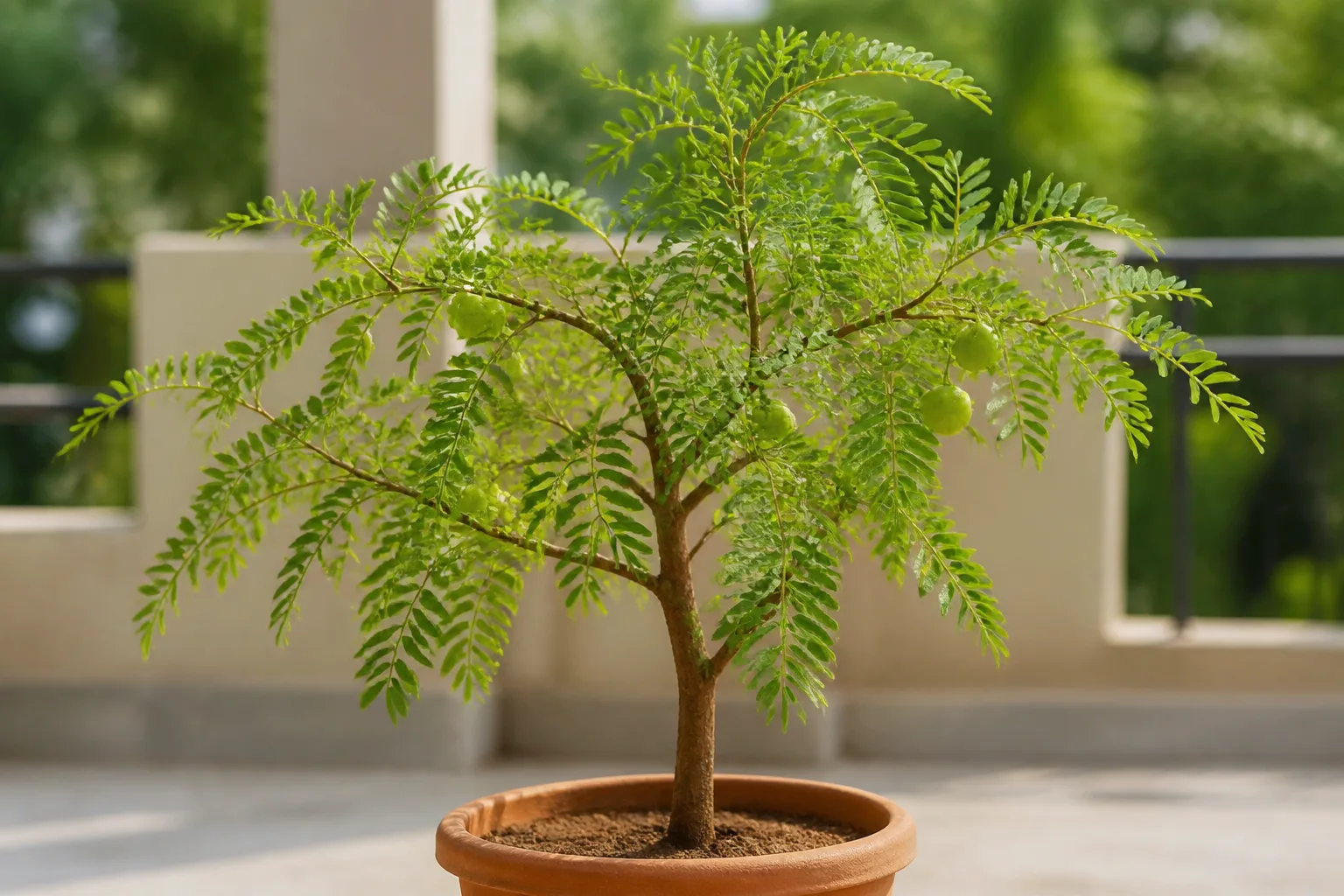
Amla Soil Guide: Mix, Drainage & pH
Amla Soil Guide: Mix, Drainage & pH
Amla soil decides whether Phyllanthus emblica (Indian gooseberry, aonla, amalaki) stays vigorous or quietly declines from wet roots. This deciduous fruit tree from tropical and southern Asia is famously tough in lean, dry landscapes, yet it still needs a deep, well-draining root zone. Plants For A Future notes emblic is undemanding as long as the soil is well-drained, and that it can use light sandy, medium loamy, or even heavy clay textures when water can move through. In a balcony pot, “tough” does not mean “happy in soggy clay.”
Get the mix open and free-draining first, then let Amla watering and Amla light do their jobs. This page covers the soil type Amla prefers, realistic pH targets for pots versus orchard ground, a practical DIY container recipe, pit preparation for garden planting, monsoon clay fixes, and the warning signs that the substrate—not the calendar—is the problem. Pair it with the Amla overview if you are still placing the plant.
What Amla roots need from soil
Amla roots need three things in order: oxygen, room to go deep, and moisture that comes and goes. Fertility is secondary. Emblic thrives on sites that are too dry or too poor for many other fruit crops, so structure beats richness. When water displaces air in the pore spaces, roots weaken and opportunistic pathogens take over—the same overwatering pathway Missouri Botanical Garden explains for roots starved of oxygen. Amla’s drought toughness once established does not protect young container plants from that failure mode.
NC State Extension’s soils handbook frames the ideal root zone as roughly half pore space shared between air and water. Compacted or poorly drained profiles shrink that air fraction and restrict roots. For Amla, that science translates simply: crumbly loam that drains after a soak, then dries at the surface between waterings—not a peat sponge that stays cold and wet for a week.
Deep ground profile vs balcony pots
In the ground, Amla wants a deep soil column—sandy loam to clay depth—so roots can explore and ride short dry spells. For maximum productivity, PFAF cites deep soil ranging from sandy loam to clay, slightly acidic to slightly alkaline. That depth is what orchard trees use when irrigation is infrequent.
In a pot, depth is limited by container height, so texture has to work harder. Use a large, deep pot with open drainage holes, fill it with a mix that sheds water quickly, and never leave the saucer full. A shallow decorative dish of dense mix is a poor match for a tree that wants a deep, aerated profile. If you are upsizing because roots circle or the pot dries in a day in heat, follow the Amla repotting guide rather than only top-dressing.
Ideal soil type for Amla in India and similar climates
For Indian home gardens and similar dry-subtropical belts, think deep, well-draining sandy loam or loam with compost, not waterlogged clay basins. India’s National Horticulture Board notes that aonla suits a dry subtropical climate and that slightly acidic to saline/sodic soils with pH 6.5 to 9.5 can support cultivation. That orchard-scale tolerance explains why Amla shows up on marginal and alkaline lands where fussier fruit trees struggle.
Home growers should still aim for structure first: crumbly loam that lets a soak drain within minutes, then dries at the surface between waterings. Enrich with well-rotted compost or farmyard manure so young trees have organic matter without turning the root zone into mud. Avoid sealed planters, compacted rooftop fill, and heavy black cotton clay that ponds after monsoon showers unless you raise beds and amend aggressively with sand and organic matter.
pH range: orchard tolerance vs home pot target
Orchard references and home-pot targets are not identical, and that difference matters. NHB’s cultivation window of pH 6.5–9.5 reflects field tolerance on saline and sodic sites. PFAF separately notes a preferred range near pH 6–8, with tolerance roughly 5–8, and warns that in highly alkaline soil around pH 8.0, nutritional deficiencies become evident.
For balcony and terrace pots, target about 6.0–7.5. In that band, micronutrients stay more available and compost-based mixes behave predictably. Mild outdoor alkalinity is fine for landscape trees with good drainage; chasing extreme sodic chemistry in a closed pot is not. If leaves yellow while the mix stays wet and alkaline amendments keep stacking, fix drainage and refresh the mix before adding more minerals.
Best container soil mix for Amla
Container Amla fails most often on closed, peat-heavy “indoor plant” mixes that hold water for days. University of Florida IFAS Gardening Solutions advises against using garden dirt as the main container medium and points growers toward blended container media that drain and aerate—combining moisture-holding materials with coarse drainage fractions such as perlite or sand. Treat Amla the same way: build a loam-based blend with a clear mineral fraction, not a moisture-control tropical bag.
Choose a pot with multiple open drainage holes. Skip a bottom layer of gravel—the perched water table effect keeps the root zone wetter, not drier. Fill the pot top to bottom with one uniform mix. After watering, you should see runoff within seconds, and the top few centimetres should begin to dry within a few days in full sun.
DIY recipe that drains without starving roots
A practical starting recipe for young Amla in pots is:
- 50% quality potting mix or screened garden loam
- 25% well-rotted compost
- 25% coarse sand or perlite
That blend matches how Amla is handled in home culture: organic matter for steady growth, mineral grit for air and drainage. In humid monsoon spells or if the pot stays heavy for more than three or four days after a soak, bump the coarse sand/perlite toward 30–35% and reduce the loam fraction. In very hot, windy terrace sites where the pot dries in under a day, keep compost at 25% and avoid making the mix purely sandy—young trees still need even moisture during active growth.
Use coarse horticultural sand or perlite, not fine play sand that clogs pores. Rewet hydrophobic old peat by soaking the root ball thoroughly during repotting, then return to a finger-test watering rhythm.
Ground planting and pit preparation
In the garden, dig a generous planting pit rather than forcing a root ball into compacted subsoil. NHB describes pits about 1–1.25 m prepared ahead of planting, filled with the excavated soil mixed with several baskets of well-rotted farmyard manure plus neem cake or bone meal. On sodic ground, NHB recommends mixing gypsum and sand into the pit fill so structure and chemistry improve where roots will sit.
Plant so the graft or bud union stays above the final soil line, water in once to settle fines, then mulch the basin with straw or dry leaves—keeping mulch off the trunk. Do not bury Amla in a low spot that collects monsoon runoff. After establishment, the tree’s drought tolerance improves, but chronic waterlogging still kills roots faster than short dry spells.
Monsoon, clay, and raised beds
Monsoon rain is the stress test Amla soil rarely gets in a dry-season nursery. Raised beds or gently mounded basins help where native clay drains slowly. Open heavy ground with compost and coarse sand over seasons rather than dumping fine sand into wet clay in one go—NC State notes that adding sand to clay can worsen structure if ratios are wrong. Keep irrigation measured in the rainy season; established trees often need little supplemental water while rains are frequent.
Store-bought mixes vs DIY for Amla
Bagged “fruit tree,” “citrus,” or “cactus” mixes can work as a base if you amend them. Most all-purpose indoor bags need extra coarse sand or perlite before they suit Amla. Cactus mixes often drain well but may be too lean and too fine for a fruiting tree that will live years in the same pot—blend in compost and some loam so the mix holds nutrients without sealing shut.
DIY wins when you can source local loam, compost, and coarse sand and control the ratio. Store mixes win when your balcony has no space to blend—buy the closest draining base, amend once, and refresh on a schedule. Either path beats unamended garden clay in a plastic pot. For feeding after the mix is right, use the Amla fertilizer guide rather than pouring high-nitrogen liquid into a wet, compacted root ball.
Why dense clay and sealed pots fail Amla
Dense clay holds water in tiny pores and collapses air spaces when you water from above. In a pot without drainage—or with holes blocked by a solid saucer—that water has nowhere to go. Amla can tolerate heavy textures in open ground when water moves through the profile; it cannot tolerate the same clay locked in a container. Yellowing leaves, out-of-season drop, and a sour smell are root-environment problems, not proof the plant “wants more water.”
Sealed ceramic cachepots, self-watering reservoirs left full, and decorative outer pots that trap runoff recreate orchard flood conditions Amla never evolved to live in continuously. Lift the nursery pot after watering, empty the cachepot, and let the mix breathe. If clay is your only native soil for in-ground planting, raise the bed, open it with organic matter over time, and keep irrigation measured.
Warning signs your Amla soil is wrong
Treat these as soil and drainage clues, especially when light is already adequate:
- Pot stays heavy and dark for many days after watering
- Surface grows mold or smells swampy
- Leaves yellow or drop outside normal deciduous timing
- New shoots stall while the mix never feels dry at 3–5 cm
- Water ponds on top or runs down the inside wall without wetting the core
- Roots appear brown, mushy, or foul when you slip the plant from the pot
Seasonal leaf drop on this deciduous tree is normal. Sudden soft decline with wet media is not. First action: stop watering, improve drainage (clear holes, empty saucers), and plan a soil refresh if the mix is collapsed or anaerobic. Do not stack fertilizer, hard pruning, and a rushed up-pot on the same stressed day.
How soil choice changes watering
Soil texture sets how often Amla needs water more than any app reminder. A gritty loam in full sun may need a deep soak every several days in summer once the top 3–5 cm dry; a peat-heavy mix in the same pot can still be wet at depth on day five. Always check with a finger before watering—details live in the watering guide.
If you continually underwater to compensate for a water-holding mix, the plant still sits in low oxygen between sparse drinks. Fix the substrate, then return to deep soaks with full drainage. Conversely, a very sandy mix in harsh terrace wind may need slightly more frequent soaks while the canopy is young. Match the rhythm to the pot’s dry-down, not to a neighbour’s guava schedule.
When to refresh or replace the mix
Young Amla usually benefits from a full mix refresh every 1–2 years, ideally in spring as growth resumes—aligned with repotting when roots circle or exit drainage holes. UF/IFAS notes that container media often needs periodic replacement because it breaks down and holds water differently over time. Between repots, scrape and replace the top few centimetres of tired mix with compost-rich blend if salts crust or the surface seals, without burying the stem deeper.
Replace the whole volume sooner if the mix smells sour, stays saturated, or has compacted into a hard brick. When you unpot, tease circling roots gently, trim only clearly rotten tissue, and replant into fresh mix at the same depth. Wait for steady new growth before aggressive feeding.
Common Amla soil mistakes to avoid
- Using unamended garden clay in a sealed plastic pot
- Choosing moisture-control indoor mixes that stay wet for a week
- Adding a gravel layer under the mix and calling it “better drainage”
- Stacking alkaline amendments in a wet pot instead of refreshing the substrate
- Planting in a monsoon low spot without raising the bed
- Changing soil, fertilizer, pot size, and hard pruning on the same stressed day
Fix drainage and aeration first. Then return to a steady soak-and-dry rhythm under full sun.
When to use this page vs other Amla guides
Use this soil page when you are choosing or fixing the substrate and drainage—mix recipe, pH, clay problems, pot setup, and refresh timing. Switch to watering when the mix is already open but you need dry-down checks and seasonal intervals. Use light when the plant is sparse or stalled in shade despite decent soil. Use fertilizer only after drainage and moisture rhythm are stable. Use repotting for pot size, root inspection, and the physical move. Use propagation when you are starting grafts or seedlings in nursery media. The plant hub ties size, sun, and pet-aware notes together.
Related Amla guides
- Amla overview — growth habit, placement, and care map
- Amla watering — when to soak after the mix is right
- Amla light — full-sun needs that drive dry-down
- Amla fertilizer — feeding once roots are healthy
- Amla repotting — timing and pot upgrades
- Amla propagation — nursery media for new plants
- Amla pruning — canopy work after the root zone is stable
Conclusion
Amla succeeds in soil that drains freely, runs roughly slightly acidic to mildly alkaline in pots, and offers enough depth or pot volume for a developing tree. Lean on sandy loam or loam plus compost, keep a clear mineral fraction in containers, and treat chronic wetness as an emergency. Orchard tolerance of saline and sodic ground is real, but balcony growers should still prioritize aeration and a practical 6.0–7.5 pH band. Fix the mix first; watering and fertilizer only work when roots can breathe.