Amla Pruning Guide: When, Where, and How Much to Cut
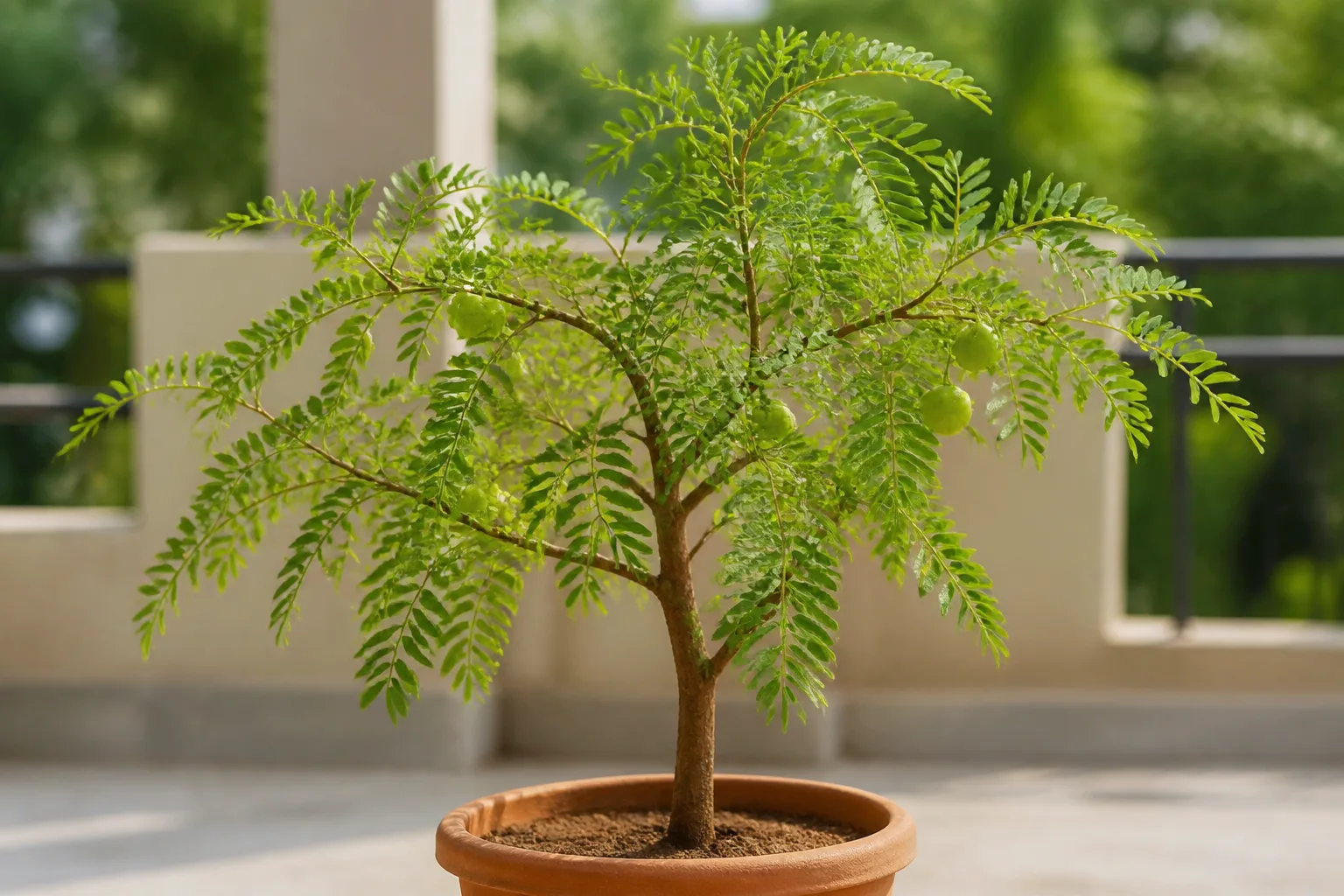
Amla Pruning Guide: When, Where, and How Much to Cut
Amla Pruning Guide: When, Where, and How Much to Cut
First action: Walk the canopy and remove only dead, damaged, crossing, weak, or clearly diseased wood with clean bypass pruners—finish that cleanup before you pinch healthy laterals or reshape the crown. That order matters on Amla because bearing trees need little hard annual pruning; you want a clear map of live scaffold branches before you decide what else to shorten.
For whole-plant context—sun needs, watering rhythm, and container size—see the Amla overview.
Reviewed by LeafyPixels Review Board · Author: sai-ananth
Quick answer
Prune Amla (Phyllanthus emblica, also called aonla or Indian gooseberry) to build a strong early framework, keep light moving through the crown, and remove failing wood—not to “fix” weak sun or waterlogged roots. India’s National Horticulture Board trains plants to a modified central leader, pinches unwanted shoots in March–April, and notes that regular heavy pruning of a bearing tree is not required because determinate shoots shed and encourage fresh growth. Still remove dead, infested, broken, weak, or overlapping branches regularly.
Make structural cuts just outside the branch collar (or just above an outward-facing bud on thin stems), keep live canopy removal near about one-third per session on pots, and schedule formative thinning for the March–April window used by TNAU Agritech. Amla recovers best in full sun with a dry-down watering rhythm—see the Amla light guide and watering guide before you expect a thinned canopy to refill densely.
What pruning does for Amla
Amla is a deciduous subtropical fruit tree with feathery foliage on slender branchlets and a drooping, lengthy fruiting habit. In the ground it can reach roughly 8–18 m; in large containers home growers usually keep it nearer 1.5–3 m. Left untrained, young trees throw crowded uprights, narrow crotch angles, and shaded interiors that set less fruit and trap humidity.
Four jobs show up repeatedly:
- Cleanup removes dead, broken, pest-tunnelled, or rubbing wood whenever you spot it.
- Formative training establishes a clear trunk and two to four wide-angled scaffold branches in the early years.
- Thinning opens crowded sections so light reaches fruiting wood and air can move through the canopy.
- Size control shortens overly long laterals on balcony or terrace pots so harvest stays reachable.
Pruning cannot replace full sun or fix chronically wet soil. If the canopy is sparse because the pot stays dark and soggy, fix placement and drainage first.
Why bearing Amla needs little hard pruning
NHB notes that shedding of determinate shoots encourages new growth the next season, so a well-trained bearing tree does not need intensive annual cutbacks the way apples or peaches do. Your job shifts from shaping every year to selective cleanup and light thinning. That is good news for home growers—and a warning against over-pruning healthy fruiting wood just because the calendar says “prune.”
What to check before you cut
Before any structural session, inspect in good light:
- Live vs dead wood — scratch lightly; green cambium means live; brittle brown pith means remove to healthy tissue.
- Crossing or overlapping branches — mark these for cleanup first.
- Crotch angles — keep wide attachments (roughly 45–60°) and remove narrow, splitting forks when you can choose.
- Graft union — on budded or grafted plants, note suckers rising below the union; remove them whenever they appear.
- Stress signs — recent frost damage, sour wet soil, or a plant still settling after repotting. Delay hard cuts until the plant is stable.
- Tools — sharp bypass pruners for stems under about 2 cm; loppers or a pruning saw for thicker wood. Sterilize blades when disease is present (Clemson HGIC).
Plan the goal before the first cut: cleanup only, formative training, or intentional thinning for light.
When to prune Amla
Best windows for training and thinning
March–April is the standard window for pinching unwanted shoots and thinning crowded branches so the tree keeps maximum fruit-bearing surface (NHB; TNAU). Use that pass for formative work—not for removing the flowering wood you want for fruit set.
After harvest, many orchard programs schedule a quieter maintenance pass (often at the end of December) to clear dead, broken, and overlapping wood while the tree is less active. On a home terrace, treat that as optional cleanup timing rather than a hard rule if your climate stays warm year-round.
Cleanup anytime
Dead twigs, storm breaks, rubbing limbs, and clearly diseased or gall-tunnelled shoot tips can come off whenever you find them. TNAU specifically recommends cutting off gall-caterpillar-infected apices so apical growth is not permanently checked. That emergency cleanup is different from hard height reduction.
When to wait
Skip major reshaping when the plant is wilted from root failure, within a week or two of a hard move or repot, during a hard frost risk on young trees, or when you cannot give strong sun afterward. If the plant is mid-bloom and you want fruit, avoid stripping flowering laterals—stick to removing only dead or damaged wood until fruit set is underway.
How to prune Amla step by step
1. Cleanup pass (first action)
Cut dead, broken, weak, and rubbing branches back to healthy wood or to the branch collar. Bag and remove diseased wood from under the tree. Do not leave stubs that die back into the scaffold.
2. Formative training on young trees
Allow the main scaffold branches to emerge about 0.75–1 m above ground (or above the pot soil line on containers), then train to a modified central leader (TNAU). In the early years, keep two to four branches with wide crotch angles pointing in opposite directions (NHB). Pinch off competing uprights and inward-growing shoots during the March–April training window. In later years, allow four to six well-spaced limbs to develop.
3. Thin crowded sections
Where branchlets shade each other, remove the weaker of two overlapping shoots rather than tipping every tip. The goal is light into the interior and fruit-bearing area—not a topiary ball.
4. Size control on pots
Shorten overly long laterals just above an outward-facing bud or lateral. Prefer several moderate sessions over one severe scalp. Keep roughly two-thirds of the leafy canopy so roots still have carbohydrate support (Penn State Extension).
5. Finish and clear debris
Remove prunings from the potting area. TNAU notes manuring is commonly done immediately after pruning in orchard systems; on a home pot, resume a light fertilizer routine only if the plant is actively growing and roots are healthy—do not dump high nitrogen on a stressed tree the same day.
Where to cut, and what not to cut
Where to cut
- Just outside the branch collar on limbs thicker than a pencil—do not flush-cut into the trunk ridge (Clemson HGIC).
- Just above a healthy outward-facing bud or lateral on thin stems.
- Below a graft union when removing rootstock suckers.
- Into clean wood below pest tunnels or dead tips.
What not to cut
- Healthy flowering laterals mid-bloom if fruit is the goal.
- All determinate fruiting shoots in a panic “cleanup”—Amla partly sheds and renews these on its own.
- The only strong leader on a young tree unless you are intentionally converting to multiple leaders after the framework is set.
- More than about one-third of live canopy on a container plant in one session.
Plants For A Future lists no known hazards for Phyllanthus emblica, but bark and unripe fruit are tannin-rich—wear gloves if your skin is sensitive, and keep pets from chewing large piles of trimmings.
Aftercare and recovery timeline
Keep Amla in full sun after pruning. Water deeply when the top few centimetres of mix are dry; do not keep the pot permanently wet because a reduced canopy uses less moisture—follow the watering guide. Hold off on aggressive feeding until you see new shoots firming up.
Typical recovery signals
- Within days to a couple of weeks in warm weather: remaining leaves stay firm; no sudden wilt.
- Within a few weeks of active growth: buds below cuts break into new laterals.
- Next season: renewed determinate shoots and a more open, even canopy.
Warning signs you cut too hard or timed poorly
- Prolonged stall with no bud break in warm weather.
- Sudden off-season leaf drop plus sour wet soil—fix roots and light before more cuts.
- Soft, stretchy regrowth racing toward a dim window—improve light before another structural session.
Healthy tip wood from pruning is not the usual home-propagation route for named fruiting cultivars; those are typically grafted or budded. See the propagation guide if you are multiplying seedlings or practicing budding rather than expecting every soft tip to become a fruiting tree.
Mistakes to avoid
- Hard-pruning a bearing tree every year “just because” — NHB says regular pruning is not required once trained.
- Leaving crowded, overlapping wood — poor light and airflow invite pest and disease pressure.
- Ignoring rootstock suckers — they can overtake a grafted cultivar.
- Flush cuts into the trunk — remove the branch collar’s healing tissue.
- Stacking hard prune + repot + fertilizer changes on the same day — stabilize one stress at a time.
- Expecting pruning to fix shade — sparse Amla in weak light needs placement changes first.
When not to prune
Skip structural pruning when roots are failing, when nights threaten frost on a young or newly cut tree, within the first weeks after a stressful move or hard repot, or when you cannot restore full sun afterward. Cleanup of dead wood remains fine. If bark-eating caterpillars or stem swelling appear, clear damaged tissue and correct crowding, but treat the pest or cultural cause rather than relying on cuts alone.
Related Amla guides
- Amla overview — identity, size expectations, and placement for Indian climates
- Amla light — full-sun needs before you expect dense regrowth
- Amla watering — dry-down rhythm after canopy thinning
- Amla soil — drainage that prevents post-prune stress
- Amla propagation — grafting and budding versus seed for fruiting plants
- Amla repotting — when a top-heavy canopy needs a larger pot, not just more cuts
- Amla fertilizer — light feeding after pruning once new growth resumes