Overwatering on Amla: Finger-Test Checks & Fixes
Quick answer
Overwatering on Amla shows up as a heavy wet pot, yellowing or out-of-season drop of feathery leaves, and sour-smelling mix—not a light dry pot with crisp tips. First step: stop all watering and check dryness at 3–5 cm depth before you add another soak.
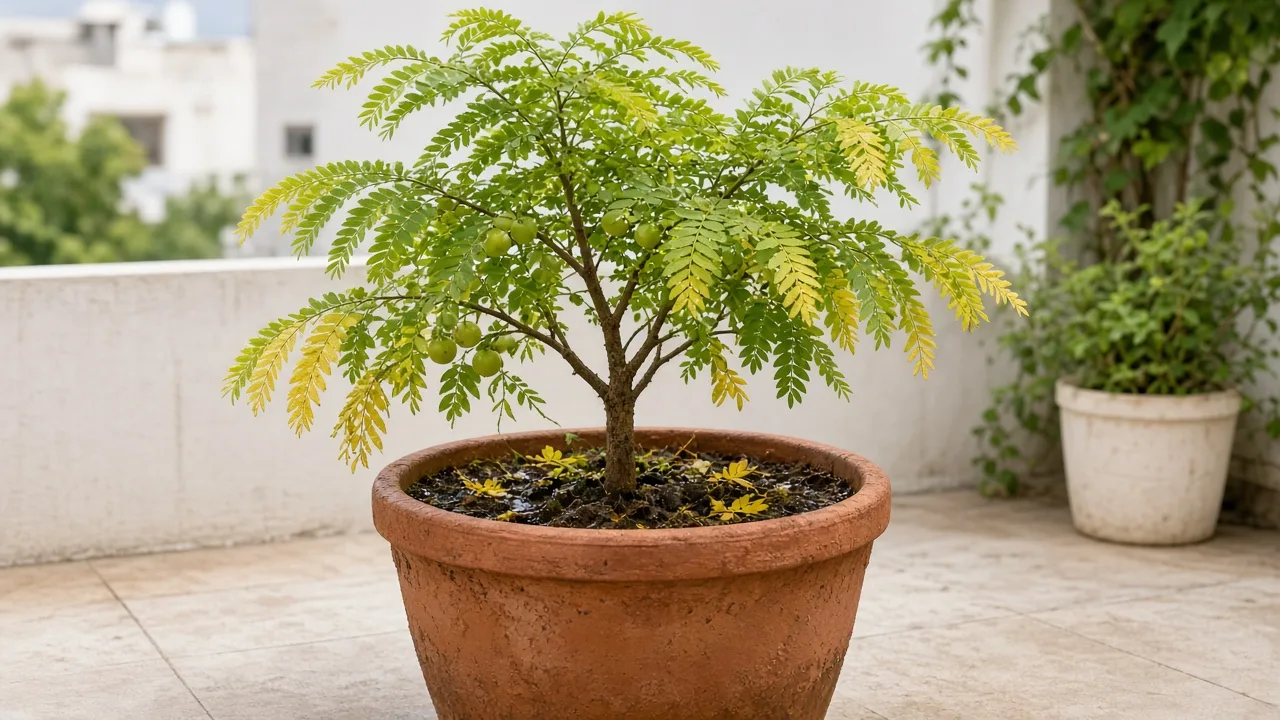
Overwatering on Amla: Causes, Checks & Fixes
This guide covers overwatering on Amla. See also the general Overwatering guide, watering, and light pages for this plant.
Overwatering on Amla: Causes, Checks & Fixes
Quick answer
Overwatering on Phyllanthus emblica (Amla, Indian gooseberry, Aonla, or Amalaki) is the classic fruit-tree-in-a-pot trap: a sun-loving deciduous tree that tolerates drought on well-drained ground but dies fast when terrace mix stays wet for weeks. When roots sit in saturated soil, they lose oxygen and stop functioning—and Amla has little tolerance for waterlogged clay or closed saucers.
For how chronic wet mix damages roots in general, see our overwatering guide. On Amla, the pattern is a heavy pot long after watering, yellowing or out-of-season drop of feathery compound leaves, sour-smelling mix, and extra risk when monsoon rain plus hand-watering keep a balcony pot saturated.
First step: stop all watering immediately. Run the 3–5 cm finger test at the trunk base before you add fertilizer, repot, or prune. If the mix smells sour or roots feel soft, escalate to the root rot protocol the same day.
When to use this page vs other Amla guides
| Pattern | Read next |
|---|---|
| Light dry pot, wilted tips, firm branchlets | Underwatering |
| Heavy wet pot, yellow feathery leaves (this page) | Stay here; escalate to root rot if mix is sour |
| White fuzz on damp surface only | Mold on soil |
| Small dark flies when you water | Fungus gnats |
| Yellow leaves without obvious wet mix | Yellow leaves |
| Whole canopy limp on wet soil | Wilting |
| Long-term dry-down rhythm after recovery | Watering guide |
| Mix stays damp even after cutting water | Soil guide |
What overwatering looks like on Amla
Unlike broad-leaf houseplants, Amla photosynthesizes through fine feathery compound leaves on woody branchlets. Lower leaves yellow and drop before the whole canopy fails—but seasonal winter leaf drop is also normal on this deciduous tree, so timing and soil moisture matter.
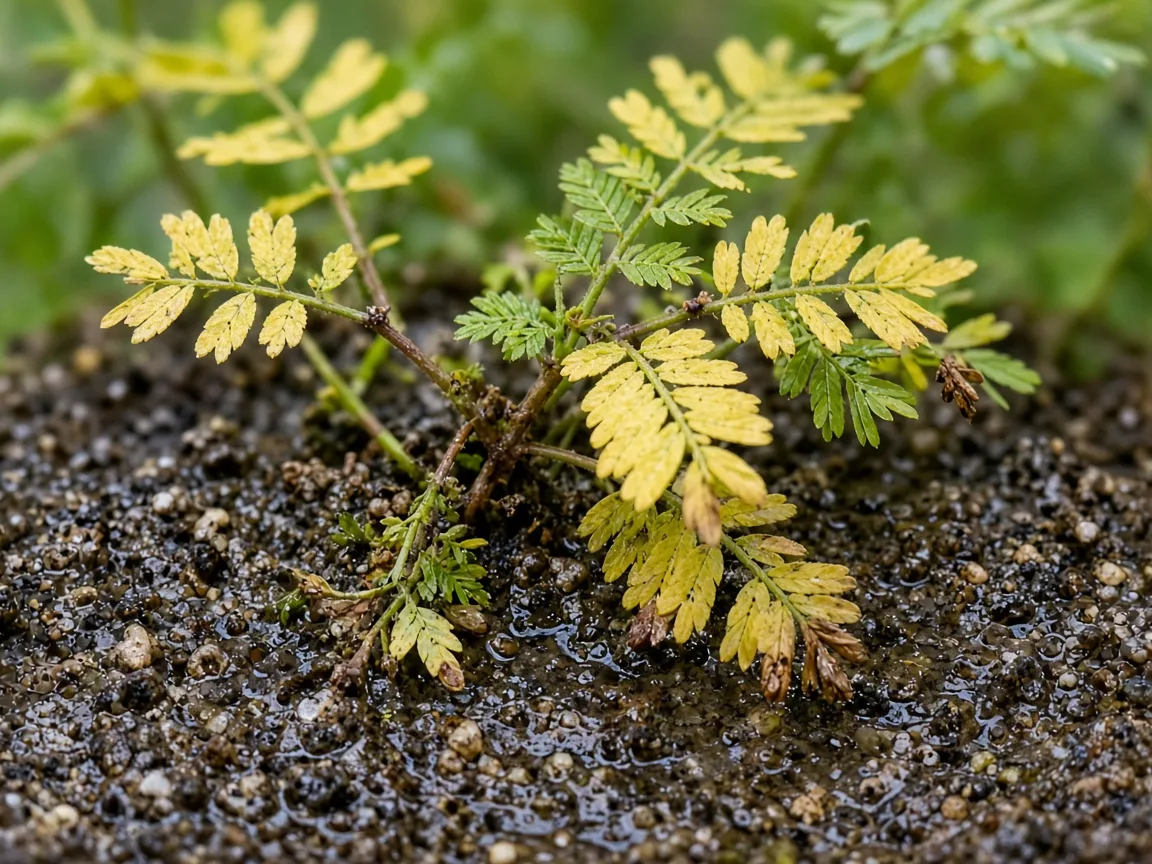
Early overwatering at the soil line—yellowing lower branchlets on wet gritty mix; upper growth may still look green until root damage spreads.
Early signs
- Heavy pot days or weeks after the last watering
- Yellowing feathery leaves, often starting on the lowest branchlets
- Out-of-season leaf drop while the mix stays damp—not the planned winter rest
- No new shoot tips for weeks despite wet soil
- Fungus gnats or surface mold—chronically wet organic mix is their habitat; see mold on soil if white patches spread
- Premature fruit drop during fruit fill when roots are stressed (drought during fruit set also causes drop—check whether the pot is heavy or light)
Advanced signs
- Wilting branchlets on wet mix—damaged roots cannot move water even though soil is saturated
- Sour or rotten smell from the pot
- Soft or blackened roots when you probe below the surface
- Stalled flowering or fruit set after chronic wet conditions
- Leggy pale new growth in shade plus wet mix—see not enough light if light is the co-factor
A leafless winter silhouette is not automatically overwatering—Amla is deciduous and drops foliage in cool months. Overwatering adds wet mix + sour smell + yellowing outside normal rest to that picture.
The 3–5 cm finger test vs orchard calendars
Home terrace growers cannot copy orchard irrigation tables blindly. National Horticulture Board guidance for field aonla uses 15–20 day summer intervals with no irrigation during the flowering period (mid-March to April in India). Commercial notes for young plants often land around 10–15 day summer spacing—but a 30 cm terracotta pot in full May sun may dry in four days, while the same mix in monsoon humidity may stay wet for two weeks.
Your honest check is always the finger test at 3–5 cm depth, not the date on your phone:
- Push a finger or wooden skewer 3–5 cm into the mix near the trunk.
- Cool, clinging soil means wait—even if the surface looks pale and dusty.
- Dry at that depth means you can deep-soak until water runs from drainage holes, then empty the saucer.
- Lift the pot to learn dry weight versus two days after a soak; weight beats surface colour on deep planters.
Orchard intervals are a ceiling for established ground trees, not a permission slip to water a soggy balcony pot because “it has been ten days.”
Monsoon terrace saucer syndrome
This plant-only failure mode does not apply to desert succulents or indoor ferns. In Indian home gardens, Amla often sits on a sunny terrace in monsoon where:
- Daily rain recharges the pot even when you skip hand-watering
- A full saucer or cachepot traps runoff for days
- Peat-heavy nursery mix stays anaerobic at the bottom while the top looks merely “damp”
- Reduced winter sun after monsoon slows uptake, but owners keep a summer watering rhythm
If your terrace pot has not dried at 3–5 cm for more than ten consecutive days during or after monsoon, treat that as confirmed overwatering risk even without yellow leaves yet. Move the pot to guaranteed drainage, tilt it to drain, and protect from continuous driving rain until the profile dries.
Flowering-pause confusion
Another Amla-specific trap: orchard practice deliberately avoids irrigation during flowering (NHB mid-March to April). Home growers see dry surface soil during bloom and add water “to help fruit set,” or they keep a weekly schedule through bloom and fruit swell—both extremes cause problems.
- Too much water during bloom can stress roots when the tree is reallocating energy to flowers.
- Correct pause followed by heavy soaking without checking dryness can flood roots just as fruit is setting.
After flowering, resume deep soaks only when the 3–5 cm test reads dry—not because fruit is forming. Pair that rhythm with full sun from the light guide; shade plus wet mix is the common balcony combination behind chronic overwatering.
Why Amla gets overwatering
Phyllanthus emblica is reported to thrive in regions too dry for many other fruit crops when drainage is good. It prefers dry or moist soil and tolerates drought, but cultivation fails on waterlogged soils. Most chronic overwatering comes from treating it like a leafy houseplant, not from one accidental soak.
Calendar watering. Watering every Sunday ignores how fast your specific pot dries. Amla in full sun and terracotta may need a soak every five to seven days in May; the same plant in a glazed pot after monsoon may stay wet for two weeks.
Heavy clay or peat mix without grit. Amla needs deep, well-draining sandy loam. Dense peat in a deep ceramic pot stays damp far longer than the gritty blend this species needs—see the soil guide.
Oversized pots and poor drainage. Extra soil volume around a young root ball holds moisture for days. Pots without holes, full saucers, or decorative cachepots trap water at the bottom where rot starts first.
Mistaking wilt for thirst. Owners see drooping feathery leaves and add water, deepening the cycle. On a heavy wet pot, more water is the wrong move—see wilting for the wet-soil wilt paradox.
Winter rest mismatch. Deciduous leaf drop in cool months is normal. Continuing a summer watering rhythm while growth has slowed keeps roots wet when uptake has already dropped.
Low light terraces. Amla cannot grow in shade; weak light slows water use and makes the same watering volume stay wet longer.
How to confirm the cause
Work through this checklist in order. Two or more wet-soil matches confirm overwatering before you repot.
- Lift the pot — Heavy days or weeks after watering means moisture is trapped.
- Finger test at 3–5 cm — Cool, clinging soil means wait; do not water.
- Smell check — Sour or rotten odor means treat as advancing root damage; see root rot.
- Leaf pattern — Yellowing lowest feathery leaves on damp mix, not just one aging leaflet.
- Season context — Off-season drop during monsoon or winter wet stretch strongly favors overwatering over normal deciduous rest.
- Gnat check — Small flies rising when you disturb the surface mean larvae in damp organic soil sharing the same wet layer.
If branchlets are still firm, the trunk base is not soft, and leaf drop matches cool-season rest on a drying pot, look at underwatering or normal dormancy instead.
Lookalike comparison
| What you see | Likely cause | How to tell apart |
|---|---|---|
| Yellow feathery leaves + heavy wet pot | Overwatering | Sour smell, gnats, or slow drying at 3–5 cm |
| Wilted tips + light dry pot | Underwatering | Pot light; skewer dry throughout |
| Winter leafless branches, dry cool mix | Normal deciduous rest | Expected season; firm wood; no sour smell |
| Pale stretched shoots in dim corner | Low light + possible wet mix | Thin internodes; see not enough light |
| Yellow leaves, dry mix, good sun | Nutrient issue or transplant shock | Check nitrogen deficiency after watering is ruled out |
First fix for Amla
Stop all watering immediately. Move the pot to its brightest safe spot with good airflow—full sun is appropriate for Amla once roots are not actively rotting, but avoid moving a stressed plant into harsh afternoon heat on the same day you discover damage. Empty any standing water in saucers or cachepots.
That single pause lets you read the plant for one to two weeks without stacking variables. If branchlets are still firm and the mix surface begins drying, you may not need to unpot.
If the mix smells sour, several branchlets wilt on wet soil, or probing reveals mushy roots, skip the wait—follow the root rot unpotting steps the same day.
Step-by-step recovery
Mild cases (firm branchlets, heavy wet pot)
- Stop watering until the top 3–5 cm are fully dry throughout on finger or skewer tests.
- Improve airflow around the pot base; keep temperatures in the 20–35°C (68–95°F) range this species prefers during active growth.
- Resume deep soak-and-drain only when the pot feels noticeably lighter and the dryness check passes—see the watering guide.
- Watch for new shoot tips within two to four weeks in warm growth season.
Moderate cases (slight root browning, mostly firm tissue on inspection)
- Unpot, shake off wet mix, and inspect roots. Trim brown mushy roots with sterile shears.
- Let trimmed roots air-dry 24 hours on newspaper in shade.
- Repot into dry gritty sandy loam with perlite in a right-sized pot with drainage holes—see repotting.
- Wait one week before the first light soak at the pot edge.
Severe cases (sour smell, widespread mushy roots)
- Salvage firm upper branchlets if the trunk base is compromised—air-layering or hardwood cuttings may be the rescue path; see propagation.
- Discard severely rotted root mass; do not compost wet rot tissue indoors.
- Do not fertilize until new growth looks stable for two weeks.
Recovery timeline
| Severity | What to expect |
|---|---|
| Mild (firm wood, wet mix only) | Mix dries in 1–2 weeks; yellowing stops; new shoots in 2–4 weeks in warm season |
| Moderate (trimmed roots) | 3–6 weeks before confident new tip growth |
| Severe (major root loss) | May not fruit the same season; focus on re-establishing roots over one growing cycle |
Judge success by firm branchlets, predictable dry-down cycles, and new feathery shoots—not by old yellow leaves re-greening. Seasonal winter leaflessness can still occur on a recovering tree.
Mistakes to avoid
- Watering because leaves look thin in winter — deciduous rest is not thirst.
- Irrigating during the flowering pause then flooding after bloom without a dryness check.
- Fertilizing a stressed tree before roots and light are corrected.
- Repotting, hard pruning, and pesticide on the same day — change one variable at a time.
- Leaving monsoon pots in full saucers “so they do not dry out.”
- Assuming drought tolerance means no watering ever — young terrace plants still need deep soaks; they just need dry phases between them.
How to prevent overwatering next time
- Anchor to the 3–5 cm finger test, not a calendar—log two full wet-to-dry cycles for your exact pot.
- Use sandy loam with 25% coarse sand or perlite and never let pots sit in standing water.
- Match watering to sun — full terrace sun dries faster than shaded corners; see light.
- Respect the flowering pause in orchard timing; resume only when dryness checks pass.
- Protect monsoon pots from endless rain plus hand-watering on the same profile.
- Repot when mix collapses or dries unevenly—see repotting before roots stay chronically wet in degraded peat.
Related Amla guides
Use this page when the pot stays heavy, leaves yellow off-season, or the mix smells sour. For fuzzy soil without trunk decline, start with mold on soil. For confirmed mushy roots, go straight to root rot. For long-term rhythm after recovery, the watering and soil guides set the baseline. The overview ties sun, drainage, and seasonal leaf drop together.
Related tool
Use the Root Rot Risk Checker to narrow causes for overwatering on this plant before changing multiple variables at once.