Wilting on Amla: Causes, Checks & Fixes
Quick answer
Wilting on Amla (Phyllanthus emblica) usually means feathery branchlets lost turgor from waterlogged monsoon mix, a bone-dry summer pot, collar rot at the soil line, or transplant shock on a young graft—not generic houseplant thirst. First step: push a finger 3–5 cm into the mix; if wet and the pot is heavy, stop watering and improve drainage before anything else.
Wilting on Amla: Causes, Checks & Fixes
This guide covers wilting on Amla. See also the general Wilting guide, watering, and light pages for this plant.
Wilting on Amla: Causes, Checks & Fixes
Quick answer
Wilting on Phyllanthus emblica (Amla, Indian gooseberry) is rapid loss of stiffness across feathery branchlets on a sun-loving terrace fruit tree—not a single limp peace-lily leaf in a dim room. The same collapse can mean opposite emergencies: waterlogged monsoon mix starving roots of oxygen, a bone-dry small pot in summer heat, collar rot at the soil line, or transplant shock on a newly grafted sapling.
For how wilting works when roots lose access to water or oxygen in general, see our wilting symptom hub. On Amla, the decisive check is moisture at 3–5 cm depth in a draining container under full sun—not whether you watered “last Tuesday.”
First step: push a finger 3–5 cm into the mix. If it feels cool, clings, and the pot stays heavy, stop watering and improve drainage and light before any other fix. If it is dry at that depth, deep-soak until water runs from the holes and discard saucer water.
When to use this page vs other Amla guides
| Pattern | Best page |
|---|---|
| Whole canopy collapsed, mix wet or dry unclear | This page |
| Limp branchlets but canopy still partly upright | Drooping leaves |
| Soft stems, sour soil, off-season yellowing | Root rot |
| Yellowing on heavy wet pots without full collapse | Overwatering |
| Very light pot, crisp tips in summer heat | Underwatering |
| Pale yellow lower leaflets, not sudden collapse | Yellow leaves |
| Uniform bare wood in late winter on firm branchlets | Normal deciduous rest — see overview |
What wilting looks like on Amla
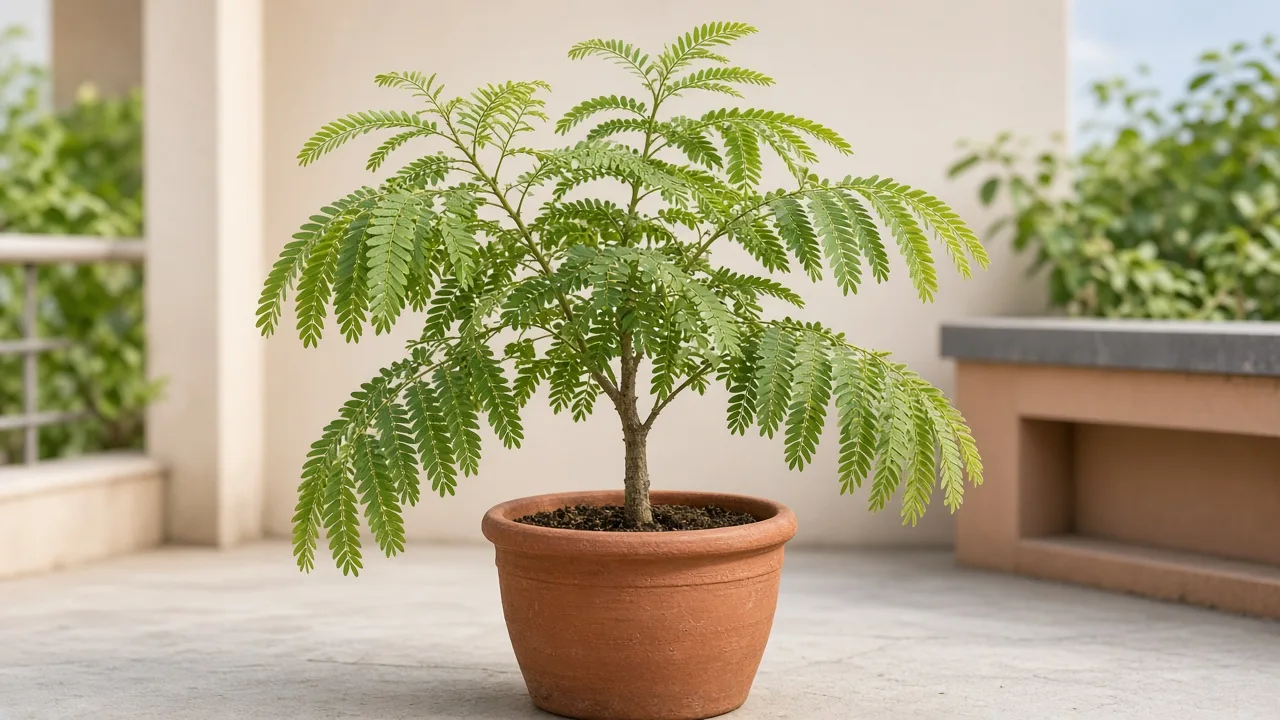
Healthy Amla carries fine pinnate leaves along slender green branchlets—dozens of tiny light-green leaflets per stem on a woody terrace tree. Wilting is the severe end of turgor loss: entire branchlet sprays hang limp and may not recover by morning.
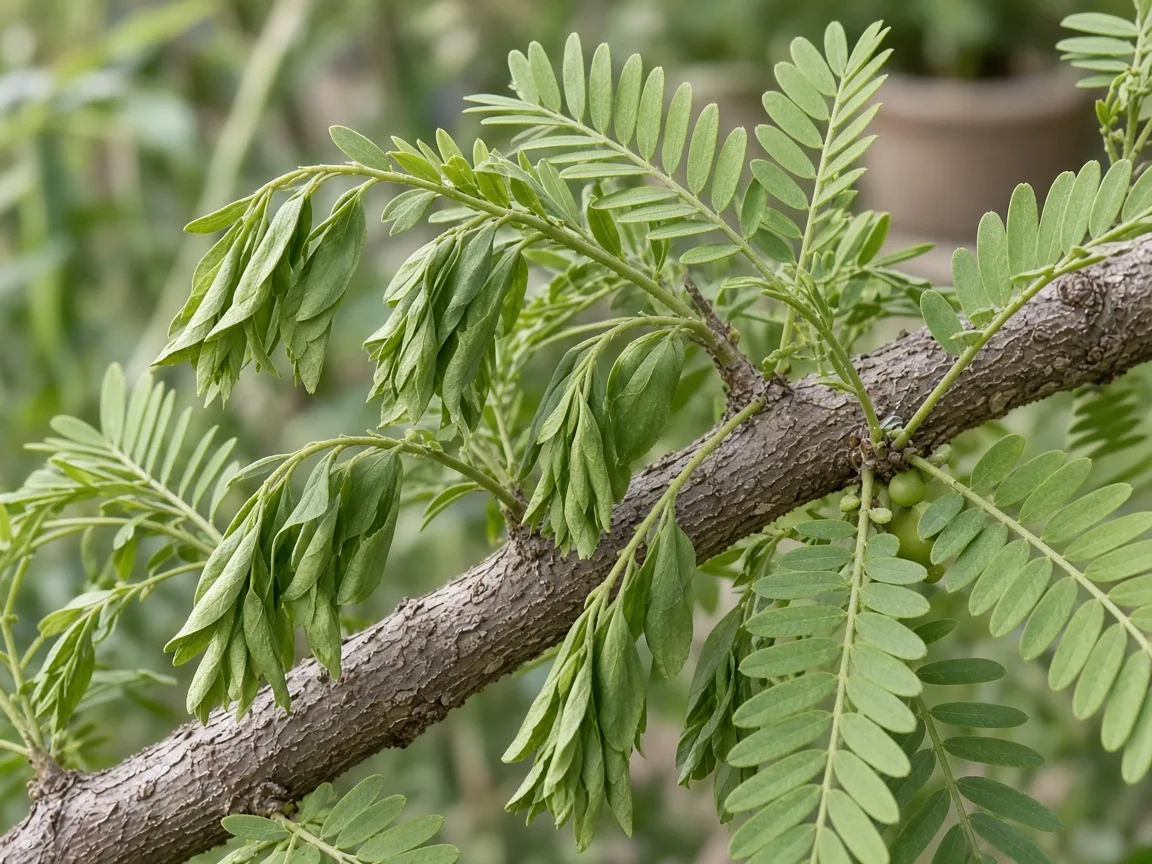
Collapsed feathery leaflets along an Amla branchlet—compare limp tips with any firm new flush lower on the same stem.
Typical wilt patterns:
- Sudden full-canopy collapse — Multiple branchlets lose stiffness from tip to base within one to two days while wood may still feel firm or begin softening at the soil line
- Wilting on a heavy wet pot — Mix clings at 3–5 cm, saucer holds water, new flush looks pale or stalled, and Missouri Botanical Garden describes wilting on wet soil when damaged roots cannot take up water
- Wilting on a very light pot in summer — Container dried fast under full terrace sun; overlaps underwatering during flowering or fruit set
- Dark water-soaked bark at the trunk base — Collar rot girdles the stem; Plants Info notes wilting despite adequate watering when root or collar tissue is mushy
- Pale limp canopy on a newly planted graft — Normal transplant stress for the first eight to ten weeks if roots were disturbed—not permission to fertilize through the collapse
Afternoon sag on outer branchlets that firms overnight is usually drooping leaves or heat wilt, not the emergency collapse this page covers.
Monsoon waterlogging and collar rot: terrace patterns only amla faces
Amla is drought tolerant once established in open ground—but a 30–40 cm balcony pot or black cotton soil bed can swing from bone-dry to saturated within one rainy week. That mismatch causes most “I watered it but it still wilted” panic on home trees.
Waterlogging in heavy clay. Plants Info warns that amla roots cannot tolerate standing water for more than a few days in black cotton soil across Maharashtra, Madhya Pradesh, and Telangana. The first symptom is wilting, easily confused with drought because both look like limp leaflets—pot weight and depth at 3–5 cm separate them.
Collar rot at the soil line. Dark, water-soaked lesions where bark meets mix cause the trunk to soften and peel. In advanced cases the entire root collar rots and the tree wilts rapidly—often unrecoverable. Keep mulch off the trunk base and improve drainage in the soil mix before monsoon, not after collapse.
Paradoxical wilt on wet soil. Roots in anaerobic mix cannot move water upward even when the profile is saturated. Never deep-soak a heavy sour pot “because the plant looks thirsty.”
Summer drought wilt during flowering and fruit set
Field aonla irrigation is timed to wet and dry seasons—home terrace pots lack that soil volume buffer. During flowering and fruit development, several hot dry days without a deep soak can collapse the canopy on a tree that tolerates drought in the ground but not in a small container.
Signs it is drought, not rot:
- Pot lifts noticeably lighter than after a full drain cycle
- Mix is dry at 3–5 cm depth per the watering guide
- Wood at the soil line stays firm; no sour smell
- Outer sun-exposed branchlets wilt first; inner wood still green
Premature fruit drop during heat without watering tracks drought stress during fruit set—not a separate disease page.
Young graft transplant shock: when pale wilt is expected
Grafted amla saplings—the standard planting material for named cultivars—are sensitive to transplant stress for the first eight to ten weeks. Pale, papery leaflets and slow growth in that window are common after nursery pot disturbance.
Hold all fertilizer for the first month after transplanting; over-feeding burns young roots and extends wilt. Keep light steady in full sun, water when the top 3–5 cm dry, and do not repot again until new branchlet flush looks firm. If wilt worsens on wet sour mix, switch to root rot diagnosis—not more “recovery” watering.
The branchlet-collapse and pot-weight triage
On ferns you watch frond crowns. On amla you watch slender branchlets, pot weight, and the trunk base.
- Finger-test 3–5 cm depth — Dry plus light pot equals drought wilt; wet plus heavy pot equals root stress.
- Lift the container after a full drain cycle and compare to today—calendar watering lies during monsoon weeks.
- Press bark at the soil line — Soft, dark, peeling tissue means collar rot, not underwatering.
- Check new flush at branch tips — Firm emerging leaflets mean salvage is possible; uniform collapse on wet mix needs urgent dry-down.
- Map the season — Bare branchlets on firm wood in January–February are normal deciduous rest, not wilt.
How to confirm the cause
Work through checks in this order:
- Moisture at 3–5 cm depth and pot weight — separates drought collapse from waterlogged roots faster than leaf colour alone
- Trunk base inspection — dark water-soaked bark at the soil line points to collar rot
- Smell and texture of mix — sour anaerobic rot versus dusty dry surface over wet middle
- Light and placement — six or more hours of direct sun; weak shade-grown trees wilt from poor root vigor
- Recent transplant or repot — within eight to ten weeks, mild pale wilt may be shock if mix is neither bone-dry nor sour
- Fruit and flower timing — heat-wave wilt during fruit set without deep watering tracks drought per TNAU amla irrigation guidance
First fix for Amla
If the mix is wet and the pot is heavy: stop watering immediately. Move the container to the brightest airy spot on the terrace, tilt it to drain any saucer water, and confirm holes are open. Do not fertilize, repot, or prune on the same day—let the profile dry until the top 3–5 cm feel dry before the next soak.
If the mix is dry at 3–5 cm and the pot is light: deep-soak until water runs freely from drainage holes, then empty the saucer. Wait 24 hours and re-check depth before watering again.
Make one correction at a time so you can read the tree’s response.
Step-by-step recovery
After the first fix:
- Maintain dry-down rhythm — water only when the top 3–5 cm of well-draining loam are dry
- Improve drainage if monsoon rain refills closed planters — drill holes, raise pots on feet, never leave standing water
- Shelter young grafts from drying wind on exposed roof edges while roots re-establish
- Trim only fully dead leaflet tissue — collapsed tips on rot-damaged wood will not reopen
- Hold fertilizer until firm new branchlet flush emerges for two weeks
- Scout for pests on stressed shoots — aphids and spider mites exploit weak new growth in hot dry corners
If stems soften at the base despite dry-down, inspect roots per the root rot guide—salvage may require removing rotten tissue and repotting into fresh sharp mix.
Recovery timeline
- 24–72 hours: Drought wilt on a firm young tree often improves after one deep soak when depth was genuinely dry
- Overnight: Heat-related outer branchlet wilt on a correctly watered tree may firm by morning—see drooping leaves if sag is mild and reversible
- 2–4 weeks: New branchlet flush with clean leaflets confirms watering and drainage fixes are working after overwatered roots
- Beyond one season: Advanced collar rot with mushy trunk base is rarely recoverable—replace with a healthy graft on improved drainage
Judge success by firm new branchlets, not older bent leaflets reopening perfectly.
Lookalike symptoms
| What you see | More likely cause than generic wilt |
|---|---|
| Limp branchlets that firm overnight | Heat wilt or mild droop — drooping leaves |
| Yellowing waves on wet heavy pots | Overwatering before full collapse |
| Crisp dry tips, very light pot | Underwatering |
| Bare wood in late winter, firm branchlets | Normal deciduous rest |
| Dark peeling bark at soil line | Collar rot — drainage emergency |
| Stippling on tender shoots in dry heat | Spider mites weakening turgor |
Wilt vs. drooping: Drooping is slower branchlet sag; wilting is rapid canopy collapse that may not recover by morning. Start on drooping leaves if only outer tips hang in afternoon heat.
What not to do
- Do not water a heavy wet pot because leaflets look limp—anaerobic roots need air first.
- Do not mist feathery foliage instead of fixing root-zone moisture.
- Do not fertilize a collapsed tree to “wake it up”—salts worsen stressed roots.
- Do not pile mulch against the trunk — collar rot thrives at the soil line on waterlogged terraces.
- Do not treat January–February bare wood as drought and soak dormant roots weekly.
- Do not keep amla in shade because wilting looked like “too much sun”—weak roots fail faster in dim rooms.
How to prevent wilting next time
- Water when the top 3–5 cm are dry per the watering guide.
- Use well-draining sandy loam with open holes per the soil guide.
- Keep six or more hours of direct sun on a terrace per the light guide.
- Empty saucers after every soak; never leave pots in standing monsoon water.
- Improve bed drainage before planting in heavy clay—aonla field practice emphasizes avoiding waterlogging.
- Hold fertilizer for the first month after transplanting young grafts.
- Scout the problems hub at the first off-season yellowing before full collapse.
Related Amla guides
- Amla overview — Sun placement, deciduous rhythm, and fruit-tree baseline.
- Problems hub — All amla issue pages in one place.
- Drooping leaves — When branchlets sag but the canopy has not fully collapsed.
- Root rot — Soft stems, sour mix, and mushy roots.
- Watering — Finger-test depth and seasonal reduction.
Use the Plant Watering Calculator to narrow causes for wilting on this plant before changing multiple variables at once.