Spider Mites on Amla: Feathery Leaflet Checks & Fixes
Quick answer
Spider mites on Amla show up as pale stippling and fine silk webbing between feathery leaflets—usually on the newest branchlet tips in hot dry terrace air after monsoon. First step: shake a damaged leaflet cluster over white paper and rinse branchlet undersides with a strong lukewarm stream before spraying anything.
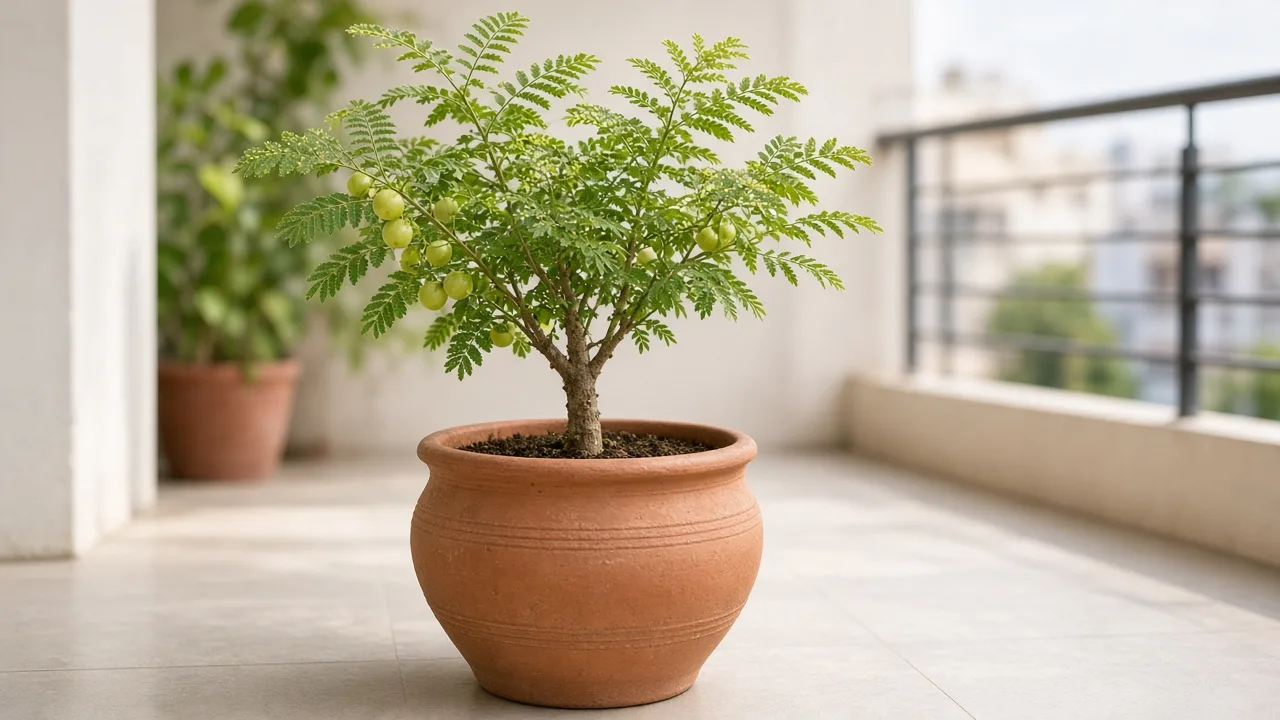
Spider Mites on Amla: Causes, Checks & Fixes
This guide covers spider mites on Amla. See also the general Spider Mites guide, watering, and light pages for this plant.
Spider Mites on Amla: Causes, Checks & Fixes
Quick answer
Spider mites on Amla (Phyllanthus emblica, Indian gooseberry) almost always show up as pale stippling and fine silk webbing on the feathery compound leaves at branchlet tips—the tiny leaflets that look soft and fresh during warm-season flush. Unlike broad-leaved houseplants, the damage is easy to miss from across a terrace until individual leaflets turn yellowish or bronze and fine webbing appears between the narrow blades.
For how spider mites reproduce, why dry air favors them, and when water knockdown works in general, see our spider mites pest guide. On Amla, the practical pattern is post-monsoon dry heat on sunny terraces (September–October), stippling concentrated on the newest feathery flush, and extra confusion because feathery foliage hides colonies until you magnify leaflet undersides or shake a cluster over white paper.
First step: isolate the pot from other fruit trees if needed, then rinse the undersides of the newest feathery branchlet clusters with a strong lukewarm stream—covering every leaflet axis—before reaching for oils or miticides.
When to use this page vs other Amla guides
| Pattern | Read next |
|---|---|
| Soft pear-shaped insects with sticky honeydew on branchlet tips | Aphids |
| White cottony tufts in shoot axils | Mealybugs |
| Cupped feathery leaves without stippling or webbing | Curling leaves |
| Serpentine pale tunnels inside individual leaflets | Leaf miners |
| Silver scarring without internal tunnels | Thrips |
| Crispy tips in dry indoor overwintering | Low humidity |
| Whole-branch wilt on a light dry pot | Underwatering |
What spider mites look like on Amla
Spider mites are tiny arachnids, not insects—adult females are less than 1/20 inch long that live in colonies on leaf undersides. On Amla they colonize the narrow leaflets within feathery branchlet clusters, where silk webbing is harder to spot than on a single large leaf blade.
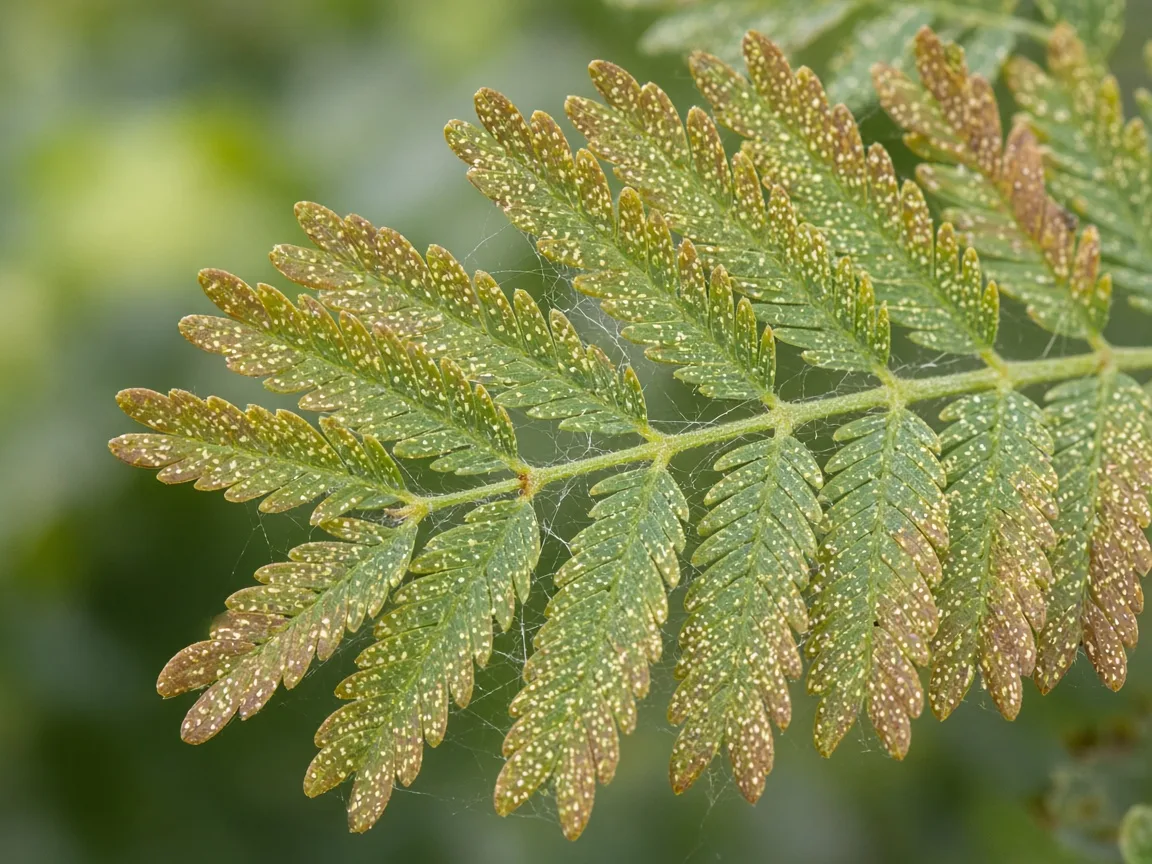
Pale yellow stippling on individual tiny leaflets with fine silk threads between blades—typical early spider mite damage on Indian gooseberry branchlet flush.
- Pale yellow or bronze stippling on individual leaflets — Feeding damage first appears as light dots scattered across feathery blades; heavy feeding bronzes whole branchlet tips
- Fine silk webbing between leaflets — Webbing distinguishes mites from aphids and thrips; dense webbing at high populations coats branchlet clusters
- Newest flush hit first — Mature lower branchlets can look firm and green while only the top feathery tips show damage
- No sticky honeydew — Unlike aphids, mites do not leave glossy residue on shoots (though drought-stressed leaflets may feel papery)
- Moving dust specks on white paper — Shake a damaged leaflet cluster onto paper; mites scurry when disturbed
- Dry-heat timing — Flare-ups often follow hot dry terrace spells when mites feed more actively and natural enemies struggle
Healthy Amla branchlets carry fine feathery compound leaves along slender woody stems in full sun. A few pale dots on one sunny side during a dry week are common on vigorous terrace trees—worry when stippling spreads branchlet to branchlet within days.
Where mites hide on feathery branchlet foliage
Amla’s feathery leaves are not one blade—they are dozens of tiny linear leaflets along each branchlet axis. Spider mites tuck into the junctions where leaflets meet the rachis and along the midrib on undersides. From across a terrace you see a slightly dull branchlet tip; only when you fold a cluster back do the stippling and silk threads become obvious.
This growth form matters for treatment. A quick overhead mist misses the undersides of half the leaflets. You need to aim the rinse along each feathery axis and work branchlet by branchlet on container trees. On larger terrace specimens, prioritize the sunniest quarter of the canopy where dry conditions favor outbreaks.
Post-monsoon terrace dry spells
Amla is a subtropical fruit tree that prefers dry climate and tolerates drought once established—but that same terrace culture creates mite weather. After monsoon rains end, September and October often bring hot reflected wall heat, fast-drying pots, and low humidity beside sunny railings. Mites that were barely visible during humid monsoon growth can explode on soft new branchlet flush.
If stippling appears right after you eased off watering in cool evenings, cross-check underwatering—but when webbing is present and the pot is not bone-dry, treat mites first. Chronic drought alone rarely produces silk between leaflets.
Why Amla gets spider mites
Hot dry micro-climates on terraces. Dry weather greatly favors spider mites because lower humidity helps them shed excess water, while many predators need more humid conditions. Amla pots beside south-facing walls, concrete, or metal railings bake faster than the ambient forecast suggests.
Drought-stressed foliage. Plants stressed by drought can become more nutritious to mites. Skipping deep soaks during a heat wave while the top 3–5 cm dries out leaves feathery tips vulnerable—pair mite treatment with corrected watering rhythm, not extra fertilizer.
Dusty feathery leaves. Terrace wind coats fine leaflets with dust that interferes with predatory mites. A periodic rinse during dry months helps prevention as much as crisis treatment.
Broad-spectrum insecticides. Sprays aimed at aphids or caterpillars can wipe out lady beetles, predatory mites, and other allies—setting up mite rebounds on the next warm dry spell.
How to confirm the cause
Work through these checks in order before spraying oils on a sunny afternoon:
- White-paper shake test — Snip or hold a stippled feathery cluster over white paper and tap firmly. Mites move rapidly when disturbed; if nothing moves, reconsider thrips or old sun scorch.
- Webbing location — Fine silk between leaflets points to mites. Loose bark webbing with wood dust at the stem base suggests caterpillar galleries, not foliar mites.
- Sticky vs dry damage — Glossy honeydew on shoot tips means aphids, not mites.
- Internal tunnels — Serpentine pale trails inside a leaflet mean leaf miners, not surface stippling.
- Pot weight and soil depth — A light pot with crispy margins everywhere may be drought; stippling with webbing on a moderately moist pot points to mites in dry air.
The first fix to try
Rinse branchlet undersides with a strong lukewarm stream, working feathery clusters one at a time until water runs clean from every leaflet axis. Forceful spraying often reduces mite numbers adequately on garden and small fruit trees when you get thorough coverage.
Do this in early morning or late evening—not in midday sun on a heat-stressed terrace tree. Let foliage dry before nightfall to avoid fungal issues on dense feathery tips.
Re-inspect with the shake test in three days. If mites persist and stippling spreads, move to step two—not a bundled spray stack on day one.
Step-by-step recovery
Days 1–3: Rinse and isolate
- Move the pot away from other fruit trees if webbing is dense
- Rinse every feathery branchlet tip, prioritizing the sunniest side
- Improve steady moisture—water deeply when the top 3–5 cm dries, without leaving the pot soggy
Days 4–7: Escalate only if needed
If live mites remain after two thorough rinses:
- Apply insecticidal soap or horticultural oil labeled for mites, covering all leaflet undersides
- Test one branchlet first—oils can damage drought-stressed or heat-stressed tissue
- Never apply when the pot is wilting or afternoon sun is direct on wet oil
Week 2 onward: Scout and support predators
- Shake-test new flush weekly through the dry season
- Tolerate small colonies if stippling is cosmetic and predatory mites or lady beetles are visible
- Avoid repeat broad insecticides that aggravate mite outbreaks
Recovery timeline
Mild stippling on one branchlet often stabilizes within one to two weeks after two thorough rinses and corrected watering. Feathery leaflets that already bronzed stay marked—judge recovery by clean new branchlet tips on the next flush, not by older speckled blades.
Severe webbing across the canopy may need three to four weeks and two careful soap or oil cycles spaced seven to ten days apart. Flower buds that shriveled during heavy feeding rarely reflower on the same branchlet; wait for the next seasonal flush.
Lookalike symptoms
| What you see | Likely cause | Next step |
|---|---|---|
| Stippling + fine webbing on feathery tips | Spider mites | This page — shake test |
| Sticky shoots + soft insects | Aphids | Aphids |
| White cotton in axils | Mealybugs | Mealybugs |
| Serpentine tunnel inside leaflet | Leaf miners | Leaf miners |
| Cup without stippling | Curl from drought or aphids | Curling leaves |
| Crispy tips, no webbing, very dry pot | Drought | Underwatering |
Mistakes to avoid
Do not blast feathery foliage with cold water at noon on a baking terrace—leaflet scorch can mimic mite damage.
Do not apply horticultural oil when the tree is wilting or soil is bone-dry. Fix watering first.
Do not confuse bark caterpillar webbing with foliar mite silk—stem galleries need caterpillar handling, not repeated leaf rinses.
Do not fertilize during an active infestation. Soft nitrogen-rich shoots feed the next mite generation.
Do not assume one rinse is enough. Mite eggs in webbing hatch on a staggered schedule—follow-up scouting matters more than the first knockdown.
How to prevent spider mites next time
Scout new branchlet flush weekly from September through October when terrace air turns hot and dry after monsoon.
Keep Amla in full sun with airy sandy loam mix and deep soaks when the top 3–5 cm dries—avoid chronic drought stress on young grafts.
Rinse dusty feathery leaves after long dry spells; periodic hosing removes mites and dust that blocks predators.
Preserve beneficial insects when possible. Skip broad-spectrum sprays for minor aphid colonies if predators are already working.
If you overwinter a container tree indoors, pull it away from heating vents and inspect feathery tips weekly—indoor dry air overlaps with low humidity stress and mite flare-ups.
When to worry
Small stippling on one sunny branchlet during a dry week is common on established terrace Amla and rarely threatens a firm tree if you rinse early. Escalate when dense webbing coats multiple tips, stippling spreads branchlet to branchlet within days, or flower buds fail across the canopy during post-monsoon heat.
Act urgently if branchlets wilt, lower leaves yellow in waves, and mix stays wet for weeks—switch to root rot or wilting diagnosis rather than repeating foliar sprays alone.
Related Amla guides
- Overview — Indian gooseberry culture and fruiting basics
- Watering — steady moisture without waterlogging during mite treatment
- Light — full sun placement vs reflected heat traps
- Aphids — sticky honeydew on branchlet flush
- Low humidity — dry indoor overwintering overlap
- Distorted leaves — twist without confirmed mites
- Problems hub — full symptom index
Conclusion
Spider mites on Amla are a feathery branchlet-tip problem in hot dry terrace air—not a mysterious whole-tree collapse. Magnify the softest shoot clusters, shake-test over white paper, and rinse every leaflet axis before oils. Firm woody stems and clean new branchlets on the next flush are the recovery signal; old stippled leaflets can stay imperfect without harming a slow fruit tree.
Related tool
Use the Pest Identifier Tool to narrow causes for spider mites on this plant before changing multiple variables at once.