Curling Leaves on Amla: Feathery Flush Checks & Fixes
Quick answer
Curling on Amla usually hits the softest new branchlet tips—feathery leaf clusters cup inward from aphids, drought on a light terrace pot, soggy roots, or hot reflected wall heat. First step: inspect the newest curled branchlet tips and leaf undersides with a hand lens before you water, spray, or repot.
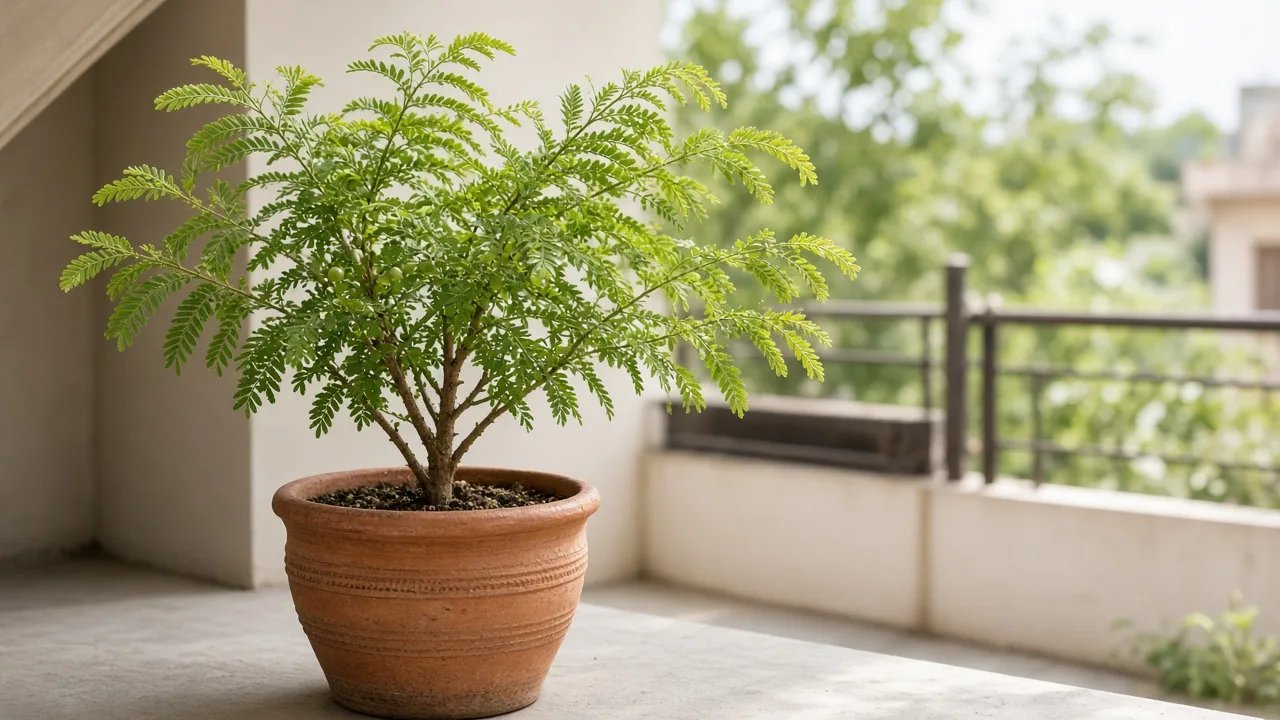
Curling Leaves on Amla: Causes, Checks & Fixes
This guide covers curling leaves on Amla. See also the general Curling Leaves guide, watering, and light pages for this plant.
Curling Leaves on Amla: Causes, Checks & Fixes
Quick answer
Curling leaves on Amla (Phyllanthus emblica, Indian gooseberry) almost always show up on the softest new branchlet tips—the feathery compound leaf clusters that push after monsoon rain or a deep summer soak. Each tiny leaflet may cup inward, roll lengthwise, or pucker while the woody stem below still feels firm. That pattern is different from whole-branch wilt or normal seasonal leaf drop on this deciduous fruit tree.
For how leaf curl works across plants in general, see our curling leaves guide. On Amla, the practical split is new-flush curl with sticky branchlet tips (often aphids during July–September growth) versus older-branchlet cup on a light, dry terrace pot (drought) or limp curl with yellow lower leaves on heavy wet mix (failing roots).
First step: inspect the newest curled branchlet tips and leaf undersides with a hand lens before you water, spray, or repot—so you know whether you are treating sap feeders, dry roots, or soggy mix.
When to use this page vs other Amla guides
This page is the symptom-first entry when feathery leaves cup or roll but you have not confirmed the cause yet.
| Pattern | Read next |
|---|---|
| Soft insects + sticky honeydew on branchlet tips | Aphids |
| Fine webbing and stippling in dry terrace heat | Spider mites |
| Twist and puckering without confirmed pests | Distorted leaves |
| Whole branchlets limp, pot heavy and wet | Overwatering or root rot |
| Crisp cup on older leaves, pot light and dry | Underwatering |
| Yellowing lower canopy, not just cupped tips | Yellow leaves |
| Collapse of stems despite wet soil | Wilting |
What curling leaves look like on Amla
Healthy Amla carries fine feathery compound leaves on slender woody branchlets—not broad flat houseplant blades. Stress curling changes that open feathery profile in recognizable ways:
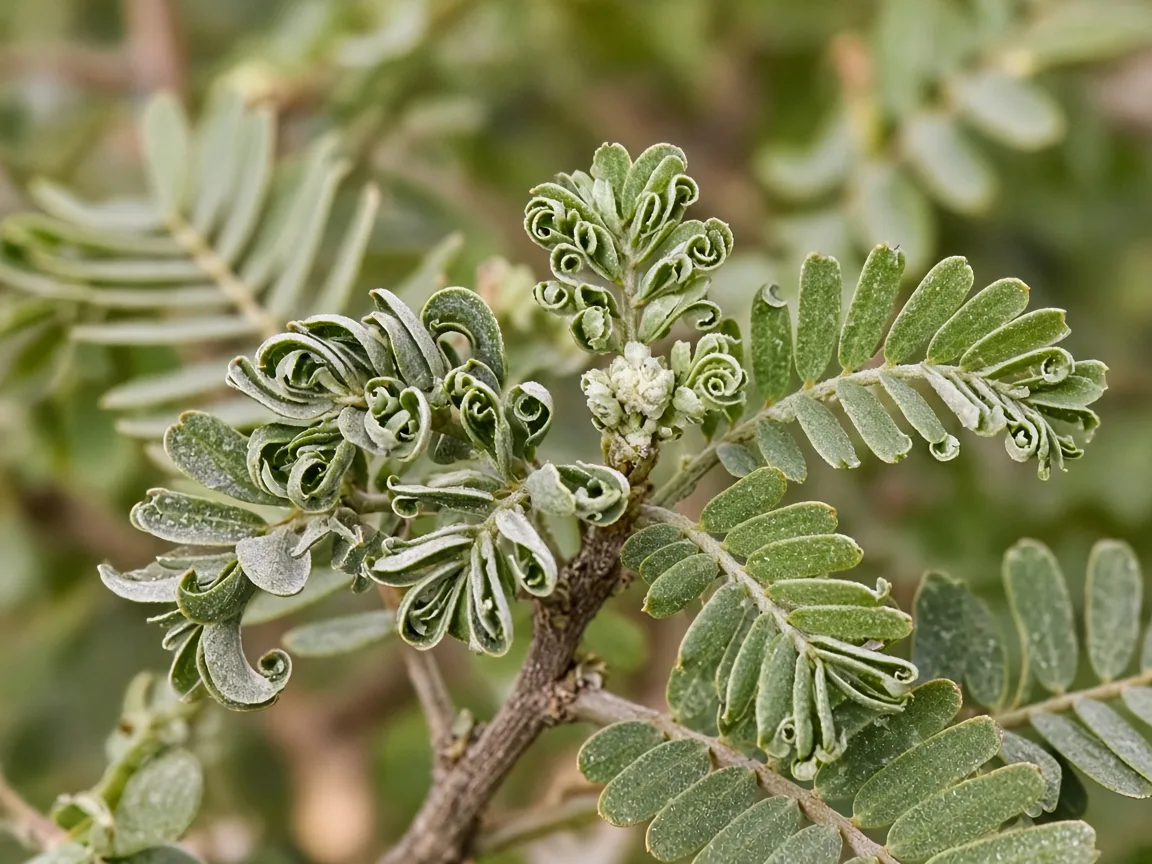
Cupped feathery leaflets on an emerging Amla branchlet—compare with flat mature foliage lower on the same tree.
- Inward cupping of tiny leaflets along the newest branchlet flush, sometimes rolling the whole feathery cluster into a tube
- Sticky, shiny young shoots with distorted leaflets—often paired with ants on the pot rim
- Dry, papery leaflet margins on cupped branchlets while the pot feels light and mix pulls from the sides
- Downward limp curl on older feathery sections with yellow lower leaves and mix that stays wet for more than a week
- One-sided curl on branchlets facing a hot west wall, metal railing, or dark pot that overheats in afternoon sun
- Fine stippling or webbing between feathery leaflets in dry terrace air—harder to spot than on broad-leaved plants
Because mature lower canopy can stay flat while only the top flush curls, do not assume the whole tree is healthy from a quick glance at older branchlets.
Feathery branchlet flush vs mature canopy curl
Amla pushes growth in short branchlet flushes after warm rain or deep watering—not one endless vine of new leaves. The tissue that curls is almost always on the innermost soft tips where leaflets are still expanding.
New-flush curl concentrates on those tender feathery clusters. Aonla aphids colonise young leaves and shoot tips, and feeding while tissue is soft produces yellowing, distortion, and curled leaflets. Lower woody branchlets with hardened foliage are less affected unless the whole tree is drought-stressed.
Whole-canopy curl on both new and older feathery sections usually points to root-zone or environmental stress—chronic wet mix, a missed watering cycle on a small pot in full sun, or heat reflected off terrace tiles. Cross-check watering rhythm and whether the pot dried in two days or stayed soggy for two weeks.
Monsoon aphid curl vs terrace drought cup
These two causes dominate terrace Amla during India’s warm season—and they need opposite first responses.
Monsoon / post-monsoon aphid curl builds from July and peaks around September as monsoon flush softens every branchlet tip. Schoutedenia emblica (the specialist Indian gooseberry aphid) feeds on undersides of young leaflets and flower buds. Affected leaves yellow, curl, and new shoots stunt while honeydew coats tissue and can support sooty mold. The pot may feel correctly moist—you do not fix this with more water. See aphids on Amla for rinse timing.
Terrace drought cup hits when a sunny south-facing pot goes light between soaks. Amla tolerates drought once established but container soil volume is tiny compared with orchard basins. Feathery leaves lose turgor and cup inward to cut exposed area—often on the oldest open branchlets first while the tip still tries to push soft growth. One deep soak after the top 3–5 cm are dry usually relaxes mild cup within 24–48 hours if roots are white and firm.
| Clue | Likely cause | Wrong move |
|---|---|---|
| Sticky branchlet tips, ants on saucer | Aphids | Extra nitrogen feed |
| Light pot, dry 5 cm, crisp leaflet edges | Drought | Horticultural oil in midday heat |
| Heavy pot, sour smell, yellow lower leaves | Wet roots | Another deep soak |
| Curl only on wall-facing side | Heat / reflected sun | Moving tree to deep shade |
Flowering and fruit-set stress on container Amla
Curl during flower bud formation deserves extra attention on potted trees you grow for harvest. Sap loss from aphids or drought on soft buds can reduce fruit set even when woody stems look fine.
If curled branchlet tips carry shrinking flower buds or dried bud scales during peak flush, treat the feeding site early—rinse aphids from bud clusters or restore even moisture before the bud drop spreads. Orchard Amla often pauses irrigation around flowering; container trees still need the profile to dry between soaks, but bone-dry mix through bud swell can cup leaves and abort buds on the same flush. Balance against the seasonal notes in the watering guide rather than guessing.
Why Amla gets curling leaves
Aphids and other sap feeders on new flush
Aphids pierce tender tissue and extract sap, distorting leaves while they are still developing. On Amla this shows on feathery branchlet tips and flower buds—not scattered random leaves. Plants Info notes aphids cluster on new shoots in dry winter months as well, causing leaf curl and stunted flush on young saplings. Heavy colonies overlap with distorted leaves when insects are the driver.
Underwatering on sunny terrace pots
Full-sun terrace culture dries small pots fast. When the top 3–5 cm go dry and the container feels light, open feathery leaves cup before woody branchlets wilt. This is common in pre-monsoon heat when growers assume monsoon rain will arrive soon. Pair with brown tips on leaflet margins when drought is chronic.
Overwatering and failing roots
Amla needs excellent drainage and fails in soggy mix. When roots suffocate, they stop absorbing water while feathery foliage still transpires in sun—the tree rolls leaflets to reduce moisture loss. Curl with wet mix and yellow lower leaves points to overwatering or advancing root rot, not thirst.
Heat, reflected sun, and low humidity
Terrace tiles, metal railings, and dark plastic pots radiate heat onto the side of the canopy they face. One-sided cup on afternoon-exposed branchlets is environmental, not disease. Dry air also increases transpiration faster than roots replace water on windy balconies—especially when monsoon humidity drops in September.
Spider mites in dry post-monsoon air
Mites thrive in hot dry conditions on many fruit plants; on Amla they cause stippling and fine webbing between feathery leaflets, with new tips staying twisted after watering fixes. Check spider mites when cup concentrates on newest growth in September–October dry spells.
How to confirm the cause
Work through these checks in order:
- Which branchlets curl? Tips only → aphids, mites, or normal flush stress. Older and new sections together → water or roots.
- Underside inspection — Clusters of soft insects or honeydew confirm aphids. Fine webbing suggests mites. Clean undersides with a light dry pot suggest drought.
- Pot weight and moisture — Probe 3–5 cm depth. Light and dry → soak candidate. Heavy and wet days later → hold water and smell the mix.
- Side pattern — One face of the tree cupped → heat placement. Even cup across active flush in July–September → scout pests first.
- New growth signal — Next branchlet opening flat after one correction means you found the cause. Continued twist on every flush with soggy mix → escalate to root inspection.
The first fix to try
Inspect the newest curled branchlet tips and leaf undersides on every affected shoot with a hand lens.
If you see aphids or sticky honeydew, rinse those branchlet tips with a strong stream of lukewarm water and re-check in three days—do not soak the whole pot “to help stress” on the same day. If undersides are clean and the top 3–5 cm are dry with a light pot, give one deep soak until water drains, then wait. If mix is wet and sour-smelling, skip water and improve drainage and light instead.
Only after that single targeted response should you add neem sprays, repotting, or fertilizer.
Step-by-step recovery
For confirmed aphid curl
- Rinse or gently wipe colonies off the softest feathery branchlet tips and bud clusters.
- Manage ants on terrace pot rims so lady beetles and lacewings can reach aphids.
- Prune only severely twisted tips if honeydew blocks spray coverage—then treat remaining colonies per aphids on Amla.
- Hold extra nitrogen until new flush is clean; review fertilizer timing after recovery.
For drought cup
- Soak until runoff, empty the saucer, and note how many days until the top 3–5 cm dry again.
- Mulch the surface lightly if sun bakes the mix—without burying the trunk collar.
- Move the pot off overheated tiles if one side cups repeatedly.
For wet-root curl
- Stop watering and move to maximum safe sun to speed drying.
- If mix stays anaerobic for weeks, unpot only to remove mushy roots and repot into chunky sandy loam per the soil guide.
- Do not fertilize until new branchlets push without yellowing waves.
Recovery timeline
Mild drought cup on open feathery leaves often relaxes within one to two days after a proper soak when roots are healthy. Aphid-distorted leaflet clusters on hardened branchlets rarely flatten fully—expect improvement on the next one or two flushes over several weeks, not overnight on old tissue. Root-stress curl can take one to two months of corrected watering before new branchlets stay flat; badly rotted trees may not recover.
Judge success by firm new feathery growth at the tips, stable pot weight between soaks, and stopped spread—not by older cupped leaflets turning perfect.
Lookalike symptoms
| What you see | Often mistaken for | How to tell apart |
|---|---|---|
| Seasonal yellow drop | Curl disease | Deciduous Amla sheds leaves in cool dry season; stems stay firm, no cupped flush |
| Rust orange pustules | Aphid curl | Black spots and rust show fungal patterns on undersides, not honeydew |
| Chewed branchlet tips | Curl from pests | Caterpillars leave frass and tunnels in woody bark |
| Leggy sparse growth in shade | Nutrient curl | Not enough light — tiny soft shoots everywhere, not localized cup on sun-grown tips |
Mistakes to avoid
- Soaking a sticky aphid-infested tree because leaves “look thirsty”
- Spraying horticultural oil on drought-stressed foliage in midday terrace heat
- Heavy nitrogen feed during soft monsoon flush—invites more aphid-friendly tissue
- Repotting and pruning the same week curl appears—masks which fix worked
- Ignoring ants while rinsing aphids weekly—colonies return on the next flush
How to prevent curling leaves next time
Keep Amla on a sunny terrace with 6+ hours of direct light so branchlets harden quickly. Water when the top 3–5 cm are dry, never on a calendar alone. Scout new branchlet tips weekly from July through September when aphid populations peak. Neem oil sprays on a fortnightly schedule can suppress aphids and mealybugs on young trees if you prefer organic prevention.
Quarantine new nursery stock for two weeks, manage saucer ants, and improve monsoon drainage before roots sit anaerobic. Pair seasonal feeding with firm growth—not shade plus excess nitrogen.
When to worry
One cupped branchlet tip beside clean neighbors during warm flush is common and manageable. Escalate when every new tip stays twisted, honeydew coats multiple branchlet flushes, flower buds fail across the canopy, or woody stems soften while mix stays wet.
Act urgently if curl spreads with fine webbing in dry heat, branchlets wilt despite wet soil, or lower leaves yellow in waves—switch to root rot or wilting diagnosis rather than repeating foliar sprays.
Related Amla guides
- Overview — Indian gooseberry culture and fruiting basics
- Watering — dry-down depth and monsoon rhythm
- Light — full sun for firm branchlet growth
- Aphids — sticky branchlet-tip colonies
- Underwatering — light pot and crisp leaflet margins
- Problems hub — full symptom index
Conclusion
Curling leaves on Amla are a branchlet-tip and root-zone signal on a sun-loving fruit tree—not a mysterious whole-canopy collapse. Magnify the newest feathery flush, separate sticky pest curl from dry pot cup, and correct one variable at a time. Firm woody stems and flat new branchlets on the next flush are the recovery sign; older cupped leaflets can stay imperfect without harming a slow orchard tree in a pot.
Related tool
Use the Plant Problem Diagnosis Tool to narrow causes for curling leaves on this plant before changing multiple variables at once.