Caterpillars on Amla: Feathery Leaf Checks & Fixes
Quick answer
Caterpillars on Amla chew feathery compound leaflets, roll or mine individual leaflets, or bore bark on slender branchlets—often after monsoon flush, nursery hitchhikers, or open terrace nights. First step: inspect branchlet tips and rolled leaves at dusk with a flashlight, then hand-pick every larva into soapy water before treating foliage.
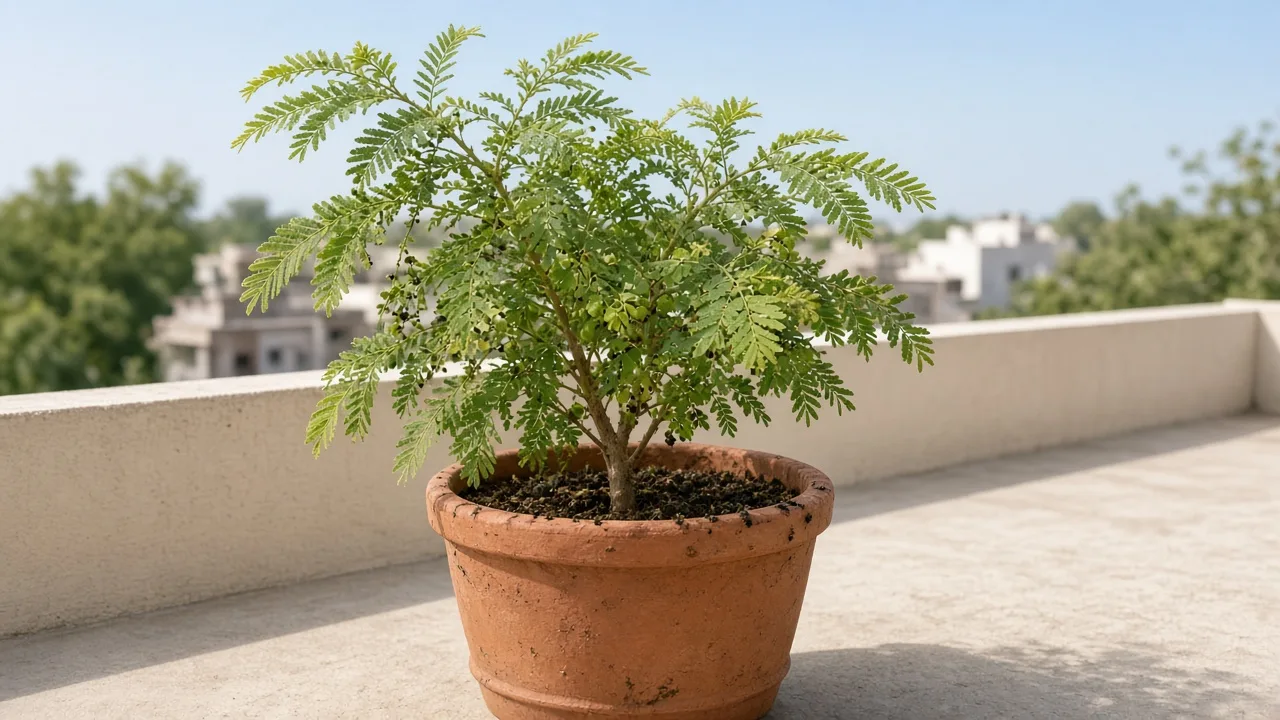
Caterpillars on Amla: Causes, Checks & Fixes
This guide covers caterpillars on Amla. See also the general Caterpillars guide, watering, and light pages for this plant.
Caterpillars on Amla: Causes, Checks & Fixes
Quick answer
Caterpillar damage on Phyllanthus emblica (Amla, Indian gooseberry) shows up as ragged chew and dark pellet frass on feathery branchlet leaves, rolled or mined individual leaflets with black excreta inside the fold, or silken bark galleries on trunk and branches—not the sticky honeydew of aphids or the fine stippling of spider mites.
Indian orchard records list several caterpillar pests on aonla, grouped as defoliators and borers alongside leaf rollers and fruit borers. The common terrace patterns are hairy caterpillar (Selepa celtis) chewing soft flush, leaf roller (Caloptilia acidula) mining feathery leaflets, and bark-eating caterpillar (Indarbela tetraonis) tunnelling slender wood on neglected or crowded pots.
For general caterpillar biology, frass signs, and when hand removal works first, see our caterpillars pest guide. On Amla, larvae often hide inside rolled feathery leaf clusters and along trunk bark under silk—not on broad single leaves like many houseplants.
First step: inspect branchlet tips and any rolled feathery leaflets at dusk with a flashlight, then hand-pick every visible larva into soapy water before spraying anything.
When to use this page vs other Amla guides
This page is the chewing-insect entry for larvae, frass, rolled leaflets, or bark galleries on feathery growth.
| Pattern | Read next |
|---|---|
| Ragged chew + frass pellets + visible larvae | This page |
| Rolled feathery leaflets with black excreta inside | This page (leaf roller section) |
| Silk galleries and bore holes on trunk or branches | This page (bark-eating section) |
| Clean tear, no frass, no larva after night check | Holes in leaves (mechanical) |
| Serpentine tunnels inside a leaflet, no through-holes | Leaf miners |
| Sticky honeydew on soft branchlet tips | Aphids |
| White cottony patches in shoot axils | Mealybugs |
| Tiny white insects that fly up when disturbed | Whiteflies |
| Entry holes in fruit with damaged seed inside | Fruit-borer escalation—inspect developing gooseberries same day |
What caterpillars look like on Amla
Caterpillar damage is easy to miss on Amla because feathery compound leaves look fine from across a terrace until you magnify individual leaflets on branchlet tips. When larvae are active, the signature is missing leaflet tissue with pellet frass—not the clean snap of a bumped pot or the stippling of sap feeders.
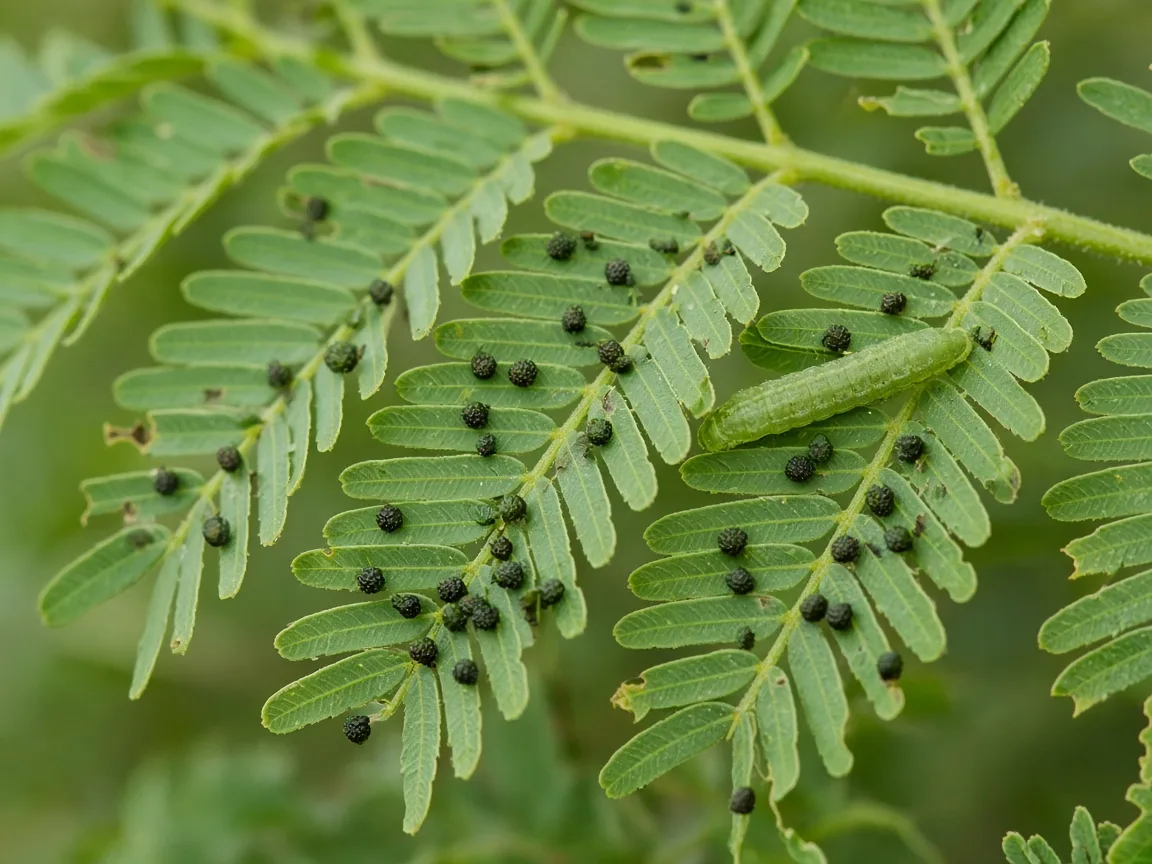
Irregular chew notches on feathery leaflets with dark pellet-like frass—compare with an intact leaflet cluster on the same branchlet.
Chewed feathery leaflets (hairy caterpillar and general defoliators):
- Irregular sections missing from soft new leaflets on branchlet flush
- Dark green or black barrel-shaped frass on leaflets, pot rim, or terrace tiles below
- Visible green, brown, or hairy larvae on outer leaflets—Selepa celtis is a major hairy caterpillar defoliator on aonla
- Ragged edges that look torn inward, not the straight crease of mechanical bending
Rolled or mined feathery leaflets (leaf roller):
- Slender larvae mine part or all of individual leaflets on compound feathery leaves
- Affected leaflets turn pale brown or dark brown; upper epidermis separates from lower with black excreta in between
- Severe attack twists leaflets into rolled cocoons—distinct from distorted leaves from sap suckers alone
- When you disturb the branchlet, larvae may drop from mines quickly—catch them on white paper below
Bark galleries on trunk and branches (bark-eating caterpillar):
- Irregular tunnels and silken webbing of excreta and chewed wood on shoots, branches, and trunk
- Loose irregular webbing and bore holes on main trunk and branches—uncommon on tiny pots but serious on established terrace trees
- Young shoots drying above a gallery; larvae often remain in bored holes by day and feed at night under silk
Unlike aphids, caterpillars do not produce sticky honeydew. Unlike leaf miners, caterpillar chew goes through the leaflet edge with frass outside—not a bordered internal tunnel visible when backlit alone.
Feathery leaflets: why rolled damage is an Amla-specific clue
Generic caterpillar pages talk about “leaves.” On Amla each branchlet carries many tiny leaflets in a feathery cluster—and the leaf roller Caloptilia acidula attacks individual leaflets within that cluster, not the whole branch.
Mine before roll. Early damage looks like one or two pale leaflets in an otherwise green feathery spray. The larva mines between epidermis layers, leaving black excreta lines visible when you backlight a suspect leaflet.
Roll as shelter. As feeding continues, folded portions skeletonize and dry up. On a potted tree, one rolled feathery cluster can hide a larva while neighboring branchlets look untouched—always unfold suspect clusters before assuming the tree is clean.
Drop test. Tap a rolled cluster over white paper. Pellets plus a greenish-yellow cylindrical larva confirm leaf roller—not curling leaves from drought alone.
This compound-leaf pattern would be nonsense on a rubber plant or snake plant page. On Amla it is the fastest way to catch Caloptilia before an entire branchlet flush skeletonizes.
Bark galleries on slender terrace trunks
The second Amla-only pattern is bark-eating caterpillar damage on woody stems—not just foliage chew.
Container Amla on sunny terraces develops a slender trunk and woody branchlets within a few seasons. Indarbela tetraonis and related species construct ribbon-like silk galleries with frass and wood chips downward from bore holes. On a young pot, even one gallery at a branch crotch can girdle a shoot.
What to look for:
- Shelter holes where shoots meet branches, especially on trees with crowded interior branchlets
- Fresh sawdust-like frass caught in silk below a hole—not mold on soil from overwatering
- Patchy bark loosening above a tunnel; affected shoots may dry while lower canopy stays green
Night inspection matters. These larvae emerge at night to feed on bark under silk protection. A daytime glance at feathery tops misses trunk-feeding colonies entirely.
For a small potted tree, probing visible bore holes with a wire and removing loose bark (as TNAU orchard practice recommends) may follow hand-picking—do not seal holes with wet soil on a tree you water deeply only when the top soil dries.
Where caterpillars hide on Amla branchlets
Amla grows as a deciduous fruit tree with feathery foliage on slender branchlets—not a broad houseplant leaf. Caterpillars follow the softest tissue and the best shelters on each growth flush.
Newest branchlet flush is the highest-value feeding site for defoliators. After monsoon rains or deep watering in warm weather, soft feathery clusters emerge from woody tips. Larvae tuck into the outermost leaflets where tissue is still expanding. Lift outer mature branchlets and inspect innermost tips with a magnifier.
Rolled feathery clusters hold leaf-roller larvae inside the fold. Pale green or brown larvae are easy to miss from above against bright terrace light. Unfold each suspect cluster and check the midrib groove.
Trunk and lower branch crotches shelter bark-eating caterpillars. On multi-branched potted trees, one gallery can sit on the wall-facing side where spray from across the terrace never reaches—inspect every face, not just the tallest shoot.
Soil line and pot rim catch frass from night feeders and larvae that drop on silken threads when disturbed—check saucers and terrace tiles below the pot, not only the canopy.
New nursery stock from open-air benches often arrives with eggs on branchlet tips or rolled leaflets. Quarantine Amla for two to three weeks on a sunny terrace and magnify new shoots before placing it beside mango or other fruit pots.
Why Amla gets caterpillars
Amla belongs on a sunny terrace or south-facing balcony with 6+ hours of direct sun, but warm-season flush creates predictable caterpillar habitat even on well-grown trees.
Monsoon and post-monsoon new growth. Fresh branchlet flush after rains gives defoliators and leaf rollers soft tissue. Major aonla caterpillar pests are documented as defoliators and borers that build when orchard intensity increases—container trees on terraces follow the same seasonal rhythm.
Hitchhikers from nursery stock and neighboring fruit pots. Caterpillars commonly enter collections on grafted trees or after summer outdoors. They are not a sign you failed at watering—but wet crowns plus unchecked rolled leaves are worse than either alone.
Open terrace nights. A moth flying in during warm months can lay eggs on upright feathery foliage it reaches—including Amla near an unscreened door.
Indoor warmth without predators. Caterpillars are far less common indoors than sap-sucking pests, but once eggs hatch on a terrace pot, there are few birds or parasitic wasps to slow a larva chewing through an entire branchlet flush.
Soft shoots after heavy nitrogen. Lush branchlets after extra fertilizer attract defoliators. If chew damage exploded right after feeding, hold extra nitrogen until larvae are gone.
Young container trees vs established specimens. A few notched leaflets on a firm established tree are often cosmetic. Young potted Amla with limited canopy can lose more growth to skeletonized branchlet flush or trunk galleries.
How to confirm the cause
Work through these checks before you spray:
- Edge test — Ragged chew with pellets means caterpillars. A clean snap with no frass means mechanical damage on the holes in leaves page.
- Unfold rolled leaflets — Black excreta between epidermis layers and a hidden larva confirm leaf roller. Internal bordered tunnels alone without frass pellets suggest leaf miners.
- Trunk scan — Silk galleries and bore holes on woody stems point to bark-eating caterpillar—not scale insects stuck to bark.
- Night inspection — Inspect branchlet tips and trunk galleries at dusk; foliage feeders and bark larvae are easier to spot when actively feeding.
- Frass check — Hold a damaged feathery cluster over white paper and tap lightly. Pellets rolling off suggest caterpillars—not sticky honeydew from aphids.
- Flush priority — Examine the newest branchlet tips first; defoliators start on soft flush before moving up the canopy.
- Neighbor scan — Inspect other plants from the same nursery batch or terrace group on the same shelf.
- Recent history — Note monsoon flush, new purchases, open windows, or winter bring-ins in the past month.
If you find a larva with ragged chew, rolled leaflets, or a trunk gallery with frass, caterpillars are confirmed. If only sticky branchlet tips without chew appear, switch to the aphids guide.
First fix for Amla
Inspect branchlet tips and rolled feathery leaflets at dusk with a flashlight, then hand-pick every caterpillar into soapy water.
Work from the newest flush down each branchlet. Manual removal is the most effective first treatment when you can reach hidden rolls and trunk galleries sprays miss. Unfold rolled clusters gently and pick larvae from leaflet folds and bark holes you can access without gouging healthy wood.
Wear gloves when handling hairy larvae—some species irritate skin. On terrace pots, work over a white tray so dropped larvae do not escape into neighboring pots.
After hand-picking, shake feathery clusters over white paper to dislodge larvae you missed. Bag and discard heavily rolled or mined leaflet clusters rather than composting them on the terrace—collection and destruction of infested parts breaks the leaf-roller cycle.
This single physical pass knocks down the active colony and gives you a clean baseline before any spray. Do not stack Bt application, hard pruning, and repotting on the same day.
Step-by-step recovery
After the initial hand-pick, follow severity:
Days 1–7: Physical control (a few chewed leaflets on one branchlet)
- Repeat dusk inspections every two to three days; catch newly hatched larvae before they reach the next flush
- Remove only feathery clusters more than half skeletonized once insects are gone
- Rinse accessible branchlet tips with a strong lukewarm stream to dislodge small larvae—avoid soaking the pot or leaving the crown wet overnight on a tree that needs well-draining soil
Days 7–21: Targeted sprays if chew marks spread (moderate infestation)
- Apply Bacillus thuringiensis kurstaki (Bt-k) labeled for caterpillars on reachable feathery foliage; Bt must be eaten and works best on younger larvae
- Spray at dusk when larvae feed on leaflets; repeat on label intervals through at least two hatch cycles
- Biological control with Bt has shown promising results against bark-eating caterpillars and leaf rollers on aonla—coat rolled clusters and trunk galleries you can reach without runoff into saucers
Heavy infestation (multiple larvae, frass across several branchlets, or trunk galleries)
- Trim and bag skeletonized branchlet sections too damaged to recover
- Treat every plant on the same terrace batch, not just the worst-looking tree
- For accessible bore holes on woody stems, remove loose damaged bark and kill larvae with a wire probe—then monitor for fresh silk
- Hold fertilizer until new branchlet flush emerges without fresh chew marks
Recovery timeline
Judge recovery on clean new feathery branchlets and frass-free shoots, not old notched leaflets:
- 3–7 days after first hand-pick: No fresh frass on tip leaflets; dusk inspection finds zero larvae
- 2–4 weeks: New branchlet flush opens without chew or rolls—normal pace for Amla in full sun
- One season on established pots: Several clean flushes confirm the population is broken; continue monthly spot checks after monsoon
Chewed feathery leaflets do not heal—the tiny leaflets stay marked or drop on their own. Success means clean new foliage along firm woody branchlets, not a cosmetic reset of every old notch on a multi-branched terrace tree.
Lookalike symptoms
| What you see | Likely cause | Key difference on Amla |
|---|---|---|
| Ragged chew + frass + visible larva | Caterpillars (this page) | Dusk inspection reveals larvae in rolled feathery clusters |
| Rolled leaflets with black excreta inside | Leaf roller (this page) | Unfold cluster; larva inside—not aphid honeydew outside |
| Silk gallery + bore hole on trunk | Bark-eating caterpillar (this page) | Woody stem damage—not leaflet chew alone |
| Clean straight tear, no frass | Mechanical damage | Holes in leaves — no larvae, no spread |
| Bordered pale tunnel inside one leaflet | Leaf miners | Tunnel visible when backlit; no pellet frass pile |
| Sticky soft branchlet tips | Aphids | Pear-shaped insects; honeydew shine |
| White cottony clusters | Mealybugs | Wax tufts, not chewing holes |
| Yellow lower leaves, wet mix | Overwatering | Mushy roots—not ragged chew with pellets |
Mistakes to avoid
- Treating mechanical snaps as caterpillars. Clean straight breaks with no frass mean holes in leaves routing—not pesticide.
- Inspecting only the tallest shoot by day. Rolled leaflets and bark galleries hide larvae that feed at night—plan repeated dusk passes.
- Assuming feathery trees are pest-proof. Aphids and mealybugs are common; caterpillars still arrive on nursery stock and monsoon flush.
- Confusing leaf miners with leaf rollers. Miners leave internal tunnels; rollers fold whole leaflets with excreta in the fold—both occur on compound feathery leaves but need different reach for hand-picking.
- Spraying Bt during the day. Bt must be eaten; apply at dusk when larvae feed on branchlet leaflets.
- Increasing watering because leaves look damaged. Amla fails in soggy mix—follow the watering guide dry-down rhythm instead.
- Composting rolled clusters on the terrace. Larvae survive in rolled feathery leaflets—bag and discard infested clusters.
Prevention
- Quarantine new grafted trees two to three weeks before placing them beside established terrace pots
- Scout branchlet flush weekly during monsoon and post-monsoon warmth when defoliators and leaf rollers are major aonla pests
- Screen terrace doors and windows that stay open at night during moth season
- Remove rolled or mined feathery clusters early—clean cultivation and destroying infested parts breaks small outbreaks before sprays
- Give full sun and fast-draining soil so healthy new branchlets make any ragged chew obvious immediately
- Avoid pushing soft lush flush with heavy nitrogen before peak caterpillar season—review the fertilizer guide if chew followed feeding
When to worry
Escalate treatment when fresh chew marks appear daily despite hand-picking, when frass accumulates across several branchlet tips during warm months, or when trunk galleries spread on a young potted tree. Chronic feeding can skeletonize an entire monsoon flush even when woody stems stay firm.
A single larva on one branchlet after nursery purchase is not a lost cause—prompt hand removal usually resolves it. Reassess for overwatering or root rot if shoots dry with soft base and sour soil rather than clean chewed edges with frass. Developing fruit with entry holes and damaged seeds needs same-day inspection—fruit-boring caterpillars are a harvest concern, not a cosmetic leaf issue.
Conclusion
Caterpillars on Amla are a feathery-leaflet and bark-gallery problem on terrace fruit trees—ragged chew with pellet frass, rolled mined leaflets, or silken trunk tunnels mean inspect at dusk, hand-pick larvae, and tell chew damage from mechanical snaps or sap feeders before you spray. Judge recovery by clean new branchlet flush on firm wood, not perfect older feathery leaves on every branch.
Related Amla guides
Related tool
Use the Plant Problem Diagnosis Tool to narrow causes for caterpillars on this plant before changing multiple variables at once.