Holes in Leaves on Amla: Causes, Checks & Fixes
Quick answer
Holes in Amla leaves almost always mean something is chewing—most often leaf-rolling caterpillars on tender new branchlets during warm flushes. First step: unroll any silk-bound leaves at dawn, hand-pick larvae, and drop them into soapy water before spraying.
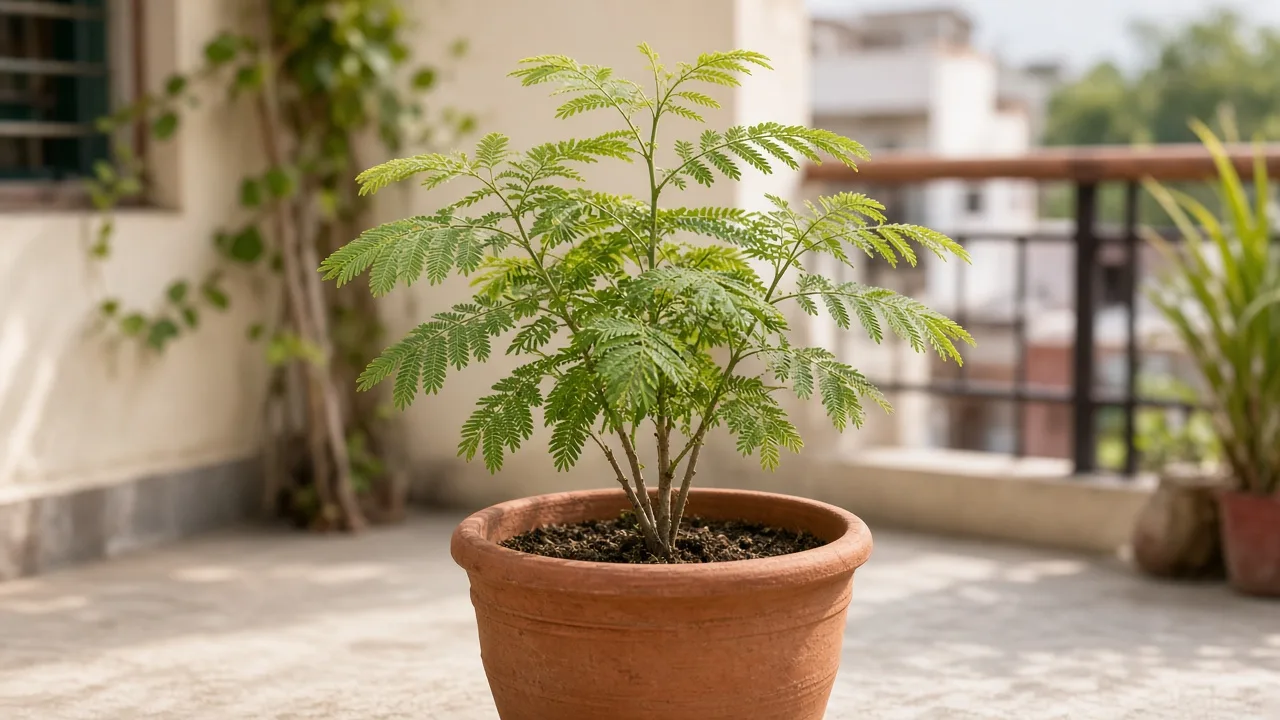
Holes in Leaves on Amla: Causes, Checks & Fixes
This guide covers holes in leaves on Amla. See also the general Holes in Leaves guide, watering, and light pages for this plant.
Holes in Leaves on Amla: Causes, Checks & Fixes
Quick answer
You noticed ragged holes through the small, feathery leaflets on your Indian gooseberry—not brown fungal spots, not yellow margins, but missing green tissue that looks chewed. On Phyllanthus emblica, that pattern almost always means an insect is eating from the leaf surface or from inside a silk-rolled shelter.
For how chewing damage works in general, see our holes in leaves guide. On Amla, the diagnostic clue is often a rolled or webbed leaflet on a thin branchlet—especially during warm spring and summer flushes when egg-laying moths target tender new growth on sunny terraces and balcony pots.
First step: inspect at dawn, gently unroll any silk-bound leaves, and hand-pick larvae into soapy water. Holes with frass pellets inside rolled leaflets confirm chewing insects—not underwatering when the pot still dries on schedule, and not root rot when branchlets stay firm and new tips are still pushing.
This page is symptom-first (holes). For full caterpillar ID, bark feeders, and spray timing, see the caterpillars on Amla guide.
What holes look like on Amla
Amla does not carry broad, flat houseplant leaves. Each branchlet bears many tiny, linear leaflets in a feathery compound pattern—so a caterpillar that eats one leaflet can make the whole tip look ragged even when only a few blades are holed.
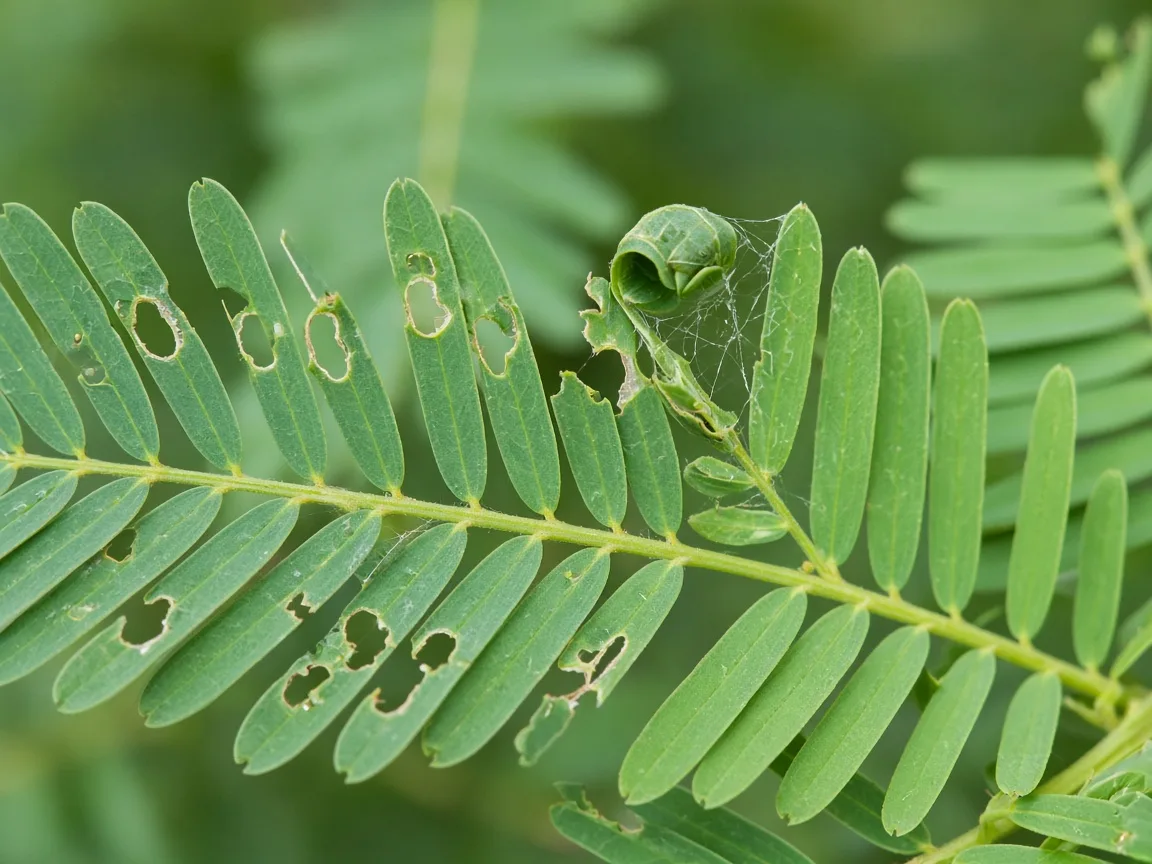
Holes in leaves on Amla — compare chewed leaflet edges with healthy tissue on the same branchlet.
| What you see | Likely cause | What to do first |
|---|---|---|
| Leaflets rolled longitudinally with silk threads, ragged edges | Leaf-rolling caterpillar (Caloptilia acidula, Tonica zizyphi) | Dawn hand-pick larvae; remove and destroy rolled leaves |
| Irregular holes through individual leaflets, no roll | Hairy caterpillar (Selepa celtis) or occasional beetle feeding | Search branchlet tips and undersides for larvae or frass |
| Pale winding trails that later tear open | Leaf miners (Phyllocnistis spp.) | Clip affected leaflets; see leaf-miner page for follow-up |
| Clean tears, same size for weeks, no frass | Mechanical scrape from pots, wind, or pets | Move the tree; no spray needed |
Leaf-roller damage on feathery branchlets
Indian gooseberry orchards across India report leaf rollers as a major chewing pest. On Amla, the signature is easy to miss because the leaves are small:
- Rolled shelters — caterpillars spin silk to fold leaflets into tubes where they feed protected from sun and predators.
- Ragged, enlarging holes along leaflet margins once larvae chew through from inside the roll.
- Frass pellets — dark droppings visible inside the roll or on branchlets below active feeding.
- New-flush targeting — damage clusters on the softest branchlet tips after a warm growth spurt, when the tree should be building canopy for future fruit.
Container Amla on a sunny terrace shows damage faster than a mature orchard tree: fewer total leaflets means each chewed blade looks dramatic, even when the infestation is still light.
Less common chewers and lookalikes
Bark-eating caterpillars (Indarbela tetraonis) gouge stems and young shoots with silken webbing—stem wounds matter more than leaflet holes. If you see drying shoot tips with wood dust at the base, inspect bark before blaming foliar caterpillars.
Aphids (Schoutedonia emblica) yellow and curl leaves but rarely punch clean holes through mature leaflets. Suspect aphids when sticky honeydew or distorted new growth appears without rolls or frass—see aphids on Amla.
Mechanical tears from shifting a heavy pot or monsoon hail leave clean edges without frass and do not spread leaflet to leaflet over several days.
Why Amla gets holes in leaves
Warm-flush vulnerability. Amla is a deciduous tropical fruit tree that leafs out heavily in spring and summer when temperatures sit in its comfort zone (roughly 20–35°C). Tender new branchlets are exactly where female moths lay eggs on leaflet undersides—often before you notice any holes.
Sun terrace placement. Home Amla belongs in full sun on a balcony or south-facing outdoor spot per the care hub. That exposure drives healthy fruiting, but outdoor trees also sit in the flight path of orchard moths and beetles that rarely trouble dim indoor collections.
Thin canopy on young pots. A seedling or grafted container tree may carry only one or two active flushes. A small leaf-roller colony can hole most visible leaflets in days, while the same pest pressure on a mature orchard tree looks like background nibbling.
Weedy understory and alternate hosts. Leaf rollers are not always Amla specialists between generations. Orchard sanitation—removing rolled fallen leaves and nearby weed hosts—matters on terrace setups where pots crowd against hedges or other fruit trees.
Stress does not cause holes—but it slows recovery. Chronic overwatering or deep shade weakens flushes after pest damage. Fix chewing first; adjust watering and light only if branchlets stay soft or new growth stalls after feeding stops.
Lookalike symptoms to rule out first
| What you see | Likely cause | How to tell apart |
|---|---|---|
| Rolled leaflets with frass and larvae inside | Leaf-rolling caterpillar | Holes enlarge over days; silk threads bind the roll |
| Tan-to-black spots with yellow halos, tissue still present | Fungal leaf disease | Spots, not missing tissue; see black spots on Amla |
| Yellowing entire branchlets, no chew marks | Aphids or nutrient stress | No frass rolls; check yellow leaves |
| Winding pale tunnels under the epidermis | Leaf miners | Serpentine trails before tears; see leaf miners |
| Crisp brown tips only | Drought or salt stress | Margins dry; no pellets or larvae |
If holes spread and you find frass or larvae inside rolled leaflets, chewing insects are confirmed regardless of soil moisture.
How to confirm the cause: step-by-step inspection
Work through this inspection in order on a sunny terrace or garden Amla:
- Start at the newest branchlet tips — leaf rollers target the softest flush first.
- Look for rolled or webbed leaflets held with fine silk; gently open suspect rolls at dawn when larvae feed actively.
- Check for frass pellets on leaflets, branchlets, or the pot rim below feeding sites.
- Scan lower branchlets and the soil surface for fallen rolled leaves that may harbour pupae.
- Feel branchlet firmness — supple green wood with firm bark confirms the tree is not in root failure; holes with firm branchlets almost always mean pests, not watering collapse.
- Watch for two days — holes that grow without visible insects may mean hidden rolls higher in the canopy or caterpillars on lower stems.
Confirmed leaf-roller damage shows all three: ragged enlarging holes, silk-bound rolls, and frass on or below affected leaflets.
Treat as urgent when a young container tree loses most of a flush within a week. Cosmetic holes on a few lower leaflets during peak warm-season activity can wait for a dawn picking session.
First fix: hand-picking rolled leaves and larvae
Unroll and remove at dawn. Manual removal of rolled leaves works well on terrace Amla where the canopy is small enough to reach every branchlet. Gently open silk-bound leaflets, drop caterpillars into soapy water, and collect rolled material in a bucket—do not drop it on the potting surface where larvae can pupate.
Destroy collected rolls by bagging and binning, not composting on the same terrace. Caterpillars are resilient; a rolled leaf on the soil can still complete development.
Make this one correction first. Do not repot, hard-prune, and spray on the same day—you need to see whether picking alone stopped new damage before escalating.
If hand-picking is not enough
When larvae are small and still feeding on exposed leaflet tissue, apply Bacillus thuringiensis (Bt) at dusk to actively chewed leaves. Bt must be eaten to work, so coat leaflet surfaces where feeding occurs; reapply every 5–7 days until you find no new frass. UC IPM notes that Bt is most effective on young larvae before they retreat deep inside rolls.
Avoid broad-spectrum insecticides on a backyard fruit tree unless a confirmed infestation persists after picking and Bt—those products can knock out parasitic wasps and lacewings that naturally suppress leaf rollers.
Recovery: what to expect after feeding stops
Holed leaflets are cosmetic—they will not fill in missing tissue. Once feeding stops, Amla typically pushes clean new branchlets within a few weeks during active summer growth in full sun with steady deep watering when the top soil dries.
Judge recovery by fresh feathery flushes at branch tips, not old chewed leaflets left on lower wood. Flowering and fruit set may pause briefly after heavy defoliation on a young grafted tree; resume balanced feeding only after new growth looks healthy—see the Amla fertilizer guide.
Seasonal deciduous leaf drop is normal on mature Amla; do not confuse autumn yellowing with pest holes. Off-season chewed defoliation on green summer growth is the pattern that needs action.
What not to do
Do not increase watering because leaves look damaged—chewing does not mean drought stress on a tree that dries on schedule.
Do not apply high-nitrogen fertilizer to a stripped young tree hoping for faster regrowth; feed only after new branchlets establish in warm weather.
Do not spray neem or horticultural oil as a blind first response on every hole. Oils can stress sun-exposed foliage, and the wrong timing wastes effort while caterpillars keep eating inside rolls.
Do not repot on day one. Holes with firm branchlets and good drainage are a foliar pest problem, not a root problem—unless the mix stays soggy; then check overwatering separately.
Prevention for next season
Prevention is weekly scouting during spring and summer flushes on terrace and balcony trees. Check new branchlet tips before rolls spread across the visible canopy—the gregarious early stage is easiest to control when larvae are small and clustered.
Keep Amla in full sun with sharp drainage per the soil guide so recovery flushes stay vigorous after minor feeding. Remove fallen rolled leaflets from the pot surface and nearby weeds that harbour alternate hosts between generations.
Quarantine new nursery stock for two weeks before placing it beside established Amla—egg clusters on tender understock leaves are easy to miss until holes appear on your older tree.
Align baseline care with the Amla care hub so pest setbacks do not compound with weak light or chronic wet roots.
When to get help
Leaf-roller outbreaks rarely kill a mature Amla outright when branchlets stay firm—even heavy summer defoliation on a established tree is usually survivable if feeding stops. Worry when a young grafted container tree loses flushes repeatedly and slow growth stalls despite good sun.
If branchlets soften or bark cracks with webbing at the base while you treat foliar holes, inspect for bark-eating caterpillars separately—stem damage needs different handling than leaflet picking.
For repeated annual defoliation in commercial orchard settings, contact your local agriculture university extension or Krishi Vigyan Kendra with photos of rolls, larvae, and branchlet damage. For home terrace trees, the caterpillars deep-dive covers life stages and escalation beyond hand-picking.
When to use this page vs other Amla guides
- Caterpillars on Amla — Use for full pest ID, bark feeders, Bt timing, and spray escalation after hand-picking fails.
- Leaf miners on Amla — Use when damage is serpentine tunnels under the leaflet surface, not ragged chew holes.
- Amla watering guide — Use for routine moisture checks before assuming holes are the main issue.
- Amla problems hub — Browse all common issues on this species.