Slow Growth on Amla: Branchlet Flushes & Fixes
Quick answer
Slow growth on amla is often normal for this naturally slow deciduous fruit tree—or winter rest on a firm terrace pot—not hunger that needs fertilizer. First step: in warm months, inspect the newest feathery branchlet tips for a fresh flush while the trunk stays firm, and confirm the tree gets open-sky sun before changing water, pot, or feed.
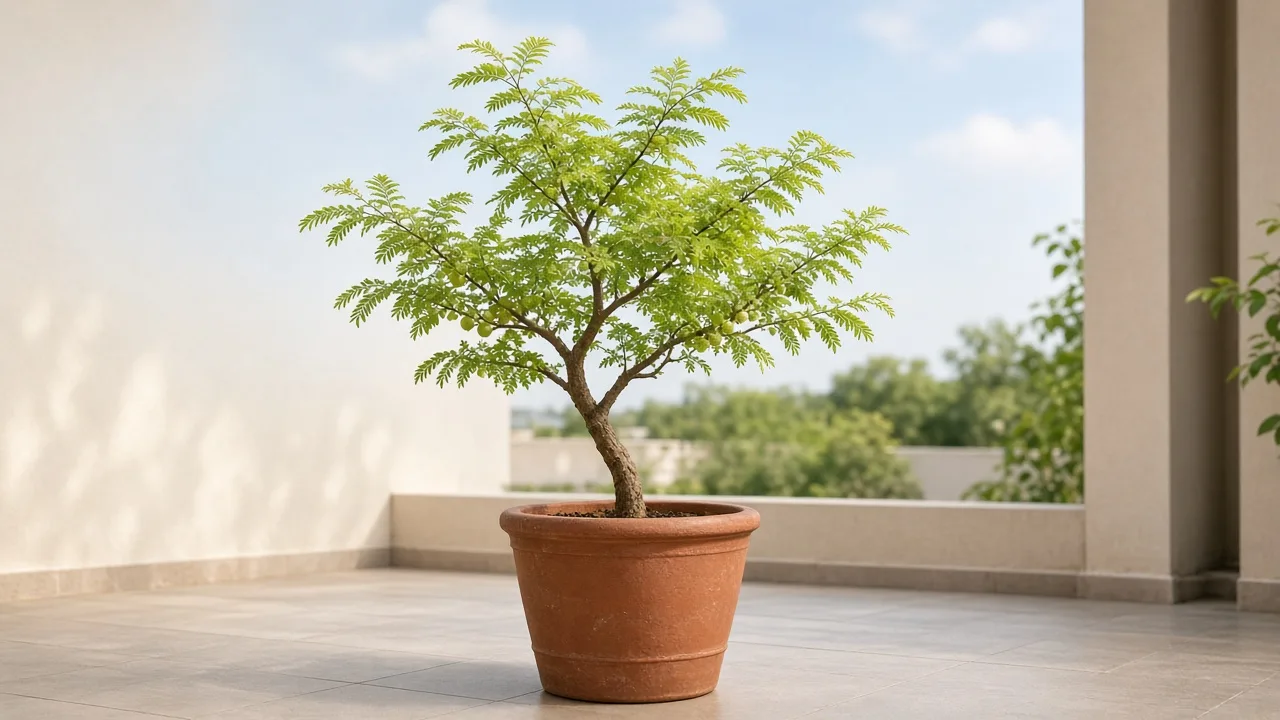
Slow Growth on Amla: Causes, Checks & Fixes
This guide covers slow growth on Amla. See also the general Slow Growth guide, watering, and light pages for this plant.
Slow Growth on Amla: Causes, Checks & Fixes
Quick answer
Slow growth on amla (Phyllanthus emblica, Indian gooseberry) is not always a problem. This is a slow-growing deciduous fruit tree that naturally builds height and canopy over seasons—not weeks like a pothos vine. Container growers often panic when a terrace pot looks unchanged month to month, yet the tree is simply resting through winter leaf drop or pacing like a young seedling.
For how chronic stagnation works across plants in general, see our slow growth hub. On amla, the decisive check is whether feathery branchlet tips pushed a fresh warm-season flush while the trunk stayed firm—not whether the whole canopy still looks green from across the balcony.
First step: during active warm months, inspect the newest branchlet tips on marked scaffold branches and confirm open-sky sun at the pot—before repotting, fertilizing, or assuming the tree is failing.
When to use this page vs other Amla guides
This page is the firm-but-quiet entry—little new branchlet length, no collapse—when you are unsure whether to wait or intervene.
| Pattern | Read next |
|---|---|
| Long bare branchlets leaning toward one wall | Leggy growth or not enough light |
| Washed-out feathery foliage without height gain | Pale leaves |
| Uniform yellowing with wet heavy pot | Overwatering or yellow leaves |
| Light dry pot, wilting branchlets in heat | Underwatering or wilting |
| Old leaves pale while new stay small | Nitrogen deficiency |
| Gall swellings on shoot tips in monsoon | Holes in leaves (caterpillar section) |
| Ready to shorten scaffolds after vigor returns | Pruning guide |
| Full problem index | Problems hub |
What slow growth looks like on Amla
Healthy amla in active growth extends slender branchlets carrying closely set feathery leaves along scaffolds on a firm crooked trunk. PFAF describes the species as slow-growing and deciduous—so some quiet periods are biology, not neglect. Problematic slow growth is about warm-season branchlet flushes stopping while the skeleton stays intact:
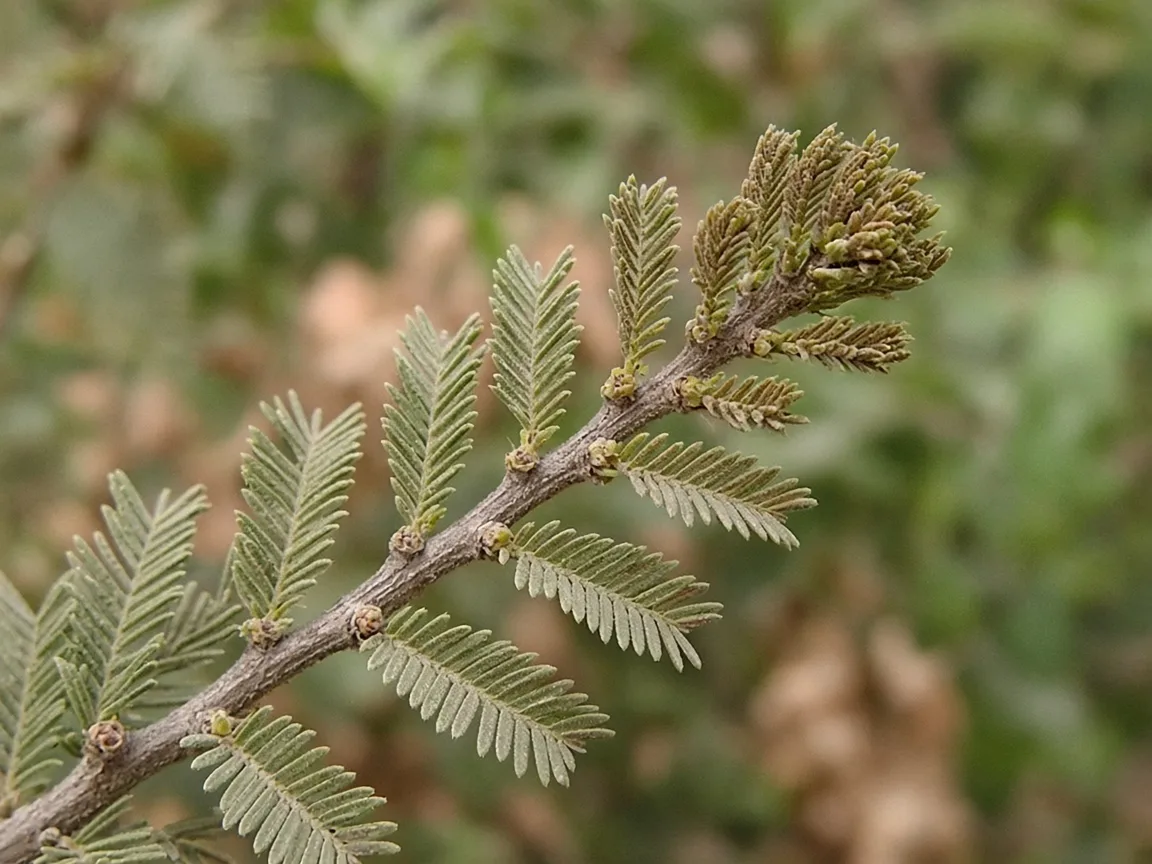
Stalled branchlet tips: firm wood and older feathery leaves along the branchlet, but no new flush at the growing point—compare with a warm-season scaffold that recently added a short cluster of bright green branchlets.
- No measurable branchlet extension on marked scaffolds for six to ten weeks through warm months
- Winter bare canopy on firm wood — seasonal leaf drop with no off-season yellowing wave
- Same pot silhouette month to month in monsoon heat despite regular watering and sun
- Seedling patience — healthy firm tree under three years old with only incremental height gain
- Grafted tree quiet past year three — no flowering wood when sun and water look adequate
- Pot dries unusually slowly — heavy mix days after watering while branchlet tips stay idle
This differs from leggy growth, where long naked branchlet gaps and terrace lean appear quickly, and from not enough light, where stretch and pale shoots develop even as the tree keeps reaching. Overwatering stalls warm-season flushes with yellowing leaves and a soft dull base on soggy mix—not a firm trunk on properly dried soil per the watering guide.
Branchlet flush clock vs winter leaf drop
Amla photosynthesizes through dense feathery branchlets on a fruit-tree scaffold, not through a single rosette crown. New warm-season vigor shows as short bright branchlet extension at scaffold tips—not as random foliage along old bare wood. Use that flush rhythm before assuming the tree is “lazy.”
| What you see on branchlet tips | Likely meaning | First adjustment |
|---|---|---|
| Bare firm scaffolds November–February; mix dry on winter schedule | Deciduous rest | Ease watering; wait for spring flush—do not feed |
| No flush June–August; terrace pot in deep shade | Light bottleneck | Move to full sun per light guide |
| No flush in heat; pot heavy days after watering | Wet root zone | Extend dry interval; check soil drainage |
| Incremental growth only; tree grown from seed under 6 years | Normal seedling pace | Confirm expectations—see graft timeline below |
| Swollen tip galls in rainy season; side shoots below | Gall caterpillar | Inspect apical tunnels—see pest cross-check |
| Flush resumes after repot pause | Transplant shock | Hold feed; keep sun steady |
Winter deciduous leaf drop on firm wood is different from a care stall: the canopy goes bare seasonally without ongoing scaffold lean or sour soil smell.
Seedling vs grafted timeline: a plant-only expectation check
Amla is marketed as a superfood terrace tree, but propagation method sets the growth clock. Indian orchard guidance is explicit:
- A budded or grafted tree starts bearing in the third year after planting, with full bearing in ten to twelve years under good management.
- A seedling tree may take six to eight years to fruit, and container seed-grown plants often need four to seven years before meaningful harvest.
If you bought a cheap seedling and measure progress like a grafted NA-7, slow visual growth is often correct species behavior, not a fixable deficiency. Grafted stock from a nursery should show warm-season branchlet flushes and flowering wood sooner—if it does not, move to care checks.
This fruit-tree timeline logic does not apply to snake plants or pothos—it is specific to Phyllanthus emblica orchard biology.
Why Amla grows slowly
Amla is a subtropical tree that prefers a dry climate and cannot grow in the shade. It thrives in open sun on well-drained loam—conditions terrace growers sometimes miss. Indoor stalls usually mean a bottleneck, not a species that is naturally sluggish in good light.
Amla-specific triggers:
- Natural slow-tree metabolism — PFAF rates growth as slow. Incremental branchlet extension on a firm trunk can be healthy pace, especially in the first few years.
- Winter deciduous rest — Cool dry months with bare firm scaffolds and reduced watering match normal dormancy. Growth resumes with spring warmth—not January fertilizer.
- Insufficient open-sky sun — Amla needs full sun or at most part-day shade. Dim balcony corners suppress warm-season flushes before obvious leggy stretch appears.
- Winter overwatering on a bare tree — watering on a summer calendar while the canopy is leafless keeps roots cool and damp, suppressing spring break without immediately rotting the trunk.
- Root-bound container — Young trees need repotting every one to two years when roots circle or the pot dries within a day in heat. A stalled canopy on good sun with exhausted mix is a common terrace pattern.
- Post-repot pause — disturbed roots after spring repotting can skip one flush even in summer. Firm trunks with appropriate dry-down often resume without feeding.
- Gall caterpillar apical check — TNAU notes young caterpillars bore apical shoots in rainy season, checking regrowth and forcing side shoots below the gall. Warm-season stall with swollen tips needs inspection, not more nitrogen.
- Mistimed fertilizer — Manuring follows pruning in orchard practice. Feeding a bare winter tree or a stressed wet-root plant pushes soft growth that does not solve the real bottleneck.
How to confirm the cause
Work through these checks in order:
- Season calendar — Is the canopy bare on firm wood during cool dry months? If yes, log rest—not emergency care.
- Light audit — At the pot on a clear warm day, does a hand cast a sharp shadow? Amla wants open terrace sun, not room glow.
- Branchlet gap comparison — Mark a scaffold in spring. Measure newest branchlet extension monthly through monsoon. Flat warm-season lines mean a bottleneck.
- Trunk squeeze at base — Firm and dry supports light-or-calendar diagnosis; soft on wet mix needs overwatering steps.
- Propagation label — Grafted vs seed-grown sets fruit and vigor expectations for the next five years.
- Pot dry-down speed — A container that stays heavy a week after watering in heat suggests drainage or watering mismatch.
- Apical tip scan in rainy months — Swollen tips or dieback with side shoots below suggest gall caterpillar, not simple hunger.
First fix for Amla
During warm active months, move the tree to the brightest available outdoor spot—or confirm it already gets open-sky sun for most of the day—then log branchlet flushes for four weeks before any other change.
That single focus addresses most warm-season stalls on a firm trunk:
- Shift gradually from a shaded corner toward open terrace, roof edge, or south- or west-facing balcony rail—details in the light guide.
- Match watering to season: deep soaks when the top 3–5 cm of mix is dry in growth months; ease off when the deciduous canopy is bare.
- Stop fertilizing until a fresh branchlet flush looks normal for two weeks in the brighter spot.
- Do not repot on day one unless roots circle hard or mix smells sour.
If sun was already strong and the pot dries fast but flushes stay flat, inspect roots at the drainage hole and compare to repotting signs before feeding.
Recovery timeline and mistakes to avoid
New feathery branchlet flushes often show in three to six weeks during warm growing weather after light and watering align. Grafted trees approaching bearing age may need a full warm season after correcting shade before flowering wood appears. Do not:
- Fertilize a bare winter tree or a firm dormant pot
- Repot and prune hard the same week you moved sun exposure
- Expect seedling fruit timelines on a young seed-grown terrace tree
- Judge recovery by old bare scaffold sections refilling—success is new tip flushes
- Ignore swollen apical galls in monsoon—trim and treat before stacking feed
Signs you are winning: brighter green on new branchlets, measurable scaffold extension, flowering wood on mature grafted stock, and symmetric growth after weekly pot rotation. Signs to escalate: soft base on soggy mix, off-season yellowing wave, or collapse despite bright light—root checks before more inputs.
How to prevent slow growth stalls next time
Match the overview routine: full sun, deep watering when the top soil dries, well-draining loam, and weekly terrace rotation. Scout branchlet tips monthly when monsoon humidity rises. Repot young plants before roots bind the pot hard. Choose grafted cultivars like NA-7 or Krishna if you want earlier fruit in containers. Log warm-season flushes each year so natural slow growth and winter rest do not feel like failure.
Related Amla guides
Conclusion
Slow amla is often normal deciduous rest, natural slow-tree pace, or a sun-and-container bottleneck—not hunger on day one. Confirm warm-season branchlet flushes, propagation type, and open-sky exposure before repotting or feeding. Firm trunks and fresh tip growth tell you the tree is recovering; soft wet bases and off-season collapse need water and root correction first.
Related tool
Use the Why Is My Plant Dying? tool to narrow causes for slow growth on this plant before changing multiple variables at once.