Not Enough Light on Amla: Terrace Placement & Fixes
Quick answer
Not enough light on amla shows as a pale open canopy with feathery leaves clustered at branchlet tips, a pot that stays wet for days, and months without new shoots—even while the tree looks barely alive. First step: move the container to the brightest outdoor spot with seven to ten days of gradual acclimation before repotting, feeding, or hard pruning.
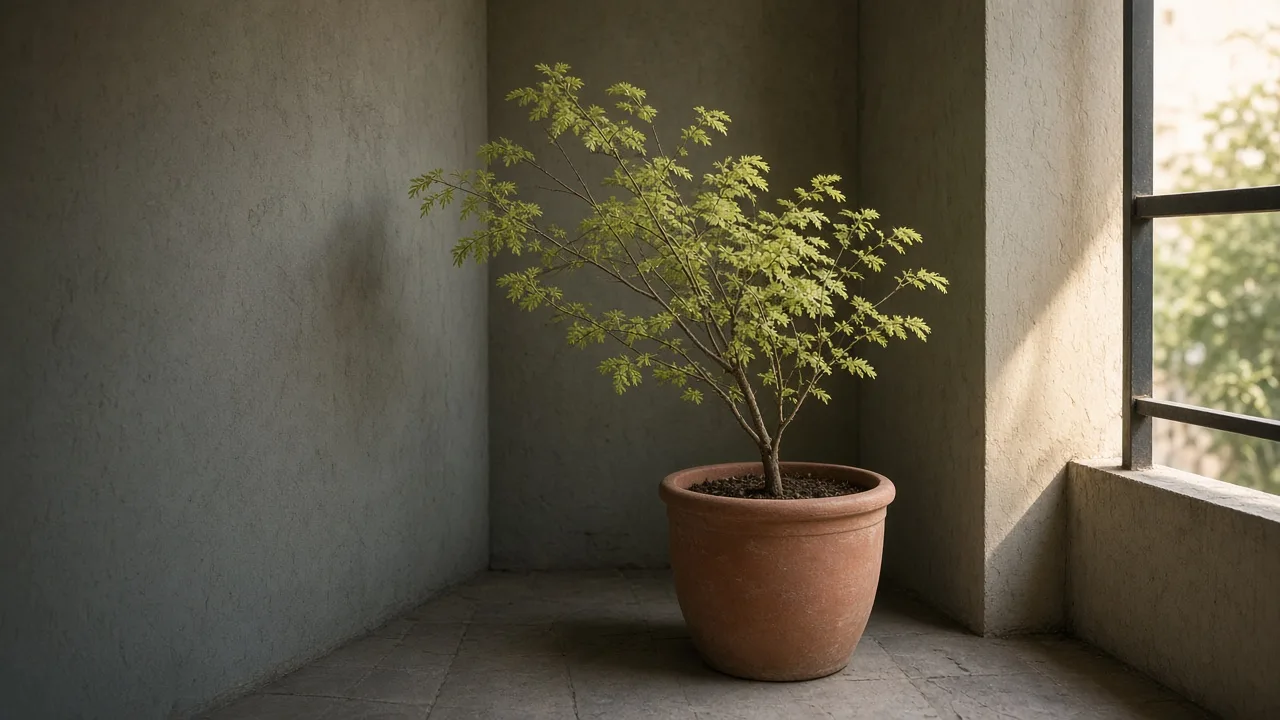
Not Enough Light on Amla: Causes, Checks & Fixes
This guide covers not enough light on Amla. See also the general Not Enough Light guide, watering, and light pages for this plant.
Not Enough Light on Amla: Causes, Checks & Fixes
Quick answer
Not enough light on amla (Phyllanthus emblica, Indian gooseberry) is a placement failure on a full-sun fruit tree, not a mysterious nutrient shortage. The species cannot grow in the shade and needs full sun or, at most, part-day shade—yet many terrace pots sit on north balconies, under dense overhangs, or indoors where a living room feels bright to human eyes but delivers far too little intensity for photosynthesis.
For how chronic dim light weakens houseplants in general, see our not enough light hub. On amla, the pattern is an open thin canopy with feathery leaves bunched at branchlet tips, pale chartreuse new shoots, a hard lean toward the brightest wall gap, mix that stays wet for days, and months without flowering or fruit set.
First step: move the container to the brightest safe outdoor location—open terrace, roof edge, or unobstructed south- or west-facing balcony rail—with seven to ten days of gradual acclimation. Do not repot, fertilize, or hard-prune until placement is fixed.
When to use this page vs other Amla guides
This page is the brightness-and-placement entry when the canopy looks starved—not when stretch has already produced long bare branchlets.
| Pattern | Read next |
|---|---|
| Long naked branchlet gaps and hard lean | Leggy growth |
| Washed-out foliage without obvious lean | Pale leaves |
| Firm tree, just slow in cool months | Slow growth |
| Soft trunk base on soggy mix in a dim corner | Overwatering or root rot |
| Window direction, sun hours, grow lights | Light guide |
| Scaffold thinning after sun is fixed | Pruning guide |
What not enough light looks like on Amla
Healthy amla builds a crooked trunk with spreading scaffolds carrying closely set feathery leaves along slender branchlets. Under chronic shade that silhouette breaks down before the tree looks obviously dead:
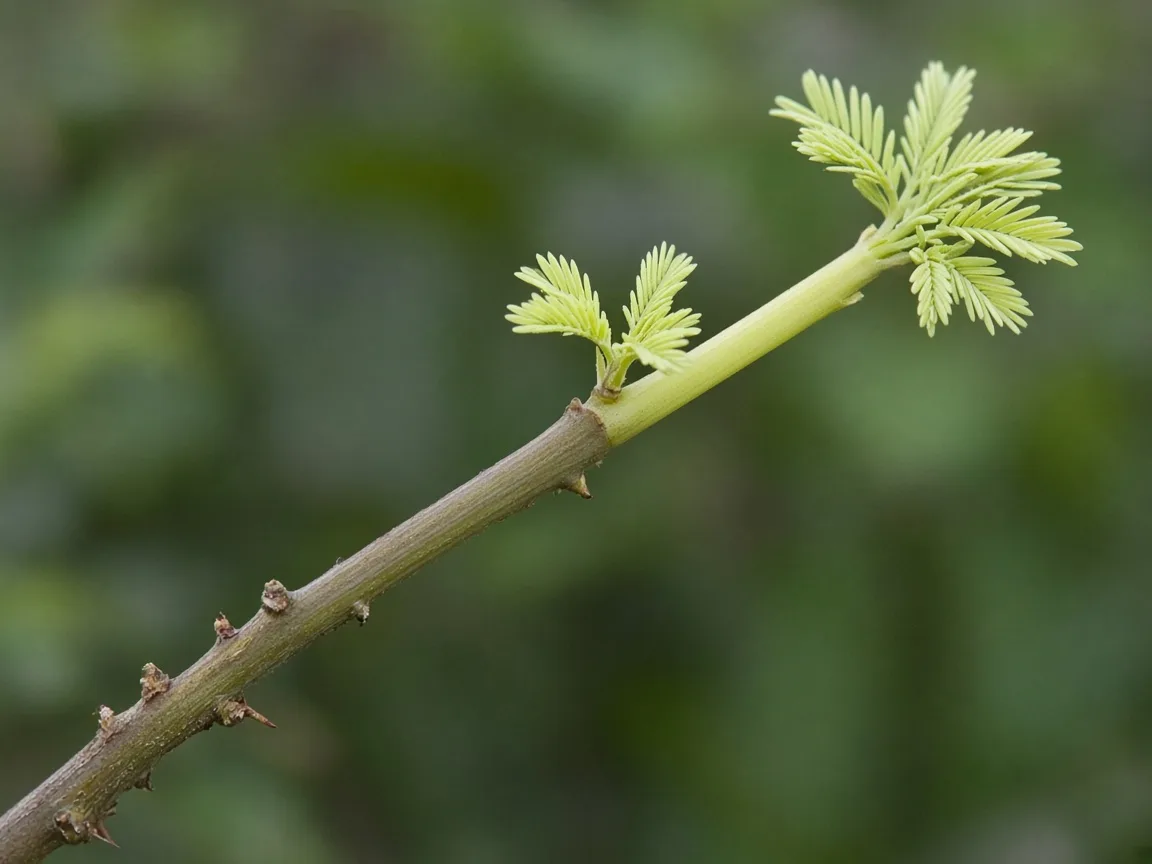
Pale feathery leaves clustered at branchlet tips with bare gaps below—compare tight leaf spacing on lower firm wood with washed-out upper shoots in a shaded terrace corner.
Early signs:
- Open, never-closing canopy — Thin crowns are normal enough that plantations need weeding, but shade makes the openness extreme: you see sky through the branchlets.
- Pale chartreuse new shoots — Newest branchlets look lighter than older lower wood, not the deep green of a terrace tree in full sun.
- One-sided lean — The whole pot angles toward the brightest rail gap or west wall opening.
- Feathery leaves clustered at tips — Tiny leaves bunch at branchlet ends while mid-sections look bare.
- Mix stays heavy for days — Shade slowed evaporation; the watering guide rhythm no longer matches actual use.
Later signs if placement does not change:
- Months without new branchlet flush or flowering
- No fruit set despite age—flowers form when daylength sits near 12–13.5 hours, but weak light still limits vigor
- Increased pest pressure on soft pale tissue (aphids, spider mites)
- Yellowing lower leaves while upper shoots stay weak—often shade plus wet roots, not nitrogen alone
What low light usually does not look like on amla: crisp brown patches on the sun-facing side right after a sudden west-glass move (sun scorch), or sudden collapse with sour-smelling soil (root failure). Those patterns point to too much harsh light without acclimation or overwatering—not simple insufficient brightness.
Why a north balcony fails this sun crop
Amla evolved in drier forests, dry open sparse forests, and scrub—open tropical and subtropical sites across the Indian subcontinent. National Horticulture Board guidance frames Aonla as a dry sub-tropical crop unsuited to heavy winter frost, not as a deep-shade understory plant.
Interior terrace corners. Rails, parapets, and neighboring walls block midday sun. A spot that feels “outdoors” may deliver only a late-afternoon beam—far below the six to eight hours of direct sun fruiting trees need.
Nursery shade carryover. Retail pots often sit under shade net for months. Bringing that plant straight to a dim home balcony continues the same stress—only slower.
Decor-first indoor placement. Amla is sometimes kept in a bright living room for a few weeks of winter shelter. Ordinary room light that suits pothos will not sustain a deciduous fruit tree; the overview hub is explicit that this is a terrace crop first.
Monsoon cloud cover. You cannot control the sky, but you can avoid adding shade cloth or tucking pots under dense tree cover “to protect” a species that needs every bright hour.
Seasonal daylength drop. The same south rail that works in June may fail in December at higher latitudes. Short days plus weak sun angle stall flush even without a watering mistake.
The wet-soil trap in shaded terrace pots
Shade changes water use more than beginners expect. In full sun an amla container dries predictably when you water when the top 3–5 cm of soil is dry. In a dim north corner the same soak can sit cold and wet for a week.
That pattern mimics overwatering: pale tired foliage, stalled shoots, sour mix smell. The first fix is still brighter placement, not more fertilizer from the fertilizer guide. Once sun returns, the pot weight and dry-down timing usually normalize within one or two watering cycles.
If the trunk base softens or roots smell sour, cross-check root rot—shade often started the wetness, but roots may need rescue beyond a simple move.
How to confirm the cause
Work through these checks before treating pests, nutrients, or repotting.
- Hand-shadow test at the pot — Hold your hand above the canopy at midday. A sharp dark shadow means usable direct sun; a faint ghost shadow means the corner is too dim for this species.
- Direct sun hours — Count how many hours the leaves see the sun’s disk, not just open sky brightness. Aim for at least six hours daily for strong growth; young trees may tolerate partial shade briefly, but fruiting needs more.
- Growth direction — Stems and branchlets reaching toward one sunny gap confirm the plant is hunting for light.
- New vs old branchlets — Compare newest feathery flush to firm lower wood. Pale small new leaves with stalled extension fit shade. Uniform yellowing of old bottom leaves alone may be seasonal drop on this deciduous tree that sheds branchlets as well as leaves.
- Soil moisture pattern — Finger-test at 3–5 cm. Wet for many days in a dim spot supports shade plus watering mismatch. Fast dry-down with firm wilted leaves points to underwatering instead.
- Two-week placement test — Move to the brightest safe outdoor spot with gradual acclimation. If the next branchlet flush is deeper green and tighter within two to three weeks, light was the main limiter.
The first fix to try
Move the pot to full outdoor sun today—then acclimate, not the reverse.
- Choose the brightest safe site: open terrace, roof edge, or unobstructed south- or west-facing balcony where the canopy sees clear sky most of the day.
- If the tree lived in deep shade or behind glass, increase direct exposure over seven to ten days—a shade-grown nursery plant meeting harsh west glass can scorch even though the species is a sun tree.
- Rotate the container a quarter turn every week during the growing season so one side does not keep reaching.
- Stop calendar watering. Water only when the top 3–5 cm of mix is dry; shade-stressed pots need less moisture until sun rebuilds use.
- Wait two to three weeks before fertilizer, repotting, or hard pruning. Read the next flush first.
Do not stack a repot, hard prune, and high-nitrogen feed on the same weekend—that is how a stressed rootball fails after a simple placement fix.
Recovery timeline and what improves
Week 1–2: Lean may stop worsening; soil dry-down speeds up in stronger sun. Old pale leaves often stay pale.
Week 3–6: New branchlets emerge with tighter feathery leaf spacing and deeper green color. This is your proof placement worked.
One growing season: Canopy fills enough to reduce the open-sky look. Flowering still depends on age, cultivar, and daylength—do not expect instant fruit the first month after a move.
What will not recover: Already-elongated bare branchlet sections and badly washed-out old leaves. Prune those in the next spring thinning window per the pruning guide once the tree is stable in full sun.
Signs you are winning: upright new shoots, symmetric scaffold after rotation, faster pot dry-down, and deeper green on newest branchlets. Signs to escalate: soft trunk base on sour wet mix, repeated pot tipping from extreme lean, or no new flush after four weeks in full sun—check roots and drainage via the soil guide.
Lookalike symptoms on Amla
| What you see | More likely cause | Next step |
|---|---|---|
| Long bare branchlet gaps, hard lean | Leggy growth from chronic shade | Fix sun + rotate; prune scaffolds next spring |
| Uniform pale leaves, no lean | Pale leaves — light, iron, or cold | Confirm sun hours; rule out nutrient pages |
| Firm tree, slow in winter only | Seasonal deciduous slowdown | Protect from frost; resume sun in spring |
| Wilting with dry light mix | Underwatering | Deep soak when top soil dries |
| Wilting with sour wet mix in shade | Overwatering / root rot | Improve sun and drainage before repot |
| Bleached crisp patches after sudden west move | Sun scorch / heat | Temporary filter; rebuild exposure over two weeks |
How to prevent not enough light next time
- Buy from nurseries that already grow amla in open sun—not deep shade stock with sparse roots.
- Default placement: terrace or south/west balcony with six or more hours of direct sun.
- Rotate pots weekly; do not let one rail gap become the plant’s only light source.
- Use grow lights only as winter shelter bridge, not permanent terrace replacement.
- Match watering to light: dim corners need fewer soaks, not more “care.”
- Review placement each autumn when sun angle drops—February stretch often started the previous October.
Related Amla guides
- Overview — full-care baseline for Indian gooseberry
- Light — window direction, sun hours, grow-light setup
- Watering — deep soaks timed to sun-driven dry-down
- Leggy growth — when stretch has already produced bare branchlets
- Pale leaves — washed-out foliage without obvious lean
- Slow growth — stalled flush when basics are already right
- Problems hub — all symptom guides for this plant
Conclusion
Not enough light on amla is almost always a terrace placement problem on a species that cannot grow in shade. Sparse feathery canopies, pale new branchlets, wet soil in dim corners, and absent flowering trace back to hours of direct sun—not a missing fertilizer dose. Move to the brightest outdoor site first, acclimate gradually, rotate weekly, and let the next flush prove the fix before repotting or feeding. Dense green branchlets in full sun are how home growers turn a stalled pot into a real fruit tree.