Pale Leaves on Amla: Sun, Roots & Fixes
Quick answer
Pale leaves on Amla look washed-out, lime-green, or thin across many feathery branchlets—not the deep green Indian gooseberry shows in full terrace sun. First step: confirm the wash is canopy-wide (not green-vein tips only or lowest branchlets first), audit direct sun hours on the pot, and check whether wet mix or cool seasonal rest explains the fade before fertilizing.
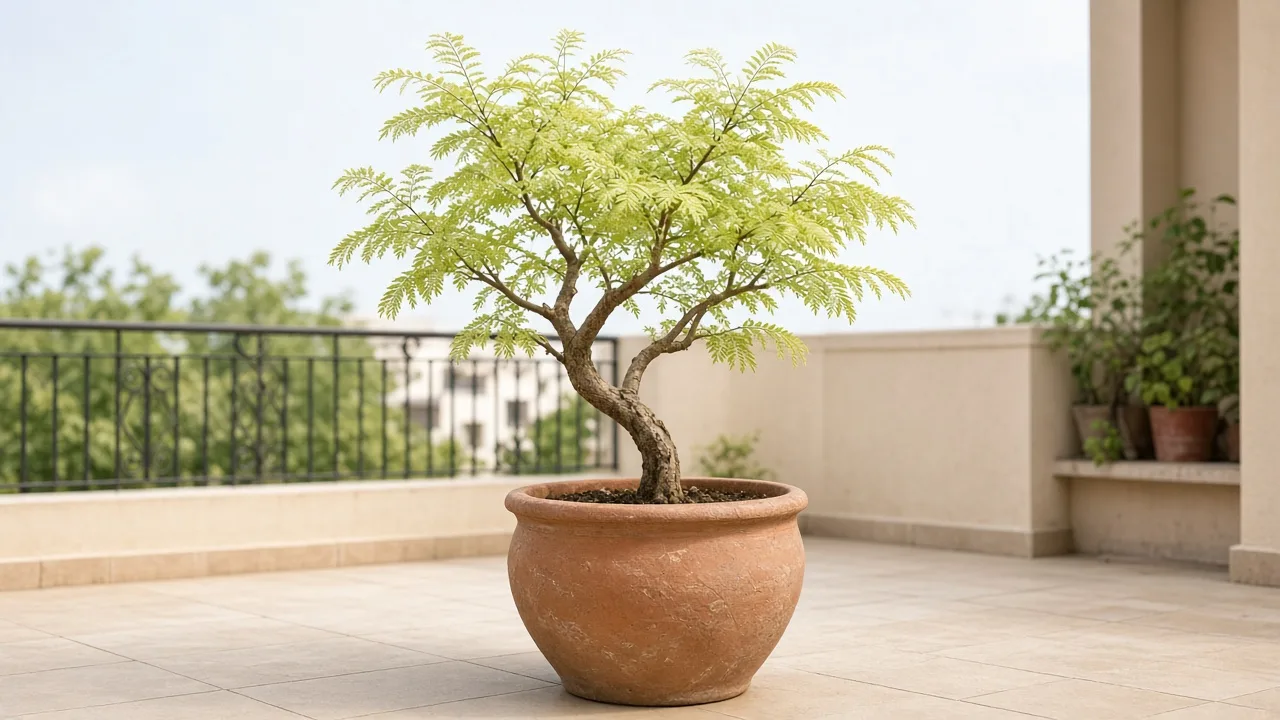
Pale Leaves on Amla: Causes, Checks & Fixes
This guide covers pale leaves on Amla. See also the general Pale Leaves guide, watering, and light pages for this plant.
Pale Leaves on Amla: Causes, Checks & Fixes
Quick answer
Pale leaves on Amla (Phyllanthus emblica, Indian gooseberry) look washed-out, lime-green, or thin across many feathery branchlets—not the deep green canopy this sun-loving fruit tree builds on a bright terrace. For general chlorosis mechanics, see our pale leaves guide. On Amla, a whole-canopy wash without green-vein tip chlorosis usually means too little direct sun, wet-root stress, or cool-season fade—not a single nutrient guess.
First step: confirm the pale pattern is canopy-wide on open branchlets (not oldest lowers only or green-vein new tips), then audit direct sun hours and pot dry-down before adding fertilizer.
When to use this page vs other Amla guides
| Pattern | Read next |
|---|---|
| Whole canopy lime wash, dim balcony | Pale leaves (this page) |
| Green-vein yellow only on newest tip cluster | Iron deficiency |
| Lowest branchlets pale first, no vein pattern | Nitrogen deficiency |
| Long bare branchlets, leaves only at tips | Leggy growth |
| Dim corner but stretch not advanced | Not enough light |
| Pale + wet soil, sour smell, soft base | Overwatering or root rot |
| Canopy thinning, firm wood, cool dry months | Normal deciduous rest—see watering guide |
What pale leaves look like on Amla
Healthy Amla carries light to medium green feathery compound leaves along slender branchlets on a crooked, spreading scaffold—PFAF describes simple, light green, pinnate foliage that deepens in strong sun. Paleness is a loss of depth and gloss across many branchlets at once:
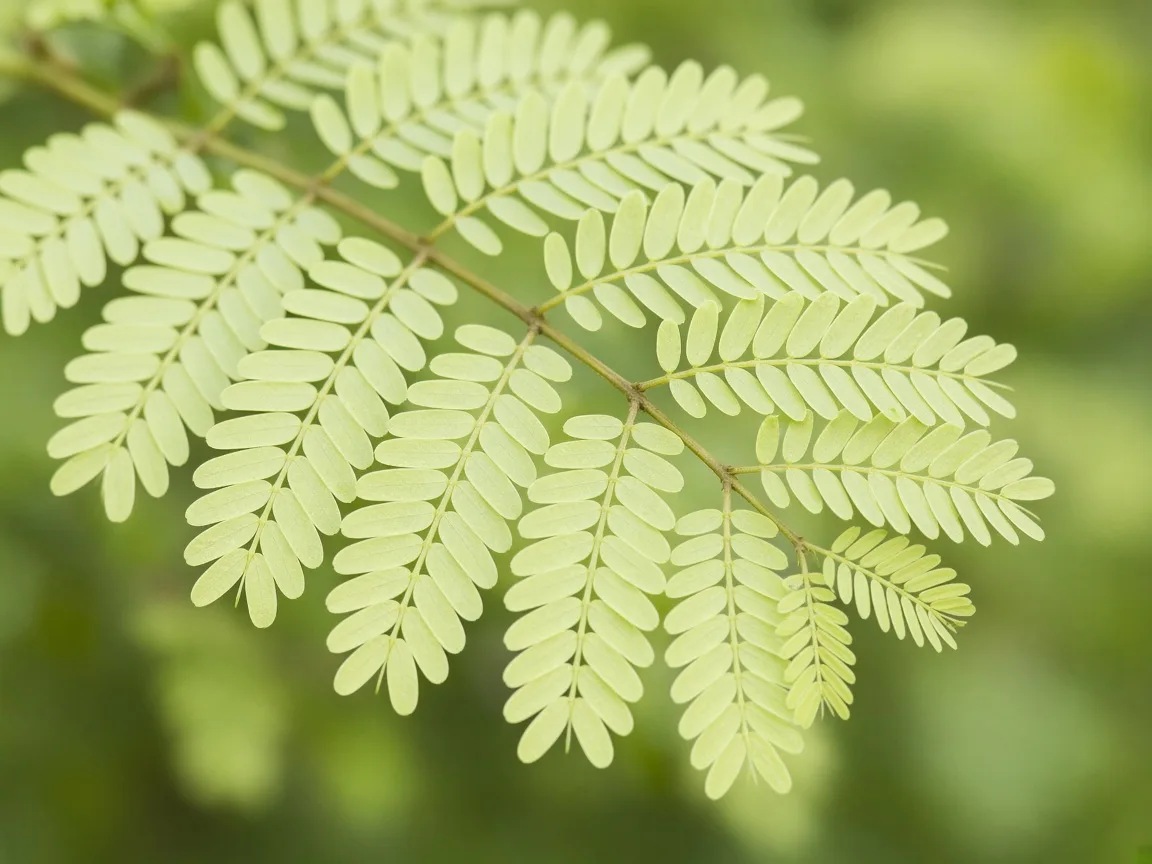
Pale lime wash across feathery leaflets on one branchlet—compare uniform wash here with green-vein yellowing only on newest tips (iron) or pale lowest branchlets first (nitrogen).
Typical signs:
- Uniform lime or yellow-green wash across upper and mid-canopy branchlets—not isolated to one tip cluster
- Thin, weak-looking feathery leaflets with reduced gloss compared with lower wood that still holds older green branchlets
- Open, never-closing canopy in a partially shaded balcony corner while the pot leans toward the brightest wall gap
- Slow branchlet extension without the dramatic naked gaps of leggy growth—color fades before stretch becomes extreme
- Firm trunk and branches at the soil line when light alone is the issue; soft wood on wet mix points to roots instead
Not simple pale leaves:
- Green veins with yellow tissue between veins on the newest tip cluster only — iron deficiency during warm flush
- Lowest branchlets pale uniformly while tips stay greener — nitrogen deficiency
- Interveinal yellow on older mid-canopy branchlets — magnesium deficiency
- Mottled patches or stippling — inspect for aphids or spider mites before blaming light
- Fade then drop on firm wood in cool weather — seasonal deciduous rest, not hunger
RHS notes chlorosis patterns vary by cause—iron hits youngest leaves first with interveinal yellowing, nitrogen starts on older foliage, and cultural stress can yellow the whole canopy. On Amla, read branchlet position and sun exposure together, not leaf color alone.
Terrace sun audit: the hand-shadow test for Amla
Amla is a full-sun fruit tree, not a low-light foliage plant. PFAF states it cannot grow in the shade and needs a position in full sun or at most part-day shade for survival—six to eight hours of direct sun supports optimal growth and fruiting on a terrace. That requirement fails on snake plants or aglaonemas; it is the core Amla-only rule for pale foliage.
Hand-shadow test at the pot rim (10 a.m. and 2 p.m.):
- Hold your hand 15 cm above the top branchlets in direct sun—you want a sharp, dark shadow with clear finger edges.
- A faint, fuzzy shadow means bright indirect light only; Amla may stay alive but foliage washes out and fruiting stalls.
- Note permanent shadow bands from a west wall, AC ledge, or taller building—one scaffold side can stay pale while the rest looks acceptable.
- After seven to ten days of gradual move to a brighter outdoor spot, the next branchlet flush should open darker. If color stays washed out in six or more hours of direct sun, shift to root and nutrient checks.
Cross-check placement with the light guide before repotting or feeding.
Wet-mix trap: when pale Amla leaves mean roots, not hunger
Amla tolerates drought once established but fails fast in waterlogged pots—a pattern that mimics nutrient deficiency. RHS links leaf yellowing to waterlogged or compacted soil when roots cannot take up nutrients evenly. Pale wash on heavy wet mix with sour smell is root stress until proven otherwise.
Pot-weight cross-check (Amla-specific):
- Lift the container when you know the top 3–5 cm is fully dry versus two days after a deep soak per the watering guide.
- Probe 3–5 cm deep with a skewer—surface dust-dry on peat-heavy mix can hide wet roots below.
- Press the trunk base—firm wood on appropriately dry gritty soil mix with whole-canopy wash in dim light = light first; yellow-green wash on spongy base with constant wetness = overwatering first.
- Compare branchlet tiers—whole-plant lime wash on dry firm roots in shade differs from uniform fade plus out-of-season drop on sour wet mix.
Do not fertilize a pale Amla on soggy terrace soil; salts stress damaged roots further.
Seasonal fade vs true chlorosis on a deciduous fruit tree
Amla owners often panic when a cool-season canopy thins and remaining branchlets look lighter before drop. This deciduous tree sheds foliage in its rest cycle; a firm tree with no active feathery tip flush in cool dry months is often seasonal—not a call for nitrogen.
The split:
- Seasonal rest — thinning canopy, firm wood, cool or dry weather, no expanding branchlet tips. Hold fertilizer until warm flush returns per watering guidance.
- True pale chlorosis — active warm-season growth with washed-out color on many open branchlets while wood stays firm on appropriate dry-down—usually light, roots, or whole-canopy nutrient stress.
Feeding a resting canopy wastes product and can crust salts on slow roots during dormancy.
Lookalike symptoms
| Pattern | Wood / soil | Likely cause |
|---|---|---|
| Whole canopy lime-green, firm base, dry gritty mix | Firm; dry at 3–5 cm | Low light (this page) → not enough light |
| Green-vein yellow on newest tip cluster only | Firm; appropriate moisture | Iron deficiency |
| Lowest branchlets pale first | Firm | Nitrogen deficiency |
| Long bare branchlets, tips only green | Firm; often dim | Leggy growth |
| Uniform pale + limp feel, wet sour mix | Soft base possible | Overwatering |
| Fade then drop, firm wood, cool months | Dry; seasonal | Normal rest—not fertilizer |
Why Amla gets pale leaves
Insufficient direct sun. Most terrace Amla with washed-out feathery foliage simply need more hours of direct sun on an open balcony—not a brighter indoor window. Bloom failure and pale canopy often arrive together when shade persists.
Root stress from chronic wet mix. Damaged roots cannot move iron, nitrogen, or magnesium evenly. Chlorosis can follow waterlogging even when fertilizer is present. Pale-yellow branchlets on heavy wet soil mimic deficiency—check dry-down before feeding.
Cool-season or post-harvest fade. Natural lightening before leaf drop on firm wood in short days is not fixed with fertilizer.
Whole-canopy nutrient stress. After light and roots check clean, suspect skipped warm-season feeding or alkaline terrace mix locking micronutrients—see iron or nitrogen deficiency if leaf age and vein patterns match those pages, not this one.
Pest stippling. Heavy aphid or mite feeding can lighten leaflet color in patches—inspect undersides and new tips before assuming shade alone.
How to confirm the cause
Work through these checks in order. Amla responds on a seasonal pruning and monsoon rhythm; one change at a time makes the next branchlet flush readable over four to eight weeks.
- Pattern across branchlets — uniform wash on many open clusters? This page. Green-vein tips only? Iron deficiency. Lowest branchlets first? Nitrogen deficiency.
- Season and growth stage — active warm flush with pale open branchlets vs resting canopy with no new tips.
- Direct sun hours — sharp hand-shadow test at the pot; fewer than six hours of direct sun in summer is a primary suspect.
- Root-zone condition — firm wood; sour smell or constant wetness means fix overwatering before nutrients.
- Soil moisture rhythm — dry at 3–5 cm before soaking; chronically wet outer mix in shade blocks uptake.
- Stretch check — long naked branchlet gaps point to leggy growth overlap; color wash without extreme stretch stays on this page.
- Pest scan — stippling, honeydew, or fine webbing on feathery undersides.
- Two consecutive flushes — if pale wash persists after brighter sun and correct dry-down, branch to specific nutrient pages by leaf age.
The first fix to try
Move the pot to the brightest available outdoor location with seven to ten days of gradual acclimation—morning sun first, then full terrace exposure—and rotate the container a quarter turn every week so no scaffold side stays in permanent shadow.
Do not repot, hard-prune, and fertilize on the same day. Brighter sun is the safest first correction when the canopy is uniformly washed out in a dim balcony corner with firm wood and appropriate dry-down. If the tree sat in deep shade, expect one flush of sun-stressed leaflet edges before color stabilizes—normal acclimation, not failure.
If pale wash continues after two greener branchlet flushes in six or more hours of direct sun with firm roots, use the Plant Problem Diagnosis Tool to route toward iron, nitrogen, or root guides—one variable at a time.
Step-by-step recovery
- Confirm diagnosis — canopy-wide wash on open feathery branchlets; rule out green-vein tip pattern and lowest-branchlet-first fade.
- Increase direct sun — gradual move to open terrace; sharp hand-shadow at midday; rotate weekly.
- Fix watering — dry at 3–5 cm before soaking; never leave pots in a wet saucer through cool nights per watering.
- Flush salts if white crust rings the pot—plain water at three times pot volume, draining fully, before any feed.
- Wait one branchlet flush — judge new leaflet color before adding fertilizer.
- Feed lightly only during warm active growth with complete micronutrients per fertilizer guide if light and roots are corrected and wash persists.
- Repot into fresh well-draining loam mix only if roots are compacted in depleted soil after light and watering are stable.
Recovery timeline
Amla flush growth is seasonal—not year-round houseplant growth. Expect four to eight weeks for the next branchlet cluster to open noticeably greener after corrected sun and watering. A full growing season may pass before the canopy looks uniformly deep green on a young grafted terrace tree.
Signs of improvement: darker green new feathery leaflets, normal leaflet size, tighter spacing along branchlets, firm wood, stable dry-down rhythm.
Signs the problem is worsening: each successive flush stays paler despite full sun, sour wet soil, widespread yellowing with soft base—stop feeding and check root rot.
Hardened pale leaflets rarely re-green fully; judge success by new branchlet flush, not old tissue. Interveinal chlorosis can stunt growth when unresolved—another reason to fix light and roots before guessing nutrients.
Mistakes to avoid
- Fertilizer before light and roots — pale wash on wet mix or in shade worsens with salts.
- Treating every light branchlet as iron deficiency — green-vein tip chlorosis on warm flush only routes to iron deficiency, not this page.
- Expecting current pale leaflets to re-green — judge the next branchlet flush.
- Indoor window as “bright room” — Amla needs outdoor direct sun for deep foliage color.
- Feeding during seasonal rest — salts accumulate while roots are slow and the canopy has no active flush.
- Stacking repot, prune, and feed — one correction at a time on a seasonal fruit tree.
Prevention
- Keep the tree in full sun on an open terrace with six or more hours of direct light during active growth.
- Match watering to dry-down at 3–5 cm; improve drainage before watering more in shade.
- Feed with complete micronutrients during warm flush only per fertilizer guide—TNAU orchard practice ties manuring to post-pruning active growth.
- Rotate the pot weekly during the growing season so scaffolds stay evenly lit.
- Repot into fresh loam-based mix when roots exhaust depleted terrace soil every one to two years while young.
- Inspect feathery undersides monthly for pests that stipple color.
Related Amla guides
- Overview
- Problems hub
- Light
- Watering
- Soil
- Fertilizer
- Iron deficiency
- Nitrogen deficiency
- Leggy growth
- Yellow leaves
Scope note: Use this page when many feathery branchlets show a uniform washed-out lime-green wash without green-vein tip chlorosis or lowest-branchlet-first fade. Use iron deficiency for green-vein yellowing on newest tips, nitrogen deficiency when oldest lowers pale first, and overwatering when soil stays wet with out-of-season drop—regardless of leaf color.
Related tool
Use the Plant Problem Diagnosis Tool to narrow causes for pale leaves on this plant before changing multiple variables at once.