Amla Repotting: When, Pot Size & Soil Mix
Amla Repotting: When, Pot Size & Soil Mix
Amla Repotting: When, Pot Size & Soil Mix
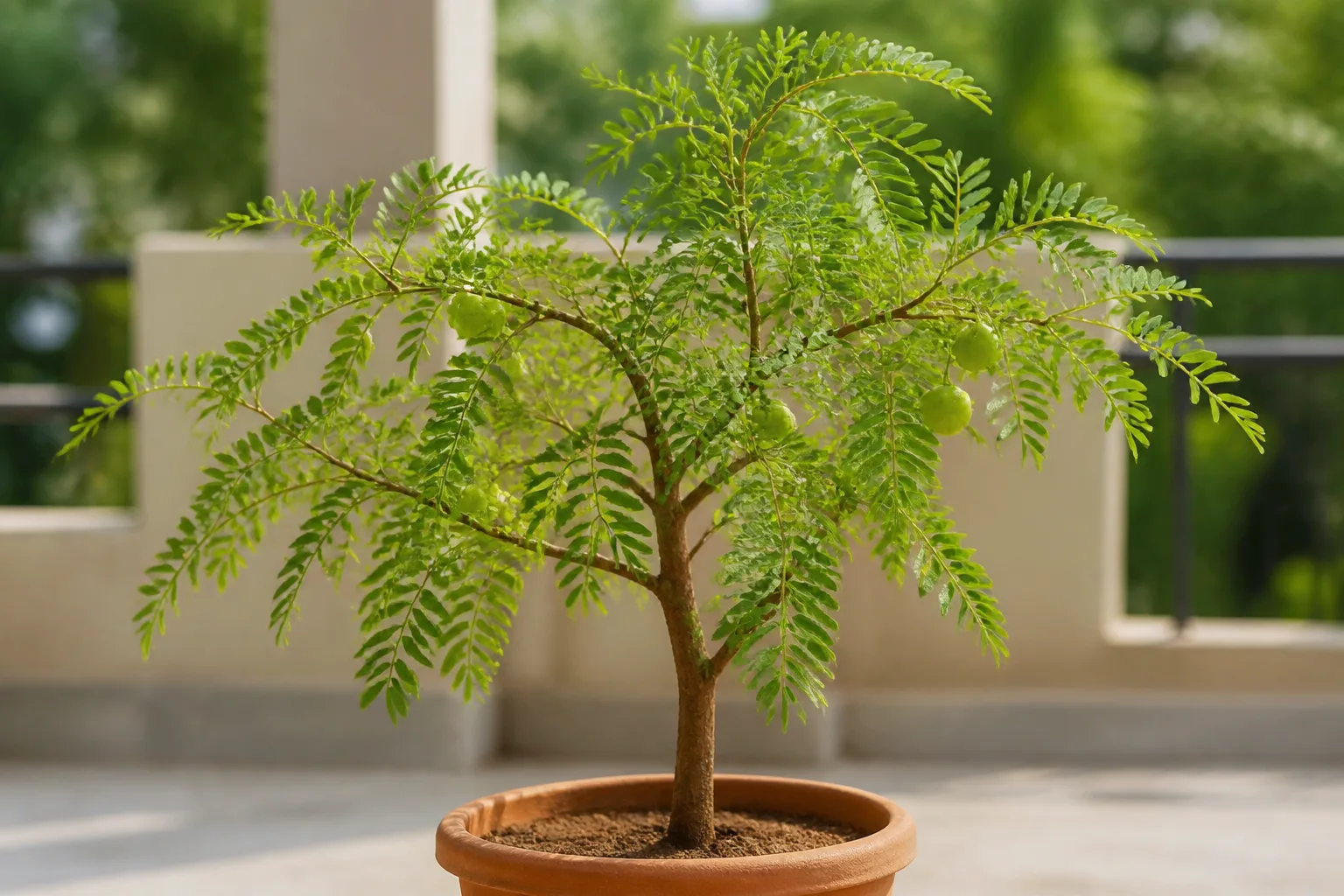
Amla (Phyllanthus emblica), also sold as Indian gooseberry, Amalaki, Aonla, or Emblic, is a slow-growing deciduous fruit tree, not a compact foliage houseplant that can sit indefinitely in a decorative cachepot. In the ground it commonly reaches about 8–18 m; on a sunny terrace you usually keep it nearer 1.5–3 m with pruning and pot limits. That size mismatch is why amla repotting arrives sooner than many growers expect — and why the wrong upgrade (a giant pot of heavy, wet mix) can hurt more than staying slightly root-bound for another season.
Plants For A Future describes emblic as an easily grown tropical tree that thrives in regions too dry and soils too poor for many other fruit crops, provided the medium is well-drained, and notes that established plants tolerate drought. The practical job of a good repot is therefore not “give it as much space as possible.” It is to refresh deep, free-draining mix, give modest new room, and keep the root zone oxygenated after the move.
This guide covers when to repot Amla, how to read root-bound signs, pot size, soil ratios, step-by-step technique, aftercare, and the mistakes that turn a spring refresh into weeks of leaf drop.
Why Amla Repotting Differs From Typical Houseplants
Most indoor tropicals forgive a slightly oversized pot. Amla does not. Its biology favors soils that drain after a deep drink, then dry through the upper layer before the next soak — the same rhythm described in the Amla watering guide. When you jump two or three pot sizes, unused outer mix stays cold and wet while the canopy still looks thirsty. Growers then water again, and the fine roots that need air begin to decline.
Amla belongs to Phyllanthaceae (often still listed under older Euphorbiaceae treatments in nursery labels) and evolved across tropical and southern Asia. PFAF places it in hot lowlands and semi-arid to humid climates, with preferred daytime temperatures roughly 20–29°C, tolerance near 14–35°C, and a preferred soil pH about 6–8 (tolerating roughly 5–8). It cannot grow in the shade for productive culture. Those facts change every repotting choice: pot volume, substrate texture, seasonal timing, and how soon you resume fertilizer.
Container culture versus a full-sized fruit tree
In open ground, Amla sends roots into deep sandy loam to clay profiles and shrugs off short dry spells once established. In a pot, that strategy collapses to whatever volume you provide. PFAF notes that for maximum productivity the tree wants deep soil ranging from sandy loam to clay that stays slightly acidic to slightly alkaline — still with reliable drainage. Practically, that means you must repot before the mix collapses into a dense, circling mat, but you must not create a swamp of unused media. Pair every pot upgrade with the Amla soil guide philosophy: deep, well-draining loam enriched with compost, never a sealed decorative bowl without holes.
How Often to Repot Amla
For most balcony and terrace plants, plan on every 1–2 years while young, with a same-size soil refresh in between if drainage slows but roots are not yet packed. Nursery seedlings and one-year grafted plants in small starter pots may need an annual step-up because warm Indian summers push root growth quickly. Mature, heavily pruned specimens in large containers can sometimes stretch longer if water still soaks evenly and new branchlets stay steady.
Frequency is a decision tool, not a calendar law. If the plant still dries on a predictable schedule, pushes healthy feathery foliage, and shows no circling roots at the drainage holes, wait. If the mix smells sour, water races down the sides, or the canopy tips the pot, do not wait for the “year two” anniversary. Seed-grown trees can be slow to fruit (often many years); grafted plants fruit earlier — but neither type benefits from chronic root congestion in a collapsing mix.
Signs Your Amla Needs a New Pot
Do not repot on appearance alone. Amla is deciduous, so seasonal leaf drop is normal; sudden off-season yellowing can also come from cold, shade, or drought even when the root ball is fine. Use multiple signals before you unpot.
Root, drainage, and drying-speed signals
Penn State Extension lists classic pot-bound checks that map cleanly onto container Amla: roots growing through drainage holes, watering frequency shooting up, and slowed top growth despite decent light. When you slide the plant out, look for a dense mat of roots with little visible mix in the lower third, or roots circling the wall of the pot.
Other practical flags for Amla specifically:
- Soil that was drying in five to ten summer days now dries within about a day after a thorough soak.
- Water runs straight through while the center of the root ball stays hydrophobic or channelled.
- Lower branchlets yellow and drop while the pot stays heavy and sour-smelling — a wet-root pattern more than a drought pattern.
- Stunted canopy despite full sun, or premature fruit drop on a plant that otherwise looked stable.
Any two of these usually justify a repot or a same-size refresh. One mild sign can wait until the next warm growth window if the plant is otherwise stable.
Top-heavy canopy as a stability trigger
Young Amla puts on height and sail area in full sun. A tall, leafy canopy in a light plastic starter pot becomes a tipping hazard on windy terraces. That instability is a legitimate repot trigger even before roots fully circle. Choose a wider, heavier container — terracotta or thick concrete — rather than a tall, narrow “tree pot” that amplifies leverage. Light pruning reduces sail area (see the cluster’s pruning page when you need canopy control), but pot weight and base width still matter after a size increase.
Best Time of Year to Repot Amla
Timing decides how fast new roots colonize fresh mix. Repot when the plant can grow into the new volume; delay when growth is quiet and wet mix sits unused.
Spring windows for Indian climates
Spring, as new growth begins — often February–April across much of India, depending on your local cool season — is the default window. Penn State Extension recommends spring as the best time to repot because roots expand into new media as seasonal growth starts. For Amla, that window also precedes the hottest months when a slightly larger pot will dry predictably in strong Amla light rather than staying soggy.
Avoid routine repots in peak monsoon if your terrace stays humid and pots dry slowly, and avoid the coldest North India weeks when night temperatures approach frost. PFAF rates the species hardy to about UK zone 10; disturbed roots plus cold wet mix is a poor combination for young container trees.
When emergency repotting is still justified
Repot immediately — season aside — if you find mushy brown roots, a cracked pot, severe waterlogging, or an insect-infested, foul substrate. In those cases prefer a same-size or only slightly larger pot, fresh free-draining mix, and a bright but less scorching spot for a week. Skip fertilizer. Treat the move as rescue, not upsizing for growth.
Do not repot a newly purchased Amla on day one unless the nursery mix is already failing. Quarantine, learn its drying rhythm, and confirm placement in full sun first — the same “first month” discipline described on the Amla overview.
Choosing the Right Pot Size and Material
The one-size-up rule for drought-smart roots
Move up about 2–5 cm (1–2 inches) in diameter — one pot size — unless you are graduating a seedling from a tiny nursery cup through intermediate sizes. Penn State Extension advises a container that is only slightly larger than the current one; an oversized pot looks unbalanced and holds excess wet media. For Amla, that excess is the main root-rot risk because the species prefers dry-to-moist, well-drained conditions and declines when roots sit anaerobic.
Non-negotiables:
- Drainage holes are required. Cachepots without holes are sleeves only — lift and empty them after watering (Penn State Extension).
- Prefer terracotta, concrete, or other heavy materials for tall plants so wind and canopy weight do not tip the pot.
- Match depth to the root ball; avoid extremely deep pots filled with unused mix under a shallow root mass.
- If you want to keep the plant small, a same-size refresh with light root teasing plus canopy pruning beats endless upsizing.
Best Soil Mix When Repotting Amla
Use a deep, well-draining sandy loam or loam enriched with compost — not a water-retentive indoor tropical peat blend alone. PFAF’s culture line — undemanding soils so long as they drain, with best productivity in deep sandy loam to clay that is slightly acidic to slightly alkaline — is the outdoor blueprint; containers need the same drainage logic in a smaller volume. A practical home pot target around pH 6.0–7.5 aligns with that preference and with LeafyPixels cluster soil guidance.
A reliable DIY ratio for patio Amla:
- 50% potting mix or screened garden loam
- 25% compost
- 25% coarse sand or perlite
Moisten the mix before you pot so it rewets evenly. Avoid dense clay that puddles, sealed planters without holes, and reusing sour, compacted old substrate. Full mix details and wrong-soil warning signs live in the Amla soil guide; use this page when the question is timing and container change.
Step-by-Step Amla Repotting Method
Water the plant in its old pot about an hour before you start so the root ball slides out with less tearing. Clean and sanitize a reused container; Penn State Extension recommends washing thoroughly and sanitizing with a solution of about one part bleach to nine parts water when pots have salt crust or disease history. Soak new unglazed terracotta overnight so it does not pull moisture from fresh mix on day one.
Lay a small screen or mesh scrap over the drainage holes if mix tends to wash out. Remove the Amla, gently tease circling roots so they face outward, and trim only soft, black, or foul-smelling sections with clean shears. Keep healthy woody roots intact — Amla relies on a deep, stable root system more than on a chopped “bonsai” ball.
Set the root ball so the old soil line sits about 2–3 cm below the new rim, never buried deeper up the stem. Backfill with your moistened mix, firm lightly (do not pack into a brick), and water until runoff exits the holes. Let the pot drain fully. Return it to a full-sun terrace or balcony position as soon as it has drained — shading “to reduce stress” often slows drying and invites wet-root problems. Hold fertilizer; feeding belongs later under Amla fertilizer once growth resumes.
Aftercare for the First Four Weeks
The first month is about stable moisture and light, not stimulation. Water deeply only when the top 3–5 cm of mix is dry — often every 5–10 days in warm weather and 10–14 days when cooler, matching the species watering profile. Container Amla still has less drought buffer than a field tree, so do not abandon watering, but never keep the mix constantly wet. Mild leaf drop or a brief pause in shoot growth for one to two weeks can be normal; soft stems, sour soil, or progressive collapse are not — check drainage immediately. Saturated media can starve roots of oxygen and lead to decline, the same overwatering mechanism extension horticulture describes for container plants in general.
Keep the plant in full sun (6+ hours) once it has drained. Skip fertilizer for at least three to four weeks, longer if you did heavy root pruning. New feathery branchlets are the recovery signal. Resume a lean feeding schedule only after that flush, and keep Amla watering and Amla light consistent so you are not changing three variables at once.
When You Should Not Repot Amla
Skip routine repotting when the plant arrived this week, when a frost or hard cold snap is forecast, during peak monsoon if the only pot you have is a giant peat-filled tub that will stay wet for weeks, or when the tree is already dropping leaves from poor light and you have not fixed placement first. Do not upsize purely for aesthetics while roots still have room. Do not repot, prune hard, and move into deeper shade on the same day. If the mix is healthy and the plant is flushing, wait for the next spring window.
Mistakes That Trigger Transplant Shock
The most common failure is jumping three pot sizes into rich, moisture-holding mix, then watering on a calendar. The second is burying the stem deeper than the old soil line, which encourages rot at the crown. The third is cutting a healthy deep root to fit a shallow decorative pot. The fourth is fertilizing immediately “to help it settle,” which burns stressed roots. The fifth is leaving the pot in a saucer of monsoon water. Fix those patterns and most Amla transplants settle within a few weeks of warm bright weather.
When to Use This Page vs Other Amla Guides
Use this page when the question is pot size, timing, root inspection, or post-move recovery. Use Amla soil when the mix itself is wrong even if the pot size is fine. Use Amla watering when dryness checks and seasonal intervals are the issue. Use Amla light when a weak indoor or shaded spot is driving yellowing and slow drying. Use Amla fertilizer only after roots have recolonized fresh mix. Use Amla pruning to keep patio height in check between pot upgrades. Use Amla propagation when you want grafted or seedling starts in new pots rather than upsizing the parent. The Amla overview and Amla hub tie placement, toxicity notes, and cluster habits together.
Related Amla Guides
- Amla overview — identity, placement, and full-care snapshot
- Amla hub — species profile and grower notes
- Amla soil — loam recipes, pH, and drainage failures
- Amla watering — soak-and-dry rhythm after repotting
- Amla light — full-sun requirements for terrace trees
- Amla fertilizer — lean feeding once new growth returns
- Amla pruning — size control that pairs with container limits
- Amla propagation — grafting and seed starts for new pots
Conclusion
Repot Amla when roots and drying speed say the pot is finished — not when a random Saturday looks convenient. Choose spring as new growth begins when you can, step up one pot size into deep, free-draining sandy loam or loam with compost, protect the main root system, and water only after the top few centimetres dry. Treat wet feet as the real enemy, keep the plant in strong sun, and wait for new branchlets before you fertilize. Done that way, a terrace Phyllanthus emblica stays stable, upright, and ready for the next warm season instead of stalling in a soggy oversized pot.