Black Spots on Amla: Causes, Checks & Fixes
Quick answer
Black spots on amla are usually Cercospora leaf spot, rust pustules turning dark, sooty mold from aphid honeydew, or fixed necrosis on old winter-drop leaflets—not a mystery houseplant disease. First step: flip one spotted leaflet and check the underside for orange powdery rust or a smear that wipes off.
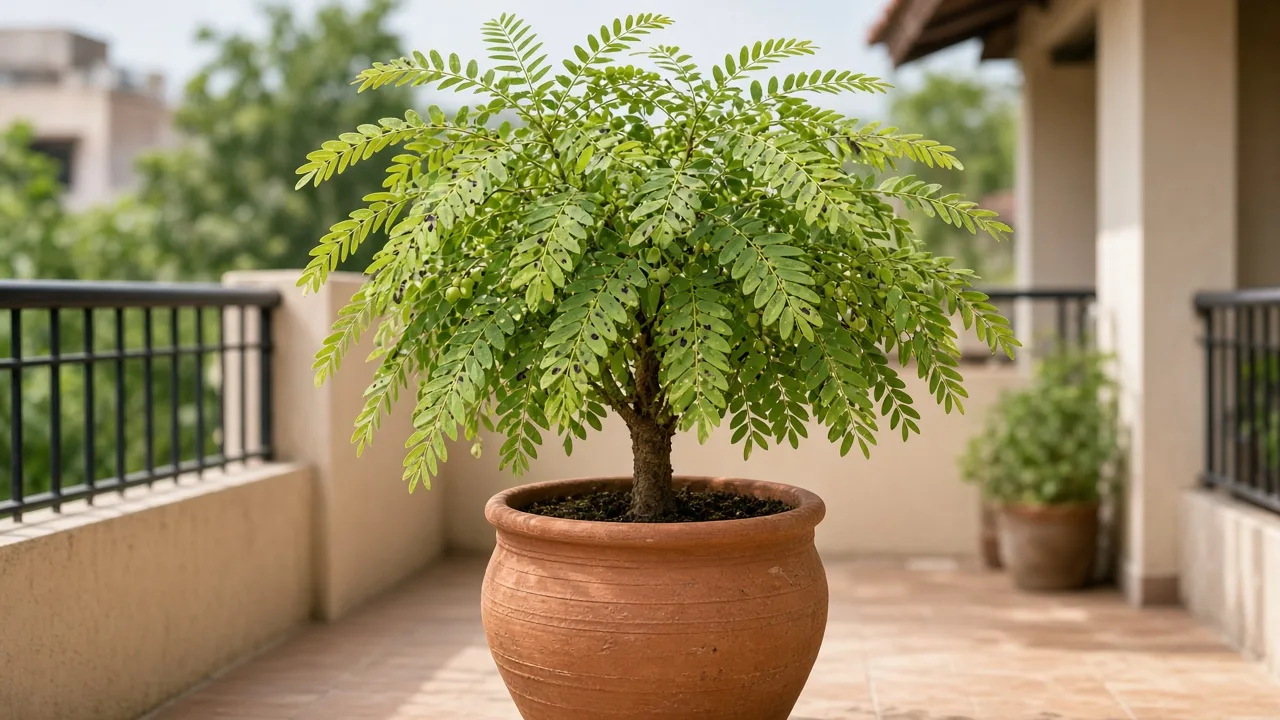
Black Spots on Amla: Causes, Checks & Fixes
This guide covers black spots on Amla. See also the general Black Spots guide, watering, and light pages for this plant.
Black Spots on Amla: Causes, Checks & Fixes
Quick answer
Black spots on amla (Phyllanthus emblica, Indian gooseberry) are localized tissue death or surface mold on the tree’s small pinnate leaflets—not the same problem as black patches on broad houseplant leaves. On this sun-loving deciduous fruit tree, the pattern usually splits four ways: flat grey-brown angular spots with darker borders after monsoon humidity point to Cercospora leaf spot, orange-yellow powder on leaflet undersides is rust (often peaking post-monsoon), black smear that wipes off tracks aphid or mealybug honeydew, and fixed dry black marks on old leaflets before winter rest may be normal aging on a briefly deciduous tree. For general spot-disease mechanics, see our black spots guide. On amla, feathery compound leaves hold dew after terrace watering, post-monsoon nights keep branchlets damp, and growers often panic during January–February leaf drop when the tree looks bare but is simply dormant.
A few isolated dry marks on one lower branchlet are cosmetic. Spreading wet-looking spots on new flush leaflets or black smear across several branchlets need action the same week—not extra fertilizer.
First step: flip one spotted leaflet and inspect the underside in bright light. If you see orange powder, treat for rust before generic fungicide. If black smears when wiped, inspect shoots for aphids or mealybugs. If the mark stays fixed in the leaflet with a dry angular border, stop wetting foliage and improve airflow before spraying.
When to use this page vs other Amla guides
| Your question | Best page |
|---|---|
| Dark spots or smears on small leaflets | This page |
| Orange powder on leaflet undersides | This page (rust section) |
| Whole leaflets yellowing on wet soil | Overwatering |
| Mushy roots, sour smell, wilt on wet mix | Root rot |
| Uniform yellowing, older leaflets first | Yellow leaves |
| Tan bumps on branchlets and shoots | Scale insects |
| Holes chewed through leaflets | Holes in leaves |
What black spots look like on Amla
Healthy amla carries feathery pinnate leaves on green branchlets—dozens of small light-green leaflets per stem, not one broad blade. Black spotting breaks that pattern in recognizable ways:
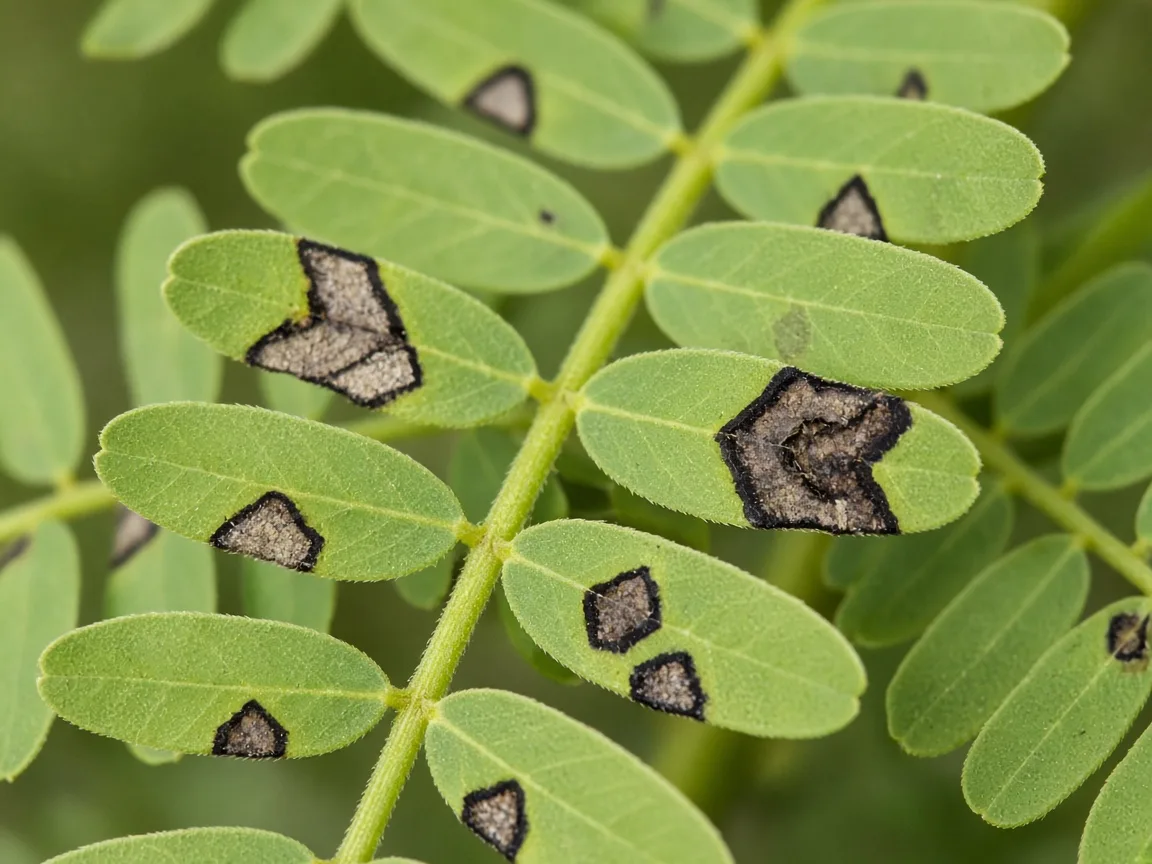
Angular grey-brown lesions with dark borders on individual amla leaflets—compare flat Cercospora spots with orange rust pustules on the underside.
- Small angular grey-brown spots with darker borders — Flat, dry lesions on individual leaflets, often multiplying after monsoon rains. Plants Info describes Cercospora leaf spot on amla as grey-brown with darker margins, unlike powdery rust.
- Orange-yellow powdery pustules on leaflet undersides — Rust on amla shows bright pustules below with pale patches above; old pustules can look dark brown or black when they dry.
- Black coating that wipes off with a damp cloth — Sooty mold on sticky honeydew from aphids on winter flush or mealybugs at branch junctions. The leaflet underneath is often still green.
- Dark sunken spots on young fruit — Anthracnose on amla targets fruit more than foliage; route fruit spots separately from leaflet spotting.
- Dry black leaflet edges on lowest branchlets only — May track splash, sun scorch on a terrace tree in full sun, or leaflet senescence before winter drop—not infection.
- Black soft tissue at the soil line on wet mix — Collar or root failure, not superficial spotting. See root rot.
Spots on new spring flush leaflets are more urgent than a few marks on leaflets about to drop during normal winter rest.
Why feathery amla leaflets show spots differently than broad houseplant leaves
Amla is a slow-growing deciduous tree with compound leaves on slender branchlets—not a rubbery broad-leaf floor plant. That changes where and how spots appear:
Monsoon and post-monsoon humidity on terraces. After heavy rains, water sits between tiny leaflets on crowded branchlets. Cercospora and rust both peak in high-humidity windows on amla when foliage stays wet and airflow around a balcony pot is poor.
Overhead watering on full-sun specimens. Amla needs 6+ hours of direct sun on a terrace or south-facing spot. Owners who shower the canopy to cool the tree in summer keep feathery leaflets wet for hours—RHS notes fungal leaf spots often follow persistently wet leaves with dark centres and yellowish margins.
Winter deciduous drop mistaken for disease. PFAF lists amla as deciduous. In much of India the tree drops leaflets uniformly in late winter (often January–February) before the March flush. Bare wood with no lesions is dormancy—not Cercospora.
Aphid clusters on tender winter shoots. New branchlet growth in cool dry months attracts aphids whose honeydew grows black sooty mold across leaflet surfaces. Growers search “black spots” when the underlying issue is sap feeders, not leaf-spot fungi.
Why Amla gets black spots
Cercospora leaf spot
Cercospora phyllanthi causes angular grey-brown spots with darker borders on amla leaflets during and just after monsoon. Unlike rust, lesions stay flat and dry. Heavy infection causes leaflet drop but rarely kills a well-established tree in a large pot or ground planting.
Rust (Phakopsora / Ravenelia species)
Rust is among the most common foliar diseases of amla in India, with orange to pinkish-brown pustules on leaves and fruit. Severe rust defoliates branchlets and reduces fruit size the same season. Infected leaflets do not recover—you remove them and protect new growth.
Sooty mold from aphids and mealybugs
Sticky honeydew on winter flush or branch junctions grows black mold on leaflet surfaces. The wipe test separates this from fixed necrosis instantly. Treat aphids or mealybugs before fungicide.
Anthracnose on fruit and shoots
Anthracnose causes dark sunken lesions that expand in humid weather and can trigger premature fruit drop. Fungus persists in fallen fruit and litter—sanitation matters more than on purely cosmetic leaflet spots.
Overwatering and splash necrosis
Chronic wet soil that never dries weakens roots; lower branchlets may show dark fixed patches while the pot stays heavy. This is not airborne leaf spot—route to watering and soil drainage before copper sprays.
Sun scorch on terrace leaflets
Sudden harsh afternoon sun after shade nursery culture can crisp leaflet tips dry and black on outer branchlets. Compare with a recent move to a hotter light position—not misting habit.
How to confirm the cause
Work through these checks before repotting or spraying:
- Underside inspection — Orange powder = rust. Flat dry border = Cercospora. Black smear = sooty mold.
- Wipe test — Damp cloth on the spot. Smears = treat pests first. Fixed in leaflet = necrosis or pathogen.
- Halo presence — Yellow ring around a dark centre fits fungal leaf spot per RHS guidance.
- Season timing — Post-monsoon spread suggests rust or Cercospora. Uniform bare tree in late winter without spots suggests dormancy.
- Location on the plant — Spots only on lowest ageing branchlets with clean new flush = senescence or splash. Random spots on mid-canopy and new leaflets after overhead watering = wet-foliage culture.
- Soil moisture — Top 3–5 cm wet for a week with heavy pot weight points to overwatering, not airborne pathogens.
- Litter and fruit on soil — Fallen fruit and leaf litter under the pot feed anthracnose and rust inoculum—clear before treating.
The first fix to try
Flip one representative spotted leaflet and identify rust, Cercospora, or sooty mold.
If you see orange powder on the underside, pick off the worst infected leaflets, bag them, and improve airflow around the terrace pot—do not overhead-water the canopy. Hold fertilizer until new branchlet flush looks clean for two weeks.
If the spot stays fixed with a dry angular border, stop wetting foliage—water at soil level only when the top 3–5 cm of mix are dry, clear wet leaf litter from the saucer, and space the pot so branchlets do not press against a wall.
If black smears off, isolate the plant and treat aphids or mealybugs before any fungicide.
Step-by-step recovery
For rust
- Remove and destroy badly pustuled leaflets—do not compost on the terrace.
- Clear fallen leaflets and fruit from the pot surface and saucer.
- Stop overhead watering; water at soil level when the dry-down test says so.
- Improve airflow between branchlets—thin crowded crossing shoots if the canopy is dense.
- If new flush leaflets still develop pustules after two weeks of dry-foliage culture, a labeled copper or mancozeb fungicide applied per product label for food trees is the next step—not before cultural fixes.
For Cercospora leaf spot
- Remove the most spotted leaflets on affected branchlets.
- Stop misting and overhead watering permanently for this specimen.
- Verify well-draining sandy loam and open drainage holes—soggy mix prolongs humidity at the canopy base.
- Water only when the top 3–5 cm of mix are dry.
- Re-check new flush weekly; flat spots that keep appearing on fresh leaflets after cultural fixes may need a copper spray per label directions.
For sooty mold and sap feeders
- Wash leaflets gently with lukewarm water to remove mold residue after pests are cleared.
- Treat aphid clusters on new shoots per the aphids page.
- Inspect branch junctions for mealybugs if mold returns without visible aphids.
- Re-check weekly through the winter flush period.
For overwatering-related darkening
- Stop watering until the top half of the pot dries noticeably.
- Confirm drainage holes are open and no cachepot traps monsoon runoff.
- Move to the sunniest outdoor placement the tree tolerates—slow drying in shade worsens wet mix.
- If lower branchlets blacken while soil smells sour, inspect roots for root rot before resuming any watering schedule.
Recovery timeline
| Severity | What to expect |
|---|---|
| Sooty mold only, pests cleared | Gloss returns within 1–2 weeks after washing; no new smear |
| Mild Cercospora, culture fixed | New spots stop within 2–4 weeks; old lesions stay dark |
| Rust on a few branchlets | New pustules stop after litter cleanup and dry foliage; lost leaflets do not regreen |
| Overwatering lower-branchlet patches | Stabilizes after 1–2 dry-down cycles; new flush clean |
Judge recovery by clean new branchlet leaflets without fresh spots—not by old marked leaflets turning green again.
Lookalike symptoms
| What you see | Likely cause | Check |
|---|---|---|
| Orange powder on underside | Rust | Post-monsoon timing |
| Flat grey-brown angular spots | Cercospora | Dry borders, monsoon onset |
| Black smear wipes off | Sooty mold / aphids | Aphids on winter shoots |
| Dark sunken fruit spots | Anthracnose | Fallen fruit under tree |
| Dry black leaflet tips, outer branchlets | Sun scorch | Recent move to harsher sun |
| Uniform winter leaflet drop, no spots | Deciduous rest | PFAF deciduous habit |
| Black at soil line, sour smell | Collar / root rot | Root rot |
Mistakes to avoid
- Spraying fungicide on sooty mold without clearing aphids first—the mold returns within days.
- Misting feathery leaflets on a shaded balcony—water sits between tiny leaflets longer than on a single broad leaf.
- Panicking during winter leaf drop when the tree is briefly bare without lesions—confirm season before treating dormancy as disease.
- Stacking repotting, hard pruning, and fungicide on the same day—young grafted amla is sensitive to stacked stress; fix one variable first.
- Fertilizing spotted trees—feed only after new flush looks healthy for two weeks per the fertilizer guide.
How to prevent black spots next time
- Water at soil level when the top 3–5 cm of mix are dry per the watering guide.
- Clear fallen leaflets and fruit from the pot saucer before monsoon—rust and anthracnose persist in litter.
- Keep the tree in full sun with airflow around branchlets per the light guide.
- Inspect winter flush weekly for aphid clusters before sooty mold covers leaflets.
- Avoid overhead watering through the post-monsoon humidity window when Cercospora pressure rises.
Related Amla guides
- Amla overview — Species profile, sun placement, and fruit-tree baseline.
- Problems hub — All amla issue pages in one place.
- Aphids — When black smears wipe off and shoots curl in winter.
- Overwatering — When lower branchlet darkening tracks wet mix, not infection.
- Watering — Top 3–5 cm dry-down and seasonal reduction.
Use the Plant Problem Diagnosis Tool to narrow causes for black spots on this plant before changing multiple variables at once.