Mold on Soil on Amla: Causes, Checks & Fixes
Quick answer
White or gray mold on Amla soil is usually harmless saprophytic fungus on damp organic mix—not a disease on healthy roots. Scrape the top layer, stop watering until the top 3–5 cm are dry throughout, and fix the moisture habit that caused it.
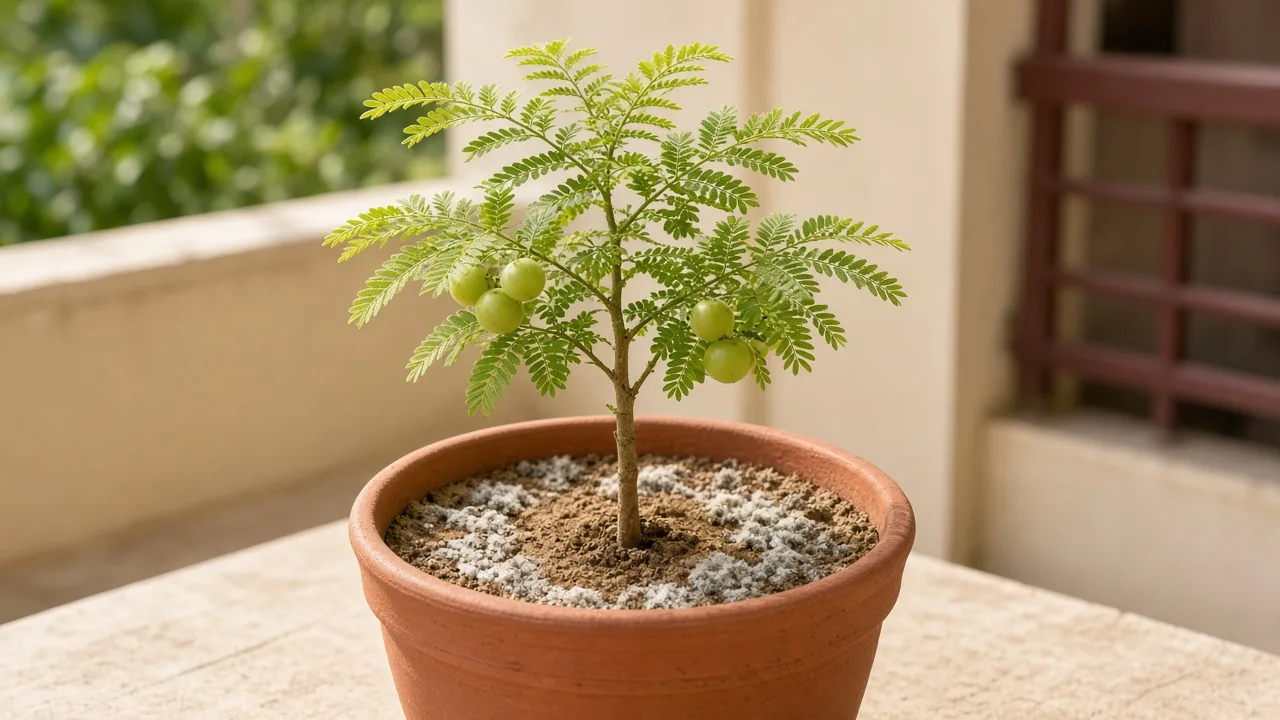
Mold on Soil on Amla: Causes, Checks & Fixes
This guide covers mold on soil on Amla. See also the general Mold on Soil guide, watering, and light pages for this plant.
Mold on Soil on Amla: Causes, Checks & Fixes
Quick answer
Your Amla (Phyllanthus emblica, also sold as Indian gooseberry, Aonla, or Amalaki) has white or gray fuzz on the potting mix and you need to know whether to scrape, repot, or panic. Start with what makes this plant different from leafy houseplants: it is a sun-loving deciduous fruit tree that evolved across dry tropical lowlands and tolerates drought on well-drained soils—not a constantly damp soil surface in a shaded corner.
For how saprophytic fungi colonize wet organic mix in general, see our mold on soil guide. On Amla, the practical pattern is surface fuzz around the trunk base of a terrace pot, a heavy mix days after watering, and extra risk during monsoon when rain plus hand-watering keep the top layer wet for weeks.
First step: stop watering and scrape off the top inch of affected soil with a spoon, then let the entire pot dry until the top 3–5 cm read dry on a finger test before the next deep soak.
When to use this page vs other Amla guides
This page is the symptom-first entry for fuzzy soil on an Amla pot. Use it to decide what the surface growth means and which action comes first.
| Pattern | Read next |
|---|---|
| Heavy pot, sour smell, yellowing or off-season leaf drop | Root rot |
| Calendar watering, wet mix, no mold yet | Overwatering |
| Small dark flies when you water | Fungus gnats |
| Mix stays damp even after cutting water | Soil guide |
| Long-term dry-down rhythm after mold clears | Watering guide |
| Yellow feathery leaves with firm stems | Yellow leaves |
What mold on soil looks like on Amla
Healthy Amla pots on a sunny terrace should have a dry, dusty surface between waterings. Mold shows up differently on this feathery-leaved fruit tree than on a fern or peace lily.
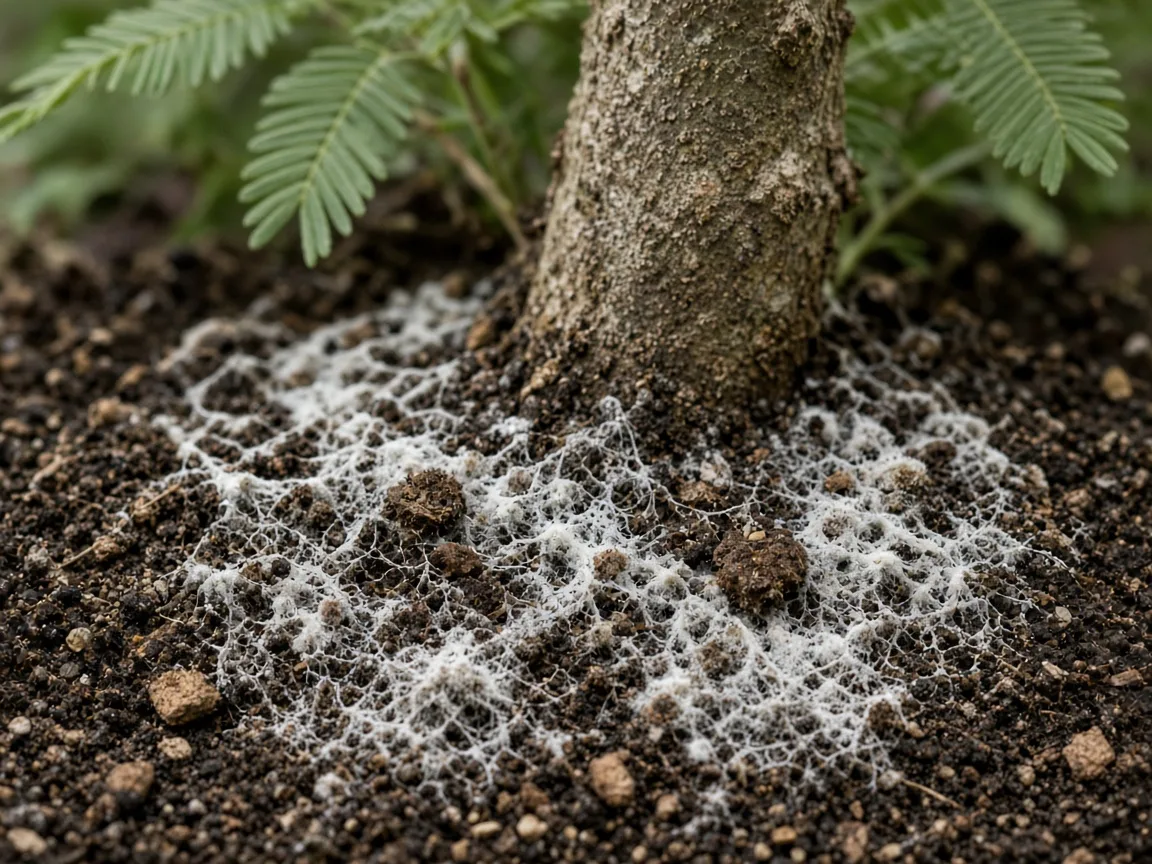
White saprophytic threads on damp gritty mix at the base of firm Amla branchlets—compare with healthy dry soil on the same plant.
Typical harmless surface mold:
- White, gray, or occasionally tan fuzzy patches on the top of the mix
- Growth concentrated where organic debris collects—fallen feathery leaflets, compost fines, or bark mulch
- Soil surface still damp or cool to the touch days after watering
- Firm branchlets, upright growth, and normal seasonal leaf rhythm unchanged
Signs the wet conditions behind mold are hurting Amla:
- Mold returns within days of scraping
- Small dark flies hover when you water—fungus gnats sharing the same damp habitat
- Pot feels heavy long after the last watering or monsoon rain
- Yellowing leaves or out-of-season leaf drop while soil stays moist
- Sour or swampy smell from the pot—distinct from normal earthy compost mix
- Stalled new shoots during active summer growth despite wet soil
Because Amla tolerates drought better than stagnant water, stems can look fine while roots below the mold are already oxygen-starved. Do not treat surface mold as purely cosmetic when the pot stays heavy and damp through a monsoon week.
Why Amla gets mold on soil
Amla thrives in regions that are too dry and on soils too poor for many fruit crops, as long as drainage is good. It prefers dry or moist soil and can tolerate drought; it does not want waterlogged clay or a saucer that never empties. University of Maryland Extension notes that algae and fungal growth on indoor plant soil are saprophytic organisms feeding on organic matter in consistently moist conditions—the same mechanism on your terrace pot.
Mold appears when that dry-down never happens. Common Amla-specific triggers include:
Overwatering on an orchard calendar. National Horticulture Board guidance for field aonla often uses 15–20 day summer irrigation intervals. A small balcony pot in full May sun may dry in five days. Watering every week out of habit keeps the surface damp and feeds fungal spores already present in compost-rich mix. See the overwatering guide for the full dry-down protocol.
Monsoon and flowering-season traps. Continuous rain on an uncovered terrace can keep mix wet for two weeks without you adding a drop. Orchard practice also advises avoiding irrigation during the flowering period (often mid-March to April in India)—but monsoon humidity can still leave the surface soggy. Mold during these windows usually means drainage or placement, not “the tree needs more water.”
Compost-heavy, slow-draining mix. Amla wants sandy loam with coarse sand or perlite. Pure garden loam or dense nursery mix without grit stays wet at the surface even when you think you watered lightly. Fallen tannin-rich leaflets on that surface give saprophytic fungi extra food.
Shade and oversized pots. Amla cannot grow in shade and uses less water when light is weak. An oversized decorative pot holds extra wet soil around roots long after the surface should have dried—see not enough light if growth is sparse.
Organic surface debris. Feathery leaflets shed during normal seasonal drop or heat stress. Left on damp compost, they decay into mold food—especially under a top layer of fresh mulch added “for nutrition.”
The 3–5 cm finger test before you change anything else
Amla watering on LeafyPixels follows one rule: water deeply when the top 3–5 cm of soil are dry, then let excess drain completely. Surface mold is often the first visible sign that this test is being skipped.
Before repotting or spraying:
- Push a finger or wooden skewer to 3–5 cm depth at the trunk base.
- If it comes out cool, dark, and clinging—stop all watering until that zone dries.
- Lift the pot. Heavy weight days after the last soak confirms slow drainage, not healthy moisture reserves.
- Smell the drainage hole. Sour = escalate toward root rot checks. Earthy only = surface issue likely.
- Check newest shoots at branch tips. Firm green growth with surface fuzz only = moisture fix, not emergency surgery.
This depth matters because Amla roots need oxygen between soaks. Chronic wet mix reduces root oxygen even when the feathery canopy still looks fine.
First fix: scrape, dry, then reassess
Do this one action first: stop watering, scrape off the top inch of moldy soil and fallen leaf debris with a spoon, and discard it—not into your compost bin if gnats are present. Maryland Extension recommends removing the upper soil layer when fungal growth appears on moist potting media.
Then wait. Do not repot, prune hard, or fertilize on the same day.
After 5–10 days in warm weather (longer in cool or monsoon humidity), retest at 3–5 cm:
- Dry throughout: water deeply until runoff, empty the saucer, and resume the finger-test rhythm from the watering guide.
- Still wet at depth: improve light exposure, punch clear drainage holes, or replace only the top inch with grittier mix from the soil guide.
- Sour smell or soft roots on probe: unpot and inspect per root rot—mold was the early warning.
Step-by-step recovery if mold keeps returning
If scraping and one dry-down cycle do not hold:
- Remove surface debris weekly. Brush fallen feathery leaves off the mix before they decay.
- Add airflow. Space pots on the terrace; avoid crowding against a damp wall.
- Refresh the top inch. Replace scraped soil with a 50/25/25 blend (loam, compost, coarse sand or perlite) matching your soil guide—do not bury the trunk deeper.
- Address fungus gnats together. Larvae develop in damp organic soil; surface mold and gnats share one cause. See fungus gnats if flies appear when you water.
- Repot only if the whole profile stays anaerobic after two dry-down attempts—spring is safest, per the repotting guide.
Avoid cinnamon, hydrogen peroxide drench, or fungicide sprays as a first response. They do not fix the wet profile Amla roots reject.
Recovery timeline
| Stage | What you should see |
|---|---|
| Days 1–3 after scrape | Surface dries; fuzz does not spread to stems |
| Week 1–2 | Pot weight drops; finger test at 3–5 cm eventually reads dry |
| Weeks 2–4 | New feathery shoots extend from branch tips if light and season support growth |
| Next monsoon cycle | Mold absent if drainage and dry-down rhythm hold |
Existing yellowed leaves from brief wet stress may not green up again. Recovery means new growth stays clean and leaf drop returns to normal seasonal timing—not perfect older foliage.
Lookalike symptoms on Amla
| What you see | Likely cause | First action |
|---|---|---|
| White fuzz on wet soil only; firm stems | Saprophytic surface mold | Scrape → dry-down → finger test |
| Green film on pot rim and soil | Algae from constant surface moisture + low light | Brighten placement; reduce watering |
| Mold + hovering small flies | Shared wet-soil habitat | Dry pot; see fungus gnats |
| Mold + sour smell + yellow leaves off-season | Advancing root rot | Unpot and inspect roots same day |
| Dry, cracked surface but wilting in afternoon heat | Underwatering during fruit set or heat wave | Deep soak when 3–5 cm are dry—not when surface mold is absent because mix is dust-dry |
Seasonal deciduous leaf drop on Amla is normal in cool months. Sudden drop while soil stays wet points to root stress, not harmless mold.
Mistakes to avoid
- Watering because mold “looks dry” on top while 3–5 cm below are still wet—the fungus dies back before roots recover.
- Adding fresh compost mulch over mold without scraping. You feed the fungus and trap moisture against the trunk.
- Moving the pot to deep shade to “protect” it. Weak light slows water use and makes mold more likely—see not enough light.
- Fertilizing a stressed tree before the root zone stabilizes. Feed only after new growth looks healthy for two weeks in active season.
- Repotting into a much larger container to “give roots room.” Extra wet soil volume worsens the problem.
How to prevent mold next time
Build watering around Amla’s fruit-tree biology, not a generic houseplant schedule:
- Run the 3–5 cm finger test before every soak on the overview care rhythm.
- Use sandy loam with grit in a pot sized to the root ball—not an oversized decorative planter.
- Keep full sun on the terrace; shade slows drying and invites surface wetness.
- Empty saucers after every watering and after monsoon downpours.
- Remove fallen leaflets from the soil surface promptly.
- Reduce hand-watering during heavy rain weeks if the mix stays saturated.
- Skip decorative moss or thick organic top-dressings that hold moisture against the trunk.
Follow the watering guide and soil guide for long-term prevention after the surface clears.
When to worry
Treat mold as urgent when:
- Soil smells sour or swampy at the drainage hole
- Branchlets soften or blacken at the soil line
- Mold, gnats, and yellow leaves appear together off-season
- Scraping and dry-down fail twice in a row
In those cases, mold is signaling root oxygen loss—not a harmless surface issue. Unpot and inspect per the root rot guide before the tree sheds its canopy with little warning.
Mild mold on firm stems with healthy new shoots in summer is low urgency. Fix the watering habit and the problem usually resolves without losing the tree.
Related Amla guides
- Amla overview — sun, fruiting, and terrace placement basics
- Watering — finger-test depth and monsoon adjustments
- Soil — sandy loam mix for drainage
- Overwatering — primary cause behind surface mold
- Root rot — rescue when probe fails
- Fungus gnats — companion pest on wet mix
- All Amla problems
Related tool
Use the Plant Problem Diagnosis Tool to narrow causes for mold on soil on this plant before changing multiple variables at once.