Drooping Leaves on Amla: Causes, Checks & Fixes
Quick answer
Drooping leaves on Amla usually mean feathery branchlet tips losing turgor from wet roots, dry summer pots, or afternoon heat on a full-sun terrace—not generic houseplant thirst. First step: push a finger 3–5 cm into the mix; if wet and the pot is heavy, stop watering and improve drainage before anything else.
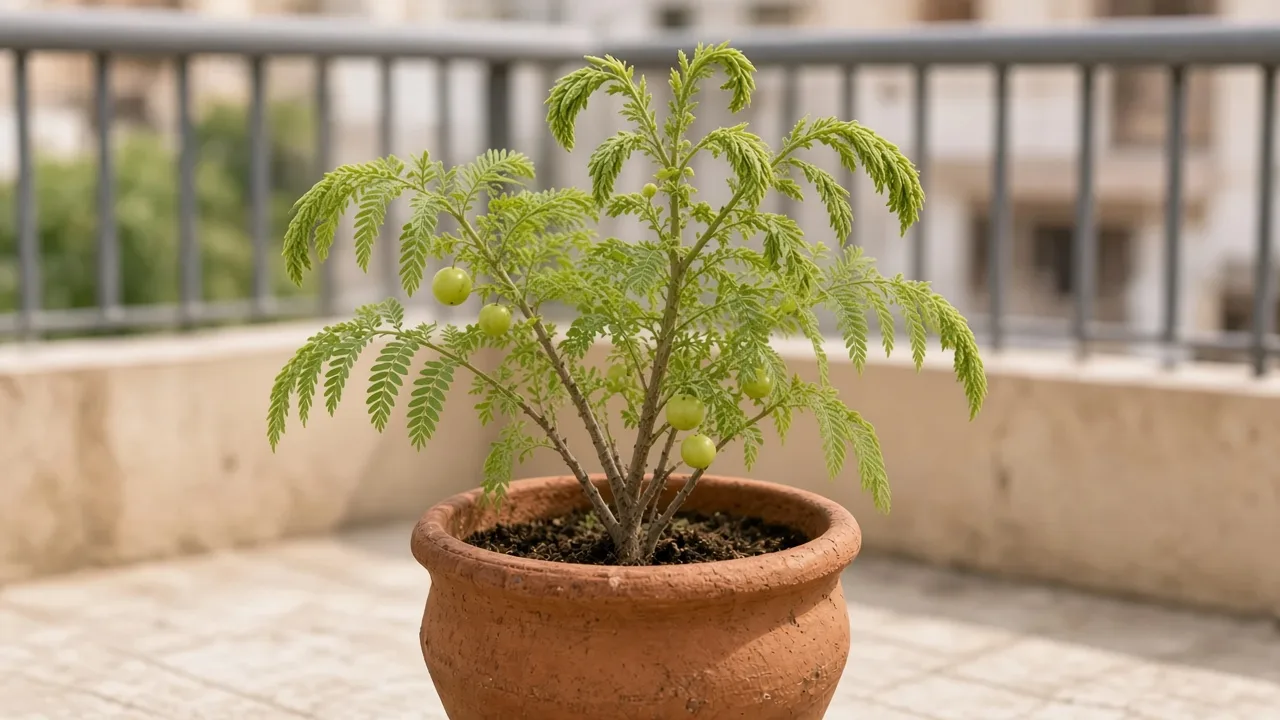
Drooping Leaves on Amla: Causes, Checks & Fixes
This guide covers drooping leaves on Amla. See also the general Drooping Leaves guide, watering, and light pages for this plant.
Drooping Leaves on Amla: Causes, Checks & Fixes
Quick answer
Drooping leaves on Phyllanthus emblica (Amla, Indian gooseberry) show up as limp feathery branchlets on a sun-loving terrace fruit tree—not as a single sad rubber-plant leaf in a dim room. The same sag can mean opposite problems: waterlogged monsoon mix starving roots of oxygen, a dry small pot on a hot balcony, or afternoon heat wilt on a tree that firms up overnight.
For how turgor loss works on houseplants in general, see our drooping leaves hub. On Amla, the decisive check is moisture at 3–5 cm depth in a draining container under full sun—not whether you watered “last Tuesday.”
First step: push a finger 3–5 cm into the mix. If it feels cool, clings, and the pot stays heavy, stop watering and improve drainage and light before any other fix. If it is dry at that depth, deep-soak until water runs from the holes and discard saucer water.
When to use this page vs other Amla guides
| Pattern | Best page |
|---|---|
| Feathery branchlets hanging limp, mix unclear | This page |
| Collapse with soft stems and sour wet soil | Root rot |
| Yellowing on wet heavy pots | Overwatering |
| Crisp dry tips, very light pot in summer heat | Underwatering |
| Sudden full canopy collapse | Wilting |
| Pale yellow lower leaflets, not just limp | Yellow leaves |
| Long weak stems in shade | Not enough light |
| Uniform bare wood in late winter | Normal deciduous rest — see overview |
What drooping leaves look like on Amla
Healthy Amla carries fine pinnate leaves along slender green branchlets—dozens of tiny light-green leaflets per stem on a woody terrace tree. Drooping breaks that pattern in recognizable ways:
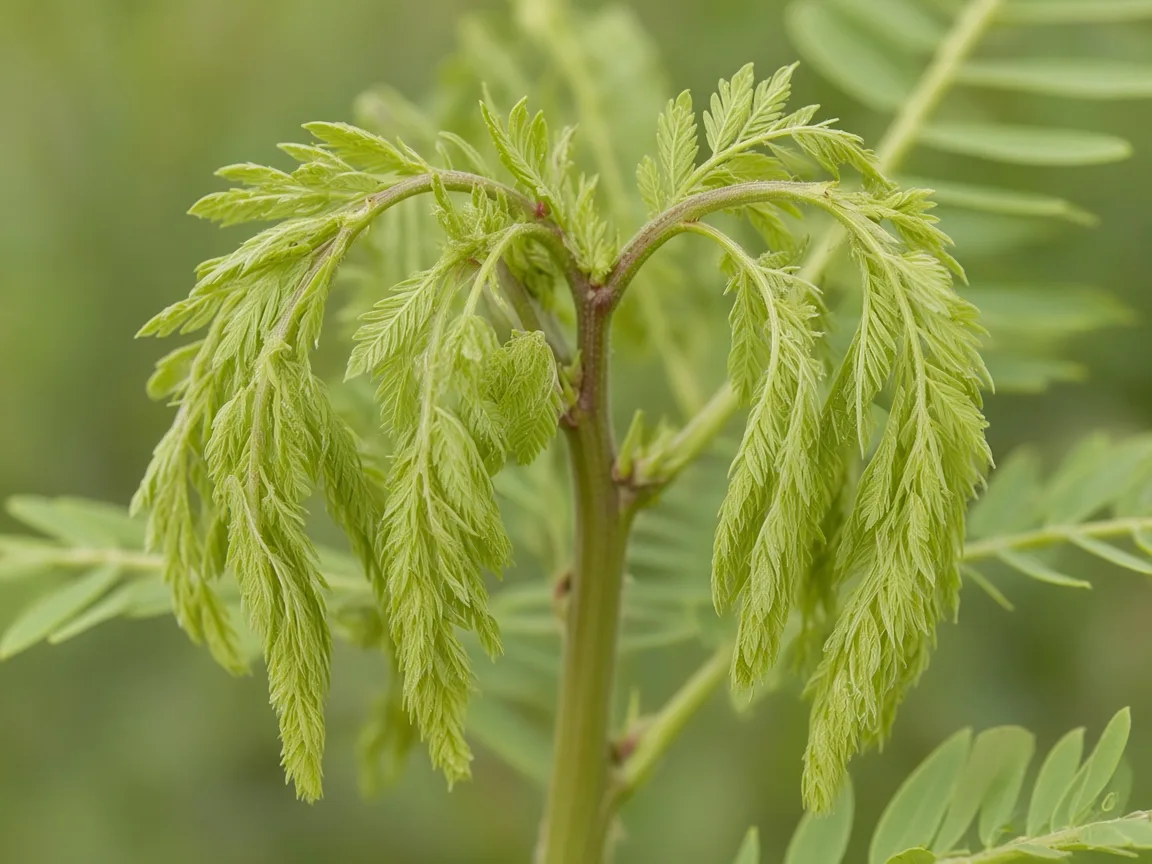
Limp feathery leaflets along an Amla branchlet—compare sagging tips with firm new flush lower on the same stem.
- Whole branchlets hanging downward — Feathery clusters lose stiffness from tip to base while the woody stem may still feel firm
- Outer branchlets droop first in afternoon heat — Tallest sun-exposed shoots sag by mid-day, then partially recover by morning when depth and roots are healthy
- Uniform limp canopy on a heavy wet pot — Mix clings at 3–5 cm, saucer holds water, and new flush looks pale or stalled
- Dry, lightweight pot with curled leaflet edges — Container dried fast under full terrace sun; overlaps underwatering
- One-sided droop after a recent move — Sun shock or root disturbance from repotting on a young grafted tree
- Sticky limp tips with ants on the saucer — Aphid honeydew and weak new growth, not drought alone
Spots on new spring flush branchlets after a dry spell need water sooner than a few lower leaflets drooping before normal winter rest.
Feathery branchlets and the terrace finger test
Amla is not diagnosed like a peace lily. Its compound feathery leaves hang from slender branchlets on a slow-growing deciduous fruit tree in a large terrace pot. When turgor drops, entire branchlet sprays sag—not one broad blade.
That matters because:
Surface colour lies in deep planters. The top centimetre can look pale and dry while the middle stays wet for days after monsoon rain or a heavy soak. The Amla watering guide standard—dry at 3–5 cm before the next drink—is the same check that separates droop from drought versus droop from waterlogging.
Pot weight beats calendar watering. Lift the container after a full drain cycle and again when you suspect drought. Amla tolerates drought once established in the ground, but a 30–40 cm balcony pot can swing from bone-dry to saturated within one rainy week.
Branchlet tips tell timing. New flush drooping while older woody sections stay upright usually means current root-zone stress. Uniform sag from base upward on wet mix points to root damage faster than heat wilt.
Afternoon heat wilt vs waterlogged monsoon pots
Amla belongs in six or more hours of direct sun on a terrace or south-facing outdoor spot. Two opposite terrace patterns cause the same visible droop:
Heat wilt on a correctly watered tree. Tall branchlets in full afternoon sun can temporarily lose stiffness even when the 3–5 cm check reads moist. If shoots firm overnight and new tips stay green, you are seeing transient heat stress on a sun-built canopy—not permission to water again. India Gardening notes Amla needs strong sun but protection from constant wind on exposed balconies—wind plus heat dries leaflets faster than roots replace water.
Monsoon waterlogging in closed planters. Continuous rain plus a cachepot without drainage keeps well-drained soil anaerobic. Leaves droop while mix stays wet—Missouri Botanical Garden describes wilting on wet soil when roots are damaged from lack of oxygen, not drought. This is the dangerous pattern: limp foliage + heavy pot + sour smell.
Route heat wilt to shade timing and depth checks. Route monsoon droop to overwatering, soil drainage, and saucer discipline.
Winter leaflet drop vs stress droop
PFAF lists emblic as a deciduous shrub or small tree. In much of India, Amla sheds leaflets uniformly in late winter (often January–February) before the March flush. Bare woody branchlets without lesions are dormancy, not failure.
Stress droop differs:
- Off-season sag while soil stays wet — Usually overwatering or poor soil in cool months when the tree uses little water
- Sudden limp flush after a cold snap — Protect from frost; Amla is tropical and tender growth collapses below comfortable warmth
- Patchy droop on one side after repotting — Root breakage on a young container tree; hold fertilizer per the fertilizer guide
Do not deep-soak a bare winter tree on autopilot—dormant roots use far less moisture than summer fruiting wood.
Why Amla gets drooping leaves
Overwatering and poor drainage
The most common killer on terrace pots is chronic wet mix, not neglect. Plants Info warns that overwatering a newly planted Amla tree rot roots faster than most growers expect. Heavy peat, sealed cachepots, and monsoon rain without saucer emptying all keep oxygen out of the root zone. Lower branchlets yellow and hang while the pot stays heavy—see overwatering and root rot.
Underwatering in summer containers
Established field trees follow wide dry-summer irrigation intervals, but a small pot in May sun can dry in three days. Feathery leaflets curl and branchlets droop from the tips inward. Premature fruit drop and stalled flush often accompany deep drought during flowering or fruit set.
Heat and wind on full-sun terraces
Strong sun builds a sturdy canopy, but extreme heat plus drying wind pulls water from leaflets faster than roots supply it on shallow watering days. Temporary afternoon droop on an otherwise healthy tree is common; persistent limp tissue after cool nights is not.
Transplant and repot shock
Young grafted Amla is sensitive when roots are disturbed. Repotting in peak heat, or stacking repot + prune + feed, often shows as limp branchlets for one to two weeks even when mix moisture is correct.
Root rot and collar failure
Advanced root rot collapses turgor while soil smells sour. Stems soften near the soil line. This is urgent—stop water, inspect roots, and repot into gritty mix only if tissue is still salvageable.
Shade and weak growth
Amla cannot grow in shade. Trees kept indoors or on shaded verandas push soft, elongated branchlets that droop from weak structure—not from a single missed watering. Route to not enough light and leggy growth.
Pests on tender flush
Heavy aphid colonies on winter or monsoon flush weaken new branchlets. Sticky shoots and ant trails distinguish this from pure water stress.
How to confirm the cause
Work through these checks in order:
- Finger test at 3–5 cm — Dry means drought path; cool clinging soil means stop watering.
- Pot weight and drainage — Heavy days after watering, full saucer, or no holes confirms wet-root droop.
- Smell at the soil line — Sour or swampy odor overlaps root rot, not heat wilt.
- Time of day pattern — Afternoon-only sag that recovers by morning supports heat wilt on a correctly watered tree.
- New branchlet firmness — Green firm tips mean roots still support growth; brown soft tips on wet mix mean advancing damage.
- Light history — Recent move from nursery shade to harsh terrace sun, or months in a dim corner, changes the diagnosis.
- Season — Uniform winter leaflet loss on bare wood is deciduous rest; off-season limp on wet cool soil is overwatering.
Lookalike comparison
| What you see | Likely cause | How to tell apart |
|---|---|---|
| Limp branchlets, dry at 3–5 cm, light pot | Underwatering | Deep soak firms tips within 24–48 h |
| Limp branchlets, wet heavy pot, yellowing | Overwatering | Wilts despite moisture; may smell sour |
| Afternoon sag, firm by morning, moist depth OK | Heat wilt | No sour smell; new flush still green |
| Soft stem base, black roots | Root rot | Collapse worsens daily on wet mix |
| Sticky curled tips, ants | Aphids | Insects on undersides; wipe test |
| Bare wood, no limp green leaflets, late winter | Deciduous rest | Seasonal; wood firm without rot smell |
First fix for Amla
Run the 3–5 cm finger test and act on that single result—do not water and drain on the same day.
- If wet: withhold the next soak, empty the saucer, move the pot off a flooded terrace floor, and confirm drainage holes are open. Improve soil grit only after the mix begins to dry—do not repot sodden roots on day one unless they are mushy.
- If dry: water slowly until runoff appears, stop, and discard standing water. Wait 24 hours and re-check depth before soaking again.
That one correction tells you whether the tree is drowning or thirsty. Add shade cloth for afternoon heat only after moisture logic is clear.
Step-by-step recovery
Days 1–3
- Complete the finger test and single corrective soak or dry-down.
- Move cachepot trees to an inner nursery pot you can lift for weight checks.
- Shield from harsh afternoon sun only if heat wilt recurs on correct moisture.
Days 4–14
- Watch for upright new branchlet tips—recovery signal on Amla.
- Trim fully brown limp leaflets only after the tree stabilizes; they will not re-green.
- If wet mix never dries in a cool corner, improve light before repotting.
After two weeks
- Resume the watering rhythm when top 3–5 cm dry consistently.
- Hold fertilizer until two weeks of firm new flush.
- Repot into grittier mix only if roots were inspected and trimmed for rot—otherwise wait until spring.
Recovery timeline
Mild drought droop on a firm young tree often improves within 24–72 hours of a deep soak. Heat wilt may correct overnight once depth is stable. Overwatered roots need two to four weeks of dry-down before new flush looks normal; badly rotted wood may not recover. Judge success by firm new branchlets, not older bent leaflets.
Mistakes to avoid
- Watering on a calendar while monsoon rain already saturated the pot.
- Misting feathery leaflets instead of fixing root-zone moisture—surface wetness does not replace a dry profile.
- Fertilizing limp trees—salts worsen stressed roots.
- Repotting, pruning, and spraying on the same day on a young grafted terrace tree.
- Treating winter bare wood as drought and soaking dormant roots weekly.
- Keeping Amla in shade because drooping looked like “too much sun.”
How to prevent drooping leaves next time
- Water when the top 3–5 cm are dry per the watering guide.
- Use well-draining sandy loam with open holes per the soil guide.
- Keep six or more hours of direct sun on a terrace per the light guide.
- Empty saucers after every soak; never leave pots in standing monsoon water.
- Reduce irrigation in cool months; field aonla often needs little winter irrigation.
- Scout new flush for aphids before weak sticky shoots droop.
Related Amla guides
- Amla overview — Sun placement, deciduous rhythm, and fruit-tree baseline.
- Problems hub — All amla issue pages in one place.
- Wilting — When the whole canopy collapses rather than branchlet sag.
- Overwatering — Heavy pots, yellowing, and sour mix.
- Watering — Finger-test depth and seasonal reduction.
Use the Plant Problem Diagnosis Tool to narrow causes for drooping leaves on this plant before changing multiple variables at once.