Holes in Leaves on Barrel Cactus: Rib Scars & Crown Checks
Quick answer
Holes in leaves on Barrel Cactus usually mean sunken pits or scars on the ribbed stem—not foliage, because Ferocactus has no persistent leaves. First step: with gloves and a flashlight, decide whether the opening is a dry mechanical scrape on one rib, white fluff at an areole (mealybugs), or a soft spreading pocket on wet mix (rot).

Holes in Leaves on Barrel Cactus: Causes, Checks & Fixes
This guide covers holes in leaves on Barrel Cactus. See also the general Holes in Leaves guide, watering, and light pages for this plant.
Holes in Leaves on Barrel Cactus: Causes, Checks & Fixes
Quick answer
Holes in barrel cactus (Ferocactus spp.) almost never mean perforated foliage—mature plants have ribbed stem tissue and spine areoles, not persistent leaves. When owners search “holes in leaves,” they usually see sunken pits, scraped rib skin, crown chew marks, or dried rot pockets on the barrel body.
For how chewing pests and mechanical tears work on leafy houseplants, see our holes in leaves guide. On barrel cactus, the rib-edge test comes first: a dry tan nick on firm green tissue with no fluff is mechanical; white cotton in the areole above the pit points to mealybugs; mush spreading on a heavy wet pot is overwatering or root rot—not a hole to patch.
First step: with thick gloves, tongs, and a flashlight, inspect the pit and the areole row directly above it before you soak, repot, or spray.
When to use this page vs other Barrel Cactus guides
| Pattern | Start here | Or route to… |
|---|---|---|
| Sunken dry pit on one rib, firm body, no fluff | This page (mechanical or old scar) | — |
| Ragged crown chew with dark frass after patio season | Caterpillars | This page for rib-edge routing |
| White cottony clumps in crown areoles | Mealybugs | Scale insects |
| Brown halos before tissue collapses inward | Black spots | — |
| Soft mushy ribs, sour wet mix | Overwatering | Root rot |
| Bleached patches after harsh window move | Sunburn scorched leaves | — |
| Woody brown only at soil line on old barrel | Normal corking—see rib vs base section | Brown tips for crown browning |
What holes look like on Barrel Cactus
Unlike pothos or peace lily, Ferocactus carries prominent ribs with areoles that sprout spines—the green photosynthetic surface is the stem itself. NC State Extension describes erect ribbed stems with multiple spines per areole and notes the genus is usually pest-resistant but can host mealybugs, spider mites, fungus gnats, or scale. “Holes” on this plant map to stem patterns:
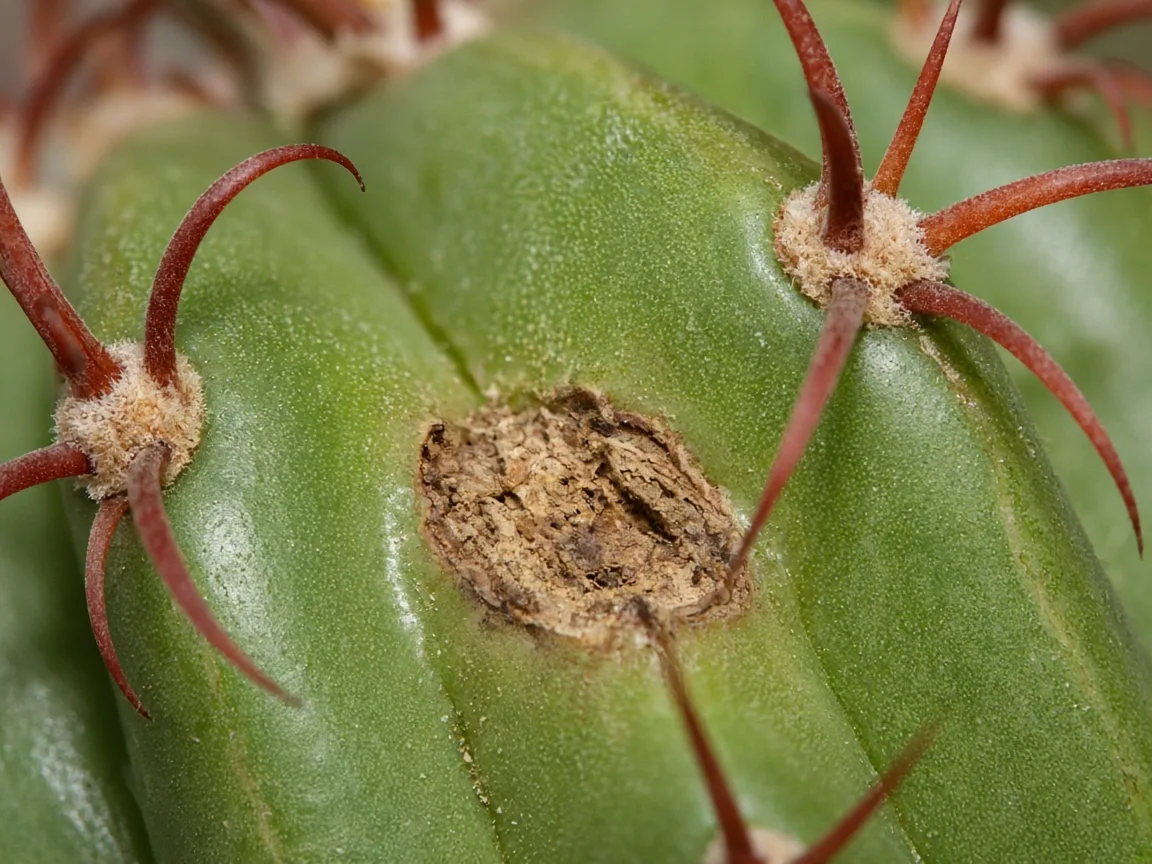
A dry sunken pit on rib tissue between spine areoles—compare firm green ribs with any soft mush or white cotton at the nearest areole before treating.
Mechanical rib scrapes (most common indoors):
- Small dry tan or gray pits where the barrel brushed a shelf, doorframe, or neighboring pot
- Clean edges, no frass, no white cotton, no yellow halo spreading week to week
- Often one rib on the traffic side; damage does not jump to opposite ribs
- May follow repotting when the plant was lifted by the body instead of the pot rim
Crown or patio chew (caterpillars, rodents outdoors):
- Ragged missing sections on tender upper ribs or crown tissue
- Dark pellet frass on spines or soil after summer outside
- Multiple fresh voids within days if the feeder is still present
- See caterpillars when frass is present
Pest-weakened areole collapse:
- Pinpoint pits that widen as sucking insects stress the epidermis
- White cottony mealybug clusters tucked against crown areoles—Succulents and More notes mealybugs colonize even thick cactus skin, though damage is often modest until populations build
- Sticky residue or ant trails near the pit on indoor specimens
- Planet Desert lists mealybugs feeding on sap as a common barrel cactus pest indoors and out
Rot pockets from wet mix:
- Soft sunken brown areas that feel mushy under gentle pressure (use tongs, not fingers)
- Often low on ribs or near soil line where moisture lingered
- Heavy pot, damp skewer, sour smell—route to root rot, not surface hole repair
- NC State links overwatering and poor drainage to brown or mushy stem areas
Seedling ephemeral leaves (rare indoors):
- Very young seedlings may show tiny true leaves that drop as the barrel form develops
- Holes in those short-lived leaves usually mean outdoor pests or handling—once leaves senesce, only rib scars remain
What barrel “holes” are not:
- Natural fenestration—barrel cactus never develops decorative leaf splits
- Normal corking at the base on mature plants—woody brown bark without a through-pit (see rib vs base section)
- Spider mite stippling alone—fine pale dots before any pit opens
No leaves, real pits: reading rib anatomy
This is the barrel cactus distinction generic hole guides miss. Damage is read on ribs and areoles, not blades:
| Feature | Mechanical rib pit | Pest-related pit | Rot pocket |
|---|---|---|---|
| Location | One sun-facing or traffic rib | Near fluffy areole or crown | Lower rib, soil line, or wet side |
| Texture | Dry, firm around pit | Cotton, scale shells, or frass nearby | Soft, sunken, spreading |
| Pot weight | Stable | Any | Heavy, slow to dry |
| Skewer test | Dry through | Dry or uneven | Wet lower third |
| Spread | Same scar for months | New pits weekly if pest active | Down-rib mush over days |
NC State emphasizes sharp spines and prominent ribs—owners often discover pits only after moving the pot and scraping epidermis against furniture. That mechanical pattern is far more common indoors than insects on a bright, dry windowsill barrel.
Areole-row inspection: the barrel cactus hole test
Spines emerge from areoles along each rib crest. The fastest confirmation path:
- Glove and tongs first — Never probe pits with bare hands; fishhook spines puncture easily.
- Follow the rib vertically — Trace from the pit up to the nearest areole. White fluff or waxy scale = pest route. Clean dry areole = mechanical.
- Frass shake — Hold a suspected rib over white paper and tap with tongs. Dark pellets mean active chewing—see caterpillars.
- Firmness squeeze (via tongs) — Gentle pressure on rib flanks beside the pit. Rock-hard with dry scar = cosmetic. Yielding mush = rot escalation.
- Pot weight + skewer — Per the watering guide, push a dry skewer to the bottom. Wet mix plus spreading pit is not a leaf-hole problem.
- Crown check — New spine clusters at the apex are most vulnerable to chew and mealybug cotton; mature lower ribs mostly scar mechanically.
Unlike thin-leaved herbs, barrel cactus does not wilt when epidermis is nicked—it stays plump while a pit dries tan. Do not wait for drooping; read pit edge, areole fluff, and rib firmness.
Why Barrel Cactus gets holes in leaves
Ferocactus evolved for rocky desert sun with full sun and fast drainage. Indoor holes usually trace to handling, crown pests after outdoor summer, or rot from generous winter watering—not chronic humidity issues.
Mechanical scrapes in tight spaces
Barrel bodies are heavy and spiny. Rotating toward a bright window, clustering pots on a shelf, or lifting by the stem during repotting scrapes rib skin. The thick epidermis may not leak sap visibly—it simply dries into a sunken tan pit. One pit on one rib after a move is classic mechanical damage.
Outdoor chewing after patio season
Barrel cacti moved outside for summer attract caterpillars and occasional rodent gnawing on tender crown tissue. Gardening Know How notes barrels want bright light but can burn at peak summer intensity—owners often shuffle pots frequently, increasing scrape and chew risk at the crown. Bring plants in before holes multiply across upper ribs.
Mealybugs and scale at areoles
Protected pockets between spines harbor mealybugs and scale. Planet Desert warns that mealybugs feed on sap and weaken tissue over time. Succulents and More found that a hard water blast removed crown cotton effectively on Ferocactus, though eggs in soil may require follow-up—confirm active insects per University of Minnesota Extension before spraying stressed plants.
Overwatering rot masquerading as pits
Chronic wet mix causes brown mushy stem areas that can collapse into irregular voids as tissue dies. This is not a repairable “hole”—it is rot. Heavy pots, poor mineral soil, and winter watering when the plant is cool are common indoor triggers. NC State lists overwatering and poor drainage as causes of mushy stem regions.
How to confirm the cause
Work through this order—each step narrows treatment without stacking fixes:
- Edge and depth — Dry shallow tan scar vs ragged chew vs soft mush.
- Areole fluff — White cotton or scale shells within one spine cluster.
- Timing — After repotting, patio season, or a wet winter watering spell.
- Neighbor ribs — One rib unchanged for months = mechanical. Several upper ribs weekly = pests or rot.
- Skewer moisture — Dry through = mechanical or pest-only. Wet lower = rot path.
- Corking check — Woody brown band at soil line on an old barrel without a through-pit is normal corking, not fresh hole damage.
The first fix to try
If the pit is dry and firm with clean areoles: Reroute the pot away from scrape paths and stop handling the body. No water change, no spray, no repot. Monitor for six weeks—barrel cactus is very slow growing, so new damage should not appear on fresh ribs.
If white cotton sits in the areole above the pit: Isolate the barrel. Blast crown areoles with a hard angled water stream (wear eye protection). That single step often clears accessible mealybugs on spiny Ferocactus per grower reports—recheck in seven days before alcohol swabs on individual clusters.
If frass and ragged chew appeared after outdoor time: Move indoors, hand-pick visible larvae with tongs at dusk, and inspect crown ribs nightly for three days. Escalate to the caterpillar guide only when chewing continues.
If tissue is soft and the pot is heavy-wet: Stop watering immediately and move to the overwatering path—do not fill surface pits with cinnamon or sealant.
Do not repot, prune spines, and spray pesticide the same day. Pick the row in the table that matches your pit pattern, execute one correction, then wait one watering cycle before the next change.
Recovery timeline and what improves
Barrel cactus epidermis does not close holes like herb leaves. Success markers:
- No new pits on ribs that were clean last month
- Firm ribs when pressed gently with tongs—no spreading softness
- Clean crown flush—new spine clusters open without tan rot or fresh chew
- Stable pot weight after corrected watering rhythm
A single mechanical nick may stay visible for years on a slow barrel. Mealybug-cleared areoles may scar lightly but stay firm. Rot pockets that turn black and dry can stabilize if roots recover—judge by firm base tissue, not cosmetic pits.
Mild mechanical cases often stop progressing within one to two watering cycles (four to twelve weeks indoors). Crown pest cleanup may need two to three weekly inspections before you declare victory.
Lookalike symptoms on Barrel Cactus
| What you see | Likely cause | Guide |
|---|---|---|
| Dry tan pit, one rib, firm body | Mechanical scrape | This page |
| Ragged void + frass at crown | Caterpillar chew | Caterpillars |
| White cotton in areoles | Mealybugs | Mealybugs |
| Brown halo then collapse | Wet rot | Root rot |
| Bleached patch, no through-hole | Sun scorch | Sunburn scorched leaves |
| Woody band at base only | Corking | Normal aging—not a hole |
Mistakes to avoid
- Sealing pits with wax or glue — Traps moisture and worsens rot on desert stems.
- Soaking because a rib “looks thirsty” — Wet mix on scarred ribs invites the mush that made a pit look worse.
- Bare-hand probing — Fishhook spines cause injury; use tongs and gloves.
- Spraying pesticides before ID — UMN Extension recommends confirming active pests; dry mechanical scars need rerouting only.
- Confusing base corking with crown pits — Lower woody bark on mature barrels is normal; fresh pits at the apex are not.
How to prevent holes next time
Give the barrel clearance on shelves, rotate pots without dragging ribs along sills, lift by the pot rim only, match watering to full dry-down with a skewer, use mineral cactus mix in porous clay, acclimate to bright light gradually, quarantine after patio season, and inspect crown areoles monthly with tongs. Accept visible old scars on slow-growing barrels—they are cosmetic if ribs stay firm.
Related Barrel Cactus guides
Conclusion
Holes in leaves on barrel cactus are rib and crown epidermis damage on a leafless desert barrel, not perforated foliage. Match mechanical rerouting, areole pest cleanup, or dry-back rot care to what pit edges, areole fluff, and pot weight tell you. Old pits may stay visible for years; watch for firm ribs and clean new crown spines as your success marker.