Caterpillars on Barrel Cactus: Crown Checks & Spine-Safe
Quick answer
Caterpillars on barrel cactus chew the crown, swelling flower buds, and soft upper areoles—leaving ragged tissue and dark pellet-like frass on rib grooves or the pot rim. First step: isolate the pot, wear thick gloves, and hand-pick every larva from the crown with kitchen tongs into soapy water before spraying anything.
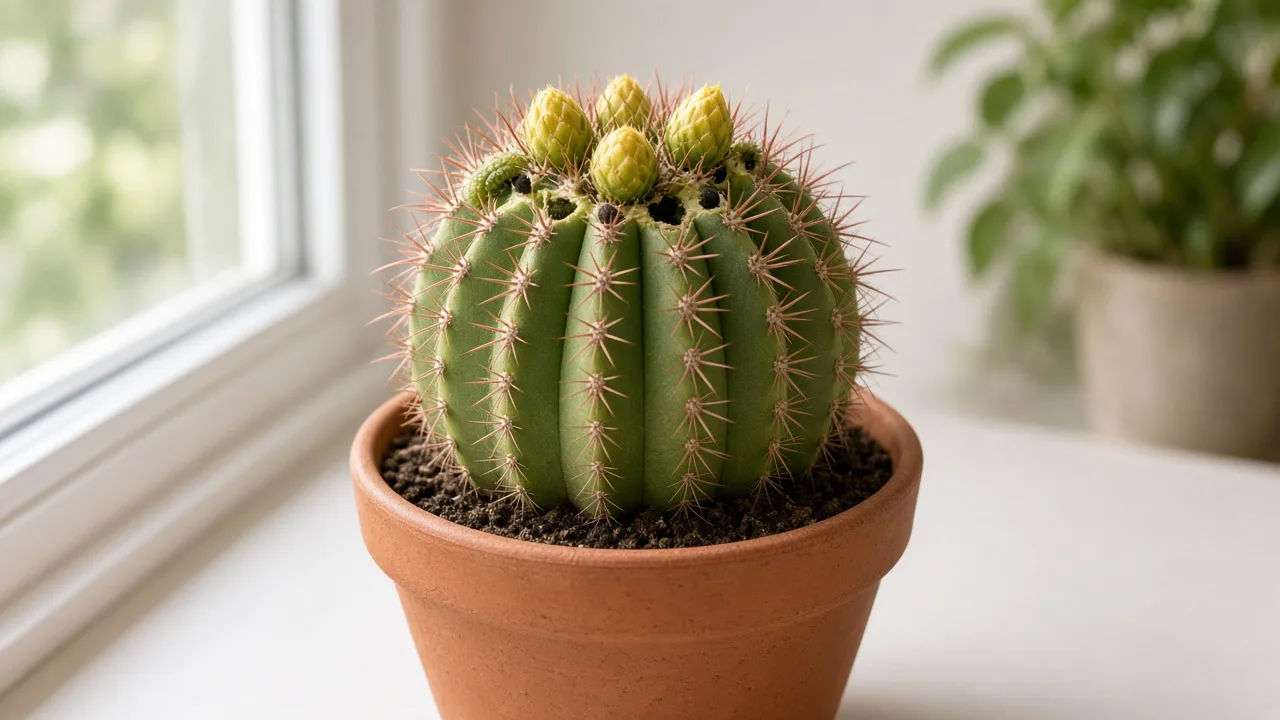
Caterpillars on Barrel Cactus: Causes, Checks & Fixes
This guide covers caterpillars on Barrel Cactus. See also the general Caterpillars guide, watering, and light pages for this plant.
Caterpillars on Barrel Cactus: Causes, Checks & Fixes
Quick answer
Caterpillars on barrel cactus are larvae of moths and butterflies that chew plant tissue with their mouthparts, leaving irregular notches, ragged crown tissue, and dark pellet-like frass on upper rib grooves, areoles, or the pot rim below. On container Ferocactus, they almost always target the crown—the growing tip where ribs meet, on swelling flower buds, and in new areoles on the upper barrel—while the hardened ribbed body below stays untouched.
For how caterpillars feed, leave frass, and respond to handpicking and Bt in general, see our caterpillars guide. On barrel cactus, the diagnostic pattern concentrates at the crown and bloom ring, not on leafless mid-ribs—and treatment must avoid pooling water at the growing tip.
First step: isolate the pot away from other succulents, wear thick gloves, and hand-pick every caterpillar from the crown and upper areoles with kitchen tongs, dropping them into soapy water. Confirm live larvae or frass before spraying—the spiny crown makes broad pesticide drenches riskier than removing one or two visible larvae by hand.
A firm base with chew marks only at the crown is an insect problem. A soft base on wet mix is a different emergency—see root rot on barrel cactus before you treat pests.
When to use this page vs other Barrel Cactus guides
This page is the chewing-insect entry for ragged crown tissue with frass pellets.
| Pattern | Read next |
|---|---|
| Ragged chew + frass + visible larvae at crown | This page |
| Soft pear-shaped insects and sticky honeydew at crown | Aphids |
| White cottony masses in areole crevices | Mealybugs |
| Fine webbing and yellow stippling on ribs | Spider mites |
| Hard brown bumps that do not move | Scale insects |
| Clean tear, no frass, no spread after moving pot | Holes in leaves (mechanical on rare spine snaps) |
| Pale serpentine trails without through-holes | Leaf miners |
| Soft base, yellow lower tissue, wet mix | Overwatering or root rot |
| Slight rib contraction, dull skin, bone-dry pot | Underwatering |
What caterpillars look like on Barrel Cactus
Ferocactus has no leaves—only ribs, spines, and a crown that pushes new growth once or twice a season. Caterpillar damage is easy to miss until frass pellets appear on a rib groove or the windowsill below. The signature is ragged missing tissue with pellet frass at the top, not the clean snap of a bumped pot or the stippling of sap feeders on mid-body ribs.
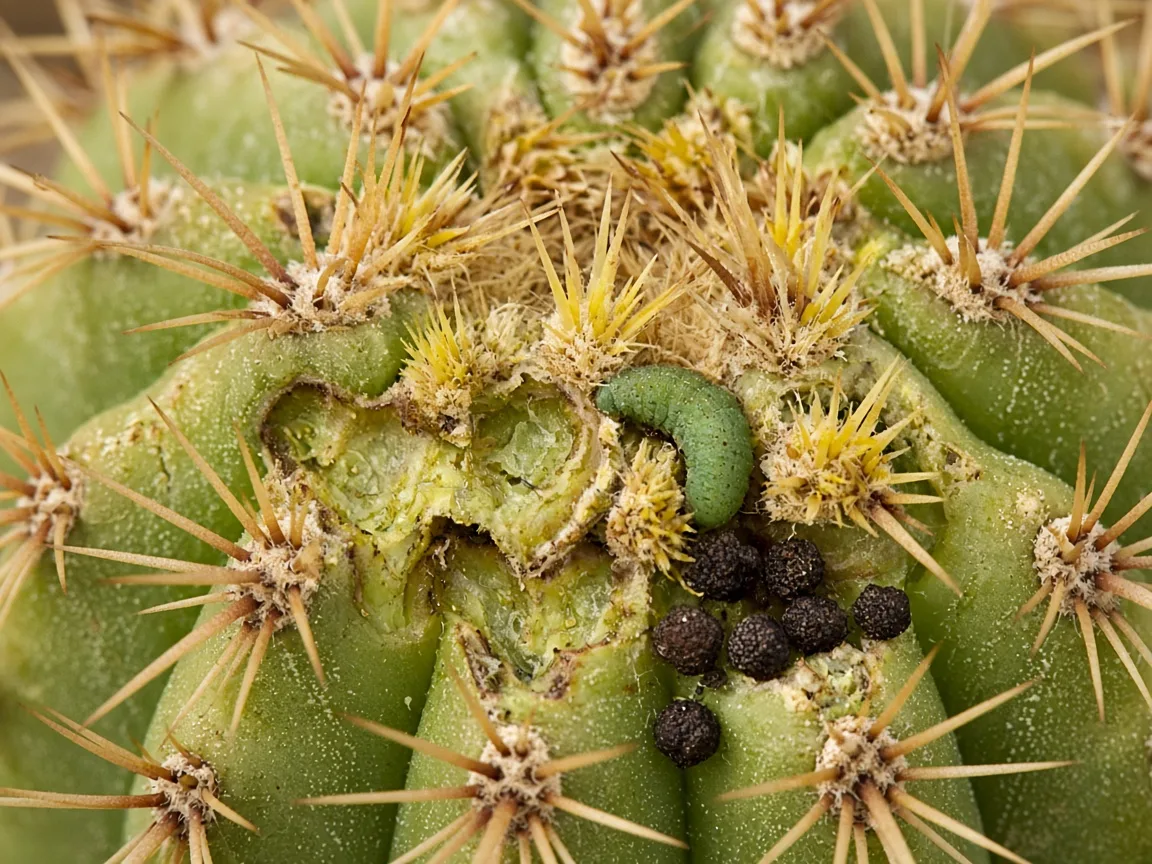
Irregular chew notches and dark frass pellets at the crown areole beside new spine clusters—compare with firm ribbed tissue on the barrel below.
On barrel cactus, larvae gather where tissue is still soft:
- Crown growing tip — where new ribs and spine clusters emerge at the top of the barrel
- Swelling flower buds — soft tissue around the crown-like bloom formation in late spring to early summer
- New areoles on upper ribs — the first few spine clusters below the crown, before tissue hardens
- Pot rim and bench below — dark pellet-like frass that falls from crown colonies above
- Offsets or pups — if your specimen is branching, check each new pup’s tip first
Supporting signs include irregular ragged notches (not clean vein splits), visible larvae that move when prodded with a stick, accelerating damage over several warm days as one caterpillar consumes a surprising area of soft crown tissue, and silken webbing on some species that roll or shelter between spine clusters. Look for feeding holes, excrement, and caterpillars together before treating.
Unlike spider mites, caterpillars do not produce fine webbing across ribs or yellow stippling on hardened barrel skin. Unlike aphids, there is no sticky honeydew—only open chewing wounds and frass. Unlike sunburn, chew marks have torn irregular margins and pellets nearby, not uniform bleached patches.
Crown and bloom-ring inspection on a spiny barrel
This is the barrel cactus pattern generic caterpillar pages miss. Before you spray, you need a spine-safe way to see the only tissue larvae can actually eat.
Where to look first
Flowers appear in a crown-like formation on top of the cactus before and during bloom. Caterpillars colonize:
- The central growing tip — where new ribs and spine clusters emerge
- Swelling flower buds — soft tissue around the bloom ring
- New areoles on upper ribs — the first few spine clusters below the crown
- Silken shelters — some larvae web between adjacent spines at the crown and feed from inside
Use kitchen tongs wrapped in paper towel to tilt the pot, or photograph the crown with phone zoom. Wear protective gloves when handling barrel cactus—curved fishhook spines can puncture fabric and skin. Never press your face into the crown to inspect.
Frass on rib grooves vs mechanical spine damage
Dark pellets lodged in upper rib grooves strongly suggest active caterpillar feeding. Mechanical damage from moving the pot or brushing against spines leaves clean breaks or spine snaps on hardened ribs lower on the barrel—usually without frass and without ragged chew at the crown. If pellets appear only on the bench below with no crown damage, check neighboring plants; moths may have fed elsewhere and dropped frass while crawling.
Why barrel cactus gets caterpillars at the crown
The barrel cactus is usually pest and disease resistant, so caterpillars are uncommon compared with mealybugs, spider mites, fungus gnats, or scale. When chew damage appears, suspect a recent introduction rather than chronic indoor pressure.
New crown tissue is the only buffet. Unlike a fern or pothos, Ferocactus offers almost no soft foliage—larvae concentrate where sap flows fastest: the growing tip and flower buds during active warm-season growth.
Outdoor summer placement. Patio barrels pick up moth eggs on crown tissue. Pests arrive on nursery stock and outdoor plants and continue feeding indoors where birds, parasitic wasps, and other predators are absent.
Night-flying moths near lights. Female moths may enter through greenhouse doors or lay eggs near lights on susceptible crops. A south-window barrel cactus near an open window in warm months is a reachable egg-laying site.
Indoor warmth without enemies. A single egg mass can hatch into larvae feeding at the crown for weeks before you notice frass on the floor. Indoor plants lack the natural enemies that control caterpillars outdoors.
Bloom-season vulnerability. Soft flower buds draw chewing pests the same way they draw aphids—but caterpillars leave ragged tissue and frass, not pear-shaped insects and honeydew.
How to confirm the cause
Work through these checks in order so you do not spray pests while the base is rotting from wet soil:
- Frass search — dark pellet-like droppings on upper ribs, crown areoles, or the pot rim below strongly indicate caterpillars, not fungal spots or mite stippling.
- Crown scan — inspect the growing tip and any swelling buds before looking at lower ribs. Use tongs and zoom photos, not finger probes into spines.
- Movement test — touch a larva with a stick or bamboo skewer. Caterpillars move or curl; dried debris alone is not enough.
- Night inspection — if you see fresh chew but no daytime larvae, check at dusk with a flashlight along crown areoles and bud clusters.
- Base firmness — dry skewer through the pot; firm ribs and a stable base point to insects at the crown. Soft or mushy base on damp mix means rot risk first—see overwatering.
- Entry route review — recent outdoor placement, nursery arrival, or open-window season supports caterpillars over chronic indoor sap feeders like scale.
Symptom lookalike comparison
| What you see | Likely cause | Key check |
|---|---|---|
| Ragged chew + frass at crown | Caterpillars | Live larvae or pellets; damage only on soft top tissue |
| Sticky honeydew, soft insects at crown | Aphids | Pear-shaped colonies; no through-chew holes |
| White cottony masses in areoles | Mealybugs | Stationary wax; alcohol turns them orange-gray |
| Fine webbing, yellow stippling on ribs | Spider mites | Dry air; damage on hardened ribs, not bud clusters |
| Uniform bleached patches on sun-facing ribs | Sunburn | No frass; follows recent move to hotter window |
| Soft base, translucent tissue, wet mix | Overwatering / rot | No insect colonies; sour soil odor possible |
Confirmed diagnosis — ragged crown chew plus frass or a visible larva with a firm base. Suspected — pellets on the bench without crown damage may need a magnifying glass on the youngest areoles and a night re-check before treating.
First fix: isolate, tong-pick, then treat the crown only
Isolate the pot away from other succulents and cacti until you see no new chew marks or larvae for at least two weeks after treatment.
Hand-pick every caterpillar with kitchen tongs into soapy water first. This is the lowest-risk first fix for a spiny crown—no pooled water at the growing tip and no chemical residue across the whole barrel. Handpicking and natural enemies often provide enough control when you catch larvae early. Grip each larva firmly, check silk shelters between spine clusters, and crush egg masses you find on crown tissue with a cotton swab.
Night follow-up when daytime picks miss larvae
Many caterpillars feed at night and hide along stems during the day. If chew marks spread but you found nothing at noon, repeat the tong-pick at dusk with a flashlight focused on the crown and upper areoles. One thorough night session often clears a small indoor infestation without sprays.
If handpicking is not enough: Bt on crown tissue only
When larvae remain after two or three pick cycles, apply Bacillus thuringiensis subspecies kurstaki (Btk) labeled for caterpillars. Btk kills only caterpillars and is safe near bees and beneficial insects—but caterpillars must feed on treated tissue, so coat crown buds and upper areoles until runoff. Rules for barrel cactus:
- Apply early morning on a crown that will dry in full sun within hours
- Target small larvae — Btk is most effective on newly hatched caterpillars and breaks down quickly
- Never soak the crown to “wash in” the spray—tilt the pot so liquid runs off ribs
- Avoid stacking repot, crown pruning, or fertilizer the same week you start Bt
Crown rinse: last resort, spine-safe
A brief targeted rinse can knock larvae off the crown, but barrel cactus needs special handling:
- Rinse only the crown, not the whole pot
- Tilt the plant so water runs down ribs and never sits in the growing tip
- Treat in morning so the crown dries within a few hours per the watering guide
- Skip rinses during cool dormant months when the plant should stay dry
What not to do the same day
Do not increase watering because the crown looks ragged—check base firmness and skewer dryness first. Do not soak the crown overnight after picking larvae. Do not use harsh indoor pesticides without ventilation. Do not ignore egg masses on crown tissue after removing visible caterpillars.
Recovery timeline and bloom expectations
Visible caterpillars should clear within one to two weeks of consistent hand-picking or Bt treatment. Expect clean new crown growth within four to twelve weeks during active warmth—Ferocactus grows very slowly, so patience is normal. Chewed flower buds from heavy feeding are gone for that cycle; judge success by the next clean flush, not by reopening old buds.
A firm ribbed base throughout treatment is a good sign. Softening at the base means rot or overwatering—not caterpillars—and needs a different response immediately. Crown tissue that stays wet after rinsing or spray can invite rot at the growing tip even when larvae are gone.
How to prevent caterpillars on Barrel Cactus
Quarantine every new cactus for two weeks before placing it on a shared windowsill. Inspect the crown weekly during spring and summer active growth. Keep care aligned with the full barrel cactus care hub—full direct sun, mineral fast-draining mix per the soil guide, and dry-down watering so crown growth stays firm rather than overly soft.
Outdoor summer placement with good air movement often sees fewer pest issues than a crowded indoor shelf. When you bring plants back inside in fall, inspect crown areoles and rinse the top before they join other pots. Screen windows that stay open at night near south-facing cacti. Eliminate weeds that serve as alternate hosts on patios where barrels summer.
Match light to the barrel cactus light guide so the plant grows steadily without the weak pale crown tissue that both pests and rot exploit.
When to escalate
Escalate if new crown chew marks appear daily after three full pick-and-Bt cycles, if silken tents spread across the bloom ring, or if crown tissue softens and darkens after wet treatment. Chronic feeding during bloom season can weaken a slow-growing barrel cactus over months even when rot has not started.
For heavy recurring infestations, a local extension office can confirm the pest species and discuss options. Systemic insecticides are generally a last resort on a single potted crown cactus when contact picking and Bt have failed.
Spine injury: If you or a pet contact spines, remove visible spines carefully and watch for infection. Barrel cactus is not pet safe in practice because rigid spines can puncture paws and noses—keep pots out of traffic paths.
Caterpillars alone rarely kill a mature Ferocactus with a firm base, but they can ruin a flowering season and open the door to crown rot if you respond with extra water instead of pest removal.
Before you water again
Ragged crown tissue on a firm base means pick caterpillars off the growing tip first—not another drink. Soft base on wet mix means rot protocol, not pest spray. That single check keeps most barrel cactus owners from making the problem worse while they treat the right cause.