Mold on Soil on Calathea Zebrina: Causes, Checks & Fixes
Quick answer
White or gray fuzz on Calathea Zebrina soil is usually harmless saprophytic mold on damp peat—not a leaf disease. First step: scrape off the top layer and let the top 2 cm of mix dry before you water again.
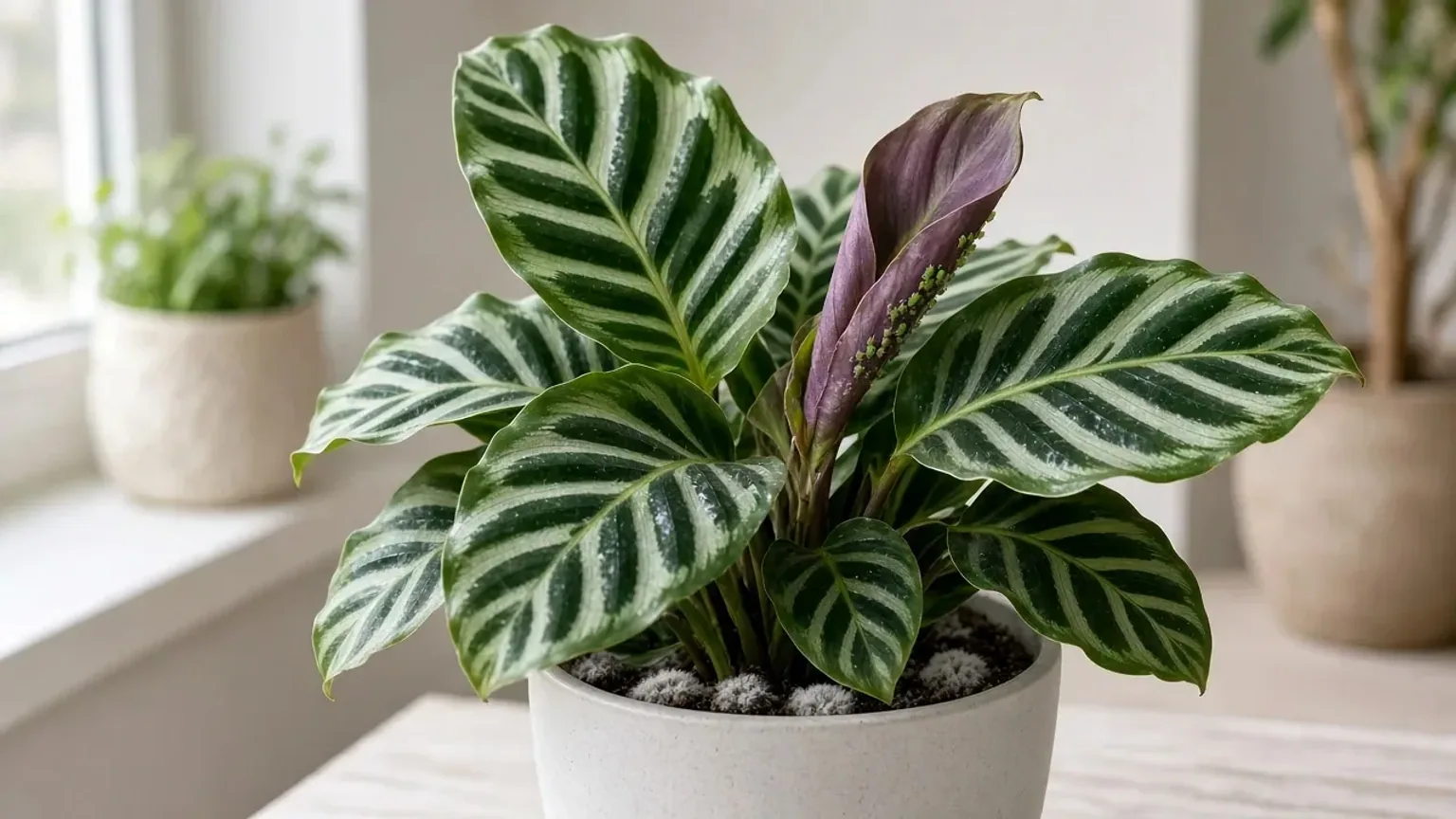
Mold on Soil on Calathea Zebrina: Causes, Checks & Fixes
This guide covers mold on soil on Calathea Zebrina. See also the general Mold on Soil guide, watering, and light pages for this plant.
Mold on Soil on Calathea Zebrina: Causes, Checks & Fixes
Quick answer
White or gray fuzz on Calathea Zebrina (Goeppertia zebrina) soil is almost always a moisture and hygiene signal, not a fungus attacking the velvety zebra leaves. The growth is typically saprophytic fungus breaking down organic matter in potting mix that has stayed damp on the surface too long. For how surface mold works on any houseplant, see the general mold on soil guide. On Zebrina, the pattern often appears while large oblong leaves still fold upright at night—do not assume the plant is dying just because the top of the peat looks fuzzy.
First step: scrape off the top 1–2 cm of affected soil and discard it, then pause watering until the top 2 cm feels beginning-dry—the same dryness check Zebrina uses before every drink in the Calathea Zebrina watering guide. Do not spray fungicide, repot, or drench roots on day one.
What mold on soil looks like on Calathea Zebrina
Zebrina’s tall clump of large velvety leaves—dark green with pale zebra stripes and reddish-purple undersides—may still fold upward at night while the soil surface tells a different story. Common patterns:
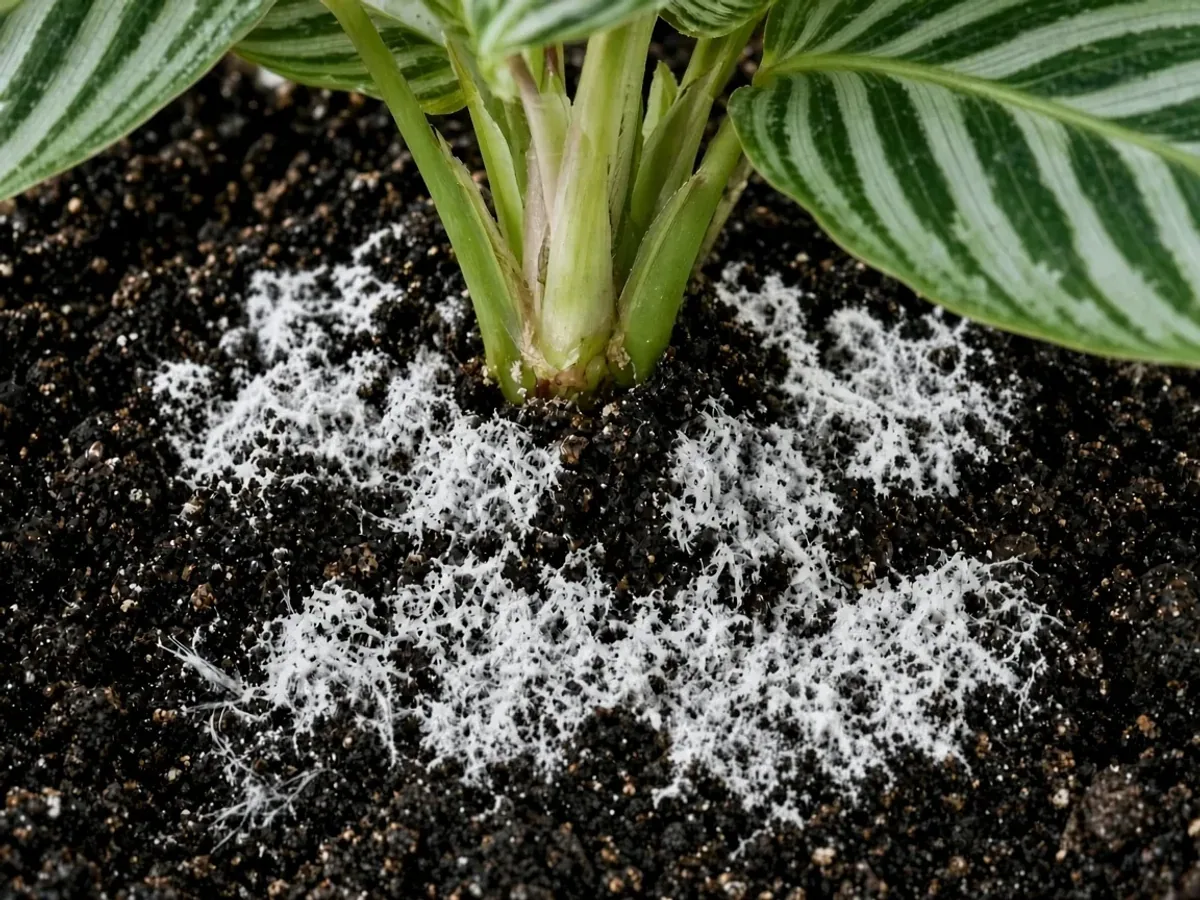
White or gray fluffy saprophytic mold on the soil surface—firm zebra leaves and normal nightly folding above mean the plant is fine; scrape the top layer and let the surface dry.
- White, gray, or occasionally yellow-green fuzz on the top of the mix, sometimes on the pot rim or around drainage holes
- Soil that stays dark and cool at the surface for many days after you water
- Cottony thread-like mycelium when you poke the surface with a finger
- Decaying leaf bits from outer Zebrina blades that dropped onto the mix and now mold on the surface
- Small fungus gnats on Calathea Zebrina associated with overwatered houseplants that fly up when you water or move the pot
The plant may still hold leaves upright, fold at night normally, and push new rolled spears from the center. Worry more when lower leaves yellow while soil is wet, stems feel soft at the base, or the pot smells sour—those point past cosmetic mold toward root stress.
Not the same thing: a slick green film is usually algae, not white mold. Both mean a wet surface. Powdery mildew on leaf blades is separate and rarely starts on potting mix alone.
Use nightly folding on large Zebrina leaves as a health check
Prayer plants in the Marantaceae family, including Zebrina, show nyctinasty—leaves that fold upward at night like hands in prayer. On Zebrina’s long oblong blades, that motion is a useful mold diagnostic:
- Firm leaves that still fold and reopen with only fuzzy soil → surface mold on wet peat; scrape and dry the top layer.
- Leaves stay curled or limp through the day on wet soil → possible root stress or overwatering on Calathea Zebrina—probe deeper before assuming mold is cosmetic.
- New center spears collapse while the surface is moldy → escalate to root inspection; do not water to “fix” curl on already-saturated mix.
Zebrina’s drama-prone foliage can look stressed from dry air, hard tap water, or low humidity without mold being the cause. Pair leaf checks with the top 2 cm soil probe, not leaf curl alone.
Humidity setups that keep the soil surface wet
Zebrina is a humidity benchmark species—NC State Extension recommends humidity above 60% and moist, well-drained peat-based mix indoors. Owners often add pebble trays, humidifiers, or tight plant shelves to protect the pale zebra bands from crisping. Those same setups can slow evaporation at the soil line:
- Pebble trays and cachepots raise humidity under the foliage but trap runoff and keep the rim damp—prime territory for saprophytic fungi.
- Grouping Zebrina with other calatheas creates a humid microclimate where the top layer of mix dries slower than the roots use water.
- Misting leaves does not replace watering; it can drip organic debris onto wet peat and feed surface mold.
Humidity supports leaf quality on Zebrina; it does not mean the surface should stay continuously wet. Let the top 2 cm dry between drinks while keeping ambient humidity high with airflow, not a soggy rim.
Why Calathea Zebrina gets mold on soil
Zebrina is a tropical understory prayer plant that wants evenly moist, well-drained mix—not a constantly wet surface. NC State Extension notes that the soil needs to be moist but warns to avoid overwatering or soggy soils, which can cause root rot. Growers aiming for “moist roots” sometimes keep the surface saturated, which is where saprophytic fungi colonize.
Zebrina-specific triggers include:
Large leaves shedding debris. Zebrina leaves can reach 18 inches long in good conditions. Spent blades and edge trimmings fall into the pot and decay quickly on wet peat—direct food for surface mold.
Oversized pots after repotting. Zebrina can grow to 3 feet tall as a houseplant, but the rhizome clump may still be modest. A wide ring of unused wet peat around the roots is a common hidden overwatering trap—and mold grows on that unused margin first.
Overhead watering on velvety foliage. Splashing wets leaves and drops organic matter onto the mix. In humid groupings, that debris molds within days.
Calendar watering through winter. The RHS recommends keeping compost evenly moist in the growing season and taking care not to overwater in winter. Many owners keep the same five-to-seven-day schedule while Zebrina uses less water in dim, cool months—the surface stays wet for days.
Cachepots and full saucers. Decorative outer sleeves trap runoff and wick moisture back to the surface fine roots never needed.
Surface fungi are usually not pathogenic—their growth isn’t usually detrimental to plants. The risk is indirect: chronic wetness invites fungus gnats and can precede root decline on a plant that cannot tolerate stagnant mix.
How to confirm the cause
Work through these checks before Calathea Zebrina repotting or spraying:
- Spear and stem health — Are newest center leaves firm and unfurling? Does Zebrina still fold at night? Is the stem base hard when you press near the soil line?
- Surface moisture — Does the top 2 cm stay cool and damp five or more days after watering?
- Smell — Musty surface odor fits harmless mold. Sour, swampy smell from deeper in the pot suggests anaerobic wet mix.
- Debris scan — Remove fallen velvety leaves on the soil. Mold often starts where decaying tissue meets wet peat.
- Gnat check — Tap the pot. Flies emerging mean a shared wet-soil habitat.
- Light and season — In low light or winter rest, stretch intervals toward seven to ten days per the watering guide if the surface stays wet.
If the plant is firm, leaves fold normally, and only the top layer is fuzzy, treat as confirmed surface mold. If stems are mushy or yellowing spreads on wet soil, unpot and inspect roots.
First fix for Calathea Zebrina
Scrape off the top 1–2 cm of moldy mix and discard it in the trash—not the compost pile.
Use a spoon or fork, remove the fuzzy layer plus visible decaying leaf bits, and expose fresh mix below. Then stop watering until the new surface feels beginning-dry at about 2 cm depth.
That single action removes active spores and starts drying the environment mold needs. Do not repot the whole plant, fertilize, or mist leaves on the same day.
Step-by-step recovery
After the first scrape and dry-down:
- Refresh the top layer — Replace scraped soil with a thin layer of dry, similar Calathea Zebrina soil blend. Do not pack it down hard.
- Adjust watering — Water thoroughly when the top 2 cm begins to dry, then empty the saucer within 30 minutes. In winter, stretch intervals if the surface stays wet too long.
- Bottom-water if the surface molds again — Soak from a saucer for 20–30 minutes so roots drink while the top stays drier; wipe the rim dry afterward.
- Remove debris weekly — Pull spent leaves from the pot before they mold.
- Improve airflow — Space pots on the shelf or run a gentle fan so humid air does not stagnate over wet mix.
- Brighten indirect light slightly — If Zebrina sits in deep shade, move toward medium Calathea Zebrina light so the pot dries more predictably. Avoid direct sun, which scorches zebra bands.
- Address gnats — Allow the top inch of soil to dry and use yellow sticky traps while you fix moisture.
- Repot only when chronic — If mold returns within days after repeated scrapes, repot in spring into fresh mix in a pot sized to the root ball.
Skip cinnamon, hydrogen peroxide, and fungicide drenches unless mold keeps returning after moisture correction.
Recovery timeline
Cosmetic mold should stop reappearing within one to two weeks once the top layer dries between waterings.
Fungus gnat counts often drop over two to four weeks as dry surfaces break egg cycles.
Plant recovery is judged by new center spears, not old foliage. Expect stable or improving new rolls within two to three weeks after watering correction. Existing yellow or crisp edge damage along the pale bands will not reverse.
Worsening signs: mold returns within 48–72 hours of scraping, lower leaves yellow on wet soil, or stems soften—schedule a root inspection within the week.
Lookalike symptoms
| What you see | Likely cause | First action |
|---|---|---|
| White fuzz on damp soil; firm stems; nightly folding normal | Surface saprophytic mold | Scrape top layer → dry top 2 cm |
| Mold + hovering flies | Wet soil + fungus gnats | Dry surface; sticky traps |
| Yellow lower leaves on heavy wet pot | Overwatering | Pause water; check roots if sour smell |
| Wilting with wet soil | Possible root rot | Unpot and inspect |
| Daytime curl only, dry top 2 cm | Underwatering or low humidity | Probe soil before adding water |
| Green slick on soil | Algae on constant moisture | Scrape, dry, slightly brighten light |
What not to do
Do not keep the surface wet because Zebrina “likes humidity.” Avoid overhead soaking that leaves puddles on the mix. Do not repot into a larger container to fix mold. Do not fertilize while correcting wet soil. Do not ignore gnats—they signal the same moisture mistake. Do not water on calendar autopilot when winter growth slows.
How to prevent mold on soil next time
- Check before watering — Top 2 cm beginning-dry in growth; slower in winter.
- Size the pot to the clump — Avoid wide wet margins the rhizome never reaches.
- Ensure drainage — Open holes, empty saucers, no standing cachepot water.
- Clean the surface — Remove fallen leaves promptly.
- Pair humidity with airflow — Especially near humidifiers and pebble trays.
- Bottom-water when top mold is recurrent — Roots stay hydrated; surface stays drier.
Calathea Zebrina care cross-check
| Checkpoint | Target for Zebrina | Mold link if wrong |
|---|---|---|
| Water trigger | Top 2 cm beginning-dry | Surface never dries → mold |
| Mix | Moisture-retentive but well-drained peat/coco + perlite | Heavy soggy peat → slow surface drying |
| Light | Medium to bright indirect | Deep shade → slow evaporation |
| Humidity | Above 60% with airflow | Stagnant humid air → wet surface |
| Pot | Sized to rhizome clump | Oversized pot → chronic wet margin |
Compare against the Calathea Zebrina overview if mold keeps returning.
When to worry
Surface mold on firm plants is low urgency. Escalate when mold returns within days after repeated scrapes, mix smells sour, stems soften at the soil line, lower leaves yellow on wet soil, or wilting happens despite moist mix.
When to use this page vs other Calathea Zebrina guides
- Watering — Routine top-2-cm checks before assuming mold is the main issue.
- Fungus gnats — When flies, not fuzz, are the entry symptom.
- Overwatering — Chronic heavy pots and yellow lower leaves on wet mix.
- Root rot — Mushy roots, sour smell, wilt on wet soil.
- Problems hub — Browse all Zebrina issues.
Related Calathea Zebrina guides
Related tool
Use the Plant Problem Diagnosis Tool to narrow causes for mold on soil on this plant before changing multiple variables at once.