Epipremnum Pinnatum Fertilizer Guide: Schedule, NPK &
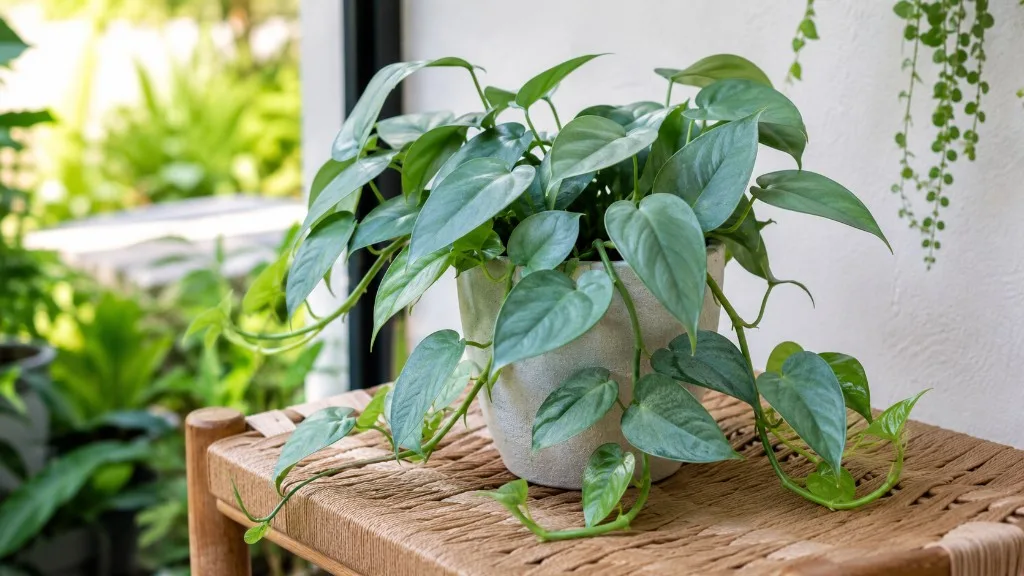
Epipremnum Pinnatum Fertilizer Guide: Schedule, NPK & Mistakes
Epipremnum Pinnatum Fertilizer Guide: Schedule, NPK & Mistakes
Why Epipremnum Pinnatum Needs Light, Consistent Feeding
Epipremnum Pinnatum — the species behind Dragon Tail Plant, Centipede Tongavine, and cultivars like Cebu Blue and Baltic Blue — is a climbing evergreen perennial in the Araceae family. In the wild it climbs rainforest trunks from India through the Philippines to Australia, drawing nutrients from leaf litter and thin organic layers on bark. Indoors, that biology meets a small, finite root zone in a pot — so Epipremnum Pinnatum fertilizer is about replacing what watering leaches out, not forcing growth when light or roots are already limiting.
Most nursery labels still group this plant with pothos care because it shares genus habits with Golden Pothos (Epipremnum aureum). Botanists now treat them as distinct species with different vegetative features. For feeding, the practical overlap matters: both are salt-sensitive aroids that punish heavy doses with brown tips. Clemson HGIC notes that yellow leaves on pothos relatives can trace to low fertility corrected by houseplant fertilizer every other month in spring and summer. Epipremnum Pinnatum fits that light-feeder profile.
What makes this species different from a generic pothos article is growth mode. Juvenile plants show narrow, blue-green elliptical leaves; on a moss pole in bright filtered light, mature leaves become thick, pinnatifid, and fenestrated — a larger leaf mass that modestly increases nitrogen and potassium demand. A trailing juvenile in moderate light needs less replacement than an 8-to-10-foot indoor climber pushing 12-to-20-inch mature blades. The Epipremnum Pinnatum light guide and watering guide must be aligned before fertilizer does any good.
NC State Cooperative Extension recommends applying houseplant fertilizer at recommended rates or less, never to dry potting mix, and reducing or stopping in winter when growth nearly stops. Many growers dilute to half strength and apply every other watering in spring and summer. That framework maps cleanly onto Epipremnum Pinnatum whether you grow Cebu Blue in a basket or Dragon Tail up a pole.
Reading the NPK Label for Epipremnum Pinnatum
Every bottle shows N-P-K — nitrogen, phosphorus, potassium. For a foliage aroid grown almost entirely for leaves, those three macronutrients shape extension, root health, and cell strength.
Nitrogen and Blue-Green Juvenile Foliage
Nitrogen drives chlorophyll and new leaf expansion. On Epipremnum Pinnatum, growers watch nitrogen through juvenile leaf size and blue-green color — whether the plant stays in the cultivar’s narrow juvenile form or begins maturing on a support. During active spring and summer growth, nitrogen is typically the nutrient used fastest as vines extend. A nitrogen-short plant grows slowly, internodes stretch, and new foliage arrives smaller and paler than the leaves above it.
More nitrogen is not automatically better. Excess on fast aroids often produces soft, fast extension without the firm texture you want on a climbing specimen. If newest leaves are full-sized and evenly colored, your current nitrogen delivery is probably adequate.
Phosphorus, Potassium, and Climbing Vines
Phosphorus supports root establishment; potassium strengthens cell walls and helps move water and sugars. When Epipremnum Pinnatum climbs a moss pole, aerial roots increase the surface area that must stay healthy. Potassium becomes more relevant as leaf mass rises on a mature climber. Indoor specimens rarely flower, so high-phosphorus bloom boosters are usually unnecessary. A balanced NPK remains the default; RHS advises balanced liquid fertiliser monthly during the growing season for E. pinnatum under glass. Dilution and frequency matter more than chasing a bloom formula.
Best Fertilizer Types for Epipremnum Pinnatum
Balanced Liquid at Half Strength
A balanced 10-10-10 or 20-20-20 water-soluble houseplant fertilizer diluted to half the label strength is the most reliable default. The two label numbers differ in concentration, not philosophy — 20-20-20 simply needs more dilution water to reach the same strength as 10-10-10. Clemson HGIC 1450 recommends a complete balanced fertilizer such as 20-20-20 for foliage plants, with water-soluble forms preferred because dilute solutions reduce fertilizer burn.
Half strength means mixing the label dose with an equal volume of extra water. Some growers use quarter strength when feeding every other watering. NC State Extension warns that strong salt concentrations can burn and dehydrate roots; over-application should be corrected by leaching — watering the medium thoroughly several times. Organic options like fish emulsion can supplement micronutrients but are harder to dose in small pots. Synthetic liquid at half strength remains the easiest path to consistent results.
How Often to Fertilize Epipremnum Pinnatum Through the Year
Timing matters more than brand. Epipremnum Pinnatum has a clear active season in most homes — roughly spring through summer — and a slowdown when days shorten. Feed when the plant is visibly growing; stop when it is not.
Spring and Summer: Every 4 to 6 Weeks
During active growth, fertilize every 4 to 6 weeks with half-strength balanced liquid on already moist soil. That interval matches RHS monthly feeding guidance while staying conservative for salt-sensitive roots. A plant on a moss pole in bright indirect light may justify the 4-week end; a trailing juvenile in moderate light can stretch toward 6 weeks without deficiency if newest leaves stay firm.
An alternate approach is half strength every other watering, as NC State Extension describes for houseplants generally. That works if your watering routine is steady and doses never creep above half strength. Include a plain-water flush monthly to leach salts if you feed frequently.
Fall and Winter: Pause or Feed Very Lightly
From late autumn through early spring, pause fertilizer on most Epipremnum Pinnatum plants. Clemson HGIC notes that during short winter days many indoor plants enter a resting stage and should not receive fertilizer. Growth slows, transpiration drops, and unused nutrients become salt in the pot.
The exception is a plant under strong grow lights still pushing obvious new leaves weekly. Feed at most every 8 to 10 weeks at quarter to half strength — not on the summer schedule. No new unfurling leaves for several weeks means stop feeding regardless of the calendar.
How Much Fertilizer Is Enough
“Enough” on Epipremnum Pinnatum is the smallest dose that keeps newest leaves full-sized and evenly colored without crust on the soil surface. It is not the label’s maximum monthly rate. Your job is replacement, not acceleration.
Use enough diluted solution to wet the root zone thoroughly once, then let the pot drain completely. If debating whether to increase the dose, check new leaf size, stem firmness, and soil surface condition first. Increase only when new leaves are persistently small and pale and light and water are already correct and the plant has not been repotted in the last month. When in doubt, less wins. Skipping one month is safer than doubling after a slow spell.
Step-by-Step: Fertilizing Without Burning Roots
First, check the calendar and the plant. If growth has stalled in winter, stop. If repotted in the last four to six weeks, skip unless new leaves show clear deficiency. If tips are brown or soil has a white crust, flush before feeding again.
Second, check soil moisture. NC State Extension is explicit: do not apply fertilizer to dry potting mix. Water with plain water first if the top few centimeters are dry, let excess drain, then feed when the mix is evenly moist.
Third, mix half-strength solution at room temperature. Fourth, pour slowly at the soil line — avoid splashing on blue-green foliage. Fifth, let the pot drain fully and empty the saucer. Sixth, note the date to avoid accidental double feeds in the same month.
Once per month during the feeding season, run a plain-water flush until drainage runs clear. That leaches accumulated salts even when individual doses are modest.
Matching Feed to Light, Water, Soil, and Moss Poles
Fertilizer never operates alone. Epipremnum Pinnatum in bright indirect light photosynthesizes and transpires more than the same plant in a dim corner. In low light, reduce frequency before you reduce dilution — a pale vine in shade is usually a light problem, not hunger.
Water mediates delivery. Nutrients move with the water film around roots. Overwatered roots in low oxygen cannot uptake minerals; underwatering followed by strong feed burns dry roots. Align feeding with the same moisture checks from your watering guide: top few centimeters dry, water thoroughly, then feed on the next moist cycle if the schedule calls for it.
Soil mediates retention. A well-draining mix with perlite targeting pH 6.0–6.5 drains freely. Fresh mix after repotting often includes starter nutrients; NC State notes recently purchased or repotted plants may have sufficient fertilizer for two to three months. Skip supplemental feed after repotting unless new growth clearly pales while older leaves stay deep green.
Clemson HGIC adds that foliage plants need at least 200 foot-candles for 12 hours per day to benefit from fertilization. In dim corners, feeding more will not replace adequate light.
Juvenile Leaves vs Mature Fenestrated Foliage
Cultivars like Cebu Blue typically remain in the juvenile form unless given a stake or moss pole; NC State explains that leaves then mature and become fenestrated like the species. Mature leaf size and splits come from vertical support, bright filtered light, stable humidity, and time — not from phosphorus spikes.
When a climber unfurls larger leaves every few weeks, stay on the 4-week end of the schedule at half strength rather than increasing concentration. Do not chase fenestrations with bloom boosters; that is a common path to burned tips right when the plant starts looking promising.
Signs Your Feeding Routine Is Working
A well-fed Epipremnum Pinnatum signals health across the vine. New leaves match or slightly exceed the previous pair on a climber, or stay proportionate on a trailing juvenile. Blue-green color stays even without yellowing between veins. Stems feel firm, and aerial roots on a moss pole stay plump rather than shriveled.
The soil surface looks like soil, not chalk. After a feed, the plant does not wilt the next day. Evaluate newest growth monthly instead of chasing a rigid calendar. If the last two or three leaves are well-formed and the vine extends steadily, your dose and interval are working.
Signs of Over-Fertilization and Salt Buildup
Over-fertilization is the most common nutrition mistake on pothos relatives. Brown or crispy leaf tips, especially on newer foliage, are often the first sign. A white or yellowish crust on soil or pot rim indicates salt accumulation. Clemson HGIC links salt buildup to reduced growth, brown leaf tips, lower leaf drop, and wilting. Wilting despite moist soil can follow when salts pull water from roots — the burn mechanism NC State describes for deliberate over-fertilization.
Some growers misread these signs as underwatering and feed again. If tips browned right after your last feed, assume salt stress first.
Flushing the Pot After Salt Stress
When salt stress appears, stop feeding and leach the pot:
- Move the pot to a sink or tub with free drainage.
- Run plain room-temperature water slowly for several minutes until it drains freely — roughly three to four pot volumes in passes.
- Let the pot drain completely between passes.
- Repeat within 48 hours if crust remains.
- Withhold fertilizer for 4 to 6 weeks. Resume at quarter to half strength on the longer end of the 4-to-6-week range.
If mix smells sour or roots look mushy, repot into fresh well-draining mix instead of flushing alone. Do not add fertilizer at repot time.
Under-Fertilizing vs Other Care Problems
Pale leaves send growers to the fertilizer bottle, but Epipremnum Pinnatum fades for reasons fertilizer cannot fix. Overwatering produces yellow leaves with soft stems. Low light produces small, pale new growth with long internodes. Cold drafts below roughly 15°C slow metabolism. Root rot stalls the whole vine while older leaves may still look temporarily green.
Use a diagnostic order: moisture first, then light, then roots and temperature, then nutrition. True under-fertilization is subtle: steady light and water, no salt crust, but new leaves stay noticeably smaller and lighter green for multiple cycles. Move from 6-week to 4-week intervals at the same half strength rather than jumping to full label rate.
Common Epipremnum Pinnatum Fertilizer Mistakes
Feeding dry soil concentrates salts on dry roots. Water first, then feed on moist mix.
Using full label strength in a small pot. Half strength is the baseline; quarter strength is safer for frequent weak feeds.
Feeding on a calendar while the plant is dormant. Winter fertilizer sits unused and becomes salt by spring.
Doubling up after a missed month. One normal half-strength feed on schedule is enough.
Slow-release pellets plus liquid feed in the same small pot without tracking total input.
Chasing fenestrations with heavy phosphorus while light and a moss pole are still inadequate.
Splashing fertilizer on foliage. Residue on blue-green leaves can scar.
Feeding a stressed plant — drought-wilted, sun-scorched, or pest-damaged — to “help it recover.” Rest and plain water come first.
Epipremnum Pinnatum is toxic to cats and dogs via calcium oxalate crystals, the same risk profile as Golden Pothos. Store concentrates safely in pet households.
Conclusion
If this guide collapses to one line: half-strength balanced fertilizer every 4 to 6 weeks on moist soil during active spring-and-summer growth, then stop. Choose 10-10-10 or 20-20-20 diluted to half the label rate, flush with plain water monthly while feeding synthetics through summer, and pause in fall and winter unless the plant is clearly growing under strong light.
Epipremnum Pinnatum is a fast aroid when climbing, not a heavy feeder. It rewards the grower who replaces nutrients lightly, watches newest leaves for the first sign of salt, and keeps feeding subordinate to light, water, and drainage — whether the vine trails as juvenile Cebu Blue or climbs toward mature fenestrated foliage on a moss pole.
When to use this page vs other Epipremnum Pinnatum guides
- Epipremnum Pinnatum overview — Start here for whole-plant context, cultivar names, and toxicity before deep-diving feeding.
- Epipremnum Pinnatum light — Fix placement before increasing fertilizer; dim light mimics deficiency.
- Epipremnum Pinnatum watering — Moisture and salt leaching tie directly to safe feeding.
- Epipremnum Pinnatum problems hub — Symptom-specific guides when feeding does not resolve yellowing or tip burn.