Yellow Leaves on Epipremnum Pinnatum: Causes, Checks & Fixes
Quick answer
Yellow leaves on Epipremnum Pinnatum usually trace to chronically wet soil, too little light dulling the blue sheen, or normal aging on the oldest nodes along a trailing vine. First step: lift the pot and probe the top 3–5 cm of mix before you change watering or light.
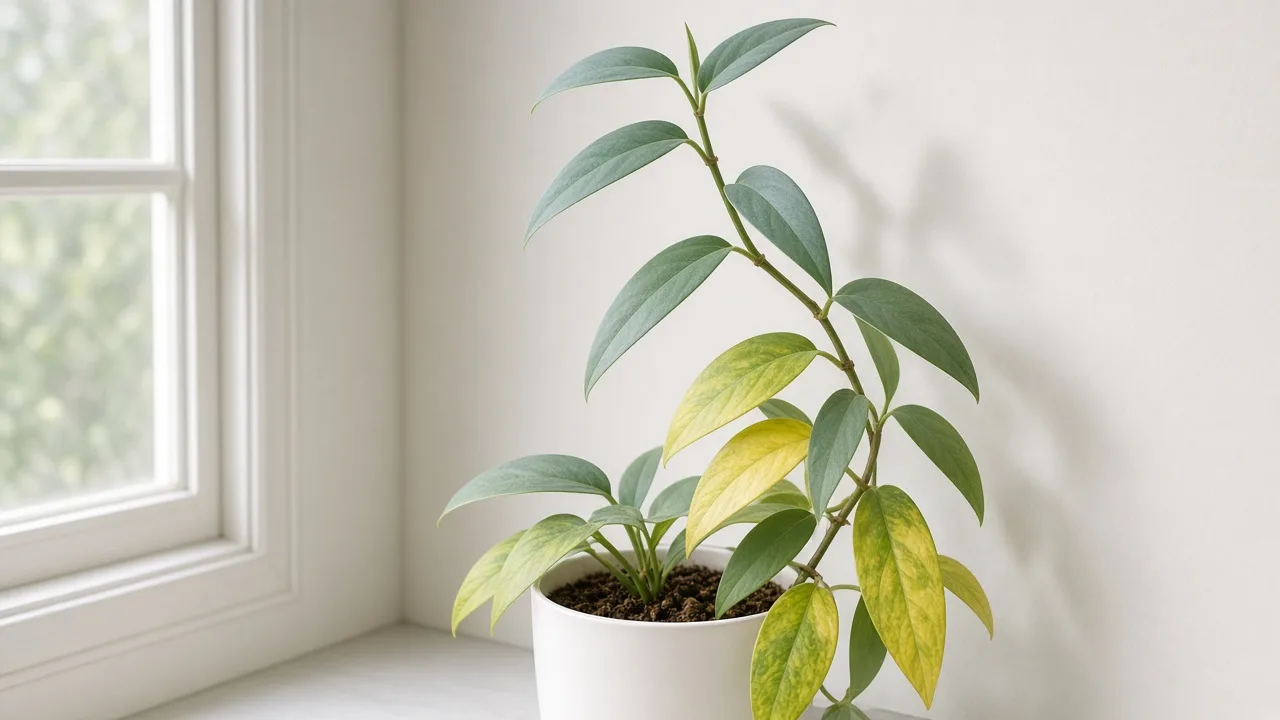
Yellow Leaves on Epipremnum Pinnatum: Causes, Checks & Fixes
This guide covers yellow leaves on Epipremnum Pinnatum. See also the general Yellow Leaves guide, watering, and light pages for this plant.
Yellow Leaves on Epipremnum Pinnatum: Causes, Checks & Fixes
Quick answer
Yellow leaves on Epipremnum Pinnatum (Epipremnum pinnatum—Cebu Blue, dragon-tail vine, silver vine) usually come from chronically wet soil, too little light fading the blue sheen, or normal aging on the oldest nodes along a trailing or climbing stem. This tropical aroid shows stress through colour loss before crisp brown edges appear. For how yellowing fits other houseplants, see the yellow leaves hub.
First step: lift the pot and probe the top 3–5 cm of mix. A heavy wet pot with yellowing leaves points to overwatering. A light dry pot with fading blue and limp leaves points to drought. Yellow only on the lowest node while new blue-tinted leaves emerge at the tip is usually normal senescence.
Yellow leaves vs. other Epipremnum Pinnatum problems
| Pattern | Pot / soil | Leaf appearance | Likely cause |
|---|---|---|---|
| Lower node yellow only | Normal weight, appropriate moisture | Oldest leaf yellows; new tips blue-green | Normal vine senescence |
| Multiple yellow leaves, heavy pot | Wet, cool mix | Blue sheen fading; limp vines | Overwatering / root stress |
| Pale yellow upper leaves, leggy vine | Dry or normal moisture | Thin soft leaves; long internodes | Not enough light ± underwatering |
| Yellow after repot | Recently disturbed | Wilt despite moisture; firm stem base | Transplant shock |
| Yellow with black mushy stems | Wet, sour smell | Stem soft at soil line | Root rot |
NC State Extension describes this species as a climbing vine with juvenile blue-green foliage needing bright, indirect sunlight and moist, well-drained soil—conditions that explain why both water and light mistakes yellow the plant faster than generic pothos advice suggests.
What yellow leaves look like on Epipremnum Pinnatum
Epipremnum Pinnatum is a vining aroid with nodal growth along trailing or moss-pole stems—not a basal rosette. Yellowing follows the vine architecture:
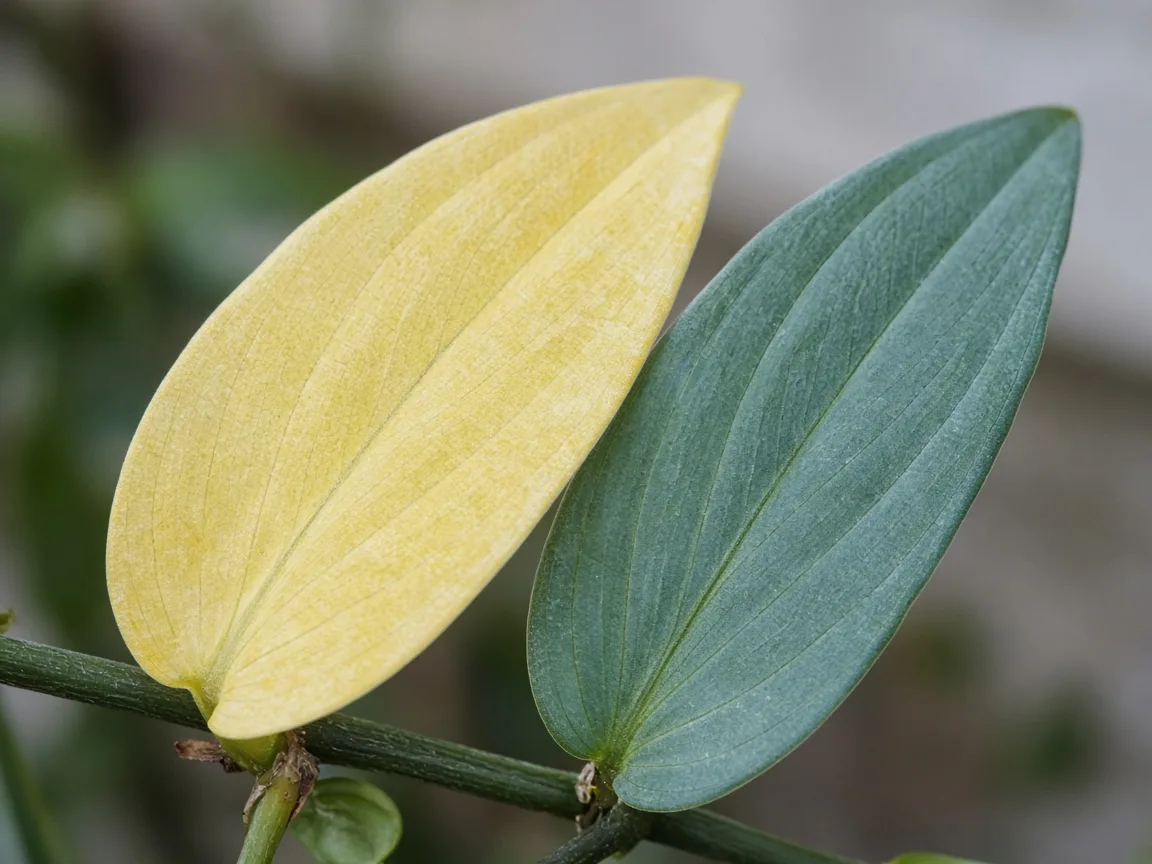
Pale yellow lower leaves with faded glaucous blue sheen at proximal nodes—compare with blue-green tips still emerging at the vine apex.
Normal senescence:
- One or two oldest leaves at the lowest nodes near the soil yellow first
- Leaf may drop cleanly while apical nodes produce new blue-green foliage
- Stems firm; soil moisture appropriate; no sour smell
Overwatering yellowing:
- Multiple leaves yellow—not just the bottom node
- Blue glaucous sheen fades to plain green or pale yellow across several leaves
- Limp vines on wet soil—the wilt-on-wet-soil trap Missouri Botanical Garden describes when rotting roots cannot take up water
- Lower leaves yellow while mix stays damp for days
Low-light yellowing:
- Leggy internodes with smaller new leaves
- Blue sheen disappears; foliage looks flat green or yellow-green
- Often affects newer leaves higher on the vine, not just the base
- Low light can cause loss of variegation on close Epipremnum relatives—a useful parallel for specialty foliage
Underwatering contribution:
- Thin, soft leaves with crispy edges after drought
- Light pot; mix dry 3–5 cm down per our watering guide
- Rebounds after a soak but repeated dry cycles yellow lower leaves
Transplant-shock yellowing:
- Several leaves yellow within one to two weeks after repotting
- Mix may feel evenly moist; vines can look limp despite water
- Stem base stays firm; no sour smell from drainage holes
Juvenile vs. mature sheen: Indoors, Cebu Blue forms usually keep narrow lance-shaped juvenile leaves with a silvery-blue coating. On a moss pole, mature leaves grow larger and may fenestrate; stressed juvenile leaves on a trailing vine fade to olive-green first. A healthy tip should still show a visible glaucous shimmer when tilted toward a window; flat yellow-green on every new leaf means light or water stress.
Damaged yellow tissue does not green up again. Recovery means new leaves at vine tips regain the characteristic blue-green shimmer.
Why Epipremnum Pinnatum gets yellow leaves
Overwatering on forgiving-vine assumptions. Growers treat this species like drought-tolerant Golden Pothos. Overwatering will cause fungal and bacterial diseases which can lead to root rot on E. pinnatum. The Spruce notes that yellow leaves with soft stems and unpleasant soil odor often trace to too much water and advancing root rot. Thin juvenile leaves yellow quickly when roots sit anaerobic in a dim room where the pot stays wet for weeks.
Low light fading the blue sheen. The glaucous coating needs bright indirect light. Penn State Extension warns that pothos in low light eventually loses desirable leaf qualities; on Cebu Blue that reads as pale yellow-green new growth and long internodes before full yellowing spreads.
Normal node senescence on long vines. As stems lengthen, the plant sheds oldest leaves at proximal nodes to prioritize apical growth—expected on mature vines.
Transplant shock after repotting. Fresh mix holds moisture differently than old peat, and root hairs break during handling. Several leaves yellow at once while the vine adjusts. The trap is watering limp leaves on already-wet mix after repotting.
Direct sun or draft stress. Direct sun will lead to the yellowing of leaves on Epipremnum houseplants; a sudden move to a hot south window can bleach or yellow foliage before brown scorch appears. Winter calendar watering on slow-growing vines keeps mix wet and yellows lower leaves.
How to confirm the cause
Work through these checks in order:
- Pot weight and soil probe — Press finger 3–5 cm deep. A heavy pot signals moisture remains; heavy wet pot with yellow leaves = pause watering. Light dry pot with limp faded leaves = thorough soak.
- Pattern on the vine — Single oldest node yellowing with healthy blue new tips = senescence. Widespread yellow on wet soil = overwatering. Pale upper leaves with leggy growth = light check.
- Blue sheen assessment — Hold new growth to light. Loss of silvery coating with long internodes confirms low light involvement.
- Stem firmness — Soft stems at soil line on wet mix = inspect roots for root rot.
- Rebound test — If dry, one thorough soak should perk leaves within hours if roots are healthy. No improvement on wet soil means stop watering, not more.
- Repot timing — Yellowing started within two weeks of repotting with firm stems and no sour smell = transplant shock watch.
| Urgency | Signals | First action |
|---|---|---|
| Routine | One bottom leaf; firm vine; healthy blue tips | Remove spent leaf; no watering change |
| This week | Multiple yellow on wet heavy pot | Stop watering; brighter spot to dry mix |
| Same day | Soft stem base; sour smell; yellow climbing tips on wet soil | Unpot and inspect roots |
First fix for Epipremnum Pinnatum
Match the first action to the confirmed cause—do not stack fixes.
If overwatering (heavy wet pot, multiple yellow leaves):
Stop watering until the top 3–5 cm of mix dry completely. Move to brighter indirect light to speed dry-down. Inspect roots if vines stay limp after the mix dries. See overwatering for full recovery steps.
If underwatering (light dry pot, thin limp leaves):
Water thoroughly until excess drains; empty the saucer. See underwatering if wilting recurs.
If low light (leggy vine, faded blue, pale new leaves):
Move to medium or bright indirect light per our light guide. Do not fertilize as a substitute for brightness.
If normal senescence (one old bottom leaf, firm vine, healthy new tips):
Remove the yellow leaf cleanly. No watering or light change needed.
If transplant shock (yellowing after repot, firm stem base, no sour smell):
Hold watering until the top 3–5 cm of new mix dries. Keep bright indirect light, skip fertilizer for four to six weeks. If stems stay firm and new blue-tinted leaves appear within two to three weeks, no further action.
Recovery timeline
Fully yellow leaves will not re-green—they drop or you remove them. Judge recovery by new blue-tinted leaves at apical nodes, not by old blade color.
| Cause | What to expect | Signs you are on track |
|---|---|---|
| Overwatering (mild) | Yellowing stops spreading in 1–2 weeks after dry-down; new blue-tinted leaves in 3–6 weeks | Pot lightens between drinks; firm stem base |
| Underwatering | Perk within hours of soak | Top 3–5 cm dries on a predictable rhythm |
| Low light | New growth shows blue sheen within 2–4 weeks after brighter placement | Shorter internodes; larger new arrow leaves |
| Senescence | Immediate once old leaf is removed | No spread beyond one node every few weeks |
| Transplant shock | Stabilization in 2–3 weeks | Earthy smell; no softness climbing the stem |
Signs the problem is worsening: yellowing climbs toward apical tips on wet soil, stems mushy at the soil line, or new leaves stay pale and small after four weeks in corrected light and water.
Lookalike symptoms to rule out
| Symptom pattern | Likely cause | Key differentiator |
|---|---|---|
| Yellow lower leaves + heavy wet pot | Overwatering | Limp vines; blue sheen fades |
| Limp leaves + light dry pot | Underwatering | Leaves perk within hours after a full soak |
| Yellow lower leaves only, firm stem | Normal senescence | One leaf every few weeks at lowest node |
| Pale stretched vine, flat green new leaves | Not enough light | Long internodes; soil moisture may be fine |
| Yellow + soft stem + sour wet mix | Root rot | Mushy roots on inspection |
| General droop, soil either wet or dry | Wilting | Broader symptom—start with pot weight |
What not to do
- Fertilize yellow stressed vines before confirming cause—weak roots cannot use nutrients well
- Assume all yellow leaves need more water—limp vines on wet soil need less
- Treat Epipremnum Pinnatum exactly like Golden Pothos drought tolerance—it yellows sooner in dim wet corners
- Remove all yellow leaves at once on a stressed plant—keep foliage until new growth is established
- Water heavily after repotting when mix is already moist
How to prevent yellow leaves next time
- Water when top 3–5 cm are dry per our watering guide
- Keep medium to bright indirect light so blue sheen stays vivid—see light
- Use airy aroid mix with perlite per our soil guide
- Empty saucers within 30 minutes after every drink
- Expect occasional bottom-node yellowing on long trailing vines
- After repotting, wait for the top of fresh mix to dry before the next drink
When to worry
Escalate when yellowing spreads weekly on wet soil, stems soften at the soil line, or new tips stay small and pale after light and watering corrections. Open our root rot guide before the vine collapses entirely.
Routine monitoring is enough if one old leaf yellows at the lowest node on a long vine, stems stay firm, and blue-green leaves keep emerging at the tip.
Related Epipremnum Pinnatum guides
- Overview — full indoor care hub
- Watering — 3–5 cm dry rule and seasonal rhythm
- Light — keeping the glaucous blue sheen vivid
- Overwatering — wet-soil yellowing and dry-down fixes
- Underwatering — light dry pot and limp faded leaves
- Root rot — when wet-soil yellowing advances
- Repotting — when to repot without triggering shock
- Problems hub
Conclusion
Yellow leaves on Epipremnum Pinnatum are a pattern-recognition problem on a trailing tropical vine—not a mystery disease. Lift the pot, read wet versus dry, note whether the glaucous blue sheen is fading on new growth, and distinguish one old leaf at a proximal node from widespread stress climbing the stem. Fix the confirmed branch first—usually dry-down, light, transplant patience, or senescence cleanup—and measure success by new silvery leaves at the apical nodes.
Related tool
Use the Yellow Leaves Diagnosis Tool to narrow causes for yellow leaves on this plant before changing multiple variables at once.