Brown Tips on Epipremnum Pinnatum: Causes, Checks & Fixes
Quick answer
Brown tips on Epipremnum Pinnatum usually mean dry winter air, drought crisp edges on narrow juvenile leaves, salt or fertilizer buildup, hard tap water, direct sun on a moss-pole climber, or spider mites—not one generic humidity problem. First step: lift the pot and check moisture 4–5 cm deep, then note whether leaves are firm or limp and whether white salt crust sits on the mix.
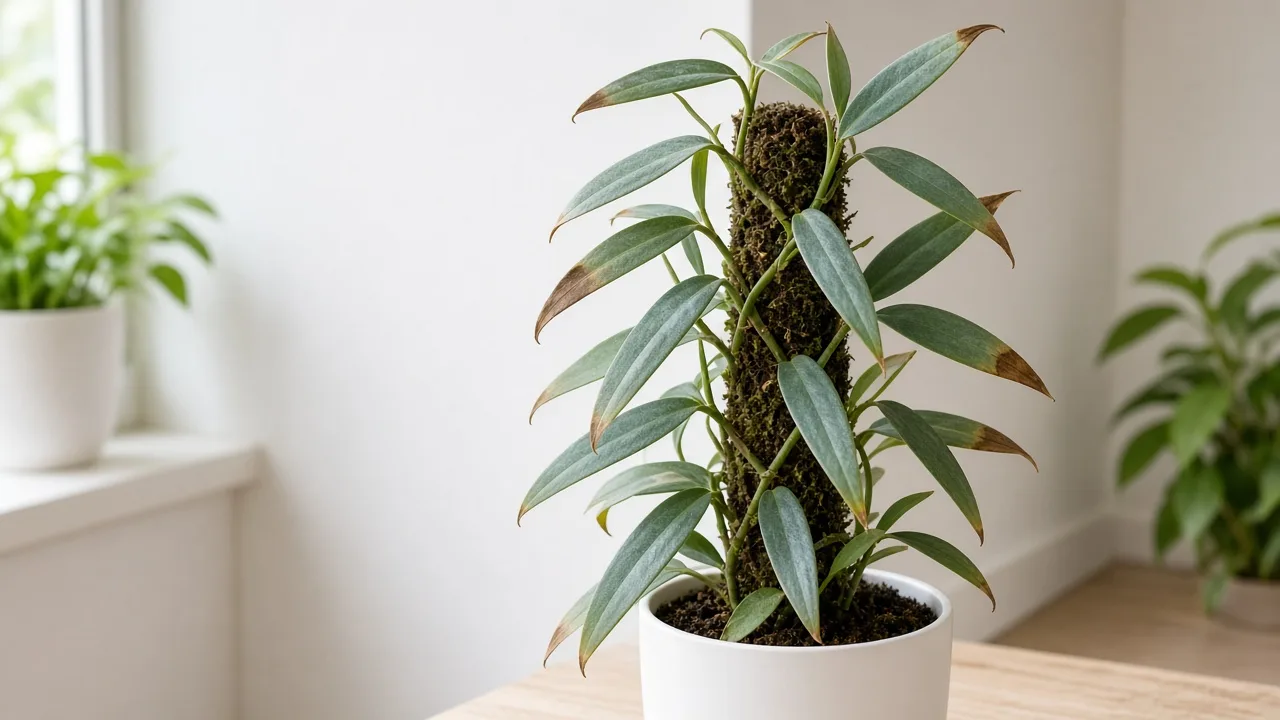
Brown Tips on Epipremnum Pinnatum: Causes, Checks & Fixes
This guide covers brown tips on Epipremnum Pinnatum. See also the general Brown Tips guide, watering, and light pages for this plant.
Brown Tips on Epipremnum Pinnatum: Causes, Checks & Fixes
Quick answer
Brown tips on Epipremnum Pinnatum (Epipremnum pinnatum — Dragon Tail Plant, Centipede Tongavine, and cultivars like Cebu Blue) are almost always an environmental stress signal on narrow, pointed foliage, not a mysterious disease. On juvenile lance-shaped leaves, damage usually starts at the slender tip or along the outer margin and turns dry and papery—distinct from soft brown spots that often mean overwatering.
The most common causes on this climbing aroid are dry winter air below comfortable room humidity, drought crisp edges on a light dry pot, salt or fertilizer buildup, hard tap water minerals, direct sun scorch on moss-pole leaves, spider mites in dry air, and normal aging of the oldest lower leaves. NC State Extension recommends bright indirect light and moderate humidity for the species; winter heater air can still crisp margins on otherwise healthy vines.
For how tip necrosis works on houseplants in general, see our brown leaf tips guide. On Epipremnum Pinnatum, the fork you want early is firm narrow leaves with moist soil (humidity or minerals) versus a light pot with limp vines (drought)—and whether the plant is a trailing juvenile or a moss-pole climber pushing larger fenestrated blades.
First step: lift the pot and push your finger 4–5 cm into the mix before changing anything. A light dry pot with limp vines means drought—see underwatering. Firm turgid leaves with crisp tips on moist soil near a heating vent usually means humidity or water quality. White crust on the soil points to salt flush, not more fertilizer. Full species context: Epipremnum Pinnatum overview.
What brown tips look like on Epipremnum Pinnatum
Epipremnum Pinnatum leaves change shape with age. Juvenile plants—including Cebu Blue—show narrow, blue-green, lance-shaped blades with a distinct pointed tip. On a moss pole in bright filtered light, mature leaves become larger, thicker, and fenestrated; tip burn on those blades is easier to spot against healthy green tissue around the splits.
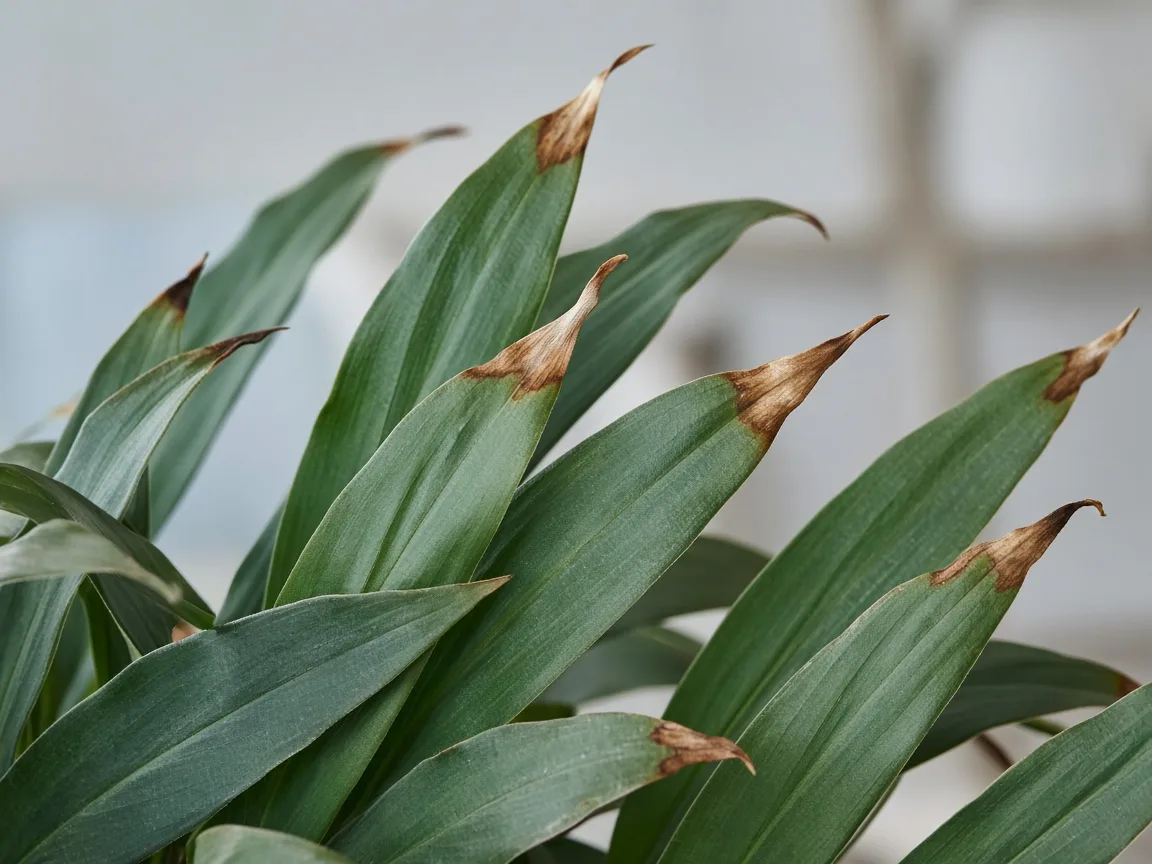
Brown tip symptoms on Epipremnum Pinnatum—compare crisp margins with healthy blue-green tissue on the same vine.
Winter humidity crisp tips (firm leaves, moist soil):
- Dry tan-to-brown tips or margins on otherwise firm, turgid narrow leaves
- Often worst on foliage closest to heating vents, radiators, or drafty winter windows
- Soil feels appropriately moist 4–5 cm down; pot weight is normal
- Newest leaves at the vine tip may show crisp points while the rest of the plant looks healthy
- Brown leaf tips and margins can follow exposure to hot, dry air on houseplants
Drought crisp edges (light dry pot):
- Crisp brown edges on thin, limp, or papery lance leaves—often oldest foliage on long hangers first
- Very light pot; mix pale, dusty, or pulled away from the pot wall
- Differs from humidity burn because leaves lack turgor and soil is dry at depth
- Vines may perk after watering; tips on damaged leaves stay brown
Salt or fertilizer burn:
- Brown margins that spread inward from tips or edges on multiple leaves
- White or grey crusty deposits on soil surface or pot rim—a sign of salt accumulation from fertilizer or hard water
- Persists even when watering rhythm seems correct
Sun scorch on climbers:
- Bleached yellow zones turning crisp brown on leaves facing a south or west window or hot afternoon sun on a moss pole
- Too much sun can dry or scorch Epipremnum pinnatum leaves; damage often on the sun-exposed side, not uniform winter tips only
- Soil may be wet or dry; light direction is the key clue
Spider mite stippling:
- Fine pale dots on narrow leaf surfaces with bronze or brown patches
- Fine webbing on leaf undersides or between stems in very dry air
- RHS notes glasshouse red spider mite as a pest risk on cultivated E. pinnatum
Normal lower-leaf aging:
- One or two oldest leaves at the base of a long vine turn yellow-brown at the tip, then drop
- Rest of plant vigorous with glossy new growth at nodes
- No salt crust, no widespread new-leaf damage
Cebu Blue versus moss-pole mature leaves
Cebu Blue and other juvenile forms keep small, narrow, pointed leaves that transpire quickly in dry air—the tip is a long distance from the petiole, so marginal desiccation shows up there first. When you mount the same species on a moss pole, leaves mature and fenestrate like the species in bright filtered light. Larger leaf area increases water demand; tip burn on new unfurling fenestrated blades often means uneven pole moisture (dry moss while the pot is wet) or salt stress, not simply “water more.” Cross-check Epipremnum Pinnatum light and watering before blaming humidity alone.
Why Epipremnum Pinnatum gets brown tips
This tropical understory climber loses water from leaf edges fastest when air is dry, roots are stressed, or minerals concentrate at transpiring tissue. Several pinnatum-specific factors drive tip burn:
Winter low humidity. Central heating drops indoor air in cold months. The species prefers moderate humidity and can handle typical homes, but very dry air encourages brown leaf tips and margins—especially near vents. Firm leaves with only tip damage usually mean air moisture, not thirst.
Inconsistent drought. Epipremnum relatives are better kept slightly too dry than too wet, which makes it easy to let a hanging Cebu Blue go too long between drinks. Narrow juvenile leaves brown at the tip first when the root ball dries. Long trailers exaggerate this: lower leaves crisp while the top still looks fine.
Salt and fertilizer buildup. RHS advises balanced liquid fertiliser monthly in the growing season under glass; indoors, feeding without leaching leaves salts in the mix. Brown leaf tips and margins can result from salt accumulation. Aroid roots are sensitive to mineral-loaded old mix.
Hard tap water. Some houseplants are sensitive to fluoride or chlorine in tap water. Repeated watering concentrates minerals at the slender tips of lance leaves.
Direct sun scorch. The plant wants bright indirect light. NC State recommends bright, indirect sunlight and warns against drafts; hot direct sun on a south window can bleach then brown sun-facing foliage on a moss pole within days.
Spider mites in dry air. Low humidity plus dusty narrow leaves invites mites; stippling precedes widespread bronzing. This is a pest problem—see spider mites—not a water-quality fix alone.
Natural senescence. Older leaves at the base of mature vines yellow and brown at the tips before dropping—normal when growth concentrates at the climbing tip.
Brown tips vs. yellow leaves vs. sun scorch
| Symptom | Typical pattern on Epipremnum Pinnatum | Soil / leaf clue | Likely cause |
|---|---|---|---|
| Brown tips or dry margins | Crisp tan-brown at slender tip or edge | Firm leaves + moist soil = humidity or minerals; limp leaves + dry soil = drought | Low humidity, salt, drought, tap water |
| Yellow leaves | Whole leaf or lower leaf yellowing | Wet soil + soft yellow leaves = overwatering; dry soil = drought | Watering imbalance, low light, aging |
| Sun scorch | Bleached then brown patches on window-facing side | Hot direct sun on moss-pole leaves | Too much direct light |
| Spider mite damage | Fine dots, bronze patches, webbing | Dry air; leaves may be firm | Pest infestation |
Yellow leaves with wet mix usually mean overwatering—see yellow leaves and overwatering. Brown tips with firm leaves and moist soil rarely mean “water more.”
How to confirm the cause
Work through this checklist in order:
- Pot weight — A light pot signals dry soil; heavy means moisture remains. Light + crisp edges = drought. Normal weight + crisp tips = humidity, minerals, or light.
- Soil moisture at 4–5 cm — Bone dry with limp leaves supports underwatering. Evenly moist with firm crisp tips supports humidity or water quality.
- Leaf firmness — Firm turgid blades with only tip damage point away from thirst. Thin papery leaves point to drought.
- Humidity and placement — Within a metre of a heating vent in winter? Dry heater air is the top humidity-burn clue. See low humidity.
- Salt crust check — White or grey deposits on soil or pot rim? Suspect fertilizer or hard-water buildup; flush salts from the potting soil.
- Moss pole moisture — On climbers, press the pole: dry moss with wet pot mix can crisp new fenestrated tips at the top while lower leaves look fine.
- Light direction — Damaged leaves facing south or west with hot afternoon sun? Sun scorch shows as patches.
- Pest inspection — Hold narrow leaves to the light; check undersides for stippling and webbing.
- Age pattern — Only the lowest one or two leaves on an otherwise vigorous vine? Likely normal senescence.
Make one care correction at a time and watch new growth for two to three weeks before stacking a second fix.
First fix for Epipremnum Pinnatum
If firm turgid leaves with crisp tips in dry winter air
Raise humidity around the plant—do not increase watering.
Move the pot away from heating vents, set the container on a pebble tray with the pot base above the water line, or run a small humidifier nearby. The Spruce suggests a pebble dish with water in dry winter rooms for this species. Switch to filtered, distilled, or rainwater if you use hard tap water—letting tap water stand 24 hours helps off-gas some chlorine.
If crisp edges on a light dry pot with limp vines (drought)
Give one slow, thorough watering—not misting, not daily splashes.
Water until drainage runs freely. Do not fertilize on day one. Full drought recovery steps are on the underwatering page.
If white salt crust on soil with tip burn despite good moisture
Flush the pot and pause fertilizer.
Run plain water through at two to three times the pot volume until drainage runs clear—drench periodically to leach salts. Hold feeding six to eight weeks; see Epipremnum Pinnatum fertilizer before resuming at half strength.
If bleached or brown patches on sun-facing moss-pole leaves
Move to bright indirect light out of direct sun.
Pull the plant back from the window or add a sheer curtain. Trim fully scorched leaves only after the plant is in stable light. Details: Epipremnum Pinnatum light.
If stippling and fine webbing (spider mites)
Isolate and rinse leaf undersides, then confirm active pests before spraying.
Follow the spider mites guide for safe control on this vine.
Recovery timeline
Mild humidity or water-quality tip burn: New narrow leaves over two to four weeks should show clean tips once humidity rises or water source changes. Old brown tips stay brown.
Drought crisp edges: Vines firm up within hours to one day after proper rehydration. Damaged margins remain crisp.
Salt flush: Tip spread should stop within one to two weeks after leaching. Persistent crust may need repotting into fresh soil.
Sun scorch: New leaves after relocation should be unblemished within three to four weeks.
Signs recovery is working: Newest leaves at the growing tip unfurl without crisp points; moss-pole foliage stays turgid.
Signs the problem is worsening: Browning spreads inward on new leaves, multiple vines collapse on wet soil, or soft stems appear—escalate to root rot inspection.
What not to do
Do not water more when tips are brown on firm leaves with moist soil—that raises overwatering risk without fixing dry air or minerals.
Do not fertilize a stressed vine to “green up” tips—salts worsen margin burn on recovering roots.
Avoid stacking repotting, flushing, pruning, and pesticide on the same day.
Do not mist instead of addressing humidity—brief wetting does not replace a pebble tray or humidifier for narrow Cebu Blue leaves in dry winter rooms.
Epipremnum Pinnatum is toxic to cats and dogs if chewed—wear gloves when trimming brown tips on low-hanging vines.
How to prevent brown tips on Epipremnum Pinnatum next time
- Check the top of the mix before watering—water when the surface is dry per your watering guide.
- Raise winter humidity near heater-season plants; keep moss poles evenly damp when climbing, not sodden at the pot only.
- Flush salts every few months if you fertilize or use hard tap water.
- Feed at half strength during active growth only—see fertilizer.
- Keep the vine in bright indirect light, not hot direct sun on fenestrated leaves.
- Wipe narrow leaves monthly to discourage spider mites in dry air.
- Weigh the pot weekly during problem seasons so drought crisp edges are caught early.
Inspect newest leaves at the vine tip every week while conditions are stressful. Tips that already browned will not green again; undamaged new foliage is your scorecard.
When to worry
Treat as urgent if brown patches spread with fine webbing and stippling—active spider mites can stress a trailing pinnatum in dry air.
Escalate if brown margins spread inward on new leaves despite flushing and humidity fixes.
Seek root inspection if tips brown alongside yellow limp leaves on wet soil—that pattern overlaps overwatering or root rot, not humidity alone.
If more than half the foliage is crisp with a failing root ball, take healthy stem cuttings from firm upper growth as backup—propagation guidance is on the overview.
Related Epipremnum Pinnatum problems
- Epipremnum Pinnatum overview — full care hub and brown-tip troubleshooting context
- Underwatering — drought crisp edges on a light dry pot
- Low humidity — winter heater air and firm-leaf tip burn
- Epipremnum Pinnatum fertilizer — salt burn and flush protocol
- Epipremnum Pinnatum light — sun scorch vs. bright indirect needs
- Yellow leaves — wet-soil yellowing vs. dry crisp margins
- Spider mites — stippling and webbing with bronzing
- Problems hub — all common issues on this species
Conclusion
Brown tips on Epipremnum Pinnatum reward a short diagnostic pause. Pot weight, soil moisture at depth, leaf firmness, salt crust, moss-pole moisture, light direction, and pest signs separate humidity burn on firm winter leaves from drought crisp edges on a dry hanger, salt buildup, sun scorch on climbers, and mite damage. Match the first fix to the branch you confirmed—humidity and water quality, one thorough soak, salt flush, light adjustment, or pest treatment—and judge recovery by clean new narrow leaves or unfurling fenestrated blades, not old brown points.
When to use this page vs other Epipremnum Pinnatum guides
- Epipremnum Pinnatum watering guide — Use for routine moisture checks before assuming brown tips is the main issue.
- Epipremnum Pinnatum problems hub — Browse all common issues on this species.
- Low humidity — Different entry point when winter air is the primary stressor.
- Underwatering — When the pot is light and mix is dry at depth.
- Overwatering — When tips accompany yellow limp leaves on wet soil.