Spider Mites on Epipremnum Pinnatum: Causes, Checks & Fixes
Quick answer
Spider mites on Epipremnum Pinnatum show as fine yellow or bronze stippling and silk webbing on leaf undersides, often after hot dry indoor air along long climbing vines. First step: isolate the plant and rinse every leaf underside with lukewarm water before applying any spray.
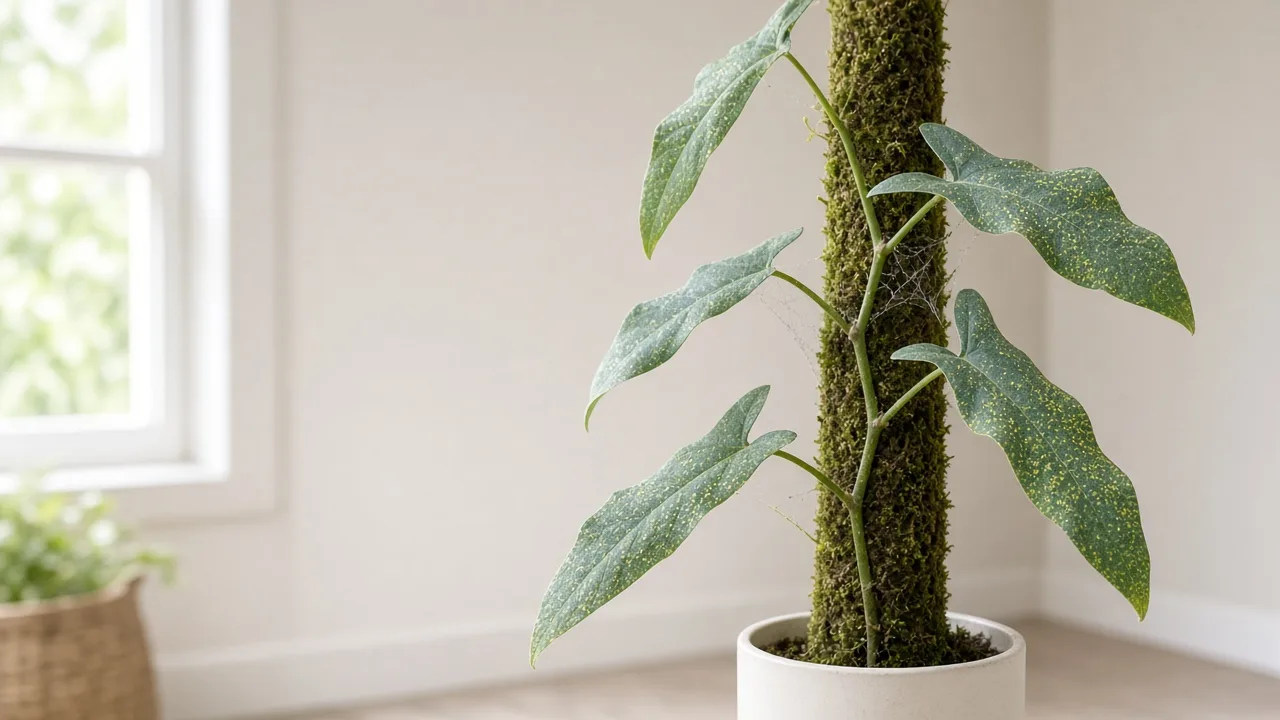
Spider Mites on Epipremnum Pinnatum: Causes, Checks & Fixes
This guide covers spider mites on Epipremnum Pinnatum. See also the general Spider Mites guide, watering, and light pages for this plant.
Spider Mites on Epipremnum Pinnatum: Causes, Checks & Fixes
Quick answer
Spider mites are tiny arachnids that pierce leaf cells and suck contents, leaving pinhead yellow or bronze stippling before fine silk webbing appears at nodes. On Epipremnum pinnatum—Dragon Tail Plant, Silver Vine, and the popular Cebu Blue cultivar—that damage usually starts on the narrow blue-green juvenile leaves at active vine tips and in the dry crevices where aerial roots meet a moss pole, not as a mysterious whole-canopy collapse.
For how spider mites reproduce in hot dry air, why webbing distinguishes them from insects, and when oils or soaps are appropriate in general, see our spider mites pest guide. On Epipremnum Pinnatum the practical pattern is stippling that dulls the silvery sheen on new arrow leaves, webbing at petiole joints on long bare stems, and outbreaks that spike when winter heat dries the room—not sticky honeydew like aphids.
First step: isolate the vine and rinse every leaf underside with lukewarm water. Move a hanging basket to the shower or use a sink sprayer for smaller pots. Bag the pot if needed. Confirm live mites with a paper tap test before stacking sprays on silvery foliage.
When to use this page vs other Epipremnum Pinnatum guides
This page is the pest-first entry for stippling and webbing from sap-feeding mites.
- Epipremnum Pinnatum overview — species identity, cultivars, and moss-pole fenestration goals.
- Watering — use when wilt or yellow leaves might be moisture stress instead of mites.
- Low humidity — brown crispy margins without moving specks or silk; often overlaps with mite-prone dry air.
- Aphids — soft clusters and sticky honeydew on new tips, not stipple dots.
- Mealybugs — white cottony wax in axils rather than fine webbing.
- Problems hub — browse all common issues on this species.
Silvery juvenile leaves and moss-pole axils
Retail E. pinnatum is often sold as Cebu Blue: narrow blue-green arrow leaves on a trailing or climbing vine. Each new leaf passes through a thin juvenile stage where the silvery sheen is easy to dull with mite feeding. Spider mites live in colonies mostly on leaf undersides; on this species that means the back of the newest juvenile blade and the groove where the petiole meets the vine—often meters above the soil on a long bare stem with only the last few nodes carrying leaves.
When you train Dragon Tail or Baltic Blue up a moss pole, aerial roots attach in humid axils—but the outer leaf base and coir wrap can still bake dry near a sunny window. Mites hide in those narrow joints long before fenestrated adult leaves higher on the pole show obvious damage. Owners who only admire split foliage at eye level miss stippling on the juvenile zone below.
Long bare vines vs active tips
A neglected trailing pot often shows a long naked stem with mites concentrated on the last two or three nodes. The rest of the vine looks clean, which tricks growers into treating one leaf while webbing spreads on a second tip in the same basket. Always inspect every growing point, including side shoots you plan to prune later.
Why Epipremnum Pinnatum gets spider mites
Spider mites are not caused by watering mistakes alone—you need the pest present—but hot, dusty, dry conditions shorten their life cycle and let populations explode on herbaceous leaves. Epipremnum Pinnatum setups often create that environment:
Winter heat and dry air. Pots on bright window sills, above radiators, or in HVAC paths lose humidity fast. Water-stressed plants are highly susceptible even when you have not changed your watering schedule—dry air pulls moisture from thin juvenile leaves faster than the root ball replaces it.
Dust on silvery foliage. Long climbing vines collect household dust on blue-green blades. Dusty conditions favor outbreaks and make early stippling harder to see until the sheen looks uniformly gray.
Crowded aroid collections. Vines touch neighboring pothos and philodendrons on shelves. Mites disperse on air currents and walk stem to stem; one infested Cebu Blue can seed mites across a display before webbing is obvious on lower leaves.
Broad-spectrum sprays. Certain insecticides kill mite predators and can trigger mite spikes. If you recently treated another pest on the same shelf with a non-miticide product, check for stippling a week later.
Recent fertilizer after a bright spring stretch pushes soft new tips that mites colonize faster than firm mature tissue. That does not mean withholding food from a healthy climber—it explains why a recently fed vine in a sunny east window can show mites before a slow-growing corner plant.
What spider mites look like on Epipremnum Pinnatum
Early damage is easy to miss on a busy climbing vine. Look for these patterns before webbing becomes obvious:
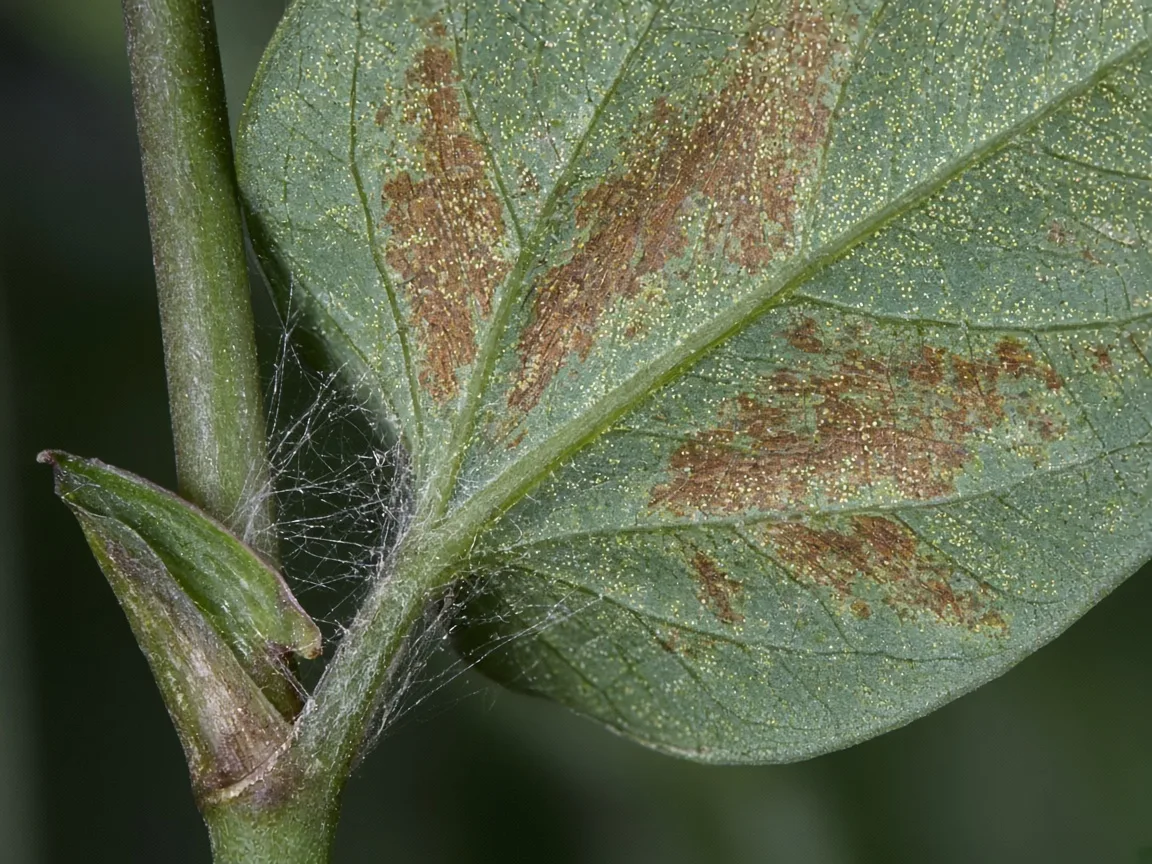
Spider mite stippling on Epipremnum Pinnatum — compare with healthy silvery tissue on the same vine.
Stippling on blue-green tissue:
- Pinhead-sized yellow, tan, or bronze dots scattered across the leaf surface
- Silvery blue juvenile leaves turning dull or gray before fenestrated blades fade
- Leaves that lose their crisp gloss and look dusty or washed out
Underside signs:
- Tiny moving specks—barely visible without magnification
- Fine silk threads at petiole joints, leaf tips, or where a vine bends
- Webbing that catches dust and makes the underside look fuzzy
Vine-level clues:
- Damage concentrated on the longest stems farthest from the soil or on the upper moss-pole zone
- Newest juvenile arrow leaves stippled while older inner leaves still look normal
- Several leaves yellowing and dropping in a short window despite normal soil moisture
This species is a fast climber in bright filtered light. That vigor does not prevent mites—long stems simply give colonies more real estate to hide along nodes before you notice stippling at the tip.
How to confirm the cause
Work through these checks in order before you spray anything:
- Paper tap test — Hold a stippled leaf over white paper and tap the underside sharply. Disturbed mites move around rapidly; static dots may be dirt or perlite dust on silvery leaves.
- Webbing search — Pull back trailing stems or peel a leaf base slightly on the moss pole. Fine silk at one node means more colonies are likely elsewhere on the vine.
- Vine-tip pass — Follow each active shoot to its end. Mites concentrate on the newest juvenile leaf still gaining size and on petiole grooves on bare stems.
- Pattern vs. watering — Yellow leaves from overwatering usually start at the soil line with wet mix and soft stems. Mite stippling appears as dots across the leaf blade with firm stems and normal pot weight.
- Humidity cross-check — Low humidity browns margins without moving specks. If you see both crisp edges and stippling, treat mites and raise humidity at the pole—dry air often enabled the outbreak.
- Neighbor scan — Inspect pothos, philodendrons, and monsteras on the same shelf. Shared stippling suggests contagious mites rather than a one-off cultural issue.
If you find moving specks or webbing, the diagnosis is confirmed. If leaves are uniformly yellow with wet soil and no speckling, look at roots or watering instead. Sticky tackiness without stippling points to aphids or mealybugs, not mites.
First fix for Epipremnum Pinnatum
Isolate the vine and rinse all foliage—especially undersides—with a steady stream of lukewarm water.
Move Epipremnum Pinnatum away from other plants immediately. Mites walk between touching leaves and ride on tools or hands. Place the pot in a sink, shower, or outdoors on a mild day. Spray each leaf from below so water hits grooved petioles, moss-pole ties, and node crevices where webbing hides. Let the vine drip dry in bright indirect light the same day.
Forceful spraying of undersides can reduce spider mite numbers adequately on many houseplants. This single rinse knocks down adults, disrupts egg-laying webs, and gives you a clean baseline to see whether mites return. Do not jump to oils or miticides before this step—you need to confirm the population dropped and avoid stacking treatments on wet foliage.
Step-by-step recovery
After the initial rinse, follow this sequence based on severity:
Days 1–7: Physical control
- Rinse undersides again every two to three days while populations are active
- Wipe accessible juvenile leaves with a soft damp cloth if the vine is too long for repeated showering
- Move the pot away from heat vents; aim for about 50–60% humidity at foliage without keeping leaves wet overnight
Days 7–21: Contact treatment if mites persist
- Apply insecticidal soap or horticultural oil labeled for spider mites on houseplants, covering undersides until runoff
- Repeat every five to seven days for at least three cycles—eggs hatch after the first spray and a single pass rarely clears a long climbing vine
- Do not use soaps or oils on water-stressed plants or when temperatures exceed about 90°F; test one leaf on variegated forms before treating the whole plant
Throughout recovery:
- Prune only heavily webbed leaves you cannot reach with spray; do not strip the whole vine at once on a specimen pushing fenestration on a pole
- Hold fertilizer until new growth looks clean—feeding stressed plants does not help mite recovery
- Keep bright indirect light so new juvenile leaves emerge with enough energy to outgrow old damage
Recovery timeline
Spider mite recovery on Epipremnum Pinnatum is measured in weeks, not days:
- 3–5 days after first rinse: Active specks decrease; fresh webbing stops appearing at tips
- 2 weeks: No new stippling on emerging juvenile leaves; old damaged tissue remains speckled but stable
- 4–6 weeks: Several clean new arrow leaves along vines confirm the population is broken; continue spot checks on the moss pole
Damaged chlorophyll does not regenerate—silvery sections stay mottled on old leaves. Success means unstippled new growth and no returning webbing, not a full cosmetic reset of every existing blade.
Lookalike symptoms
Several Epipremnum Pinnatum problems mimic mite damage:
| What you see | Likely cause | Quick check |
|---|---|---|
| Pinhead yellow dots + fine silk at nodes | Spider mites | Paper tap test; moving specks |
| Brown crispy margins, no webbing | Low humidity | Hygrometer below 40%; no moving mites |
| Sticky leaves + soft clusters on tips | Aphids | Honeydew; pear-shaped insects |
| White cotton in axils | Mealybugs | Wax tufts; alcohol dab smears pink |
| Yellow from soil line, wet mix | Overwatering | Soft stems; no stipple pattern |
| Dull vine in dim corner | Not enough light | No mites; stretch toward window |
Thrips scarring leaves silvery streaks and distorted new leaves, not fine webbing. Shake a stem—thrips are slender and jump; mites are rounder and crawl.
Mistakes to avoid
- Stopping after one rinse or one spray. Mite eggs survive single treatments; long Cebu Blue vines need repeated coverage on every active node.
- Spraying only the tops of leaves. Colonies live on undersides; missing moss-pole axils leaves a reservoir.
- Using horticultural oil on sun-stressed foliage in direct window light. Oils plus hot sun can burn thin juvenile tissue. Treat in indirect light and let leaves dry before strong sun returns.
- Ignoring nearby plants. Treat or inspect every aroid on the same shelf, not just the most stippled vine.
- Overwatering while treating. Wet soil plus pest stress compounds yellow leaves on a plant that already prefers a dry-down rhythm—keep the usual top 3–5 cm dry test.
How to prevent spider mites next time
- Quarantine new Dragon Tail or Cebu Blue vines two to four weeks before mixing them with collection plants
- Rinse or wipe foliage monthly during heating season, working from soil line to moss-pole tips
- Run a humidifier or group plants so leaf-level humidity stays near 50–60% on the climbing zone
- Inspect undersides during weekly watering—catch stippling before webbing spans nodes
- Avoid non-selective insecticides on shared shelves unless the label lists mites; preserve natural predators when possible
When to worry
Escalate treatment or consider discarding a severely infested plant if:
- Webbing covers most of the vine and returns within days after thorough rinsing
- New juvenile leaves emerge small, curled, or distorted despite three labeled spray cycles
- Mites spread to multiple plants faster than you can isolate and treat
- The plant loses more than a third of its foliage in two weeks with no clean new growth
Epipremnum Pinnatum roots easily from node cuttings. If the main vine is too far gone but firm nodes remain, salvage uninfected sections after treatment rather than risking your whole collection. The species is toxic if ingested—wash hands after handling heavily sprayed foliage and keep cuttings away from pets.
Conclusion
Spider mites on Epipremnum Pinnatum are an environmental pest problem amplified by hot dry indoor air, dusty silvery leaves, and long climbing stems with hidden node crevices. Isolate, rinse undersides thoroughly, repeat physical control, then use labeled soaps or oils on a weekly schedule until new juvenile leaves emerge clean. Old speckled foliage may stay marked, but a stable vine with fresh unstippled growth at the moss-pole tip means you have broken the cycle.
Related Epipremnum Pinnatum guides
- Epipremnum Pinnatum overview
- Epipremnum Pinnatum watering
- Epipremnum Pinnatum light
- Epipremnum Pinnatum soil
- Low humidity on Epipremnum Pinnatum
- Aphids on Epipremnum Pinnatum
- Mealybugs on Epipremnum Pinnatum
- Yellow leaves on Epipremnum Pinnatum
- Epipremnum Pinnatum problems
Related tool
Use the Pest Identifier Tool to narrow causes for spider mites on this plant before changing multiple variables at once.