Low Humidity on Epipremnum Pinnatum: Causes, Checks & Fixes
Quick answer
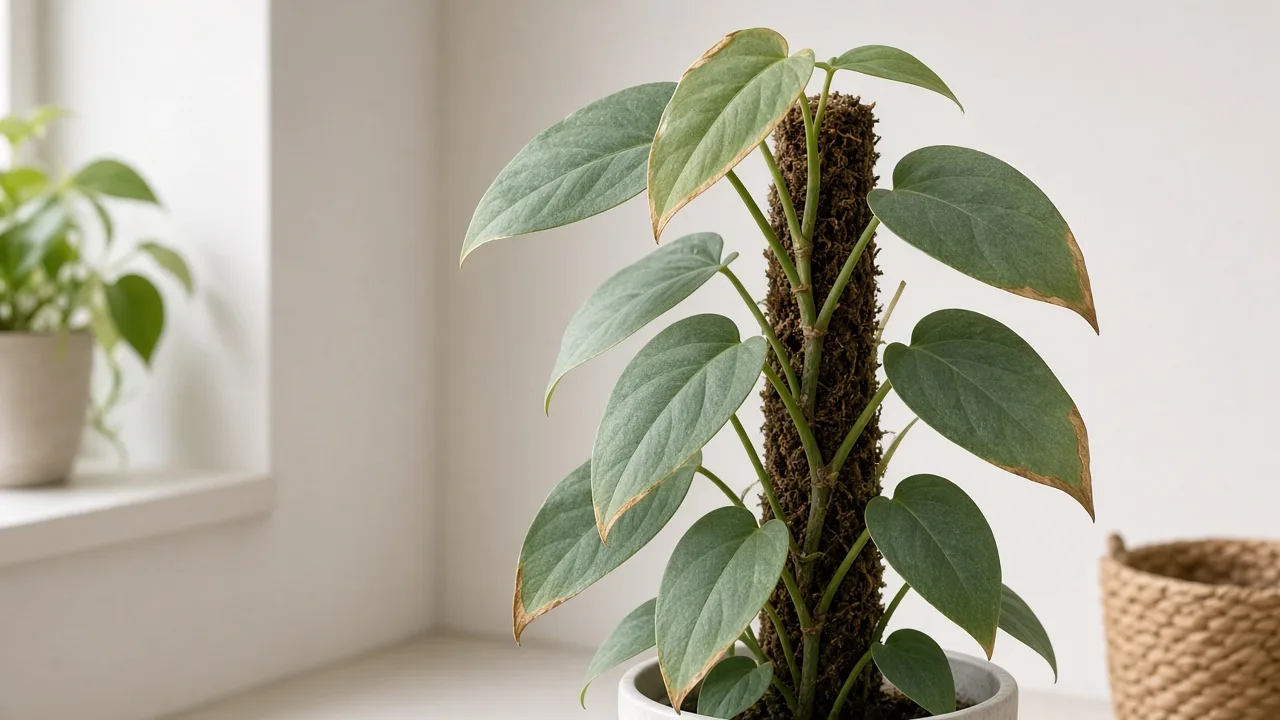
Low humidity on Epipremnum Pinnatum shows as brown leaf edges, a dull blue-green sheen, and new leaves that stick while unfurling on the vine tip or moss pole. First step: measure humidity at leaf level and run a humidifier until readings reach about 50–60% near the foliage.
Low Humidity on Epipremnum Pinnatum: Causes, Checks & Fixes
This guide covers low humidity on Epipremnum Pinnatum. See also the general Low Humidity guide, watering, and light pages for this plant.
Low Humidity on Epipremnum Pinnatum: Causes, Checks & Fixes
Quick answer
Epipremnum Pinnatum—Dragon Tail Plant, Centipede Tongavine, and the popular Cebu Blue cultivar—is a climbing tropical aroid that prefers bright indirect light, warm temperatures, and moderate humidity. It tolerates average homes better than prayer plants, but heated winter air still shows up as crispy leaf edges, a flat or dusty-looking blue sheen, and new leaves that stall halfway out of the sheath—especially on the vine tip climbing a moss pole.
For how dry air pulls moisture from foliage in general, see our low humidity hub. On this species, the tell is often split care: soil dries on your normal Epipremnum Pinnatum watering schedule while leaf margins brown anyway, because ambient humidity—not the watering can—is the missing piece.
First step: place a hygrometer at leaf level near the growing tip and run a cool-mist humidifier until readings stay roughly 50–60% at the foliage. Do not compensate for dry air by watering more. Extra moisture in the pot while air stays dry invites overwatering stress without fixing the crisp edges.
What low humidity looks like on Epipremnum Pinnatum
Dry-air damage on Dragon Tail and Cebu Blue has a pattern that differs from root rot or sun scorch once you know this plant’s growth stages.
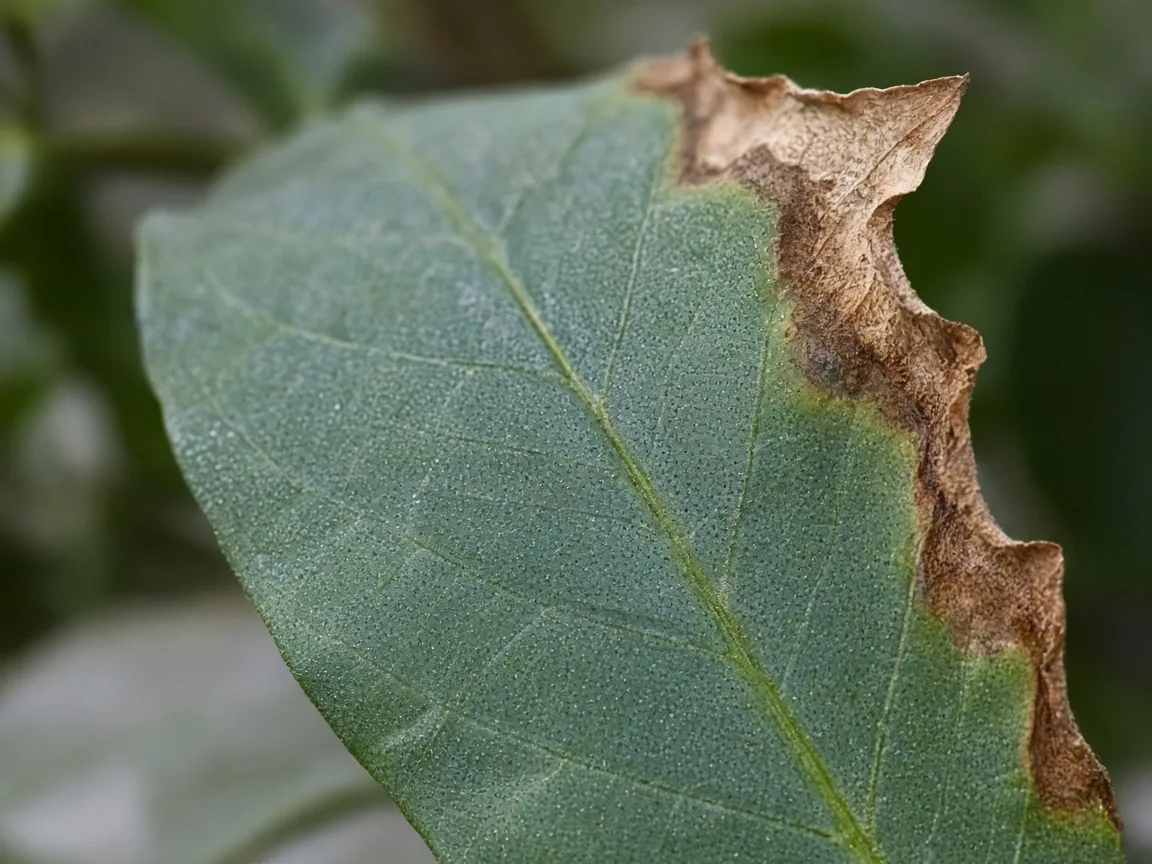
Low humidity symptoms on Epipremnum Pinnatum — compare papery margins with healthy blue-green tissue on the same vine.
Typical signs:
- Tan or brown papery margins on blue-green juvenile leaves, often starting at the tip and creeping along the edge
- Dull, less silvery foliage on Cebu Blue forms—the glaucous sheen fades before the whole leaf yellows
- Stuck unfurling at the vine tip or on a moss pole: the newest blade emerges partway and wrinkles instead of opening flat
- Smaller or slower fenestration on mature leaves climbing a stake compared with leaves produced in humid summer months
- Fine pale stippling on undersides when spider mites exploit hot, dry, dusty conditions
Juvenile leaves stay narrow and entire; mature foliage becomes deeply incised and fenestrated only when the vine climbs support in good light. Low humidity often appears first on that unfolding mature leaf—the one with the most exposed edge length—while older trailing juvenile leaves look fine for weeks.
Juvenile Cebu Blue vs moss-pole unfurling stress
Trailing Cebu Blue in a hanging basket often looks acceptable in 40% room humidity because juvenile lance-shaped leaves have less edge surface to desiccate. Problems escalate when you add a moss pole and ask the plant to push large, pinnatifid leaves.
On a pole, each new leaf must peel out of a tight cataphyll sheath while aerial roots grab damp moss. Dry air hardens that sheath and leaves a crinkled or folded tip even when you keep the pole moist. That is different from not enough light, which produces long bare internodes and small pale leaves without the stuck-unfurl tear pattern.
If only the top leaf on the pole is damaged but lower juvenile leaves are clean, humidity at the upper canopy is the likely gap—not a global watering failure.
Why Epipremnum Pinnatum struggles in dry indoor air
This species evolved as a rainforest climber across tropical Asia and the Pacific. NC State notes it prefers moderate humidity alongside warm, draft-free conditions. Most homes in heating season sit far below rainforest levels; The Spruce places ideal indoor temperatures around 65–75°F and flags dry winter rooms as a reason to add passive moisture near the plant.
Several traits make Dragon Tail more sensitive than “easy pothos” reputation suggests:
- Fast vine growth constantly produces new tissue at the tip that loses water before it hardens off.
- Leathery mature blades still have long, incised margins that dry from the outside in.
- Aerial roots on moss poles depend on both damp support and humid air; dry rooms pull moisture from unfolding leaves faster than roots can replace it.
- Extension guidance to monitor spider mites matters because mite damage is often most severe in hot, dusty, water-stressed conditions.
Heat vents and space heaters create microclimates 15–20 percentage points drier than a hallway hygrometer suggests. A Cebu Blue beside a sunny window in January can read “fine” on a wall sensor while the leaves touching cold glass and dry register air crisp overnight.
How to confirm low humidity is the cause
Work through these checks before repotting or changing fertilizer:
- Measure at the vine tip, not the floor. Tuck a hygrometer among leaves on the moss pole or hanging section for 24 hours. Below 40% with edge burn strongly supports dry air.
- Separate soil moisture. Use your top 3–5 cm dry test. Appropriate dryness plus crispy margins points to humidity; very light pot weight with limp leaves points to underwatering.
- Inspect the newest cataphyll. A leaf stuck in the sheath with firm older foliage is an air-moisture signature.
- Feel for drafts. Heat registers, fireplace blowers, and single-pane glass in winter accelerate edge burn.
- Check undersides with a lens. Stippling, webbing, or moving dots mean spider mites may need treatment even after you raise humidity.
- Note cultivar and support. Fenestration projects on poles fail in dry air more often than flat juvenile baskets.
If leaf-level humidity is already above 50%, shift to brown tips from salt or fertilizer, yellow leaves from wet mix, or direct sun scorch on the window-facing side.
First fix for Epipremnum Pinnatum
Run a humidifier within a few feet of the foliage until a canopy hygrometer reads roughly 50–60%, then maintain that through dry months.
Size the unit for the room, keep it on a stable surface, and angle mist away from blowing directly across wet leaves for hours. Grouping with other tropicals can nudge the microclimate, but a humidifier is the most reliable first move when winter heating has dropped air into the 20s–30s percent range.
Hold your existing watering rhythm. This aroid stores some moisture in thick stems, but chronic wet soil in cool, dim winter conditions still leads to root problems while tips keep crisping in dry air.
Step-by-step recovery
After humidity is running, proceed in this order:
- Move the pot off heat vents and cold glass while keeping bright filtered light on the moss pole section you want to mature.
- Keep the moss pole evenly damp, not flooded—dry moss plus dry air doubles unfurl stress.
- Dust leaves gently so stomata work normally and mites are easier to spot.
- Rinse undersides if you see stippling; repeat every few days before reaching for oils or soaps on stressed foliage.
- Trim only fully dead margins after new growth looks stable.
- Pause fertilizer until the vine pushes one or two clean new leaves.
Avoid stacking repotting, heavy pruning, and pesticide on the same week as your humidity correction.
Recovery timeline
Expect gradual improvement on a plant with firm roots:
- 3–7 days: Edge burn stops spreading on the active leaf; the stuck unfurl may loosen slightly
- 2–3 weeks: The next leaves open flatter with cleaner margins and stronger blue tone on Cebu Blue
- 4–6 weeks: Fenestration on new mature leaves looks fuller if light and pole support are already adequate
- Older leaves: Brown edges remain tan or crisp—they do not green up
Judge success by new growth at the vine tip, not by rehabilitating every older juvenile leaf on a long trailing section.
Lookalike symptoms
| What you see | More likely cause | Where to go |
|---|---|---|
| Whole vine limp, very light pot | Underwatering | Underwatering guide |
| Lower yellow leaves, wet mix smell | Overwatering / root stress | Overwatering |
| Bleached patch on window side | Sun scorch | Light guide |
| Crisp tips right after feeding | Salt or fertilizer burn | Fertilizer guide |
| Stippling with humidity already high | Spider mites | Spider mites on Epipremnum Pinnatum |
| Long bare stems, small pale leaves | Low light | Not enough light |
Mistakes to avoid
- Watering more because leaves look dry. Dragon Tail tolerates brief dryness in the mix; it does not tolerate soggy winter soil paired with dry air.
- Misting as the only humidity plan. Brief leaf wetting does not replace a humidifier in a heated room and can leave water in tight unfurling sheaths.
- Trusting a distant hygrometer while the vine sits above a radiator.
- Ignoring mites after air improves. Inspect undersides for two weeks once humidity stabilizes.
- Repotting on day one unless roots are genuinely failing—stabilize air first.
How to prevent dry-air stress next time
- Start a humidifier when heating season begins, not after widespread tip burn
- Keep moss poles and trellises where humidifier output reaches the growing tip
- Group tropical climbers to share transpiration
- Dust monthly and scout for mites in hot, dusty indoor pockets
- Match winter watering to slower growth per your watering guide
Target 50–60% at foliage through dry months; the species can coast lower for a while, but fenestration, unfurling, and mite resistance all improve when air moisture matches its tropical origin.
When to worry
Treat the situation as urgent when:
- Mite webbing covers multiple leaves and the vine tip stalls
- A new leaf stays folded more than a week despite corrected humidity and a damp pole
- Soft stems or widespread yellowing appear—look for wet mix, not air dryness alone
- The growing tip dies back while lower leaves stay firm
Firm stems, white roots visible at the drainage hole, and a new bud after two weeks of stable humidity mean the plant is recoverable.
When to use this page vs other Epipremnum Pinnatum guides
- Epipremnum Pinnatum watering — Use when pot weight and soil moisture—not air—are the main question.
- Brown tips — Use when margins crisp after feeding or with tap-water salt, with humidity already adequate.
- Epipremnum Pinnatum problems hub — Browse all common issues on this species.