Drooping Leaves on Epipremnum Pinnatum: Causes, Checks &
Quick answer
Drooping leaves on Epipremnum Pinnatum mean lost turgor—usually dry mix in a fast-draining hanging basket or failing roots in wet soil in a dim corner. First step: lift the pot and probe moisture at 3–5 cm before you pour water.
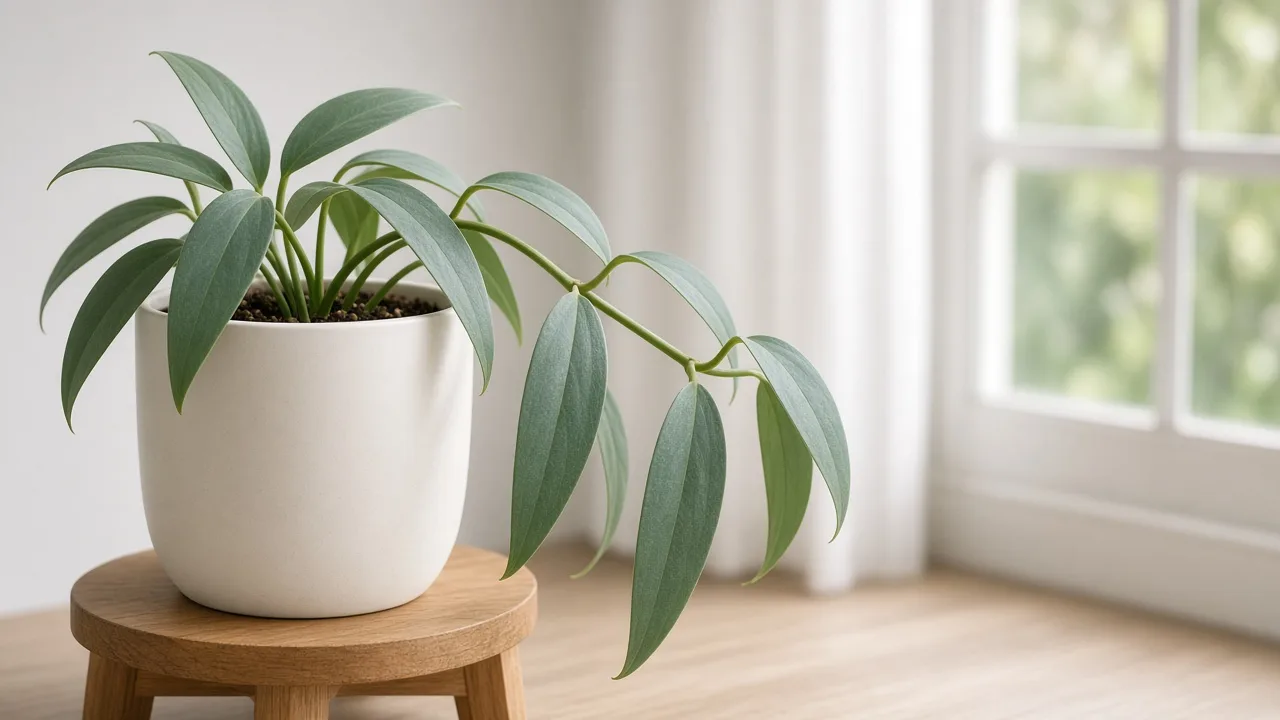
Drooping Leaves on Epipremnum Pinnatum: Causes, Checks & Fixes
This guide covers drooping leaves on Epipremnum Pinnatum. See also the general Drooping Leaves guide, watering, and light pages for this plant.
Drooping Leaves on Epipremnum Pinnatum: Causes, Checks & Fixes
Quick answer
Drooping leaves on Epipremnum Pinnatum are a turgor problem—the climbing aroid cannot keep its narrow blue-green juvenile leaves stiff when roots are too dry or too damaged to move water. Too little water may lead to leaves temporarily drooping on close Epipremnum relatives, while wilted leaves may indicate soil that is too dry or too wet when rotting roots cannot absorb moisture even though you watered recently. For how turgor loss works in general, see the drooping leaves hub. On this species, start with pot weight and a 3–5 cm moisture probe—Cebu Blue trails and moss poles dry unevenly, so calendar watering misreads both thirst and wet-root failure.
What drooping leaves look like on Epipremnum Pinnatum
On Dragon Tail / Cebu Blue forms, droop shows as limp, downward-hanging lance-shaped leaves along the vine—not stiff stems stretching toward a window. The silvery blue sheen dulls as tissue softens, and whole sections of a hanging strand may sag together while lower nodes still look green. When the plant climbs a stake or moss pole, droop often appears on the newest leaves at the top while older juvenile foliage lower on the pole still feels firm—unlike a bushy rosette plant that collapses evenly from the crown.
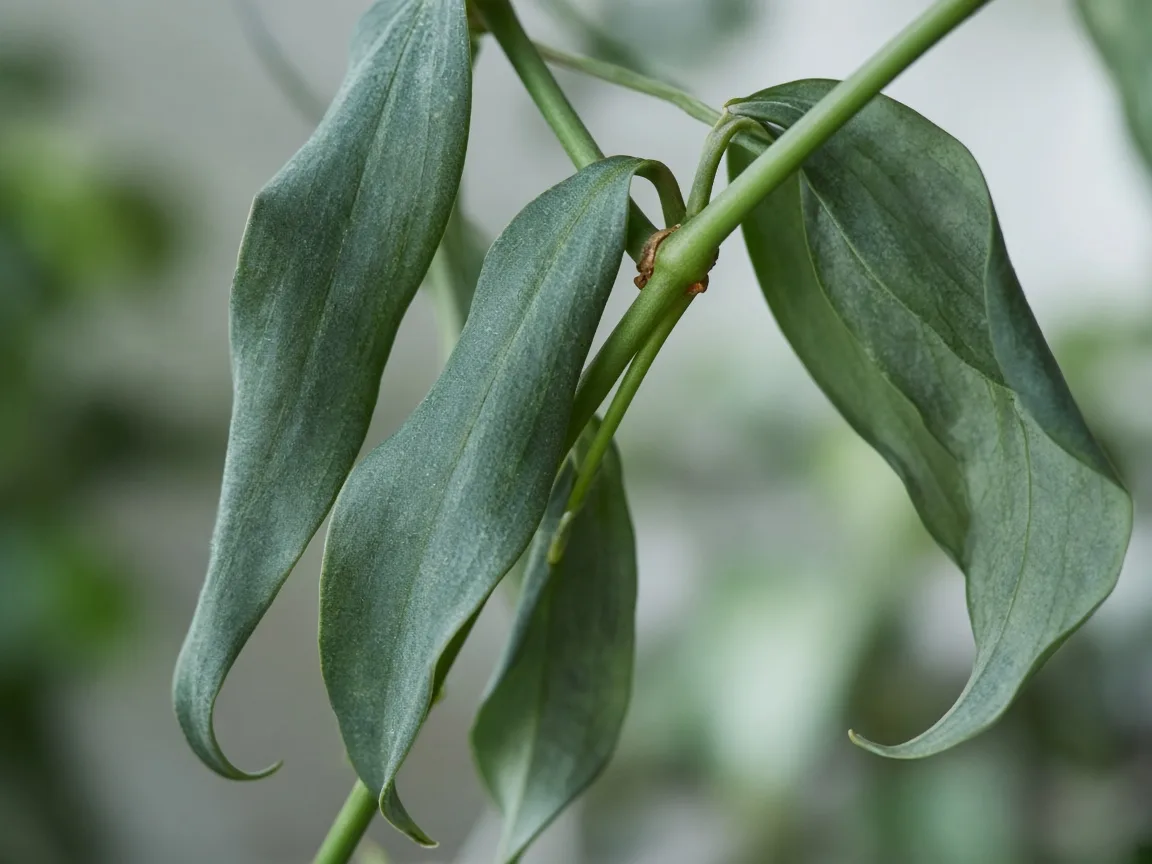
Drooping leaves on Epipremnum Pinnatum—compare limp blue-green tissue with firmer leaves on the same vine.
Early droop may keep leaf color mostly intact. Repeated dry cycles bring crispy brown tips on older leaves; chronic wet roots add yellow lower leaves before the whole vine hangs limp. Leggy growth on Epipremnum Pinnatum shows firm stems with small leaves spaced far apart in dim light—fix with brighter placement and pruning, not automatic watering.
Moss-pole and basket droop patterns
Epipremnum Pinnatum is built to climb. NC State notes it needs support for long trailing stems and bright, indirect sunlight. On a moss pole, aerial roots pull moisture from damp fiber as well as from the pot. If you water the container on a schedule but never mist or soak the pole, the upper vine can droop while the soil probe still reads “okay”—a pattern that does not fit a floor pothos in a single nursery pot.
Hanging baskets flip the risk: the top 3–5 cm dries in days under bright light, especially with perlite-heavy Epipremnum Pinnatum soil, while a dim shelf basket may stay wet for weeks. Match checks to the setup you actually use, and cross-check light if one side of the plant droops while the other stays firm.
Why Epipremnum Pinnatum gets drooping leaves
Underwatering on Epipremnum Pinnatum is the fastest reversible cause. Owners sometimes underwater after reading that overwatering will cause fungal and bacterial diseases leading to root rot on this species. Fast-draining aroid mix, heat near a window, or a lightweight basket all collapse turgor within a day or two if you skip the dry-down check.
Overwatering and root stress produce limp leaves on wet soil. Saturated mix blocks oxygen; uptake fails even though the calendar says it is time to water. This is common when Cebu Blue sits in a dim corner where the plant drinks slowly—see overwatering on Epipremnum Pinnatum and root rot if yellowing and sour smell follow.
Environmental shock droops a healthy vine temporarily. Recent repotting, a move beside a hot south window, AC blast, or cold draft slows root function. Pothos prefers average room temperatures between 60° and 80° F with bright indirect light—sudden extremes increase water loss faster than roots replace it.
Setup mistakes extend either problem: oversized pots, cachepots holding runoff, or dense mix without perlite keep roots stressed. The Spruce recommends watering when the soil surface is dry and adjusting downward in winter—Epipremnum Pinnatum in slow winter growth can stay wet too long if you keep summer frequency.
How to confirm the cause
Work through these checks in order—do not water on autopilot when leaves hang.
- Lift the pot. A light container points to dry droop; a heavy pot days after watering suggests wet-root failure.
- Probe 3–5 cm deep with a finger or dry skewer, matching the Epipremnum Pinnatum watering guide dry-down rule. Bone-dry confirms thirst. Clinging wet mix with limp leaves points to root stress.
- Check the moss pole if you use one. Dry fiber at the top with limp new leaves means pole thirst, not necessarily dry soil at the bottom.
- Review recent care. Did you skip two watering cycles in a hot room, or water repeatedly while soil stayed damp in low light?
- Inspect nodes. Firm green nodes with limp leaves favor a moisture mismatch. Soft, darkening nodes plus sour drain-hole smell favor rot.
Dry droop that perks within hours after one thorough watering confirms simple underwatering. Wet droop that persists after you stop watering needs an unpot and root inspection.
The first fix to try
Probe moisture at 3–5 cm depth before any water hits the soil. That single check separates the two main fixes:
- If dry: Water thoroughly until a little drains, then empty the saucer. Recheck in a few hours—leaves should regain firmness by morning if roots are healthy.
- If wet with limp leaves: Do not water. Move the plant to brighter indirect light to help the pot dry, and unpot if mix smells sour or stems soften. Trim mushy roots and repot into fresh well-draining mix only if you find decay.
Do not fertilize, heavily mist, or repot on day one unless roots are clearly rotting. Fix the water balance first.
Step-by-step recovery
For dry droop: After the initial soak, resume watering when the top 3–5 cm dries—not on a fixed rare calendar. If mix repels water and drains straight through, bottom-water briefly or refresh the top layer, then return to top watering so salts flush.
For wet droop: Let the root zone dry partway if roots are still mostly white and firm. If more than a third of roots are brown and mushy, trim decay, rinse the root ball, and repot into a pot only one size larger with drainage. Hold water for a week, then restart dry-down checks.
For pole droop: Mist or soak the moss pole when the fiber is dry while you correct pot moisture—do not flood the base daily to compensate.
For shock droop: Keep light, temperature, and watering steady for seven to ten days. Avoid moving the plant again until new growth looks firm.
Judge recovery by new juvenile leaves and node firmness, not by older leaves that already collapsed. Trim only tissue that stays limp or yellow after the vine perks up.
Lookalike symptoms
| What you see | Likely cause | Where to go next |
|---|---|---|
| Soft hanging blue-green leaves, light dry pot | Underwatering | Underwatering |
| Limp leaves, wet heavy pot, yellow lowers | Overwatering / root stress | Overwatering |
| Sudden collapse with stem limpness | Wilting / advanced root failure | Wilting |
| Firm long stems, small spaced leaves | Low light legginess | Not enough light |
Recovery timeline
Simple dry droop usually improves within 6–24 hours after one proper watering. Shock droop from repotting or relocation may take several days to a week once conditions stabilize.
Wet-root droop tied to early rot can take two to four weeks after trim and repot before new growth looks normal. Vines with mushy stem bases may not recover fully—take stem cuttings with nodes above firm tissue if decline continues, using guidance from the propagation guide.
Mistakes to avoid
- Pouring water the moment leaves hang, without checking whether soil is already wet.
- Assuming droop always means underwatering—wet-root droop worsens with more water.
- Ignoring a dry moss pole while only watering the pot.
- Fertilizing a drooping vine to “perk it up.”
- Treating Cebu Blue like fast Golden Pothos on the same calendar in a dim room.
How to prevent drooping next time
Match watering to how fast your pot and pole dry in their actual spot. Keep bright indirect light so the vine uses moisture steadily and keeps its blue tone. Check hanging baskets weekly—they dry faster than floor containers. Empty saucers after every drink. When in doubt, use the dry-down method from the overview hub before changing three variables at once.
When to worry
Escalate if drooping lasts more than 48 hours after you corrected moisture, if multiple leaves yellow and fall within a week, if stems soften at the base, or if soil smells sour. At that stage, root rot is likely—unpot, trim, and consider propagating from firm sections. Browse the Epipremnum Pinnatum problems hub if several symptoms overlap.
When to use this page vs other Epipremnum Pinnatum guides
- Watering — Routine dry-down checks before leaves droop.
- Underwatering — When dry soil and crispy edges dominate.
- Overwatering — When wet mix and yellow lowers came first.
- Wilting — When collapse is sudden or stems feel limp, not just leaves hanging.
- Root rot — When sour smell, mushy roots, or stem base decay appear.
Related Epipremnum Pinnatum guides
Related tool
Use the Plant Problem Diagnosis Tool to narrow causes for drooping leaves on this plant before changing multiple variables at once.