Underwatering on Epipremnum Pinnatum: Causes, Checks & Fixes
Quick answer
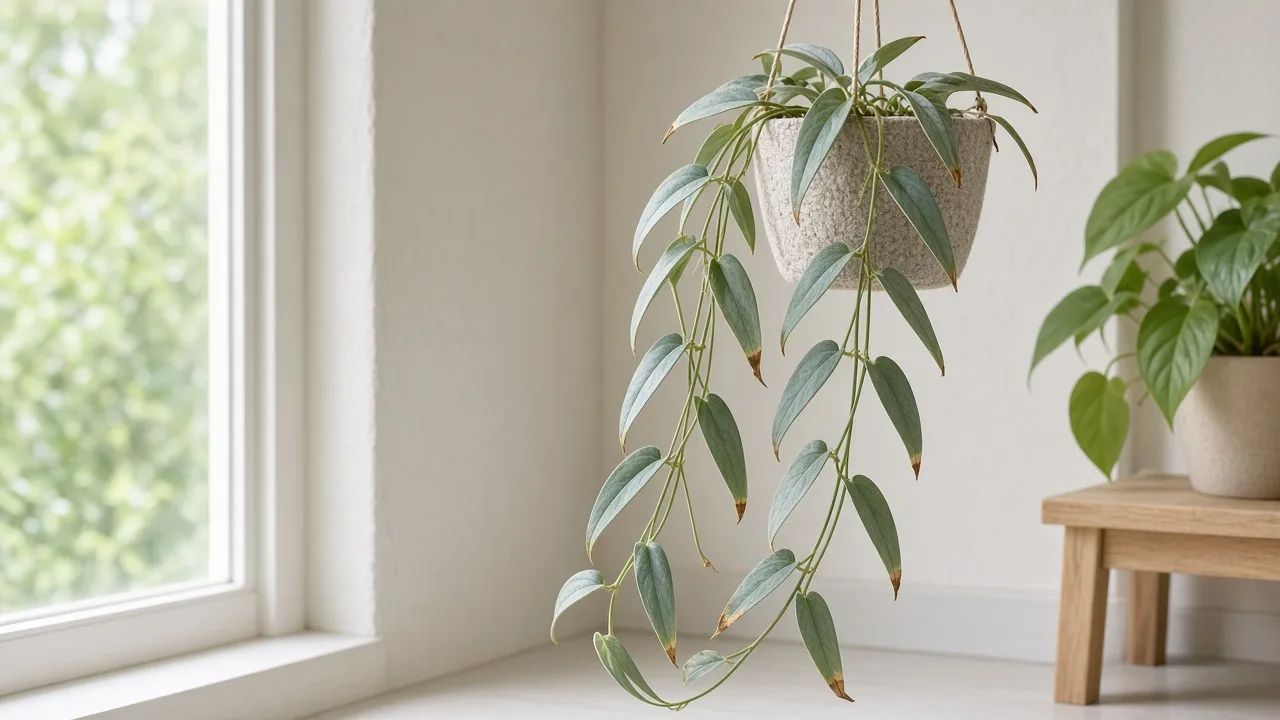
Underwatering on Epipremnum Pinnatum shows as a light dry pot, limp narrow blue-green leaves, and bone-dry mix at 3–5 cm depth—not yellow lowers on heavy wet soil. First step: lift the pot and probe moisture before you pour water.
Underwatering on Epipremnum Pinnatum: Causes, Checks & Fixes
This guide covers underwatering on Epipremnum Pinnatum. See also the general Underwatering guide, watering, and light pages for this plant.
Underwatering on Epipremnum Pinnatum: Causes, Checks & Fixes
Quick answer
Epipremnum Pinnatum (Cebu Blue, Dragon Tail Plant) stores some moisture in its sturdy climbing stems, but narrow juvenile leaves lose turgor fast when the root zone stays dry too long. Too little water may lead to leaves temporarily drooping on close Epipremnum relatives, while wilted leaves may indicate soil that is too dry or too wet when damaged roots cannot absorb moisture. For how chronic dryness limits uptake in general, see our underwatering guide. On this species, thirst usually pairs with a light pot, dusty mix at 3–5 cm depth, and limp blue-green lance leaves—not yellow lowers on soggy soil.
First step: lift the pot and probe moisture at 3–5 cm before any water hits the mix. If the container is light and dry at depth with soft hanging foliage, give one thorough soak until a little drains, then empty the saucer. If the pot is heavy and mix clings wet with limp leaves, stop—see overwatering and drooping leaves for wet-root failure.
What underwatering looks like on Epipremnum Pinnatum
On Cebu Blue forms, drought rarely starts as a bushy yellow collapse. It shows on narrow blue-green juvenile leaves along the vine:
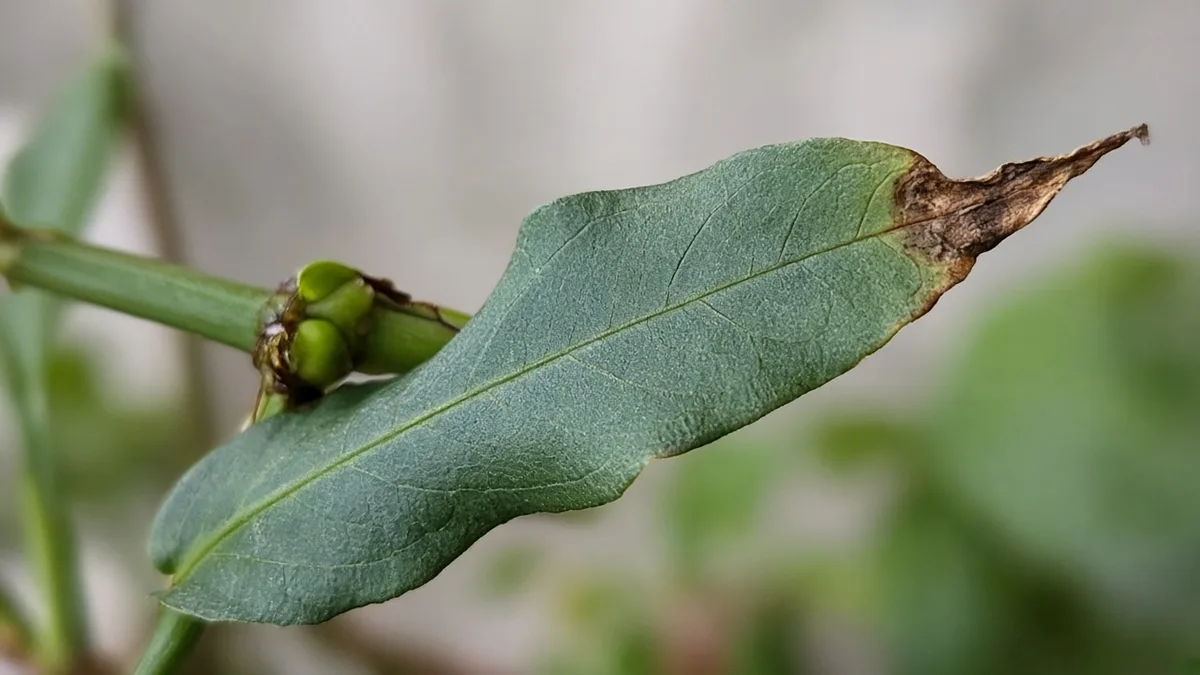
Underwatering on Epipremnum Pinnatum—limp lance leaves with dry brown tips next to firmer tissue on the same vine.
- Limp, downward-hanging lance leaves with a dull silvery sheen instead of the usual blue tone
- Thin, papery leaf feel and crispy brown tips on older foliage after several dry days
- Dry potting mix pulled slightly from the pot wall, pale and dusty on top
- A feather-light pot when lifted—especially in perlite-heavy Epipremnum Pinnatum soil
- Whole trailing sections sagging together while nodes still feel firm and green
The Cebu Blue signature: leaves that perk within hours after one proper drink on otherwise healthy roots. That rebound separates simple thirst from wilting tied to rot.
Juvenile blue leaves vs fenestrated pole foliage
Retail Cebu Blue often stays in the small lance-shaped juvenile form for years when trailing. Those leaves desiccate at the tips first because surface area is high relative to stem storage. When you grow on a moss pole, new fenestrated leaves at the top may wilt while lower juvenile leaves look fine—the pole dried faster than the pot. That split pattern is common on this climbing aroid and uncommon on a floor pothos in one nursery pot.
Moss-pole thirst and hanging-basket dry-down
NC State notes that Epipremnum pinnatum needs support for long trailing stems and bright, indirect sunlight with moist, well-drained soil. In real homes that translates to two dry-down traps:
Moss pole fiber dries first. Aerial roots pull moisture from damp sphagnum as well as from the container. If you water the pot on schedule but never soak or mist the pole when the fiber lightens, the upper vine can show classic underwatering while a finger probe at the pot rim still reads “okay.”
Hanging baskets outpace floor pots. Bright light above a basket accelerates evaporation from the top 3–5 cm. The same species on a dim shelf may stay wet for weeks—underwatering there is rarer unless you skipped checks entirely.
Match your inspection to the setup you use, not to a generic houseplant calendar.
Why Epipremnum Pinnatum gets underwatered
Fear after overwatering warnings. Extension guidance notes that overwatering will cause fungal and bacterial diseases which can lead to root rot on this species. Cautious owners sometimes wait until every leaf hangs—past the safe dry window—especially in fast-draining aroid mix.
Calendar watering across different spots. A vine in bright indirect light may need water every 7–10 days in summer per the watering guide, while a dim corner plant drinks slowly. Sharing one schedule underwatering the bright basket.
Top-surface-only splashes. The Spruce recommends watering when the soil surface is dry—but aged peat that stayed dry for weeks can repel water on top while the interior root ball stays bone dry. Cebu Blue in old mix may get frequent light pours without real rewetting.
Environmental pull. Heat vents, south-window heat, and winter heating dry lightweight hanging pots in days. Pothos is better kept too dry than too wet—a useful trait for busy growers that also hides creeping drought on fast-climbing E. pinnatum vines.
Root-bound instant drainage. Aggressive roots in a tight pot let water channel through in seconds. You water often, see fast runoff, assume the plant is wet, and the blue juvenile leaves wilt anyway—a chronic thirst pattern that mimics neglect.
How to confirm the cause
Work through these checks in order:
- Lift the pot. Light and airy means dry; heavy days after watering suggests wet-root stress instead.
- Probe 3–5 cm deep with a finger or skewer, matching the Epipremnum Pinnatum watering dry-down rule. Dusty dry with limp leaves supports underwatering. Clinging wet mix with limp leaves points to overwatering.
- Pair wilt with moisture. Dry soil plus drooping equals thirst; wet soil plus drooping equals root failure—not more water.
- Check the moss pole if you use one. Dry fiber at the top with limp new leaves means pole thirst.
- Pour a small test drink. If water exits instantly without darkening the mix, suspect hydrophobic soil or binding—not adequate watering.
- Review leaf pattern. Soft green limp leaves on dry mix fit drought. Yellow lower leaves on damp mix with sour smell favor rot—see root rot.
Dry droop that firms within hours after one thorough soak confirms simple underwatering.
The first fix to try
Probe moisture at 3–5 cm depth, then rewet the entire root ball if dry.
Take the pot to a sink. Water evenly until a little runs from the drainage holes, wait two minutes, and water once more so dry pockets absorb moisture. Empty the saucer completely. If water races through without wetting the mix, bottom-water briefly until the top feels moist, then drain.
Do not fertilize, repot, or heavily prune on day one. One proper soak solves most mild Cebu Blue drought when roots are still healthy.
Step-by-step recovery
After the initial soak: Resume watering when the top 3–5 cm dries—not when every leaf droops. If mix repels water, scratch the surface lightly or bottom-water once, then return to top watering so salts flush.
For pole thirst: Mist or soak the moss pole when the fiber is dry while you correct pot moisture—do not flood the base daily to compensate.
For hydrophobic or root-bound pots: Slide the plant out. If roots are white and firm but circling tightly, repot one size up with fresh well-draining mix per the repotting guide. If more than a third of roots are mushy on wet mix, treat as rot—not simple drought.
For crispy tips: Trim only fully dead margins after turgor returns. New juvenile leaves should emerge tight and blue-toned within one to two weeks in stable light.
Judge recovery by firm nodes and the next unfurling leaf, not by older tissue that already crisped.
Lookalike symptoms
| What you see | Likely cause | Where to go next |
|---|---|---|
| Limp blue-green leaves, light dry pot | Underwatering | This page |
| Limp leaves, wet heavy pot, yellow lowers | Overwatering / root stress | Overwatering |
| Hanging leaves that perk after soak | Dry droop (thirst) | Drooping leaves |
| Sudden collapse, soft stems | Advanced wilt / rot | Wilting |
| Crisp tips, firm leaves, moist soil | Low humidity / water quality | Brown tips |
| Crisp margins in dry winter air | Humidity stress | Low humidity |
Recovery timeline
Simple dry stress often improves within 6–24 hours after one proper watering. Moss-pole correction may take one to three days if the fiber was dry for a week.
Hydrophobic or root-bound recovery can take two to four weeks before new growth looks normal. Leaves with fully desiccated centers will not refill—focus on stopping spread and watching juvenile tips.
Mistakes to avoid
- Pouring water the moment leaves hang without checking whether soil is already wet.
- Treating every limp Cebu Blue vine like Golden Pothos on the same calendar in a dim room.
- Ignoring a dry moss pole while only watering the pot base.
- Fertilizing a drought-stressed vine to “perk it up.”
- Assuming underwatering because leaves are limp when the mix is soggy—more water worsens wet-root droop.
How to prevent underwatering next time
Match drinks to how fast your basket or pole dries in their actual spot. Keep bright indirect light so the vine uses moisture steadily and keeps its blue sheen. Check hanging baskets weekly in summer. Use the dry-down method from the overview hub before changing water, light, and pot size all at once.
When to worry
Escalate if limp foliage lasts more than 48 hours after you corrected moisture, if multiple leaves yellow and fall within a week on wet soil, or if stems soften at the base. Browse the Epipremnum Pinnatum problems hub when several symptoms overlap.
When to use this page vs other Epipremnum Pinnatum guides
- Watering — Routine 3–5 cm dry-down before leaves limp.
- Drooping leaves — When turgor loss could be dry or wet roots.
- Overwatering — When mix stays damp and yellow lowers came first.
- Brown tips — When tips crisp on firm turgid leaves with even moisture.
- Wilting — When collapse is sudden or stems feel limp, not just leaves hanging.
Related Epipremnum Pinnatum guides
Related tool
Use the Plant Watering Calculator to estimate how often your pot should dry in your room before you change multiple care variables at once.