Mealybugs on Epipremnum Pinnatum: Causes, Checks & Fixes
Quick answer
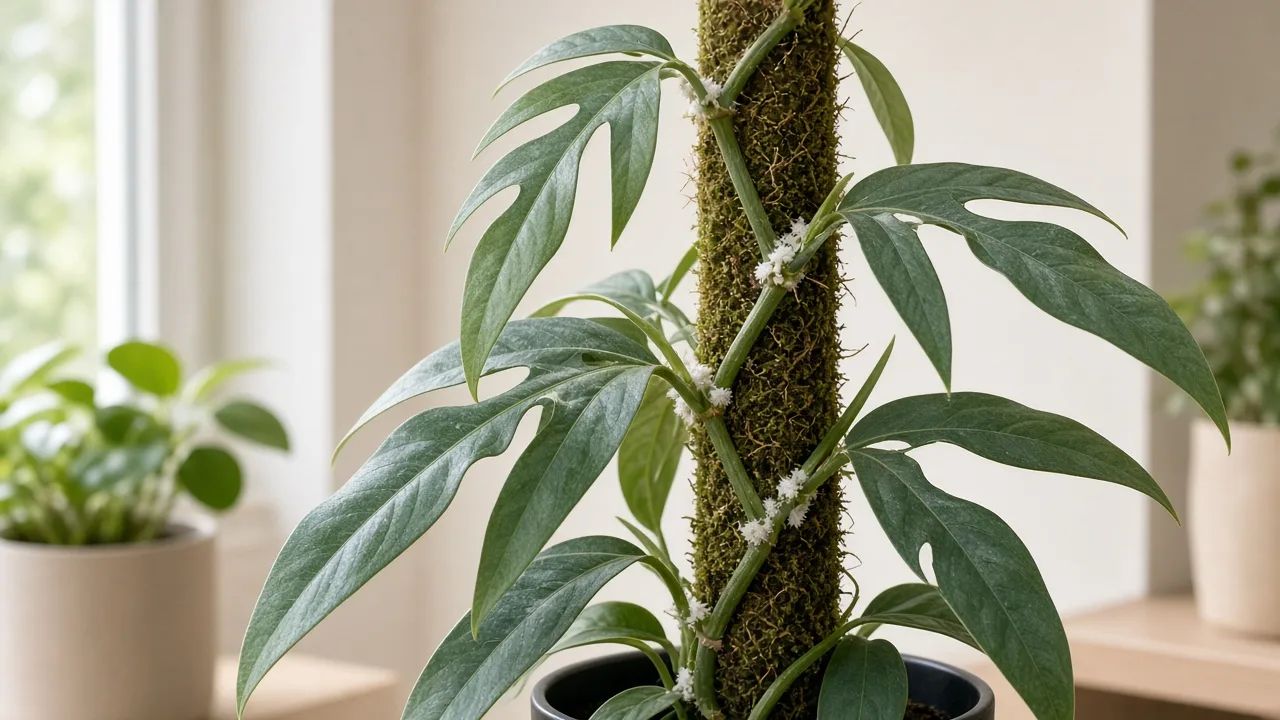
Mealybugs on Epipremnum pinnatum show as white cottony clusters in leaf axils, along climbing nodes, at moss-pole ties, and sometimes at the soil line—often with sticky honeydew on blue-green juvenile leaves. First step: isolate the plant and dab every visible wax tuft with a cotton swab dipped in 70% isopropyl alcohol.
Mealybugs on Epipremnum Pinnatum: Causes, Checks & Fixes
This guide covers mealybugs on Epipremnum Pinnatum. See also the general Mealybugs guide, watering, and light pages for this plant.
Mealybugs on Epipremnum Pinnatum: Causes, Checks & Fixes
Quick answer
Mealybugs on Epipremnum pinnatum (Dragon Tail Plant, Cebu Blue, Silver Vine) are small sap-sucking insects protected by white, cottony wax. On this climbing aroid, they tuck into sheltered joints along fast vining stems—leaf axils on narrow juvenile foliage, nodes where petioles meet the vine, moss-pole ties, and sometimes the soil line or drainage holes. They can stunt growth, coat leaves in sticky honeydew, and lead to sooty mold if you only glance at the silvery blue upper leaves.
For how mealybugs behave on houseplants in general, see our mealybugs pest guide. On Epipremnum pinnatum, the tell is wax in node crevices and stickiness on blue-green juvenile leaves, not a single yellow leaf from a recent watering change.
First step: isolate the plant the same day you spot cottony wax. Move it away from shared shelves, hanging baskets, and propagation jars before crawlers walk to neighbors. Then dab every visible cluster with a cotton swab dipped in 70% isopropyl alcohol.
Why Epipremnum pinnatum gets mealybugs
Mealybugs are common houseplant pests that usually arrive on new nursery stock, shared pruning shears, or nearby infested plants—not because Dragon Tail Plant is uniquely weak, but because its growth habit creates perfect hiding spots.
NC State Extension notes that growers should monitor Epipremnum pinnatum for mealybugs, scale, thrips, and spider mites on a vine that can reach 8–10 feet indoors when supported. Juvenile Cebu Blue leaves stay narrow and lance-shaped with a blue sheen; each leaf attaches at a regular node along trailing or climbing stems. Mealybugs settle in those tight axils and under overlapping leaves on a moss pole—places a quick top-down watering check misses.
Warm, stable indoor rooms favor mealybugs year-round. Indoor ornamentals lack natural enemies, so populations build quietly on a fast-growing vine pushing new nodes every week. A recent nursery arrival, summer patio stint, or a plant moved into dim light with soft, leggy growth often coincides with the first visible wax.
Over-fertilized Epipremnum pinnatum pushes tender tips that crawlers prefer. UC IPM notes that excess nitrogen combined with regular irrigation stimulates soft new growth where mealybugs lay eggs. That pattern shows up on vigorously climbing specimens in bright windows with frequent feedings—especially while you are trying to coax fenestrated adult leaves on a moss pole.
What mealybugs look like on Epipremnum pinnatum
Early infestations hide under waxy filaments. On Dragon Tail Plant and Cebu Blue forms, check these patterns together:
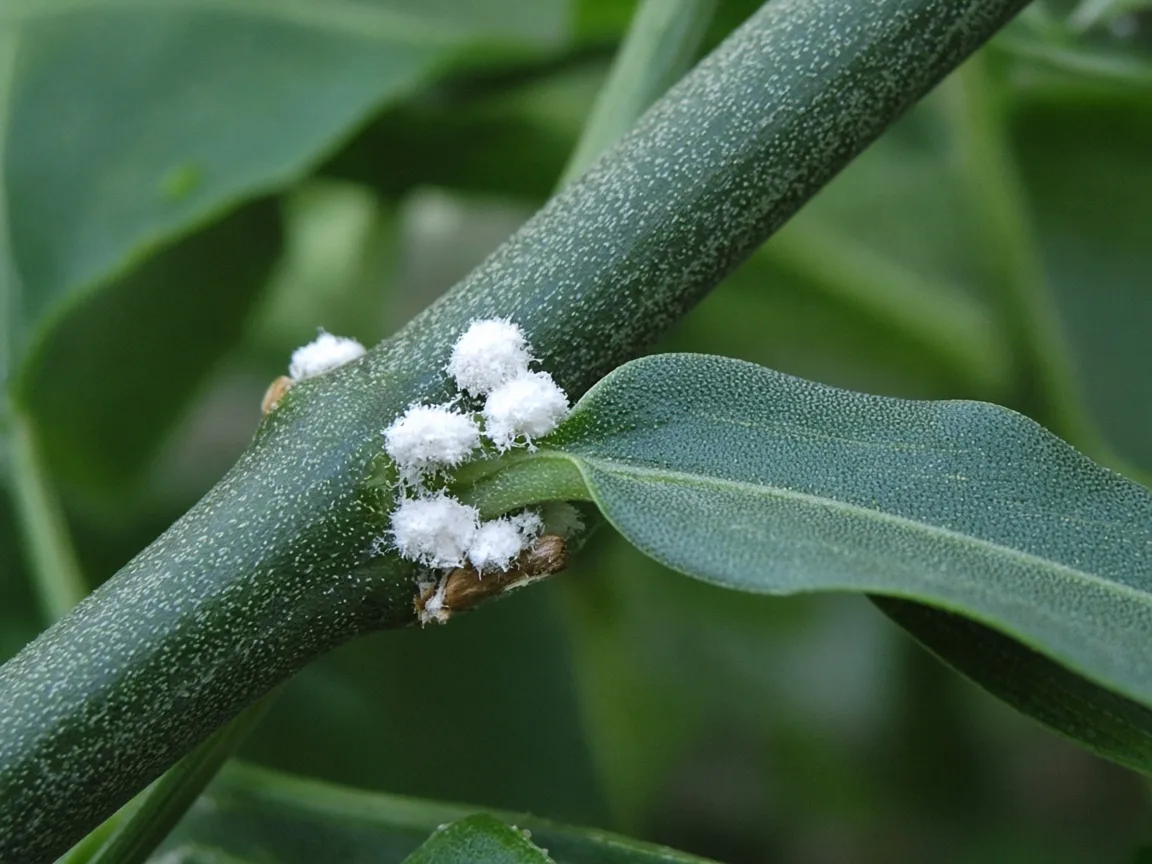
Mealybugs symptoms on Epipremnum Pinnatum - compare cottony wax at a node with healthy blue-green tissue on the same vine.
- White fluffy tufts in leaf axils where narrow juvenile leaves meet the stem—not loose perlite on the soil surface
- Clusters at every node along trailing stems, especially on the underside of hanging vines
- Cottony patches where aerial roots grip a moss pole or where damp sphagnum wraps the stake
- Wax tucked behind moss-pole ties and at the crown where several stems branch
- Cottony material at the soil line, pot rim, or drainage holes when root-zone mealybugs are present
- Sticky, shiny honeydew on leaves below active colonies or on shelves beneath hanging baskets
- Black sooty mold on leaf surfaces that honeydew has coated
- Yellowing or stunted new leaves on infested vine sections while older growth still feels firm
- Slow unfurling or smaller new leaves on pole-grown vines when sap loss hits the growing tip
Do not mistake normal aging for pest damage. Epipremnum pinnatum may shed an occasional lower leaf after a light or watering shift while the rest of the vine stays firm and keeps producing nodes. Mealybug stress shows cottony wax at multiple axils, stickiness, and stalled new growth—not one cosmetic old leaf at the base of an otherwise vigorous climber.
Moss-pole and fenestration blind spots
Dragon Tail Plant behaves differently on a pole than in a hanging basket. Juvenile blue-green leaves cluster along the lower vine; mature, deeply incised foliage develops higher up when bright indirect light and support align. Mealybugs often establish on the juvenile section and moss wrapping long before you notice wax on fenestrated leaves at eye level.
Inspect the pole from the base upward: lift leaves away from damp sphagnum, check where aerial roots penetrate the moss, and run a swab along tie tape. Humid microclimates at the pole surface favor pests and also overlap with low-humidity stress symptoms on leaf tips—wax and pink smear confirm insects; crisp brown alone does not.
How to confirm the cause
Do not treat from one white speck on a leaf tip. Use this inspection order:
- Isolate first — Move the vine away from other plants before handling so crawlers do not walk to neighboring pots or shared propagation water.
- Nodes and axils — Follow each stem and inspect every leaf axil with bright light, including undersides on trailing sections and nodes pressed against a moss pole.
- Soil line and drainage — Lift outer leaves and check where stems enter the mix, the pot rim, and drainage holes. Some mealybug species feed on roots as well as shoots.
- New growth tips — Check the softest vine tips where new leaves unfurl; crawlers settle in tight sheaths before leaves expand.
- Disturbance test — Touch a white patch with a dry cotton swab. Mealybugs smear pinkish when crushed; mineral deposits or perlite do not.
- Neighbor check — Inspect plants that shared a shelf, windowsill, or propagation station for axil clusters or honeydew.
If stems are firm, soil smells neutral, and the only issue is cottony wax with stickiness, mealybugs fit. If the pot stays heavy for days, soil smells sour, and stem bases soften while mix stays wet, rule out root rot on Epipremnum pinnatum before spraying. That is a different problem from wax in axils.
Lookalike symptoms to rule out
Powdery mildew forms flat white powder on leaf surfaces, not cottony tufts in axils. Mineral or hard-water deposits wipe off dry; mealybugs do not. Scale insects look like hard brown or tan bumps on stems, not fluffy wax. Spider mites leave fine webbing and stippling in hot dry air, not cotton clusters. Normal perlite splash sits on soil and leaf tops as hard white grains, not waxy tufts in crevices. Aphids are pear-shaped and mobile on soft tips without thick wax armor.
First fix for Epipremnum pinnatum
Isolate the plant and dab every visible cottony cluster with a cotton swab dipped in 70% isopropyl alcohol.
That single action removes adults you can reach and confirms the pest is alive—not dust—before you commit to sprays. UC IPM recommends dabbing small houseplant infestations with 70% or less isopropyl alcohol; test a hidden axil first and wait 24 hours before treating the whole plant. Firm Epipremnum pinnatum leaves are generally tolerant, but variegated cultivars can show burn on white sectors.
Once isolated and dabbed:
- Work node by node along each vine rather than spraying the whole plant on day one
- Wipe away honeydew from leaves below colonies with a damp cloth
- Check neighboring plants you have not yet isolated
Do not reach for systemic insecticides or repot on day one unless root-zone mealybugs are confirmed at drainage holes. Do not fertilize a pest-hit vine hoping to push new growth—that produces more tender tissue pests prefer.
Step-by-step recovery
After the initial alcohol dab:
- Repeat dabs every five to seven days for at least three cycles to catch newly hatched crawlers hidden in axils. Clemson HGIC notes that mealybug wax repels pesticides and makes control difficult without repeat treatment.
- Apply insecticidal soap if colonies persist after several dab rounds. Cover leaf undersides, nodes, and stem joints thoroughly; repeat at label intervals through one full pest generation.
- Shower the plant in a sink or outdoors on warm days to knock down crawlers on trailing vines—let foliage dry in indirect light the same day.
- Manage ants if they protect colonies on pot rims or pole ties. Ant barriers can help natural enemies reach mealybugs.
- Wash sooty mold off leaves with plain water once honeydew production stops. Heavily coated leaves can be trimmed if they no longer photosynthesize well.
- Repot only if root mealybugs are confirmed — If white wax appears at drainage holes and stems look clean, unpot, rinse roots gently, trim badly infested sections, and repot in fresh well-draining mix. Discard old soil.
Keep the plant isolated until you see no new cottony clusters for at least two weeks after the last treatment.
Recovery timeline
Alcohol dabs show results within a few days when colonies are moderate. A full soap course may take two to three weeks with label-interval repeats. Sooty mold fades as honeydew dries up; expect cleaner new nodes within two to four weeks once insects stay gone.
Old yellowed or distorted leaves rarely regain perfect blue sheen—judge recovery by firm vines, new leaves opening without wax, and no fresh clusters at nodes. Epipremnum pinnatum rebounds faster in bright indirect light than in dim corners where new growth stays slow and leggy.
Mistakes to avoid
Do not ignore a few white specks at one node—they multiply quickly along vining stems. Do not spray the entire plant with undiluted alcohol; spot-dab or use diluted solutions per extension guidance. Do not return an isolated vine to a shared shelf after one treatment round—crawlers hide in axils you missed.
Do not compost heavily infested clippings near other houseplants. Do not increase nitrogen feeding during an active infestation. Heavy mealybug loads may require discarding the plant to protect a large collection—Dragon Tail Plant is easy to replace from a clean node cutting once neighbors are safe.
Wear gloves when handling sap-heavy vines—NC State lists medium-severity poison characteristics if ingested, and sap may irritate skin on sensitive people. Keep treated plants away from pets and children.
How to prevent mealybugs on Epipremnum pinnatum
Scout nodes and leaf axils during weekly care, especially on moss poles and hanging baskets where undersides stay hidden. Quarantine new Cebu Blue or Dragon Tail plants—and any cuttings you plan to root—for two to three weeks before placing them near existing vines.
Keep the plant in bright indirect light so growth stays vigorous and you notice problems early. Avoid excess fertilizer that pushes soft, pest-friendly new tips. Clemson recommends inspecting for common houseplant insects when bringing plants indoors from patios or when mixing new nursery stock into a display.
Improve airflow around crowded plant shelves. Separate hanging baskets so trailing vines do not touch. Sterilize pruning shears with rubbing alcohol between plants when trimming multiple specimens—bare vines after pruning still carry hidden axil colonies.
When to worry
Treat as urgent when cottony wax encircles multiple nodes on the same vine, ants swarm stems or saucers, new tips stall for more than a week despite good light, or white material runs from drainage holes suggesting root infestation. Severe sap loss can leave yellow leaves and slow growth across much of the plant even before stems soften.
Replace severely declining plants rather than fighting endless reinfestation on a stressed specimen—starting fresh from a clean cutting is often faster than repeated chemical cycles when wax has spread to roots and most nodes.
A single small cluster on one axil with firm vines elsewhere is manageable with isolation and dabs—not an emergency, but act within days before crawlers spread.
Conclusion
Mealybugs on Epipremnum pinnatum hide in the node-and-axil crevices that climbing Cebu Blue and Dragon Tail vines create—especially along moss poles and juvenile blue-green foliage—not on the dramatic fenestrated leaves you see from across the room. Confirm cottony wax with a pink crush test, isolate the plant, and dab every cluster with 70% alcohol before escalating to soap. Judge recovery by clean new nodes, not old damaged foliage. Weekly axil inspection on this fast aroid catches pests while they are still a dab job, not a collection-wide outbreak.
When to use this page vs other Epipremnum Pinnatum guides
- Epipremnum Pinnatum watering guide — Use for routine moisture checks before assuming mealybugs is the main issue.
- Epipremnum Pinnatum problems hub — Browse common issues on this species.
- Aphids on Epipremnum Pinnatum — Different entry point when insects are pear-shaped on soft tips without thick wax.
- Yellow Leaves on Epipremnum Pinnatum — Different entry point when yellowing is widespread without cottony clusters or stickiness.
- Spider Mites on Epipremnum Pinnatum — Different entry point when you see fine webbing and stippling, not wax tufts.