Giloy Watering Guide: How Often & Soil Checks
Giloy Watering Guide: How Often & Soil Checks
Giloy Watering Guide: How Often & Soil Checks
Giloy watering fails most often from kindness, not neglect. Tinospora cordifolia — also sold as Guduchi, Amrita, or Heart-leaved Moonseed — is a fast-climbing medicinal vine from tropical and subtropical India, Myanmar, and Sri Lanka. In the wild it climbs through deciduous and dry forests and low-elevation dry districts, so it evolved for well-drained ground that swings between moist and dry — not for a saucer of stale water under a balcony pot.
Indian cultivation packages are blunt about the failure mode. Agro-technique profiles on Vikaspedia and the National Medicinal Plants Board booklet for giloy state that the crop prefers light medium sandy loam with adequate drainage and does not tolerate high rainfall or waterlogged conditions. Field plantings are largely rain-fed, with only occasional irrigation in extreme heat or cold. In a container, that biology becomes a simple rule: water when the top 2–3 cm of mix are dry, soak thoroughly, drain completely, then wait. Keep the root zone lightly moist in active growth — never soggy.
This guide covers how often to water giloy in pots, how to check dryness, overwatering and underwatering signs, monsoon pauses, cuttings vs established vines, and how light and soil change the interval. Pair it with the Giloy overview if you are still confirming placement and support, and the Giloy soil guide if drainage is already failing.
Why Giloy Needs Dry-Down Between Waterings
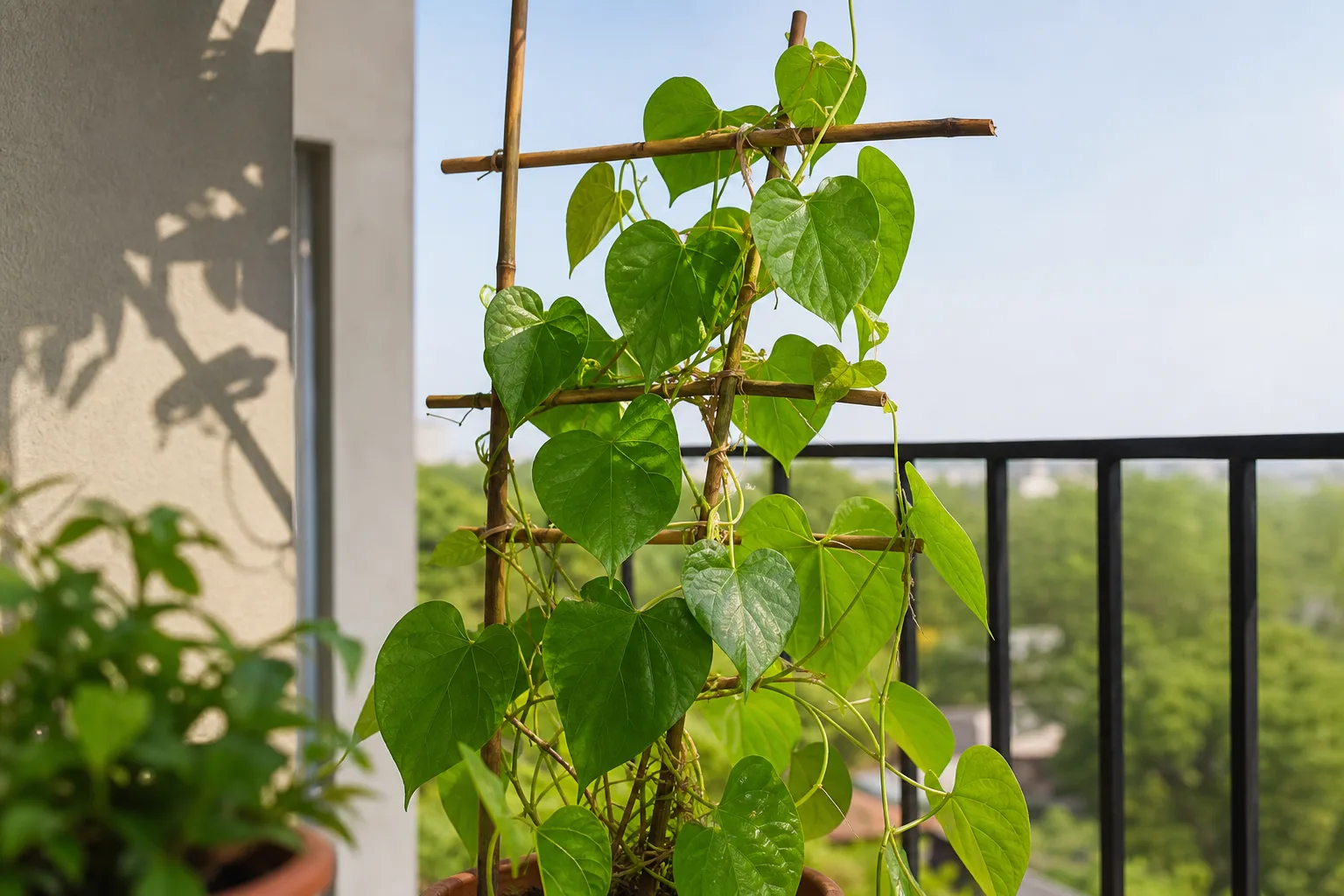
Giloy is a twining climber with heart-shaped leaves, corky older stems, and aerial roots that drop from nodes. Plants For A Future lists it as preferring well-drained soil and accepting dry or moist conditions in full sun — it cannot thrive in shade. That moisture profile is the opposite of a wetland herb: the vine wants oxygen at the roots between drinks.
When soil stays waterlogged, roots cannot absorb oxygen, then die and decay, so the plant cannot take up water or nutrients even though the pot feels heavy. Missouri Botanical Garden’s overwatering guidance explains this oxygen-starvation pathway and notes that waterlogged stress also leaves plants more open to rot pathogens such as Phytophthora (Missouri Botanical Garden — Overwatering). For giloy, a short dry-down is not “tough love.” It is how the species survives monsoon-heavy climates when drainage is honest.
So treat container giloy as a soak-and-dry climber, not a daily-sip tropical. If you must err, err slightly dry for a day rather than keeping the mix constantly wet.
How Often to Water Giloy in Pots
There is no honest universal calendar. Pot size, mix, sun, wind, and season all change how fast water leaves the container. Use intervals only as a starting map, then let the finger test decide.
As a practical reference for a typical 20–30 cm balcony pot in bright light: water about every 4–7 days in hot summer once the top 2–3 cm feel dry, and about every 7–10 days in cooler months. A small terracotta pot on a windy terrace may need water sooner; a large plastic pot in humid shade may stay wet far longer. Track two full dry-down cycles and you will know your home’s rhythm better than any reminder app.
Never water because the calendar says so while the pot is still heavy and cool at depth. Giloy that waits two extra dry days usually recovers. Giloy whose roots sit wet for two extra days may not.
Hot weather and peak summer intervals
In Indian summer heat, evaporation is fast and the vine climbs hard when light and support are right. Morning watering is usually best so foliage dries and roots refill before afternoon heat. If the top 2–3 cm are dry by evening in extreme heat, water again — especially in terracotta. Check first: afternoon soft leaves over wet mix are heat wilt, not drought.
Do not respond to heat with daily shallow cups. One thorough soak that exits the drainage holes, then a real dry-down, trains roots through the whole pot and matches how rain hits free-draining sandy loam.
Cooler months and monsoon pauses
In cooler weather, growth slows and the same pot holds moisture longer. Stretch the interval and re-check with your finger before every drink. During monsoon, pause irrigation whenever rain or humidity already keeps the mix wet. Empty saucers after storms, keep drainage holes open, and only water when the top 2–3 cm dry again.
Monsoon is when container giloy most often fails. Field profiles warn the species does not tolerate prolonged waterlogging; a pot without runoff recreates that condition in miniature. If the mix smells sour or stays heavy for many days after rain, improve drainage before you add another drink — details live in the Giloy soil guide.
How to Check Soil Dryness Before You Water
Surface color lies. Peaty mixes can look pale on top while staying damp near the drainage holes. Before every watering, use at least one of these checks:
Finger test: Push a finger 2–3 cm into the mix. If it feels cool or soil clings, wait. Dry at that depth is your cue to soak.
Pot weight: Lift the container after a full watering and again each day until it feels clearly lighter. Weight reflects the whole column, not just the top crust.
Chopstick or skewer: Push dry wood toward the mid-root zone, then pull it out. Dark, sticky wood means moisture remains; clean dry wood means the root zone has dried enough for giloy.
Season changes the same checks. The finger test that said “water” in May may say “wait” in a humid August. Always re-check rather than copying last month’s interval.
The Deep-Soak Method for Container Giloy
When dryness checks pass, water slowly and thoroughly until runoff exits the drainage holes. That confirms the entire root ball is wet, not just the rim. Empty the saucer within 15–30 minutes. Leaving giloy standing in runoff recreates the waterlogged conditions cultivation guides warn against.
Avoid frequent shallow cups. Partial watering trains roots toward the surface and leaves dry pockets deeper in the pot. One deep soak followed by a real dry-down is the pattern that matches rain-fed field culture translated to a balcony.
If water sheets off hydrophobic mix without soaking in, set the pot in a tray of water for 10–20 minutes so the root ball can rehydrate from below, then drain fully and return to the dry-down cycle. Do not leave it soaking overnight.
Overwatering Signs on Giloy
Overwatering is the main container risk. Watch for yellowing leaves, soft stems at the base, sour-smelling wet soil, and stalled vine growth despite warmth and bright light. Wilting over wet mix is a late, confusing signal — dead roots cannot move water, so the plant looks thirsty while it is drowning.
If several signs appear together, stop watering. Tip the plant carefully from the pot if you can: healthy giloy roots feel firm; rotting roots are brown or black, mushy, and foul-smelling. Early cases often recover after you dry the root zone, improve drainage, and move the plant into stronger sun so the mix can dry. Do not “perk it up” with another drink when leaves wilt over wet soil.
When wet soil leads to root decline
University of Wisconsin Horticulture describes classic container root rot as wilting despite wet soil, stunting, yellow foliage, and soft brown roots that may smell bad — usually driven by wet-loving fungi such as Pythium and Phytophthora (Root Rots on Houseplants — Wisconsin Horticulture). Their prevention advice matches giloy care: use pots with open drainage holes, avoid sitting in drainage water, and moderate moisture rather than keeping mix constantly wet.
Missouri Botanical Garden likewise notes that roots in waterlogged soil die from lack of oxygen and that waterlogging damage is often misread as a pest problem (Missouri Botanical Garden — Overwatering). For giloy, fix light and drainage first; only consider a soil refresh once the vine is stable enough to handle disturbance — see the Giloy repotting guide.
Underwatering Signs Giloy Actually Shows
Giloy tolerates short dry spells better than soggy pots, but containers still need periodic deep soaks. Prolonged underwatering shows as wilting heart-shaped leaves, dry mix pulling away from the pot walls, thin pale new shoots, and leaf drop on lower stems. The pot feels very light.
A single dry episode rarely kills an established vine. Rehydrate with one thorough soak, drain completely, and resume dry-down checks. Do not compensate with daily sips for a week — that swings the plant into overwatering territory.
If leaves are limp and the mix is wet, diagnose overwatering, not drought. The fixes are opposite.
Newly Planted Cuttings vs Established Vines
Young giloy behaves differently from a corky, climbing vine. Agro-technique guidance for stem cuttings says material should be planted within about 24 hours and kept half-dipped in water vertically until it goes into the ground — that is a nursery holding step, not a permanent potting method (Vikaspedia — Tinospora cordifolia). After planting, keep the mix evenly moist for the first weeks while roots form, but never swampy. Think lightly damp between checks, not dripping wet and not bone-dry for a week.
Once nodes are active, aerial roots appear, and the vine is climbing a stake or trellis, shift to the adult rhythm: water deeply only after the top 2–3 cm dry. Full cutting steps live in the Giloy propagation guide; do not confuse “keep cuttings moist while rooting” with “water the mature pot every day.”
Ground-Planted Giloy and Rain-Fed Culture
In open ground with sandy loam and free drainage, giloy’s rain-fed habit is real. Vikaspedia and the NMPB cultivation text describe the crop as grown under rain-fed conditions, with occasional irrigation only during extremes of cold and hot weather to help plants survive adverse spells (NMPB Giloy booklet). That is not permission to flood a bed after every dry afternoon.
For new plantings, water regularly through the first dry stretch so cuttings establish. After that, deep occasional irrigation during prolonged drought is usually enough. Avoid basins that hold standing water after monsoon storms. If your site stays wet for days after rain, plant on a raised mound or improve drainage — the species’ documented intolerance of waterlogging applies outdoors as well as in pots.
How Pot, Mix, and Light Change Water Needs
Watering advice fails when the container setup fights the plant. Use a pot with open drainage holes and a light sandy loam rich in organic matter with excellent drainage — the same soil story cultivation guides repeat. Dense garden clay or peat-heavy indoor mix holds water too long for giloy’s dry-to-moist preference. The Giloy soil guide covers mix recipes; the short version is sharp drainage first.
Light changes water use as much as season. Giloy needs bright sun or very strong light to climb well; weak shade slows growth and keeps mix wet longer, which raises overwatering risk. If the pot stays heavy for many days, check placement against the Giloy light guide before you add another soak. A vine on a sunny trellis dries more predictably than one slumped in a dim corner.
Common Watering Mistakes with Giloy
Daily watering by habit. Field crops of giloy are rain-fed for a reason. Daily sips keep container roots oxygen-starved.
Watering on wilt alone. Soft leaves over wet soil mean root trouble; soft leaves over dry soil mean thirst. Always check the mix.
Leaving saucers full after monsoon rain. Standing water is the fastest way to recreate the waterlogging giloy cannot tolerate.
Ignoring light when the pot stays wet. More shade means slower water use. Fix sun and drainage before you change fertilizer — feeding a stressed wet vine makes things worse. Timing for feed belongs in the Giloy fertilizer guide.
Treating cuttings like mature vines — or the reverse. New cuttings need steadier moisture while rooting; established vines need dry-down between soaks.
When to use this page vs other Giloy guides
Use this page when your question is when and how to water, how to read dry vs wet wilt, or how to adjust for summer and monsoon. Use the Giloy overview for identity, size, and full care summary. Switch to Giloy light when stems are thin and pale or the pot never dries. Use Giloy soil when drainage, mix texture, or waterlogging is the core problem. Use Giloy repotting when roots escape holes or the pot dries within a day. Use Giloy propagation when you are rooting cuttings rather than watering a mature vine. Use Giloy fertilizer only after light, water, and drainage are stable. Use Giloy pruning when you need to manage length and nodes on the trellis.
Related Giloy guides
- Giloy overview — growth habit, placement, and care snapshot
- Giloy light — sun hours and why shade keeps pots wet
- Giloy soil — sandy loam mixes and drainage fixes
- Giloy fertilizer — when to feed after watering is stable
- Giloy repotting — when a wet or root-bound pot needs refresh
- Giloy propagation — moist aftercare for new cuttings
- Giloy pruning — managing vine length on a trellis
- Giloy care hub — full plant profile and grower notes
Conclusion
Giloy watering is a dryness check, not a daily ritual. Tinospora cordifolia climbs best when bright light, a trellis, and well-draining sandy loam meet a soak-and-dry rhythm that keeps the top 2–3 cm from staying wet. Water about every 4–7 days in hot pots and every 7–10 days in cooler weather as a starting map, then let your finger decide. Pause hard in monsoon, empty saucers, and treat yellow leaves on wet soil as an emergency to stop watering — not a cue for another drink. Get the moisture cycle right first; light, soil, and feeding only work after the roots can breathe.