Giloy Light Needs: Sun Hours, Windows & Scorch Signs
Giloy Light Needs: Sun Hours, Windows & Scorch Signs
Giloy Light Needs: Sun Hours, Windows & Scorch Signs
Giloy is not a low-light indoor vine. Tinospora cordifolia is a sun-driven medicinal climber that builds firm stems, short nodes, and useful aerial roots when it receives real daytime brightness — and it stretches, pales, and stays wet for too long when you treat it like a shade houseplant. Plants For A Future states the species cannot grow in the shade and lists full sun among its core care needs, which matches what growers see on Indian balconies: strong light first, then water and fertilizer make sense.
This guide covers how much sun Giloy needs, where to place it at home, how to handle harsh afternoon heat, what warning signs mean, and when a grow light is worth adding. For a full care snapshot, start with the Giloy overview or the Giloy plant hub, then use this page to fix placement before you change watering.
How Much Light Giloy Actually Needs
Aim for at least 4–6 hours of direct sun daily, or an equivalent stretch of very bright, plant-facing light on an open balcony or terrace. That is the practical home target for compact climbing, thicker stems, and predictable drying of the pot. Field and botanical profiles treat Giloy as a warm-climate climber rather than a deep-shade understory plant, and cultivation notes repeatedly prefer warm growing conditions even when the species is described as hardy across many soils.
If your pot only gets a soft glow from a north-facing room or a covered corridor, you are below the growth threshold for this vine. Giloy may keep a few leaves for weeks in that setting, but new shoots usually come out thin, widely spaced, and slow. Judge success by new nodes: short internodes, heart-shaped leaves that hold a deep green, and stems that thicken enough to lean on a stake without flopping.
Direct sun versus “bright” balcony light
Direct sun means unfiltered beams on the foliage for part of the day — morning east sun on a railing, or several open hours on a terrace. “Bright light” without direct beams can still work when the sky exposure is wide: an unobstructed south or west balcony edge, white walls reflecting light onto the vine, and no deep overhang. What fails is room brightness to human eyes. Your living room can look cheerful while the leaf surface still sits in low photosynthetic light.
A simple check: on a clear midday, hold your hand above the upper leaves. A sharp shadow usually means usable outdoor intensity. A faint or missing shadow usually means the plant is surviving, not climbing well. Move the pot toward the brightest edge of the balcony before you add fertilizer or a larger pot.
Why shade fails this vine
Shade does not merely slow Giloy — it changes the whole care equation. Internodes lengthen as the vine reaches for light, leaves thin, and the potting mix stays wet because the plant is not using water quickly. That is how shade placement gets misread as a watering problem. PFAF’s blunt line that the plant cannot grow in the shade is the botanical warning; home practice adds the second half: weak light plus habitual watering is the most common balcony failure pattern.
Native Habitat and Why Giloy Wants Bright Exposure
Kew’s Plants of the World Online accepts Tinospora cordifolia as a liana native from the Indian Subcontinent to Indo-China, growing primarily in wet tropical biomes across India, Sri Lanka, Bangladesh, Myanmar, and neighboring regions. Useful Tropical Plants describes it as a large deciduous climbing shrub that twines on other plants, can reach tall hosts, and drops long aerial roots that root when they touch the ground.
PFAF places habitats in dry districts at low elevations and deciduous or dry forests, with mature height near 15 m when unconstrained. That combination — tropical climber, forest-edge and open dry-forest niches, and a habit of scrambling into brighter canopy gaps — explains why deep shade is a poor home default. Giloy evolved to climb toward light on a support, not to sit in a dim corner as a decorative foliage plant.
Commercial and research cultivation in India reinforces the same idea: CSIR–Indian Institute of Integrative Medicine has published agrotechnology for cultivating Giloy across varying climatic conditions, which only makes sense for a crop grown outdoors with real sky exposure and a host or trellis. Cultivation summaries also note the plant prefers a warm climate and needs support while it climbs — light and structure travel together.
Best Placement for Giloy in Indian Homes
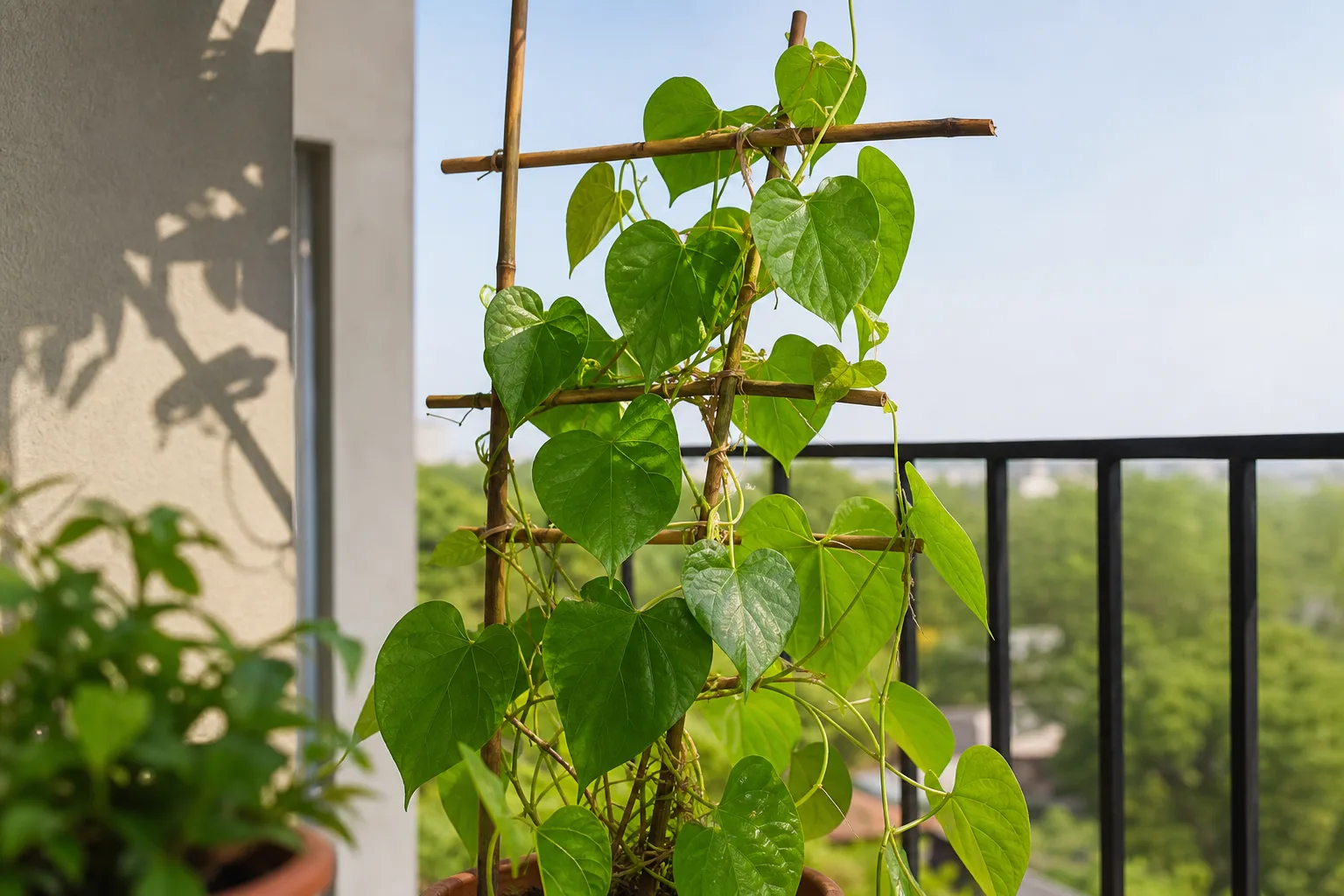
Place Giloy where a trellis, stake, railing, or host shrub can catch sun for most of the active day. The plant’s job is to climb; your job is to give it a bright path and something to hold. In containers, expect a manageable 60–120 cm of trained vine with pruning, not the multi-metre landscape size of an unconstrained climber.
Balcony, terrace, and garden-edge setups
A sunny balcony railing, terrace corner, or garden edge with 4–6 hours of direct sun is the default home placement. East exposures give cooler morning sun and are the safest start for nursery plants. South and west exposures deliver more total light and faster growth, but they also raise heat and drying speed in peak summer — useful if you water on the finger test, risky if the mix stays bone-dry while leaves bake.
Tie the main stem loosely within the first month so the vine uses light energy on structured climbing instead of sprawling across the floor. If you want thicker harvestable stems, keep the canopy open: overcrowded shade from neighboring pots is still shade. For soil that can handle bright outdoor drying without waterlogging in monsoon, see the Giloy soil guide.
Honest indoor and sunroom limits
Indoors, Giloy only works long term in a sunroom, greenhouse, or window with several hours of direct sun on the leaves. A bright-looking living room without plant-facing sunbeams is usually too weak. North windows in most Indian apartments are maintenance zones at best. If indoor culture is your only option, plan a full-spectrum grow light from day one rather than hoping ceiling LEDs will substitute for sky.
Do not bring a sun-grown terrace plant indoors for weeks of decorative display without expecting stretch and slower drying. When growth slows in a dimmer spot, cut watering frequency immediately.
Can Giloy Take Full Afternoon Sun?
Yes — established Giloy often thrives in full sun on open terraces, which aligns with PFAF’s full-sun care listing. Garden databases that list Guduchi under full sun are pointing at the same outdoor reality. The caveat is heat load and acclimation, not a botanical preference for shade.
Afternoon west sun in May–June can crisp tender leaves on a plant that spent months under nursery shade cloth, even though the species itself is sun-tolerant. Dry soil multiplies heat stress: a wilted leaf in harsh sun is both a light and a moisture problem. Keep the top of the mix from turning to dust during heat waves, but never leave the pot sitting in a water-filled saucer after you water.
Acclimating a nursery or shade-grown plant
Move Giloy toward stronger sun over 7–14 days. Start with morning sun and bright shade for the hottest hours, then add one more hour of direct exposure every day or two. Watch the newest leaves: pale bleaching, crisp margins, or sudden papery patches mean you jumped too fast. Old scars do not green up again; judge the transition by new growth after you stabilize placement.
If you bought a plant from a covered nursery bench, assume it needs acclimation even if the label says “full sun.” Species tolerance and leaf history are different things.
Signs Giloy Is Getting Too Little Light
Too little light shows as long gaps between nodes, thin pale shoots, smaller heart-shaped leaves, and a vine that leans hard toward the brightest gap. Aerial roots may form, but overall stem thickness stays weak. The pot stays heavy and cool for many days after watering because growth is slow.
Do not answer that pattern with fertilizer first. Move the pot to stronger sun, confirm the support and pruning plan so energy goes into sturdy leaders, and only then consider feeding during active growth. If cuttings are your next step, take them from firmer, well-lit stems — see Giloy propagation.
Signs of Too Much Heat or Leaf Scorch
Too much intense sun after a shade start shows as bleached or tan patches on sun-facing leaves, crisp brown margins, and leaves that feel hot and papery by mid-afternoon. Scorch tissue is permanent; remove only fully dead leaves after the plant stabilizes in a slightly gentler spot or behind a light shade cloth for peak hours.
Differentiate scorch from watering failure: scorch is localized on the brightest side and appears within days of a placement change. Overwatering yellowing tends to be more general, often with a soft base and sour wet mix. When unsure, fix light gradually and check the top 2–3 cm of soil before the next drink.
Seasonal Light Changes Across India
Summer brings the strongest intensity and the fastest pot drying. You may need afternoon filtering on west balconies while still keeping total daily light high. Monsoon reduces direct sun hours under cloud cover and raises humidity; the risk shifts from scorch to weak light plus wet soil. Pull pots out from deep covered corners so they still catch bright sky, and slow watering when the mix stays wet.
Winter in North India shortens days and can drop nights near the cold edge of comfort. PFAF lists approximate USDA hardiness zones 10–12, which matches a tropical climber that dislikes sustained chill. Give winter plants the brightest available terrace slot, reduce water as growth slows, and protect containers from hard frost. Peninsular and coastal gardens usually keep stronger year-round light — still prioritize open sky over decorative indoor placement.
NMPB-oriented cultivation material frames Giloy as a tropical and subtropical crop suited to outdoor culture, with field plantings often timed around the rainy season when establishment is easier (Giloy cultivation booklet). Container growers should still treat light as a year-round placement decision, not a one-time balcony choice in spring.
Grow Lights When Outdoor Sun Is Limited
Use a grow light only when you cannot give outdoor sun — high-rise corridors, deep apartments, or long cloudy stretches. A full-spectrum LED panel 30–45 cm above the upper leaves for 10–12 hours daily is a realistic substitute for “very bright” indoor culture. Keep the fixture on a timer, raise it as the vine climbs, and rotate the pot weekly so one side does not stretch.
Ceiling room lights and distant window glow are not grow lights. If you cannot provide either outdoor sun or a dedicated lamp, Giloy is the wrong plant for that spot. Choose a genuinely low-light species instead of forcing a sun climber into survival mode.
How Light Changes Watering and Support Needs
Bright Giloy drinks more and climbs faster. Expect the top 2–3 cm of mix to dry sooner in full sun, which is healthy when drainage is good. Weak-light Giloy drinks slowly; the same calendar watering schedule that worked on the terrace can rot roots indoors. Always couple a light upgrade with a watering reset using the Giloy watering guide.
Support matters more in strong light because growth accelerates. A stake or trellis keeps internodes from collapsing into a tangled shade pile on themselves. After a light increase, wait for new firm growth before repotting or heavy feeding — changing light, pot size, and fertilizer together makes diagnosis harder.
When to use this page vs other Giloy guides
Use this light page to decide sun hours, balcony direction, indoor limits, scorch vs stretch signs, and grow-light setup. Use watering when the question is dryness checks, monsoon sogginess, or yellow leaves on wet mix. Use soil when drainage and mix structure are the constraint. Use fertilizer only after placement and watering are stable. Use pruning to shorten leggy shade growth once light is fixed, and propagation when you want cuttings from healthy, well-lit stems.
Related Giloy guides
- Giloy overview — full care snapshot and identity
- Giloy watering — dryness checks and seasonal rhythm
- Giloy soil — drainage mix for sunny containers
- Giloy fertilizer — feeding after light is right
- Giloy pruning — shortening stretch and training the vine
- Giloy propagation — cuttings from strong nodes
- Giloy repotting — when roots outgrow a bright pot
- Giloy plant hub — profile, tools, and cluster entry
Conclusion
Giloy light care is straightforward once you drop the low-light houseplant script. Give Tinospora cordifolia at least 4–6 hours of direct sun or equivalent very bright exposure, put it on a balcony, terrace, or garden edge with a trellis, and treat deep shade as a dead end. Acclimate nursery plants before full afternoon west sun, watch new growth for stretch or scorch, and reset watering whenever you change placement. Fix light first — stem strength, leaf color, and root health usually follow.