Underwatering on Giloy: Dry Mix & Recovery
Quick answer
Underwatering on giloy (Guduchi) shows as a light pot, dry mix 2–3 cm down, limp heart-shaped leaves, and thin pale shoots on a fast summer vine—not yellow lower leaves on soggy soil. First step: confirm dryness with a finger test and one deep soak that fully drains, then wait for the top layer to dry again.
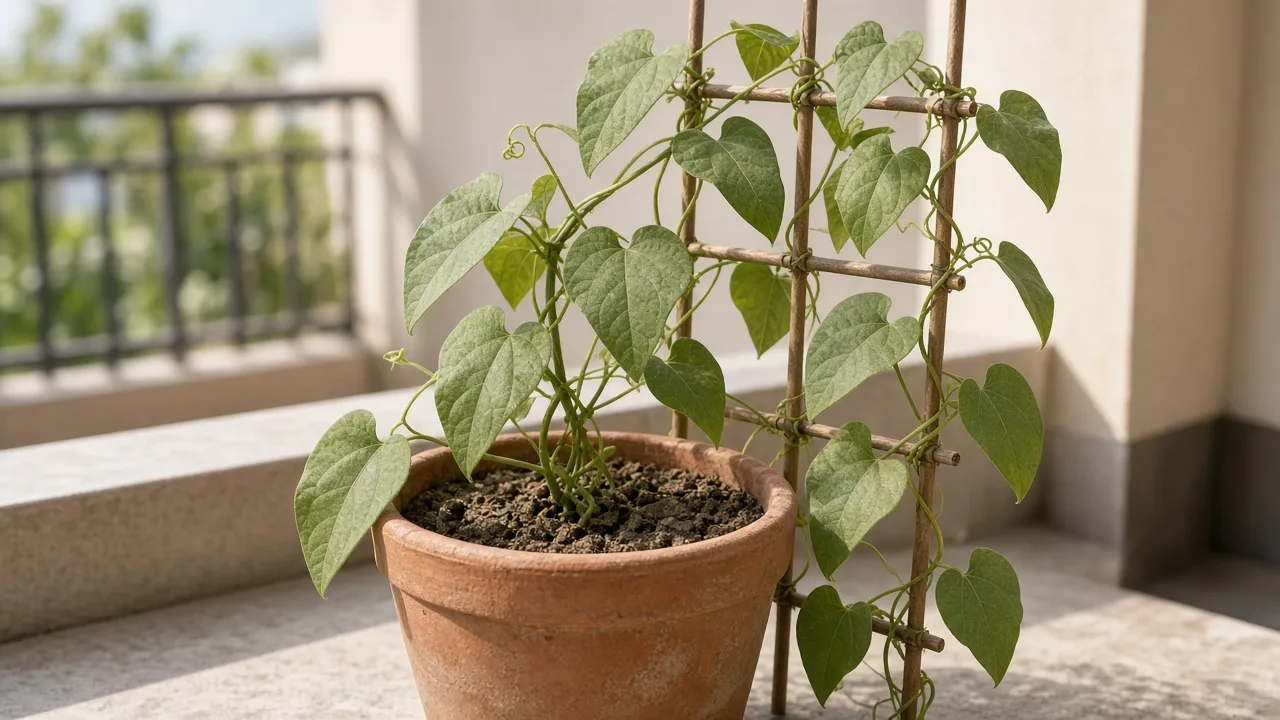
Underwatering on Giloy: Causes, Checks & Fixes
This guide covers underwatering on Giloy. See also the general Underwatering guide, watering, and light pages for this plant.
Underwatering on Giloy: Causes, Checks & Fixes
Quick answer
Underwatering on giloy (Tinospora cordifolia—Guduchi, Amrita, or heart-leaved moonseed) means the climbing vine is losing more water through its large heart-shaped leaves and fast summer stems than the root zone can replace. You usually see a light pot, dry mix 2–3 cm down, limp or hanging foliage, thin pale shoots at nodes, and sometimes lower leaf drop—not yellow leaves on a heavy wet pot.
For how chronic dry mix limits water uptake on container plants in general, see our underwatering guide. On giloy, thirst tracks pre-monsoon heat on a terrace pot, a skipped drink during a growth flush, or a small altar container that cannot feed a long trellised vine—not the same rhythm as a shade-loving foliage plant.
First step: finger-test the top 2–3 cm and lift the pot; if both read dry, give one thorough soak until a little water exits the drainage holes, then stop until that layer dries again.
When to use this page vs other Giloy guides
This page is the dry-mix, light-pot entry when giloy looks thirsty during active growth.
| Pattern | Read next |
|---|---|
| Light pot, dry 2–3 cm, limp heart leaves, thin new shoots | This guide |
| Sudden collapse in hours on very dry or very wet mix | Wilting on giloy |
| Gradual hang over days; wet vs dry confusion | Drooping leaves on giloy |
| Yellow lower leaves, sour smell, heavy pot days after rain | Overwatering on giloy or root rot on giloy |
| Long pale stems reaching for glass | Not enough light on giloy |
| Calendar, monsoon pauses, soak depth | Giloy watering guide |
What underwatering looks like on Giloy
Healthy giloy holds glossy betel-like heart leaves on firm green twining stems. Thirst changes the pot story before every leaf crisps.
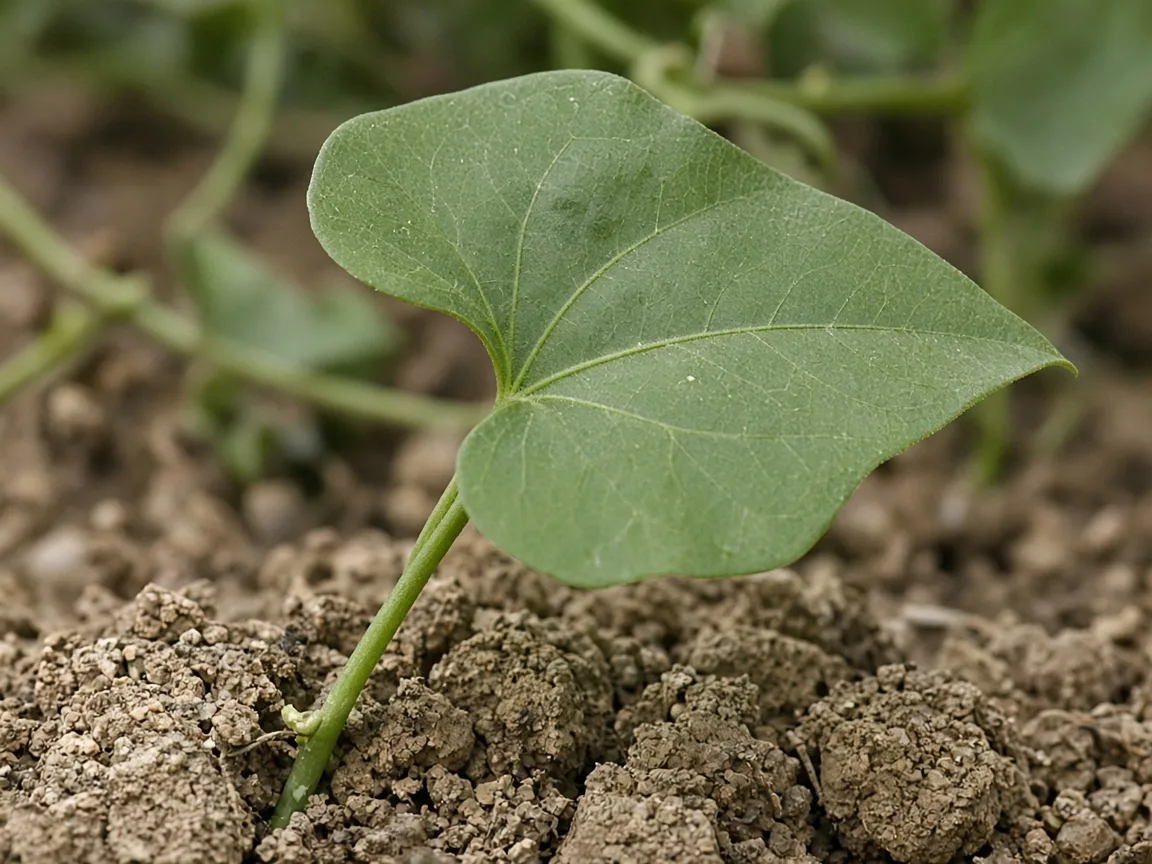
Dry, pulling-away mix at the giloy soil line with a dull limp heart-shaped leaf—compare pot weight and moisture depth before you treat wet-root lookalikes.
Typical signs:
- Pot feels light when lifted; mix is dry 2–3 cm (about 1 inch) down, not just dusty on the surface
- Heart-shaped leaves hang, curl slightly, or feel dull; tissue may stay firm early rather than mushy
- Thin pale new shoots at the trellis tip while older leaves drop from lower nodes
- Mix pulls away from the pot rim; saucer stays dry after recent “watering” that only wet the surface
- Common after pre-monsoon heat on a terrace pot that dries in a day or when travel skipped several drink cycles
Giloy is a deciduous climber of dry districts and deciduous forests that prefers well-drained soil and full sun. It tolerates dry periods once established in the ground, but a small container with a long summer flush cannot store water the way forest soil can—underwatering shows on the longest hanging stems first.
Why Giloy runs dry faster than you expect
Three giloy-only patterns drive most underwatering cases:
Pre-monsoon heat on a fast summer flush
Giloy spreads quickly in summer when light and support are right. Each new meter of stem and heart leaf increases daily water demand. On a windy west-facing railing, a 20 cm pot may need water every few days in peak heat—even if your calendar still says weekly. Skipping one cycle during that flush produces obvious limp leaves while the stem wood stays firm.
Small altar pot vs trellis-sized ambition
Many home giloy pots are smaller than the vine’s canopy. Aerial roots on mature stems absorb some atmospheric moisture in the wild, but in a balcony pot they do not replace a dry root ball. When the vine outgrows the container, the top 2–3 cm may dry while you still see green leaves—until turgor collapses across the whole trellis. Repotting or pruning back to nodes belongs after you restore moisture, not before a confirmed dry-down.
Winter leafless rest vs “emergency” drought
Giloy sheds leaves in winter and slows growth—bare firm stems are normal, not automatic proof of thirst. Underwatering during active spring or summer growth on a pot that should be pushing nodes is what this page addresses. If the vine is leafless in cool weather but wood is green and the pot is moderately moist, see slow growth on giloy for seasonal expectations instead of daily soaks.
How to confirm underwatering (not a lookalike)
Work in this order:
- Lift the pot — noticeably lighter than after a full drink tells you to suspect dry roots before you read leaf color.
- Probe 2–3 cm deep — match the Giloy watering guide dry-down check; surface dust alone is not enough.
- Compare weight to moisture — dry throughout the upper half of the pot fits thirst; heavy wet mix with limp leaves fits overwatering or root failure (Missouri Botanical Garden — Overwatering explains why wet roots cannot absorb even when leaves look “thirsty”).
- Feel the stem — firm green wood from soil line to mid-stem versus soft base on sour-smelling mix.
- Check placement — giloy does not grow well in deep shade; weak spindly growth in shade can mimic stress but pairs with normal pot weight, not a light dry container.
- Scan for pests — spider mites in a hot dry corner cause stippling; confirm mites only after moisture and light make sense.
Shehri Kisaan notes that both overwatering and underwatering can cause wilting-like hang on vines; pot weight and depth reading separate them.
The first fix to try
If the top 2–3 cm is dry and the pot is light: water once until a little runs from the drainage holes, empty the saucer within 30 minutes, and do not water again until the top layer dries. Agriculture Review and grower practice both align with water when the top layer becomes dry—not shallow daily sips that never reach deep roots.
That single deep drink is the whole first fix. Do not fertilize, repot, or hard-prune the same day.
Step-by-step recovery
- Soak thoroughly once; confirm drainage holes are open and the nursery pot is not sitting in a full cachepot of stale water after the drink.
- Move the pot out of direct afternoon scorch only for 24–48 hours if leaves looked sun-stressed on top of drought—return to 4–6 hours of direct sun once turgor returns.
- Tie the main stem to the trellis if long branches drag—see pruning on giloy for clip points only after leaves firm up.
- Wait 24–48 hours; thirsty heart leaves often lift partially when the root zone refills.
- Adjust rhythm using pot lifts during heat—terrace containers may need shorter intervals than ground vines described in tropical cultivation profiles.
If the pot was heavy and wet while leaves limped, do not soak—that path is overwatering, not this guide.
Recovery timeline
| Severity | What you did | Realistic expectation |
|---|---|---|
| Mild thirst, one missed drink | One deep soak, drained | Noticeable lift in 1–2 days on firm leaves |
| Several dry days in summer flush | Soak + trellis support | New nodes in 1–2 weeks; old crisp edges may remain |
| Chronic under-watering, tight root ball | Soak, then repot into gritty mix if roots are circling dry peat | Fresh shoots in 3–6 weeks if stem wood stays firm |
| Winter leafless rest | No forced daily water | Leaves return with warmth; do not confuse with rescue |
Badly crisp or yellowed heart leaves rarely flatten perfectly. Success means fresh nodes, firm stem tissue, and pot weight that cycles predictably with your watering checks.
Mistakes to avoid
- Misting leaves instead of watering the root zone — giloy thirst is a mix problem, not a humidity spray fix (low humidity on giloy is a separate crisp-edge pattern on moist mix).
- Soaking a heavy wet pot because leaves look limp—wet roots cannot drink; you deepen rot risk.
- Feeding a dry vine before moisture stabilizes—see fertilizer on giloy only after clean new growth returns.
- Repotting on day one without fixing the drink rhythm—roots in dry peat may need a soak first, then repot only if circling or blocked holes are confirmed.
How to prevent underwatering next time
Align checks with giloy’s growth calendar: frequent pot lifts during spring and pre-monsoon flushes, longer intervals when cool rain keeps mix wet, and honest sandy loam with coarse sand or perlite in pots with open holes. Train new nodes weekly while stems are flexible so one small root ball is not feeding three meters of untied vine. After propagation, cuttings need even moisture until roots form—then shift to the adult dry-down rhythm so you do not carry “baby daily sip” habits into an established climber.
When to worry
Escalate same-day when the whole vine collapses on bone-dry mix during warm weather, stem tips shrivel, or multiple branches fail while the pot has been light for many days. A firm leafless vine in winter is usually seasonal. Limp leaves on saturated mix with soft stem bases point to root rot—not another drought soak.
Related Giloy guides
- Giloy overview
- Giloy watering
- Giloy light
- Giloy soil
- Drooping leaves on Giloy
- Wilting on Giloy
- Giloy problems hub
Conclusion
Underwatering on giloy is a light pot and dry 2–3 cm story on a fast sun-loving climber, not mystery wilt on soggy soil. Confirm depth and weight, give one drained soak, then return to the dryness-guided rhythm in the watering guide. Fresh heart-shaped leaves at nodes mean you are back on track; limp foliage on heavy wet mix means switch to wet-root care instead.
Related tool
Use the Plant Watering Calculator to narrow causes for underwatering on this plant before changing multiple variables at once.