Wilting on Giloy: Pot Weight & Collar Checks
Quick answer
Wilting on Giloy is rapid turgor loss on a fast sun-loving climber—often on a heavy wet balcony pot after monsoon rain, a feather-light dry pot after a heat spell, or a soft stem base on saturated mix. First step: lift the container and press the corky stem where it meets the soil before you pour another drink.
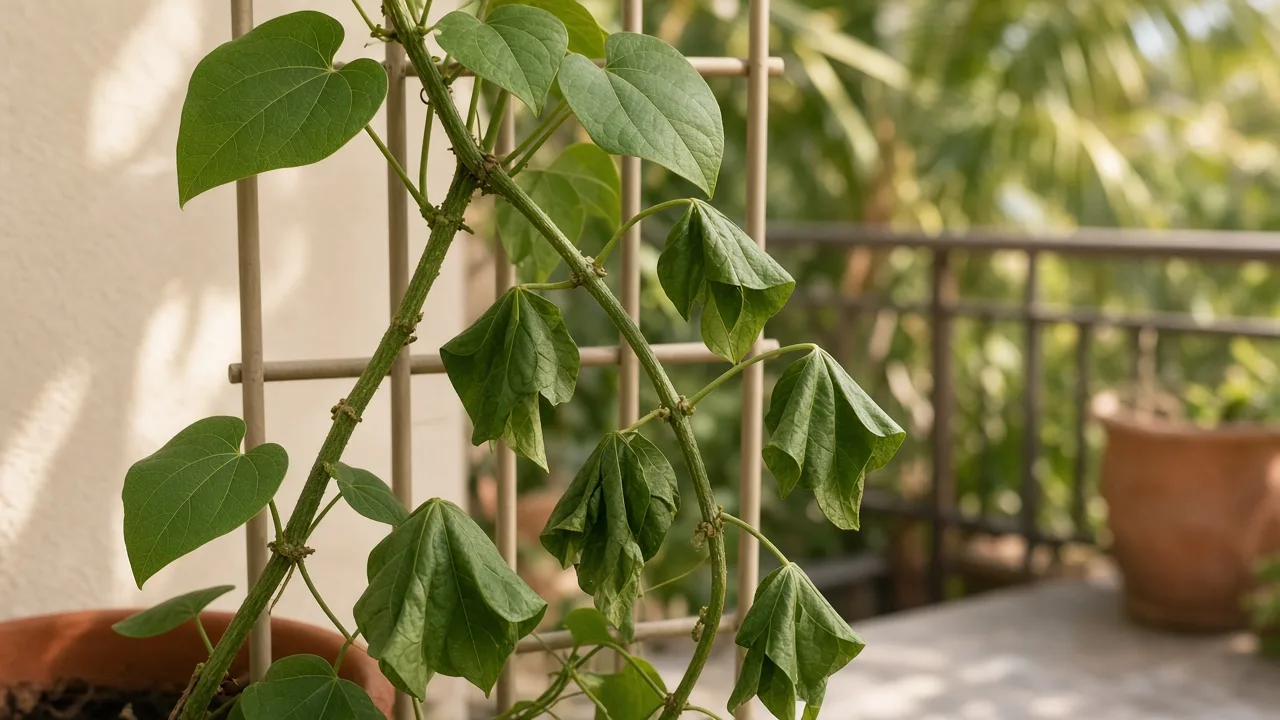
Wilting on Giloy: Causes, Checks & Fixes
This guide covers wilting on Giloy. See also the general Wilting guide, watering, and light pages for this plant.
Wilting on Giloy: Causes, Checks & Fixes
Quick answer
Wilting on Giloy (Tinospora cordifolia) is rapid turgor loss on a fast twining medicinal vine—glossy heart-shaped leaves go limp along several nodes, the stem may lean on its trellis, and the plant can look finished within a day. That speed matters. Drooping leaves on Giloy usually develop over days as petioles sag; wilting is the emergency version when multiple blades collapse together or the whole vine flops after a stress spike.
For how wilting works when soil moisture and root uptake disagree, see our wilting guide. On Giloy, the first fork is pot weight: heavy wet mix with limp leaves is uptake failure—not thirst; light dry mix with thin limp leaves is drought collapse.
First step: lift the pot off the saucer and press the stem base gently where the vine enters the mix. Do not add water until you know whether the container is heavy on damp organic soil or feather-light on dry mix—and whether the corky base is firm or soft.
When to use this page vs other Giloy guides
| Pattern | Read next |
|---|---|
| Slow sagging heart-shaped leaves over days | Drooping leaves |
| Rapid multi-node collapse, pot-weight fork (this page) | Stay here |
| Heavy wet pot, yellow lowers, no urgent base mush | Overwatering |
| Soft base + mushy roots on wet mix | Root rot |
| Light pot, dry top 2–3 cm, firm stem | Underwatering |
| Limp leaves after repot or root disturbance | Giloy repotting stress section |
| Long-term dry-down rhythm after the vine stabilizes | Watering guide |
What wilting looks like on Giloy
On a healthy Guduchi vine tied to a balcony trellis or railing, heart-shaped leaves hold a firm angle along green twining stems—even in hot sun. Wilting changes the whole silhouette quickly:
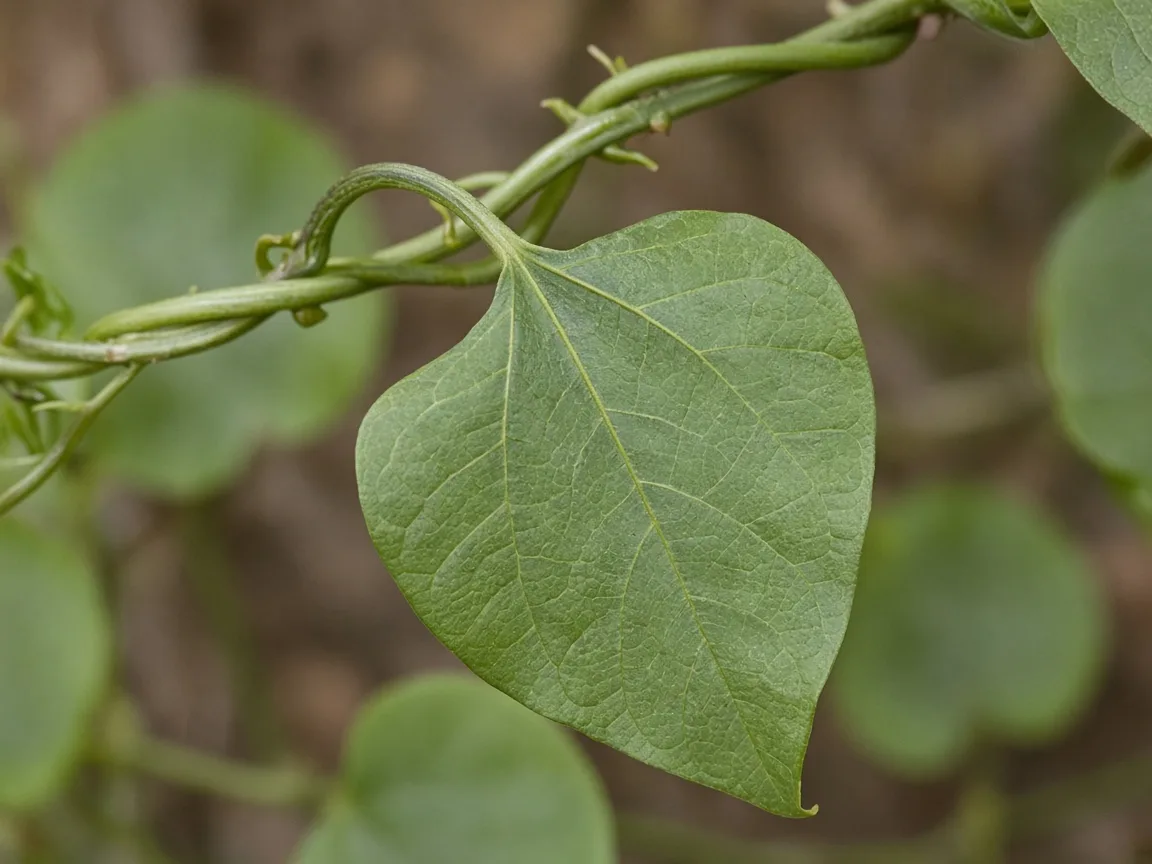
Wilting on Giloy—a limp heart-shaped blade and collapsed petiole; rapid multi-leaf failure on this climber often tracks wet roots or a failing stem base, not a single missed drink.
Wet-soil wilt is the classic misread. Several heart-shaped leaves go limp at once while the mix stays dark, cool, and heavy. Lower blades may yellow. The vine can lean on its support even though you watered recently. A faint sour smell from drain holes or fungus gnats at the rim fits chronically wet organic mix. The stem base—where Giloy would send aerial roots onto a neem host in the wild—may feel soft if rot is advancing.
Dry-soil wilt follows a missed soak, a windy terrace that dried a small pot overnight, or winter heat pulling moisture from sandy loam. Leaves look thin and limp on a lightweight pot. The top 2–3 cm are pale and crumbly. Tissue feels limp but not mushy. Rehydration can firm blades within 24–48 hours if roots are still healthy.
Heat-flush wilt appears on a pot that was fine at dawn but collapsed by afternoon on a 38°C terrace. Giloy is a deciduous climber of dry districts that still needs steady uptake during fast summer extension—transpiration can outpace a root ball that dried only partway down. Confirm depth moisture before you assume roots are dead.
Post-repot or cutting wilt is common when fine roots were disturbed. Hold off on fertilizer and give bright indirect airflow for a few days while the vine re-establishes—see propagation timing if the plant is still a fresh cutting.
Rapid collapse vs slower droop on Giloy vines
Owners often search “wilting” and “drooping” for the same limp heart-shaped leaves. On Giloy, treat speed and spread as your triage clue.
Drooping usually means petioles bend and blades hang while the vine still has partial turgor on upper nodes—you may have days to correct watering or support. Use drooping leaves when the problem built gradually.
Wilting means multiple nodes lose firmness together or the supported vine leans or collapses within hours to a day after flood, drought, heat, or base failure. Urgency is higher because vascular tissue at the soil line may already be compromised.
If only the lowest leaves wilt while the tip stays firm and glossy, you may be in early wet-soil stress—see overwatering. If tip and base wilt together on a heavy wet pot, assume root-zone emergency.
The stem-base pinch and pot-weight fork
Wild Giloy climbs host trees and roots from nodes; container growers still see wilt start where the corky stem meets mix. Your fastest home test mirrors field “collar” checks:
- Lift the pot. Heavy and cool days after watering → wet-soil branch. Feather-light → dry-soil branch.
- Probe the top 2–3 cm. Clinging damp on a heavy pot confirms you should not add water yet—match the Giloy watering guide dry-down check.
- Pinch the stem base where lenticels and old aerial-root scars show. Firm corky tissue with limp lowers may recover after a dry-down. Soft, dark, or collapsing base on wet mix means inspect roots the same day.
- Sniff drain holes. Sour or rotten odor on saturated mix fits oxygen-starved roots that cannot move water upward—so leaves wilt while soil stays wet.
This is the plant-specific version of the global rule: wilting on moist soil often means roots cannot take up water, not that the vine needs another soak.
Why Giloy wilts on wet mix in monsoon pots
Tinospora cordifolia evolved on well-drained ground in dry forests and cannot grow in shade. Cultivation references for giloy describe light sandy loam with adequate drainage and state the crop does not tolerate high rainfall or waterlogged conditions, with field plantings largely rain-fed rather than constantly irrigated (AYUSH giloy cultivation notes).
Owners hear “tropical medicinal vine” and keep pouring into a nursery pot inside a decorative cachepot on a shaded balcony where evaporation is slow. When mix stays saturated, roots lose oxygen and die. Living roots cannot replace water lost from thin heart-shaped leaves. The vine wilts on wet soil—the paradox that triggers another watering mistake.
Editorial giloy guides repeat the same fix: water only when the top layer of soil becomes dry—monsoon rain bypasses that rule unless you empty standing water and lift inner pots out of outer shells.
Sun, heat, and the dry-side wilt on terrace Giloy
Giloy does not grow well in shade and needs roughly 5–6 hours of direct sun daily for vigorous climbing. In full sun on a small pot, the vine can lose turgor when the top dries faster than roots can supply—especially if you watered lightly without soaking through the sandy loam mix profile.
Missouri Botanical Garden notes that decline from too little water is common—wilting leaves can signal drought, and once soil gets very dry it may need a full soak to wet properly again. For Giloy, one deep drink beats repeated sips that never reach the lower root mass.
If wilt follows moving a sun-hardened vine indoors or under a deep overhang, check light placement before soaking an already-wet pot—transpiration drops but roots may still be saturated from yesterday’s rain.
Trellis load and node failure (mechanical wilt)
Giloy adds meters of stem in warm weather. When several untied side branches carry full-sized heart leaves, mechanical overload can mimic wilt: petioles collapse on free-hanging shoots while the main tied stem stays firm and mix moisture looks normal.
Trace each limp branch to its tie point. If only unsupported laterals fail, tie nodes to the trellis before you change watering. If the main stem and all nodes wilt together, return to the pot-weight fork—mechanical sag rarely hits every leaf at once.
How to confirm the cause
Work in this order:
- Lift and weigh the pot — separates wet-root from dry-root branches before tools touch soil.
- Finger-test 2–3 cm deep — surface dust can lie; match watering depth, not calendar dates.
- Press the stem base — firm corky wood versus soft dark tissue at the soil line.
- Scan for pests — sticky residue or fine webbing on new growth may mean aphids or spider mites draining turgor; treat only after moisture logic is clear.
- Read the tip — a firm growing point after one corrective day is a better sign than old collapsed leaves re-erecting.
Wisconsin Extension notes that overwatered houseplants often wilt while soil stays moist because damaged roots cannot transport water—Giloy shows that pattern early on long hanging stems.
The first fix to try
If the top 2–3 cm is dry and the pot is light: water once until a little runs from drainage holes, then stop. Empty saucers after 30 minutes. Do not re-water until the top dries again.
If the top stays wet and the pot is heavy: skip watering. Move the nursery pot out of any cachepot, confirm holes are open, and place the vine in bright airflow until the root zone dries. That single pause is the safest first response before repotting.
Pick one branch of that fork. Do not prune, fertilize, and repot on the same day.
Step-by-step recovery
Dry wilt path
- Soak once until drainage runs, then wait for the top 2–3 cm to dry before the next drink.
- Tie the main stem if it leans—see pruning for clip points only after turgor returns.
- Expect partial lift within 24–48 hours on firm tissue; crispy leaves may not revert.
Wet wilt path
- Stop irrigation; improve airflow and sun per the light guide.
- If base stays soft or lowers turn yellow on sour mix, unpot and trim mushy roots—follow root rot salvage steps.
- Repot into fresh draining mix only when roots are firm enough to handle disturbance.
Node salvage when the base is failing
If the soil-line stem is mushy but upper nodes are firm, take cuttings from healthy nodes above the rot zone and root them per propagation—Giloy roots easily from stem cuttings in warm weather. That is a Giloy-specific rescue path many bushy houseplants do not offer.
Recovery timeline
Mild drought wilt on firm stems often shows new node swell within 2–4 days after one correct soak. Wet-soil wilt may take one to three weeks of dry-down before fresh heart leaves open—old limp blades may stay hanging or yellow off.
Judge progress by clean new growth at the tip, not by forcing collapsed leaves upright. Winter leaf shed is normal on deciduous giloy; do not confuse dormancy with emergency wilt in cool months—see slow growth for seasonal expectations.
Mistakes to avoid
- Watering because leaves look limp without lifting the pot—classic wet-soil kill on giloy.
- Keeping giloy in a cachepot through monsoon without draining—recreates waterlogging the species cannot tolerate (cultivation references).
- Fertilizing a collapsed vine before roots and light are stable—hold feed until new growth looks healthy for two weeks.
- Stacking repot, prune, and pesticide the same day as wilt correction—change one variable so you can read the response.
- Treating winter bare stems as wilt when wood is firm and the vine is dormant.
How to prevent wilting next time
Align watering with top 2–3 cm dryness, not a fixed calendar—Agriculture Review and the Giloy overview both anchor on that check. Drain cachepots after storms, give 4–6 hours of direct sun and a trellis sized for summer flush, and inspect weekly while problems are still small.
If yellow leaves or mold on soil appear alongside wilt on wet mix, fix drainage before the next growing season push.
When to worry
Escalate same-day when:
- Stem base is soft and dark while mix stays wet and sour
- Most nodes collapse within 48 hours after continuous rain
- Wilt spreads upward while you hold back water on a heavy pot—roots may be failing
- Rehydration on a light dry pot fails to firm leaves within 48 hours and tips brown
Those patterns may mean advanced root rot or irreversible base decay—node cuttings may be the salvage path.
Related Giloy guides
Conclusion
Wilting on Giloy is a speed and pot-weight problem on a drainage-sensitive climber, not a mystery disease. Lift the container, read moisture at 2–3 cm, and press the corky stem base before you soak or repot. Separate monsoon saturation from terrace drought, tie fast summer growth to its trellis, and measure recovery by fresh nodes—not by old leaves pretending nothing happened.
Related tool
Use the Plant Watering Calculator to narrow causes for wilting on this plant before changing multiple variables at once.