Aphids on Giloy: Causes, Checks & Fixes
Quick answer
Aphids on Giloy colonize tender new nodes, leaf axils, and shoot tips on Tinospora cordifolia—often with sticky honeydew on heart-shaped foliage. First step: isolate the pot and blast leaf undersides and climbing stems with a strong stream of water before any spray.
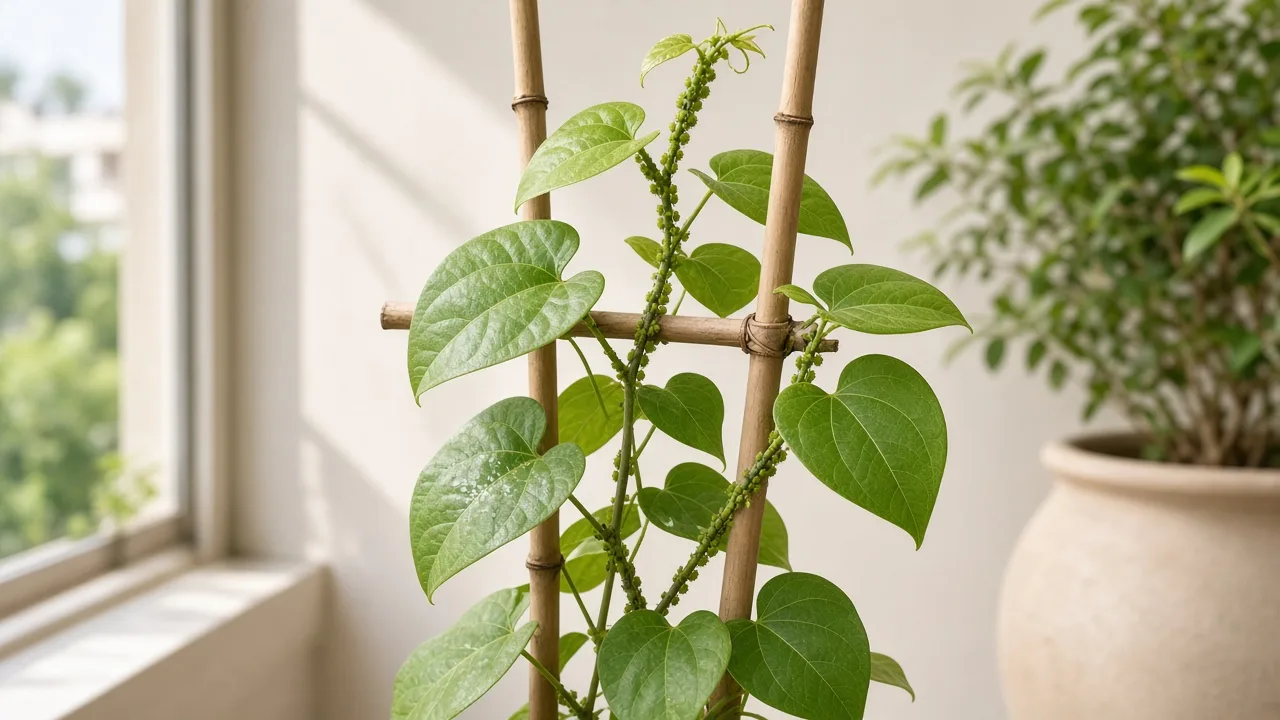
Aphids on Giloy: Causes, Checks & Fixes
This guide covers aphids on Giloy. See also the general Aphids guide, watering, and light pages for this plant.
Aphids on Giloy: Causes, Checks & Fixes
Quick answer
Aphids on Giloy (Tinospora cordifolia, guduchi) are small sap feeders that settle on the softest climbing tissue this fast medicinal vine produces at nodes, leaf axils, and fresh shoot tips. Warm-season growth on a sunny trellis or balcony keeps pushing tender stems, and aphids prefer that soft new growth over older woody runners.
First step: isolate the pot and blast leaf undersides and climbing stems with a strong stream of water. Work from the growing tip down, targeting axils where heart-shaped leaves meet the vine. For how aphids behave in general—including honeydew, ants, and contact sprays—see our aphids guide. On Giloy, the infestation pattern follows the vine’s upward climb, not random yellowing on the whole plant.
What aphids look like on Giloy
Giloy is a deciduous climber with twining branches and alternate heart-shaped leaves. Aphids exploit exactly the tissue you watch when training a new leader on a stake or trellis.
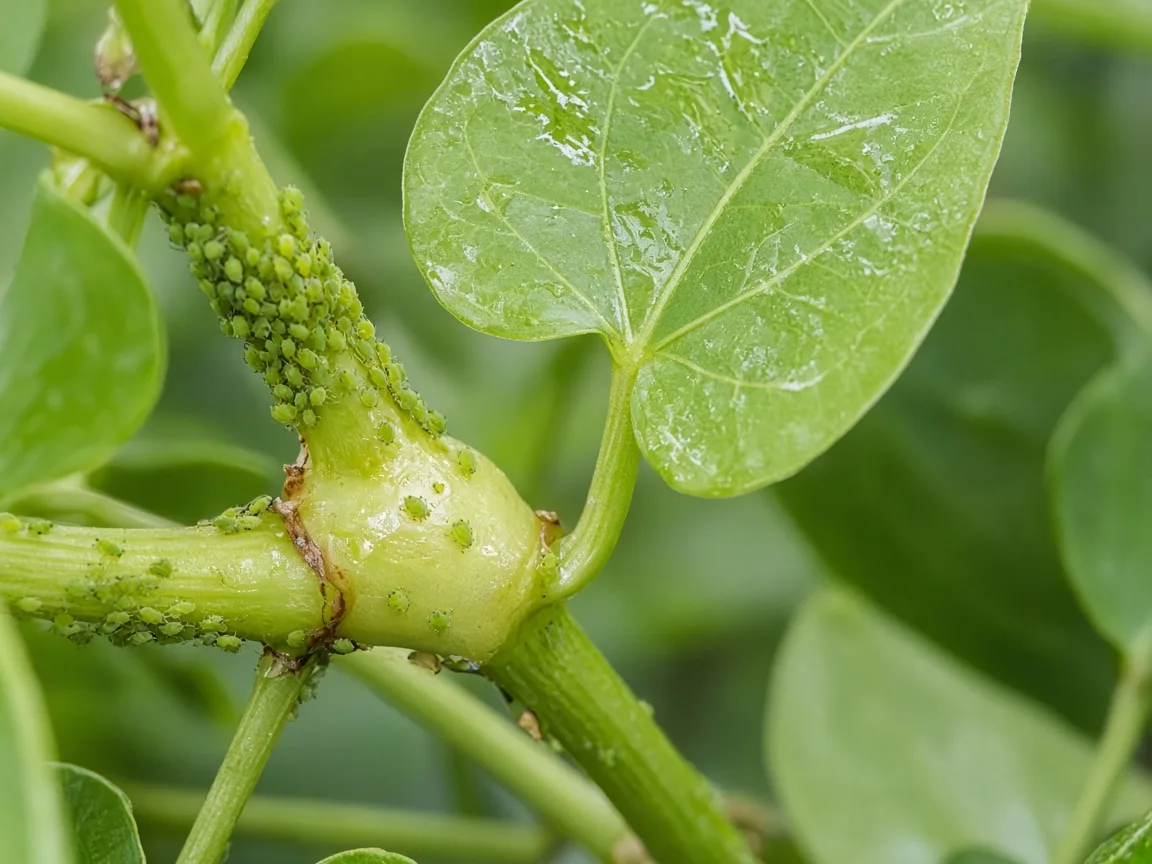
Aphids symptoms on Giloy - compare with healthy tissue on the same plant.
Typical signs include:
- Soft pear-shaped insects about 1/16 to 1/8 inch long, often green or yellow-green but sometimes black or brown (WSU PestSense)
- Dense clusters on newest nodes, tender internodes, and leaf axils where sap flow is highest
- Sticky honeydew on leaf surfaces, trellis ties, or the pot rim; black sooty mold may follow outdoors
- Yellowing or slight curl on the softest new leaves while older woody stems still look firm
- Whitish shed skins on undersides as nymphs molt
- Ants on stems feeding on honeydew and sometimes protecting colonies from predators
Winged adults may appear when colonies crowd a tip. On a balcony collection, that is your signal to inspect neighboring climbers—not just the Giloy pot.
Where aphids hide on a climbing Giloy vine
Unlike rosette houseplants, Giloy spreads damage along a vertical search path. Aphids cluster near shoot tips and on leaf undersides, which on Giloy means:
- The terminal bud and the two or three nodes below it
- Leaf axils where petioles attach—easy to miss when leaves overlap on a dense trellis
- Soft lateral shoots you leave for bushier coverage before pruning back to a single leader
- Undersides of new heart-shaped leaves still expanding, where curl can trap insects away from sprays
Older woody stems below the active zone often look clean even when the top is coated. Always inspect upward from the tip, not downward from the base.
Why Giloy gets aphids
Giloy is not randomly “weak.” Its growth habit and how growers culture it create reliable feeding sites.
Fast warm-season extension. Package-of-practices guidance treats Giloy as a tropical medicinal crop that needs good drainage and active climbing growth (Vikaspedia). In bright Giloy light and warm weather, new nodes appear quickly—exactly when aphids thrive on lush new growth.
Introduction from outside. Aphids may arrive on new nursery plants or enter through open windows and then crawl or fly short distances. Giloy brought indoors after monsoon, or a fresh cutting rooted beside other pots, is a common entry route.
Nitrogen-rich soft shoots. Recent compost top-dress or strong fertilizer during active growth pushes tender stems aphids colonize first. That does not mean starving the vine, but it explains outbreaks right after feeding—see Giloy fertilizer for seasonal timing.
Trellis crowding. Multiple stems tied to one post create humid pockets and overlapping leaves, so rinsing misses colonies tucked between axils—similar pressure to mealybugs on Giloy in sheltered joints.
Stress confusion. Giloy does not tolerate waterlogging. Yellow leaves on wet mix can look like pest damage, but aphid yellowing usually tracks newest tips with visible insects or honeydew, not uniform lower-leaf drop from overwatering on Giloy.
How to confirm the cause
Work through these checks before spraying anything beyond water:
- Start at the growing tip - Aphids cluster on soft nodes; nutrient issues more often show on older leaves without insect groups.
- Magnify axils and undersides - Pear-shaped bodies with cornicles (tail pipes) confirm aphids; fast-running specks suggest thrips instead.
- Feel for stickiness - Honeydew-coated leaves are tacky. Dry, limp whole vines with dry deep mix fit underwatering on Giloy better than localized tip stickiness.
- Watch ants - Ant trails on twining stems strongly suggest honeydew producers nearby.
- Rule out lookalikes - No insects in axils? Check spider mites on Giloy for stippling in dry heat, or mealybugs for white wax tufts.
Confirmed diagnosis requires visible aphids or fresh honeydew on new Giloy growth, not yellow leaves alone.
First fix for Giloy
Isolate the pot and knock aphids off with water.
Move Giloy away from other climbers and herbs. Use a shower head, hose with gentle pressure, or spray bottle stream to wash leaf undersides and stems with lukewarm water—UC IPM recommends a strong stream on sturdy plants. Aim at axils and the terminal bud; repeat every two to three days because aphids drop when disturbed but may climb back.
Do not stack neem, soap, and a heavy Giloy pruning session the same afternoon. Water knock-down alone often clears light balcony infestations and leaves no residue on stems you may harvest later.
Step-by-step recovery
If colonies remain after two or three thorough rinses:
- Snip heavily infested soft tips - Drop curled tips into soapy water rather than composting them indoors. Aphids inside curled young leaves escape contact sprays (UC IPM).
- Apply insecticidal soap - Use a product labeled for ornamental plants. Soaps smother on contact and have no residual activity; coat undersides and axils until runoff.
- Repeat on a schedule - Treat every five to seven days for two to three cycles to catch nymphs hatching from eggs. Gardening Know How stresses that one application rarely ends an indoor aphid outbreak.
- Manage ants outdoors - Disrupt ant trails so lady beetles and lacewings can reach colonies.
- Hold fertilizer - Do not push soft new shoots with feed while aphids are active; resume modest feeding only after new growth looks clean for a couple of weeks.
Neem oil or horticultural oil can follow if soap fails; test a few leaves first and apply in cool morning or evening light to avoid burning heart-shaped foliage in hot sun.
Recovery timeline and stem-harvest timing
Distorted young leaves often stay blemished. Judge success by clean new nodes and falling aphid counts, not perfect older foliage.
- 48–72 hours - Live aphid numbers should drop after the first thorough rinse; honeydew may still feel sticky until you wipe leaves.
- 7–14 days - With repeated water or soap cycles, new tips should open with fewer insects visible in axils.
- 2–4 weeks - Vine extension resumes if roots, Giloy soil drainage, and light are sound.
Many growers harvest mature Giloy stems for traditional use. If you cut stems for drying or juice, wait until the label re-entry interval passes after any soap or oil, and prefer stems from zones that were pest-free for several weeks. Light infestations controlled by water alone do not require a waiting period beyond your usual rinse before use—still inspect cut segments and discard heavily honeydew-coated tissue.
Lookalike symptoms
- Mealybugs on Giloy - White cottony wax in axils; insects stay put unlike active aphid colonies.
- Spider mites on Giloy - Fine stippling and webbing in dry heat; mites are microscopic dots, not pear-shaped clusters on tips.
- Yellow leaves on Giloy - Often linked to wet mix, cold, or light stress without sticky honeydew on new growth.
- Wilting on Giloy - Whole vine limpness with root-zone issues; aphid wilt is usually tip-focused with insects present.
- Normal old-leaf drop - Lower senescing leaves on a long vine without stickiness or new-tip colonies.
What not to do
Do not over-fertilize while fighting aphids; lush shoots feed the next generation (WSU PestSense). Avoid homemade dish soap mixes that burn foliage—use labeled insecticidal soap.
Do not ignore ants on outdoor trellises. Do not compost heavily infested tips indoors without killing insects first. Systemic insecticides are a poor fit for actively harvested medicinal vines and can harm bees if Giloy flowers outdoors—prefer contact methods and water knock-down.
Do not assume every yellow heart-shaped leaf is aphids when monsoon keeps the mix saturated; fix drainage and watering before repeated pesticide rounds.
How to prevent aphids on Giloy
- Quarantine new vines two to four weeks before integrating with other pots.
- Scout growing tips weekly during fast warm-season extension—the same rhythm as training a trellis.
- Avoid excess nitrogen on small containers; follow seasonal feeding in the Giloy fertilizer guide.
- Space stems on the support so axils dry and rinsing reaches both sides of leaves.
- Inspect after outdoor season - Giloy moved indoors after rains often carries hitchhiking aphids on sheltered undersides.
Lady beetles and lacewings help on open balconies; less practical on a single indoor pot, where early rinsing matters most.
Practical checks
Urgency check
Treat today if most new nodes carry visible colonies, honeydew spreads down the vine, winged aphids appear, or warm-season growth stalls. A small cluster on one tip can start with isolation and water only.
Best inspection order
Terminal bud → next three nodes and axils → leaf undersides with magnification → honeydew stickiness → ant trails → neighboring pots → soil moisture only if no pests found.
When to use this page vs other Giloy guides
- Giloy watering guide - Use when yellowing or wilt tracks wet or dry mix without insects on new tips.
- Giloy problems hub - Browse all common issues on this species.
- Drooping leaves on Giloy - When whole vines sag without obvious insect clusters on new tips.
- Mealybugs on Giloy - When you see white wax tufts instead of pear-shaped aphids.
- Spider mites on Giloy - When stippling and webbing appear in dry heat.