Mold on Soil on Giloy: Causes, Checks & Fixes
Quick answer
Surface mold on giloy (Guduchi) almost always means manure-rich mix stays damp and airless at the pot rim—common on terrace climbers, monsoon top-ups, and compost mulch under a dense trellis. First step: scrape off the fuzzy top inch and pause hand watering until the top 2–3 cm passes a dry finger test.
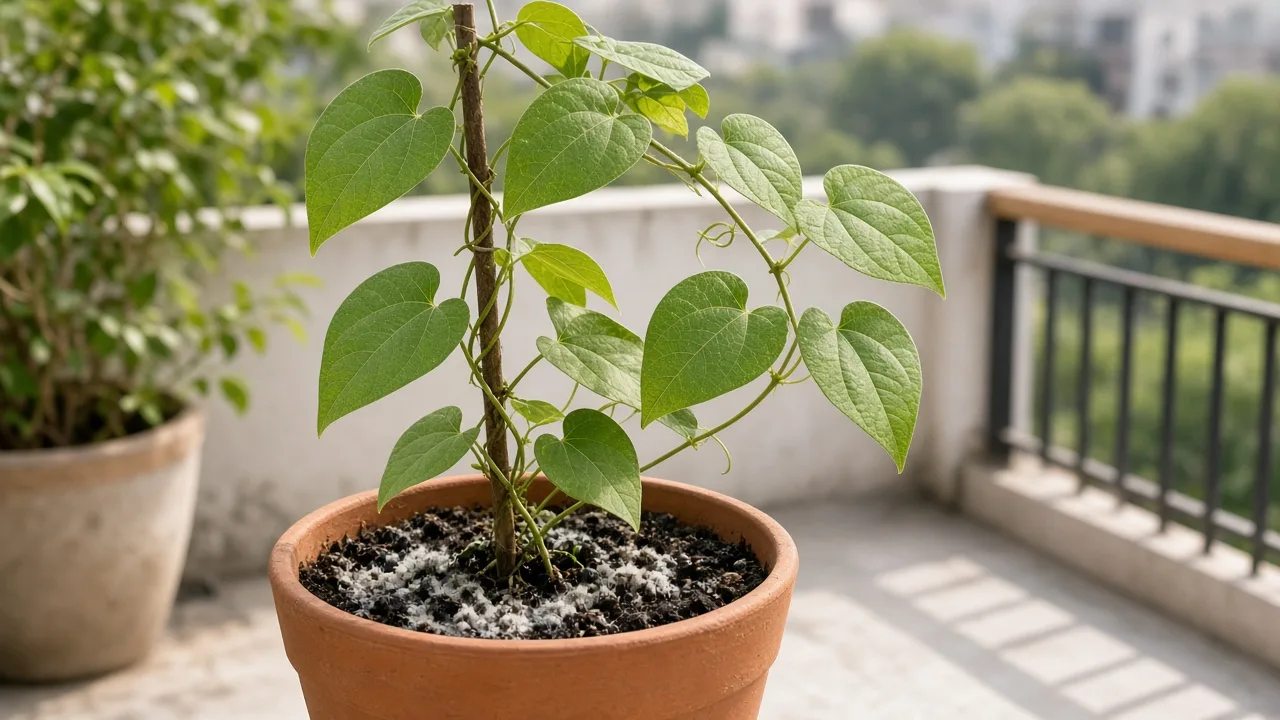
Mold on Soil on Giloy: Causes, Checks & Fixes
This guide covers mold on soil on Giloy. See also the general Mold on Soil guide, watering, and light pages for this plant.
Mold on Soil on Giloy: Causes, Checks & Fixes
Quick answer
Surface mold on giloy (Tinospora cordifolia—Guduchi or Amrita) almost always means the top of your organic mix is wet and airless longer than this fast climbing vine can use it. Manure-rich sandy loam that stays dark at the rim—especially under a dense trellis, after monsoon rain plus hand watering, or with compost mulch shading the surface—is where saprophytic fungi break down organic matter into fuzzy white or gray patches.
First step: scrape off the fuzzy top inch of mix and pause hand watering until the top 2–3 cm passes a dry finger test. Make that one correction before repotting, hydrogen-peroxide drenches, or fungicide on stems you plan to harvest.
For how harmless surface fungus on moist potting media behaves in general, see our mold on soil hub. On giloy, the useful pattern is fuzz at the soil line with firm woody bases and new nodes still climbing—not leaf spots high on the trellis, not drying the whole pot like a succulent, and not ignoring a sour smell from a heavy terrace pot.
When to use this page vs other giloy guides
This page is the symptom-first entry for fuzzy soil on a Guduchi pot.
| Pattern | Read next |
|---|---|
| Tiny dark flies rising when you water | Fungus gnats on giloy |
| Soft stem bases, sour smell, wilt on wet mix | Root rot on giloy or overwatering on giloy |
| Light pot, limp heart-shaped leaves, dry rim | Underwatering on giloy |
| Yellow leaves without obvious surface fuzz | Yellow leaves on giloy |
| Mix stays wet despite sparse watering | Giloy soil guide — sand, perlite, and drainage |
| Stalled extension despite bright trellis | Slow growth on giloy |
What mold on soil looks like on giloy
On container giloy, mold most often appears as white, gray, or occasionally greenish fuzzy film across the potting mix. It clusters where compost mulch or fallen heart-shaped leaves shade the rim, under trellis ties that block airflow at the base, or where terrace saucers hold runoff after monsoon showers. You might notice a musty smell when you shift the pot, or fungus gnats sharing the same damp organic layer.
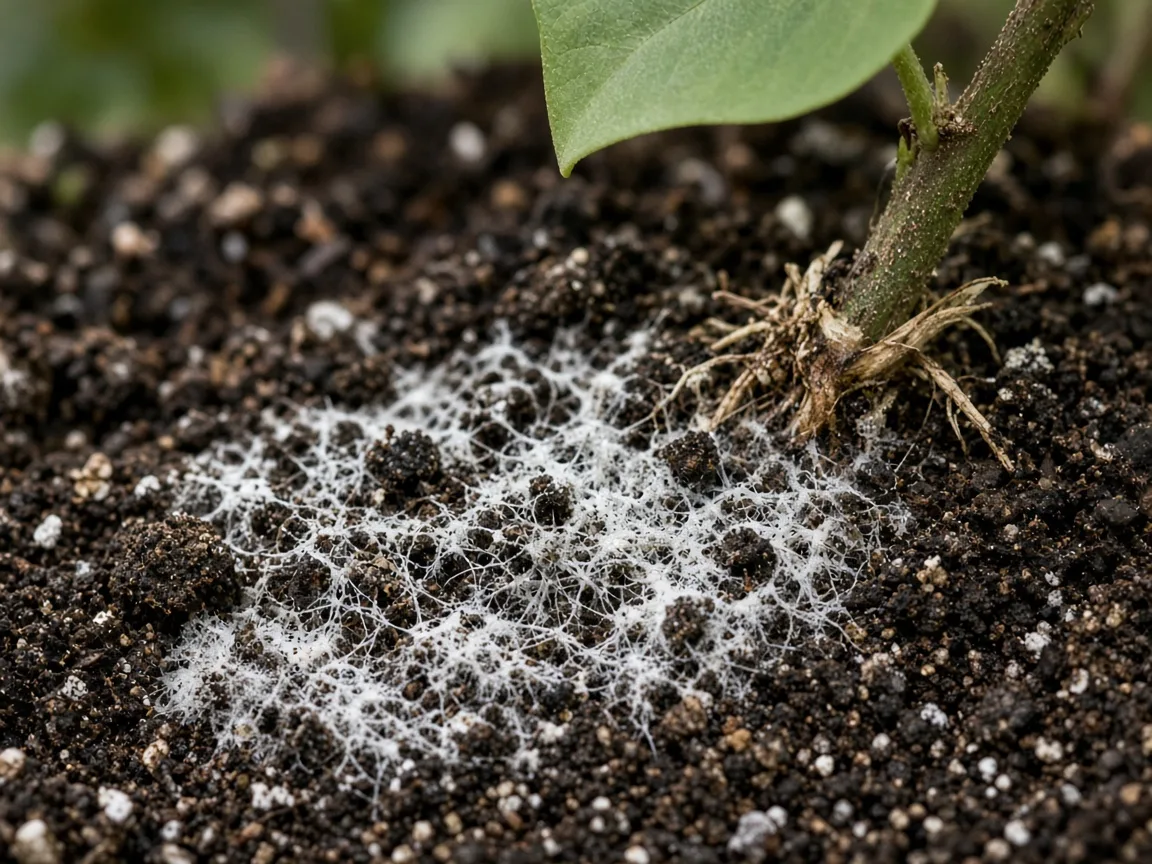
Mold on soil on giloy—compare fuzzy surface mix with firm woody stem bases and healthy nodes still tied to a trellis.
Healthy giloy keeps firm green stems at nodes, heart-shaped leaves that track light on the trellis, and new vine length even when surface mold is present. That contrast matters: fuzzy soil with an actively climbing plant usually points to a surface moisture and debris problem, not powdery mildew on foliage (which coats leaves, not just mix). If stems soften at the soil line, several leaves yellow while mix stays wet, or the pot wilts with a sour odor, escalate toward root rot rather than treating mold as cosmetic.
Mold can also line drainage holes or saucers that hold days-old runoff. On a sunny balcony where the vine above looks perfect, the rim may stay damp for a week after one generous watering—exactly the conditions that keep mold returning on giloy soil rich in compost and garden loam.
Why giloy gets mold on soil
Giloy is grown in light sandy loam with compost or well-rotted manure—the same organic richness that supports fast medicinal vine growth on a terrace trellis. That mix holds surface moisture and feeds saprotrophic fungi that recycle organic debris. Epic Gardening notes white mold from these fungi does not attack living plant tissue directly—the danger on giloy is the chronically wet, low-oxygen root zone behind the fuzz, not the mycelium eating heart-shaped leaves.
Four giloy habits make surface mold common in pots:
1. Monsoon and terrace overwatering. Giloy on an open terrace may receive rain plus hand watering. Vikaspedia notes the crop does not tolerate waterlogging—yet many growers keep a summer schedule while the pot stays saturated for days. That overlap with overwatering on giloy is why mold and root stress often appear together.
2. Wilting that tempts another drink. Giloy wilts when the root zone dries—a dramatic signal on heart-shaped leaves that pushes owners to top-up even when the top 2–3 cm is still damp. The giloy watering guide recommends checking that depth before every drink, not watering on calendar alone.
3. Trellis shade and compost mulch at the rim. A dense vine tied to a stake blocks evaporation at the soil line. A generous top-dress of compost or fallen leaves under the lowest nodes keeps the rim dark and wet—prime territory for mold and for adult fungus gnats laying eggs in moist organic matter.
4. Small altar or indoor pots with slow dry-down. Cool indoor giloy in a dim corner may need water every 7–10 days, but daily ritual top-ups on a small pot never let the surface breathe. Mold in winter often means too much water on a slow vine, not too little humidity on leaves.
Giloy on a well-drained garden edge where the surface dries between rains rarely keeps chronic mold. The problem is almost always container culture plus stagnant surface moisture, not a weakness of Guduchi itself.
How to confirm mold on soil on giloy
Work through these checks in order before repotting or spraying:
- Finger test at 2–3 cm. If the surface is fuzzy but deeper mix is soggy and cold days after watering, you have stagnation—not a leaf disease on the trellis.
- Stem base firmness. Gently press the lowest woody stem where it enters the mix. Firm lenticels and stiff bark with fuzz only on top usually mean surface mold. Mushy bark with sour smell means escalate—see root rot.
- Pot weight and saucer water. A heavy pot days after watering, or sour standing water in the saucer, confirms excess moisture. Missouri Botanical Garden notes waterlogged soils favor root decay and pathogen pressure.
- Fly check. Small dark insects rising from the rim when you water point to the same habitat—fungus gnats on giloy share wet organic mix with mold.
- Leaf pattern. Mold stays on mix; yellowing or brown tips on older heart-shaped leaves while mix stays wet fits overwatering more than saprophytic fuzz alone—cross-check yellow leaves on giloy.
Confirmed surface mold with firm bases and active new nodes: scrape, dry the rim, adjust watering. Soft bases or spreading yellowing on wet mix: treat as root-zone emergency, not cosmetic mold.
The first fix to try
Scrape off the fuzzy top inch of mix with a spoon, dispose of it in the trash (not compost), and pause hand watering until the top 2–3 cm passes a dry finger test.
That single step removes visible spores and forces the surface to dry—matching extension guidance to scrape algae and fungal growth from moist potting media before changing deeper habits. Do not repot, prune half the vine, and drench with peroxide on the same day; read the plant’s response after the surface dries.
If saucer water smells sour, dump it when you scrape. If compost mulch covers the rim, pull it back so air reaches the top layer.
Step-by-step recovery on giloy
After the first fix, layer these steps based on severity:
Mild—fuzz only, firm woody base, vine still extending:
- Empty saucers within 15 minutes after watering; tilt terrace pots to shed monsoon puddle water before the next hand drink.
- Resume watering only when the top 2–3 cm dries—often every 4–7 days in summer pots, longer in cool months per giloy watering.
- Pull fallen heart-shaped leaves and old compost cake off the rim weekly so debris does not feed new saprotrophic growth.
Moderate—mold returns within a week, or gnats appear:
- Replace the scraped top inch with fresh sandy loam mix (garden soil, compost, sand/perlite) from your soil recipe—do not pack peat-heavy store mix on top.
- Bottom-water for a few cycles if top watering keeps the rim soggy while roots still need moisture.
- Set a yellow sticky trap at the soil line if flies persist—see fungus gnats on giloy for larval checks.
Severe—soft stem bases, sour smell, yellowing on wet mix:
- Unpot only when bases soften or growth stalls despite a dry surface—inspect roots, trim decay, and repot into fresh gritty mix per root rot on giloy.
- Skip foliar fungicide on stems harvested for medicinal use unless a specialist confirms a true leaf pathogen; surface mold on mix rarely requires spray on foliage.
Recovery timeline
Surface mold often clears within one to two watering cycles after scraping and drying the top 2–3 cm—roughly one to three weeks depending on pot size, season, and terrace airflow. Judge progress by:
- No new fuzzy patches after the rim has dried between drinks
- Firm lowest nodes and fresh tendrils reaching the trellis
- Fewer fungus gnats at the soil line
Heart-shaped leaves that yellowed from chronic wet mix may drop; they will not fully green again. New clean leaves and steady node extension are the recovery markers. If mold returns weekly despite a dry finger test at 2–3 cm, review pot size, mix drainage, and whether monsoon rain plus hand watering double-saturates the same container.
Mold lookalikes on giloy
| What you see | Where | Giloy tie-in |
|---|---|---|
| Surface mold | Fuzzy film on damp mix only | Firm woody base; leaves above look normal |
| Powdery mildew | White dust on leaf blades | Wipe comes off leaves, not just soil; often in humid shade |
| Mineral crust | Hard white rim on dry mix | No musty smell; appears when water evaporates and leaves salts |
| Algae greening | Slimy green on saucers or rim | Strong light + standing water; scrape reveals green film, not cottony fuzz |
| Root rot | Soft base, sour smell, wilt on wet mix | Root rot guide—mold may be a side symptom |
What not to do
Do not keep watering on schedule because heart-shaped leaves droop while the top 2–3 cm is still damp—that feeds mold and risks rot on a vine that does not tolerate waterlogging. Do not mist the trellis to fix mold on soil; foliage humidity does not dry a soggy rim. Do not drench repeatedly with hydrogen peroxide without fixing the watering rhythm that keeps the surface wet. Do not apply foliar fungicide broadly on stems you harvest for Guduchi use when the issue is mix surface only. Do not repot a healthy woody base just for cosmetic fuzz—scrape and dry first.
Trellis pots, monsoon rain, and medicinal harvest context
Giloy is often grown for stem harvest, not only as ornamental cover. That changes how you respond to mold:
- Prefer physical removal and dry-down over chemical sprays on lower stems and nodes you might cut later.
- After monsoon, tilt terrace pots to drain before the next hand watering; rain plus ritual watering is the most common double-soak pattern on Indian balconies.
- When tying new length, leave a finger-width gap between lowest leaves and the mix so the rim can breathe—dense foliage skirts trap humidity exactly where mold starts.
- Fresh cuttings in propagation trays need moisture for rooting but still benefit from vented domes and a dry surface between drinks—see giloy propagation if mold appears on young material.
These steps would be nonsense on a ZZ rhizome or an air plant; they match how real Guduchi pots fail in home cultivation.
How to prevent mold on soil next time
Prevention on giloy is rim hygiene and seasonal watering, not constant fungicide.
- Water when the top 2–3 cm dries, not on a fixed daily schedule—reduce frequency when growth slows in winter or in dim rooms.
- Use well-draining mix with sand or perlite and pots with open drainage holes; empty saucers after every drink per the giloy watering guide.
- Pull compost mulch back from the rim after monsoon spells so the surface can dry.
- Quarantine new vines before placing them beside other climbers; inspect store pots for fuzz and gnats at purchase.
- Keep the problems hub bookmarked when multiple rim symptoms show up together.
Giloy that dries predictably at the surface, drinks deeply when needed, and climbs in bright light rarely keeps chronic mold pressure.
Related Giloy guides
- Giloy overview — growth habit, support, and seasonal care
- Giloy watering — finger-test depth, monsoon checks, and wilting vs overwatering
- Fungus gnats on giloy — flies sharing wet surface habitat
- Overwatering on giloy — yellow leaves and soft stems on wet mix
- Root rot on giloy — when mold warns of deeper root failure
- Giloy problems — full symptom index for this vine