Guava Watering Guide for Pots and Indian Seasons
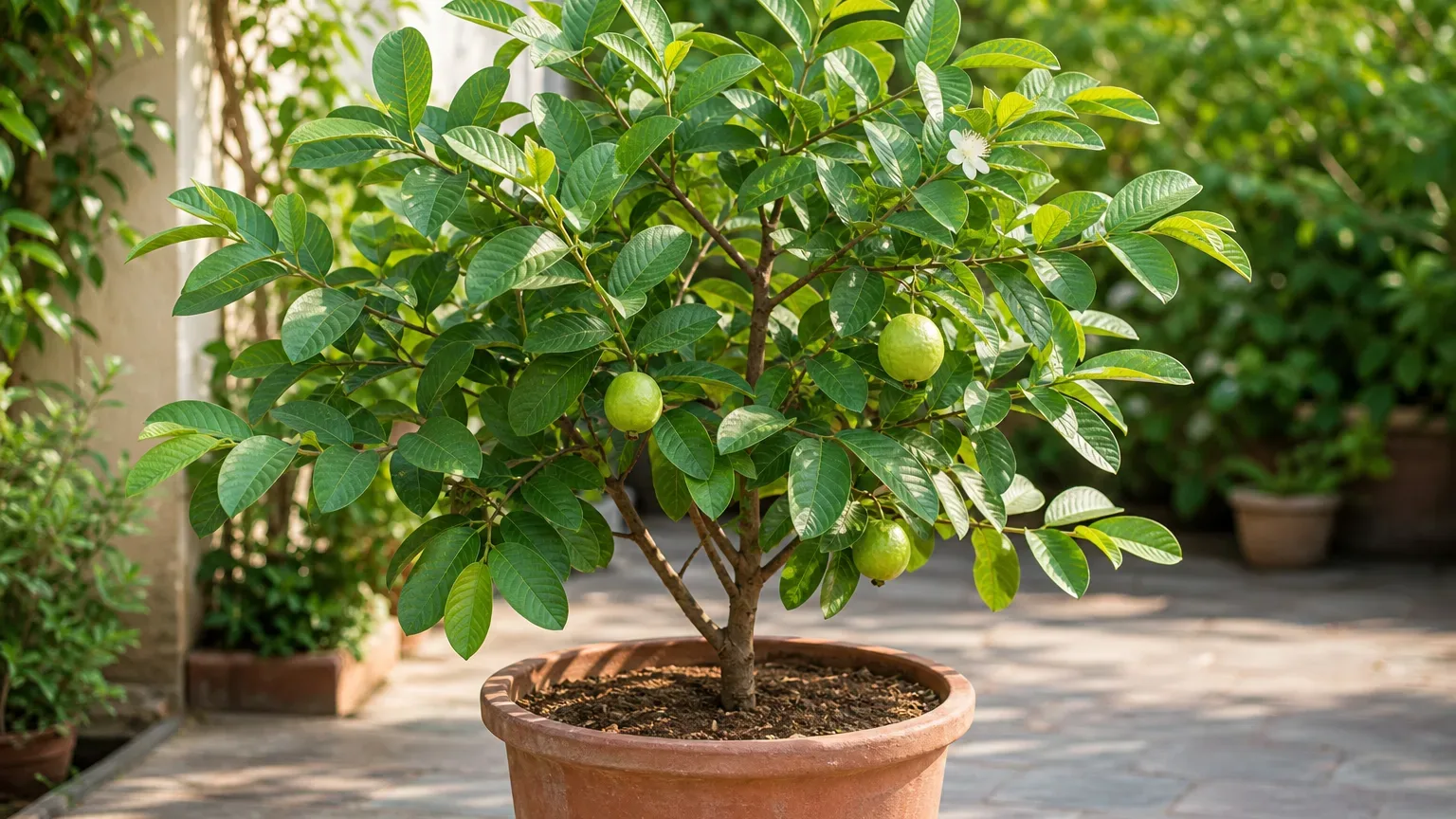
Guava Watering Guide for Pots and Indian Seasons
Guava Watering Guide for Pots and Indian Seasons
Guava watering is a root-zone decision, not a calendar appointment. For a potted Amrud (Psidium guajava), check 3–5 cm below the surface and water when that layer is dry; then soak the whole root ball and let it drain. A young tree, a fruiting tree, and a mature landscape tree after monsoon rain should not all receive the same schedule.
Guava is more drought-tolerant than its lush leaves suggest, but drought at the wrong stage can reduce fruit set or fruit size. The opposite mistake is just as damaging: watering automatically while monsoon rain or a dense potting mix keeps roots saturated. The practical goal is brief, thorough wetting followed by partial drying, with a closer watch during establishment, heat, flowering, and fruit fill.
How often should you water Guava?
For a container tree in warm, sunny weather, checking every two or three days is sensible; that does not mean watering every two or three days. Many actively growing potted guavas need a soak somewhere around every 3–7 days, while a large pot in cool weather may take 7–14 days or longer to dry. Treat these as observation windows, not promises.
Landscape trees need a different rhythm. UF/IFAS guava guidance recommends frequent watering immediately after planting, then one or two thorough waterings weekly for the first couple of months, with irrigation reduced or stopped when the rainy season supplies enough moisture. Mature trees generally need supplemental water during prolonged dry weather rather than routine shallow sprinkling.
Guava tolerates drought, not careless watering
An established guava can pause active growth through a dry period and resume when moisture returns. That resilience does not make drought harmless during reproduction: UF/IFAS production guidance identifies irrigation from bloom through fruit development as crucial for optimum yield during dry periods.
Do not translate drought tolerance into “keep the pot bone-dry.” A container has a small, hot root volume and cannot buffer a heat wave like open soil. Let the upper layer dry slightly, but water before the entire root ball becomes hard, shrunken, and water-repellent.
Check the root zone before every soak
Push a finger or slim wooden skewer 3–5 cm into the mix in a medium pot. Water if it comes out mostly clean and the mix feels dry at that depth; wait if it feels cool and damp or soil clings heavily. For a deep tub, test in two places because the sunny rim can dry while the centre remains wet.
Pot weight is an excellent second check. Lift or tilt the container just after watering, then compare it over the following days. A noticeably lighter pot plus a dry upper layer is stronger evidence than a pale-looking surface alone.
If the tree is in the ground, probe below any mulch and examine soil several centimetres deep near the canopy drip line, not against the trunk. A dry crust can hide moist soil, while a brief shower may wet only the surface. The National Horticulture Board’s guava guidance likewise ties frequency to soil, rainfall distribution, climate, and tree age rather than prescribing one interval for every orchard.
How to water a potted Guava properly
Water slowly across the entire surface until runoff appears from every working drainage hole. Pause for a minute, then make a second pass if the mix had become so dry that water initially ran down the pot wall. This gives the centre of the root ball time to absorb moisture.
Let the pot drain fully and empty its saucer or outer cachepot. NC State Extension’s container guidance explains that drainage holes prevent roots from standing in water and that adding gravel beneath potting mix does not cure saturation. A draining nursery pot placed inside a decorative container is safer than planting directly into a sealed pot.
Do not give a large guava a small daily cup. Repeated sips wet only part of the root zone, make moisture harder to judge, and may leave salts concentrated in the mix. A complete soak followed by an observed dry-down produces a more even root environment.
Adjust watering through Indian seasons
India does not have one watering calendar. A terrace in Jaipur in May, a humid Kochi balcony in July, and a cool Delhi courtyard in January lose water at very different rates. Use season to decide how often to check, then let the soil test decide whether to water.
Hot, dry summer
Check potted guava daily during severe heat, especially in a small dark pot on concrete or beside a west-facing wall. Water early in the morning when the upper 3–5 cm is dry, and shade the container itself if its sides become very hot. The tree may need water more often, but never add another soak while the lower mix is still wet.
An organic mulch can slow surface evaporation in large tubs and landscape soil. Keep it away from the trunk and recheck moisture beneath it rather than assuming the soil is dry. Indian field research in a humid subtropical region found that mulching changed guava water use, but an orchard trial cannot tell you an exact litre dose for a balcony pot.
Monsoon and humid weather
Pause automatic irrigation when rain is reaching the root zone. In the Indian guava field study, irrigation was stopped during the July–September rainy period when rainfall met crop demand. Under a roofed balcony, however, monsoon humidity does not water the pot; test the mix because wind-driven rain may miss it completely.
Raise pots on feet so holes stay open, remove standing saucer water, and protect the root ball from roof runoff that delivers repeated heavy soaking. Guava can tolerate short flooding better than many fruit trees, but prolonged saturation can cause chlorosis, leaf and fruit drop, dieback, and root decline. A timer that runs unchanged through wet weather is a warning sign, not convenience.
Cooler winter growth
Guava growth slows in cool weather, so the pot usually dries more slowly. Check weekly, but water only after the upper layer passes the dryness test. A sunny fruiting tree in peninsular India may still use substantial water; a growth-paused tree in a cold north Indian winter may need far less.
Avoid copying a northern-hemisphere “winter dormancy” rule mechanically. Guava is tropical and does not require a dry dormant season in the way a deciduous temperate fruit tree does. Match water to actual light, warmth, new growth, and fruit load.
Container size, material, and mix change the interval
A small terracotta pot in full sun loses moisture quickly. A large glazed tub filled with fine, peat-heavy mix may remain wet long after its surface looks dry. Container material, root occupancy, wind, and drainage can shift the interval by several days even for two guavas on the same terrace.
Use a moisture-retentive but aerated mix and a pot only modestly larger than the root ball. If a well-rooted tree dries completely within one day, it may need a larger container or refreshed mix; follow the Guava repotting guide rather than compensating with constant surface watering. If a pot stays wet for a week in warm bright weather, inspect blocked holes, compacted mix, and excess pot volume.
The Guava soil guide covers the root-zone structure in detail. Watering technique cannot rescue a container whose mix has collapsed into an airless mass.
Protect bloom and fruit development from drought
Once flower buds appear, avoid large swings from wilt-dry to saturated. Water stress during fruit set can reduce the number of fruits retained, while stress during development can limit fruit size. Check more frequently during a hot, dry fruiting period without abandoning the dry-at-3–5-cm rule.
Research on the Indian cultivar Arka Mridula found that phenology-based irrigation improved water-use outcomes, reinforcing the principle that reproductive stage matters. The study used measured evaporation in an orchard; it does not justify applying its percentages directly to a home container without irrigation equipment and local weather data.
Do not flood a dry tree in an attempt to make fruit swell overnight. Restore even moisture over normal soak cycles, and remove badly damaged fruit if the tree is severely stressed. Pair watering with adequate sun from the Guava light guide; a shaded tree uses water slowly and may hold wet soil even while fruiting.
Water young and established Guava differently
A newly planted guava has a limited root system and needs regular moisture while roots grow into surrounding soil. Water the root ball and the immediately adjacent soil, then gradually widen the wetted area. Do not keep the trunk base constantly muddy.
An established landscape tree has roots extending beyond the original planting hole and can withstand longer dry intervals. Apply water over a broad area below and slightly beyond the canopy instead of pouring it against the trunk. Low-volume systems can deliver water efficiently to the root zone, but UF/IFAS irrigation guidance stresses that system choice and management determine distribution and efficiency.
Container trees remain dependent on you regardless of age. A woody trunk does not give a potted guava access to deep soil reserves, so mature top growth can actually empty a crowded pot faster.
Read the leaves, soil, and roots together
Underwatering usually pairs soft or drooping new leaves with a genuinely dry, light pot. Prolonged drought may produce dry leaf margins, halted growth, poor fruit retention, or undersized fruit. After one thorough soak, leaves that are only mildly wilted should begin to regain firmness; do not follow with another drink the same day.
Overwatering is more likely when leaves pale or yellow while the mix remains wet, the pot stays heavy, or the soil smells sour. Fruit drop and dieback can occur at either moisture extreme, so those symptoms alone cannot diagnose the cause. Check below the surface before acting.
Wilting in wet soil is not thirst
Wet-soil wilt points toward oxygen-starved or decaying roots, not a need for more water. The UF/IFAS guava disease guide reports that poor drainage and overwatering favour guava root rots involving Fusarium and Phytophthora, with canopy symptoms that can include chlorosis, stunting, and defoliation.
Stop watering, drain any standing water, and inspect the setup. If the pot remains saturated or smells foul, slide out the root ball: healthy roots are firm, while diseased tissue is dark, soft, and decayed. Severe root loss needs careful repotting into fresh aerated mix, not a larger dose of water.
Correct overwatering and underwatering
For a dry but otherwise firm tree, soak slowly, allow full drainage, and move the container out of reflected afternoon heat while it recovers. If water beads off a shrunken root ball, repeat a slow pass after several minutes rather than leaving the pot submerged for hours.
For a wet tree, first remove saucer water and stop the next scheduled irrigation. Improve airflow around the container and clear blocked holes; do not put a stressed root ball in harsh new sun. If decline continues after the mix begins to dry, inspect roots and correct the mix through the Guava repotting guide.
Do not fertilize to “green up” a guava whose roots are waterlogged. Damaged roots cannot use nutrients normally, and added salts create another stress. Resume feeding only after drainage is corrected and healthy new growth appears; use the Guava fertilizer guide for timing.
Water quality and salt buildup
Ordinary tap water is usually workable, but saline water can cause brown leaf tips and margins, leaf drop, dieback, and smaller fruit in guava. If a white crust forms on the pot or mix, check both irrigation water and fertilizer use rather than blaming watering frequency alone.
Occasionally let enough water pass through a healthy, freely draining pot to carry soluble salts out, then discard runoff. Do not “flush” a tree whose drainage is blocked or roots are already rotting. Rainwater can be useful where tap water is very hard or saline, provided it is collected and stored hygienically.
Common Guava watering mistakes
- Watering daily by habit: check moisture first, particularly during monsoon and cool weather.
- Trusting only the surface: test 3–5 cm deep and use pot weight as a second signal.
- Leaving runoff in a saucer: empty it after every soak.
- Using a sealed decorative pot: double-pot with a draining inner container.
- Giving small sips: wet the full root ball, then allow partial drying.
- Ignoring fruit stage: inspect more often from bloom through fruit fill.
- Treating wet wilt as thirst: stop and diagnose roots before adding water.
- Trying to fix dense soil with less water: correct drainage and mix structure through the Guava soil guide.
When to use this page vs other Guava guides
Use this page to decide when and how to water, adjust for Indian seasons, and distinguish dry-pot wilt from wet-root decline. Start with the Guava overview for whole-plant priorities, use the light guide when slow drying may come from shade, and use the soil guide when the mix stays wet too long.
For roots circling the pot or a container that dries within a day, go to Guava repotting. Watering a rootbound tree more often can buy time, but it does not restore usable root volume.
Related Guava guides
- Guava overview — identity, placement, and complete care context
- Guava light — sun exposure and its effect on water use
- Guava soil — drainage, aeration, and moisture retention
- Guava fertilizer — feeding without worsening root stress
- Guava repotting — crowded roots and slow-drying oversized pots
- Guava propagation — moisture care for new plants
- Guava pruning — canopy management that changes water demand
Conclusion
Water guava when the upper 3–5 cm of its root zone is dry, then soak thoroughly and drain completely. Check potted trees more often during Indian summer, establishment, flowering, and fruit development; reduce or pause irrigation when monsoon rain keeps the root zone moist and when cool weather slows growth.
The first action when symptoms appear is not automatically “add water.” Test the mix, lift the pot, check drainage, and read leaves alongside root-zone conditions. A dry, light pot needs a complete soak; a wet, heavy pot with yellowing or wilt needs air and diagnosis. That simple distinction prevents the two most common watering errors while giving a fruiting Guava the steady moisture it needs.