Fungus Gnats on Java Fern: Causes, Checks & Fixes
Quick answer
Fungus gnats near Java Fern breed in wet organic substrate, damp rockwool, or soggy paludarium soil around a buried rhizome-not on submerged fronds in open water. First step: expose the rhizome on hardscape, vacuum detritus from the substrate surface, and let the top layer dry in emersed zones.
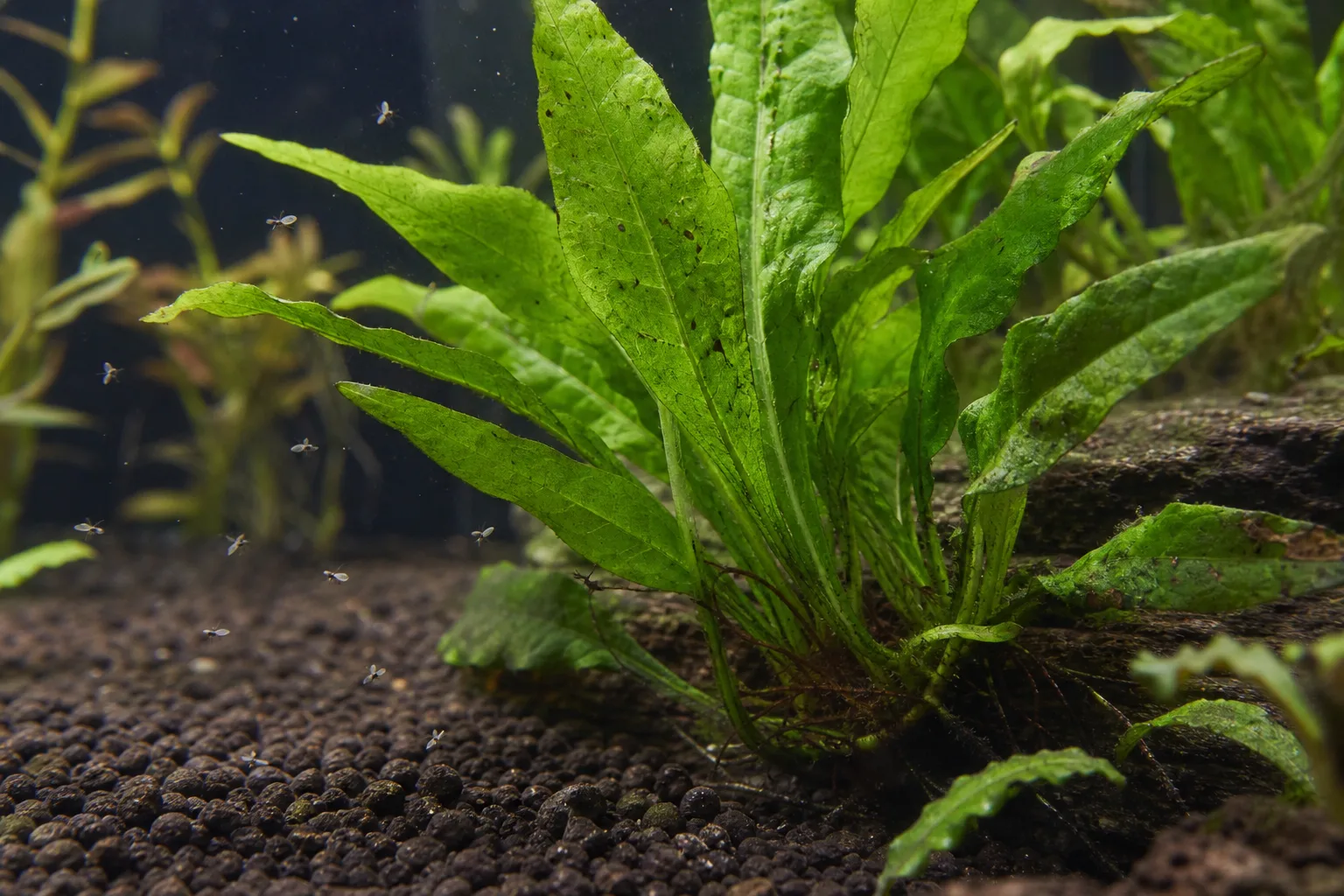
Fungus Gnats on Java Fern: Causes, Checks & Fixes
This guide covers fungus gnats on Java Fern. See also the general Fungus Gnats guide, watering, and light pages for this plant.
Fungus Gnats on Java Fern: Causes, Checks & Fixes
Quick answer
First step: find where the rhizome meets wet organics. Lift or shift your Java Fern (Microsorum pteropus). If any part of the horizontal rhizome sits under gravel, aquasoil, damp rockwool, or paludarium soil, that pocket-not submerged fronds in open water-is where fungus gnats breed.
Fungus gnats are small flies whose larvae live in moist organic matter near the surface. On Java Fern they almost always mean misplanted epiphyte culture: buried rhizome, leftover rockwool at the crown, mulm trapped where fronds meet substrate, or soggy terrestrial soil pressed against the stem in a paludarium. The flies are a wet-substrate alarm-the same failure mode that drives mold on substrate and rhizome rot on Java Fern overview.
Expose the rhizome on hardscape, vacuum detritus from the substrate surface, and let the top layer dry in emersed zones. Yellow sticky traps catch adults while you fix moisture; they do not replace removing the breeding pocket.
Do fungus gnats affect submerged aquarium Java Fern?
Fully submerged Java Fern tied to driftwood or rock-with the entire rhizome in gentle flow and only fine holdfast roots trailing into gravel-rarely supports fungus-gnat larvae. Larvae need a continuously moist organic surface layer where fungi and decaying matter accumulate. Open aquarium water around an exposed rhizome does not provide that.
Gnats become plausible when:
- The rhizome is partially or fully buried in gravel, sand, or aquasoil
- Damp rockwool from tissue-culture or emersed pots still wraps the crown
- Paludarium terrestrial soil stays soggy against the rhizome at the waterline
- Mulm and melting emersed leaves pile in a quiet corner behind hardscape
- An emersed quarantine tub or greenhouse shelf holds the fern in constantly wet media
If your only Java Fern is correctly mounted in a stocked display tank and flies still swarm, check neighboring houseplants, compost bins, and open-top paludarium soil before blaming the fern.
When Java Fern growers actually see gnats
Java Fern is an epiphyte whose rhizome must stay above substrate. Hobbyists who plant it like a sword or crypt-pushing the thick green stem into aquasoil-create the same damp anaerobic pocket where gnats, mold, and rot overlap.
Submerged tank with buried rhizome: Gravel or aquasoil drifted over the rhizome traps detritus against tissue that should stay exposed. Gnats hover when you disturb that pocket during water changes.
Emersed introduction or tissue culture: Store-bought Java Fern often arrives in rockwool or net pots. Rockwool held soggy at the crown feeds larvae exactly where mealybugs also hide on emersed shipments.
Paludarium builds: Terrestrial soil kept wet against the rhizome transition zone mimics overwatered houseplant pots. Flies rise from the soil line, not from submerged fronds below.
Low-flow hardscape pockets: Even a correctly mounted rhizome can collect mulm in a dead zone behind stacked rock. That organic layer-not the plant’s leathery leaves-feeds larvae.
Because Microsorum pteropus grows slowly, owners sometimes assume a quiet tank is clean while sludge builds unnoticed beneath broad fronds.
What fungus gnats look like near your Java Fern display
The fern’s submerged fronds often look fine at first. Watch for flies and substrate clues-not leaf stippling:
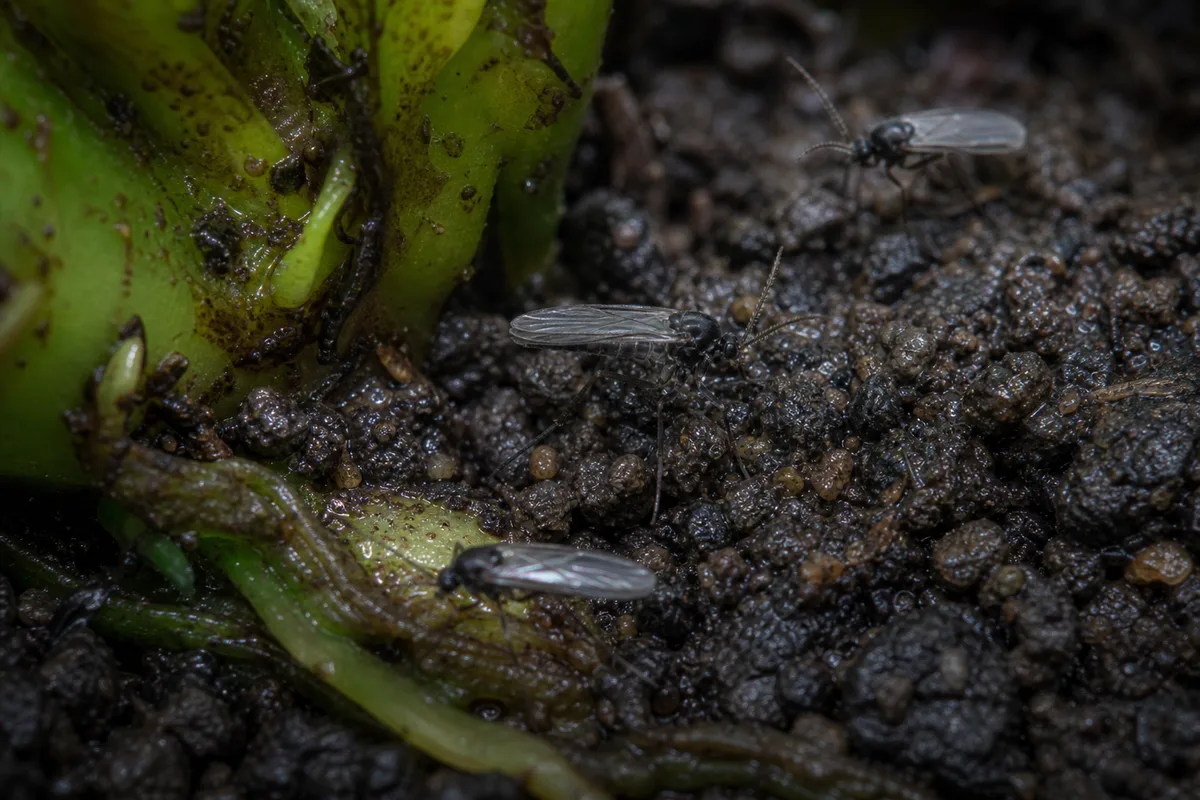
Fungus Gnats symptoms on Java Fern - compare with healthy tissue on the same plant.
- Adults - Tiny dark or gray mosquito-like flies about 1/8 inch long that scatter when you disturb wet substrate, paludarium soil, or rockwool near the plant. They hover at the waterline, tank rim, or windows-not in clouds on leaf undersides.
- Larvae - Translucent, worm-like immatures in the top 1–2 inches of moist organic media. Visible when you lift the rhizome or scrape the substrate surface beside it.
- Substrate clues - Dark, constantly damp gravel, aquasoil, rockwool, or paludarium soil within a few inches of the rhizome. Sometimes a thin algae or fungal film on wet organics-often alongside surface mold on the same pocket.
- Rhizome stress (later) - Soft, discolored, or foul-smelling rhizome tissue under the wet zone points to rot, not flies alone.
Java Fern fronds do not get the webbing, stippling, or honeydew of spider mites or aphids. Gnats are a substrate and placement problem wearing a flying nuisance.
How to confirm the cause
Work through these checks in order before adding drenches or tank-wide treatments:
Check neighboring houseplants first
Flies that rise from a pothos saucer on the windowsill but not from aquarium gravel may have nothing to do with Java Fern. Disturb each damp pot near the tank. If only the paludarium soil or buried rhizome pocket produces insects, you have localized breeding.
Paludarium terrestrial-zone and rockwool check
- Rhizome exposure - The horizontal stem should sit on wood or rock with only holdfast roots in substrate. Any soil, gravel, or aquasoil piled over the rhizome is a setup error-see the Java Fern substrate guide.
- Rockwool audit - Strip remaining rockwool from tissue-culture or emersed crowns. Damp rockwool at the rhizome is a classic larval zone.
- Fly behavior - Do insects run on the soil surface and scatter when disturbed? That pattern fits fungus gnats breeding in that specific pocket.
- Larval confirmation - Scrape the top inch of wet substrate or rockwool beside the rhizome. Glossy worm-like larvae confirm active breeding-not stray flies from elsewhere.
- Rhizome firmness - Press the rhizome. Firm tissue with flies only in nearby gravel means hygiene first. Mushy, jelly-like, or sour-smelling stem tissue means rhizome rot-urgent regardless of fly count.
- Mulm and melt debris - Look for brown sludge and dissolved emersed leaves trapped where fronds meet substrate. That debris feeds larvae even when upper fronds look healthy.
Rule out mold on substrate and shore flies
White or gray fuzz on wet gravel beside a firm rhizome is often surface mold or biofilm on the same wet-organic cause-not a different disease. Shore flies, common near algae on wet media, are stouter and more reluctant to fly than fungus gnats; they also breed in algae, not just decaying peat. Fruit flies cluster around food waste, not aquarium gravel alone.
Decision tree: exposed firm rhizome + larvae only in a debris pocket → remount, vacuum, dry surface. Soft rhizome + wet organics → rot protocol immediately.
First fixes by setup type
Submerged tank with buried rhizome
During your next water change, vacuum detritus from the substrate surface around the plant-without deeply stirring the entire gravel bed-then remount the rhizome fully exposed on hardscape.
Gently brush gravel, sand, or aquasoil off the rhizome. Attach the stem to rock or driftwood with thread or gel glue so it sits in open flow above the substrate line. Remove melting emersed fronds that decay into larval food. Increase gentle circulation to the pocket where mulm collected.
Place yellow sticky traps near the tank rim or paludarium soil line to monitor adult counts. Traps reduce egg-laying; they do not replace drying or removing the wet organic layer.
Paludarium or emersed quarantine
Pull terrestrial soil back from the rhizome transition zone so the stem sits in humid air, not soggy potting mix. Let the top layer of emersed media dry between misting sessions-the same principle as drying houseplant soil surfaces extension guides recommend.
If larvae persist in an emersed tub or terrestrial zone only-not in open aquarium water-Bacillus thuringiensis israelensis (BTI) in products such as mosquito bits can target larvae when used as a labeled drench on that soil. BTI complements drying; it does not fix a buried rhizome.
Never pour houseplant pesticide drenches, aerosol sprays, or high-dose peroxide into stocked aquarium or paludarium water with fish, shrimp, or turtles. Fix culture first; keep chemical treatments scoped to emersed soil outside open water if you use them at all.
Recovery timeline
Expect one to two weeks for adult counts to drop sharply once the wet organic pocket is removed or the surface dries consistently. Fungus gnats complete a generation in as little as three weeks at warm temperatures, with overlapping life stages-so a few stragglers near the tank rim are normal briefly.
Signs you are winning:
- Fewer flies when you disturb substrate or paludarium soil near the plant
- Clean, exposed firm rhizome with stable fronds
- Sticky traps catching fewer adults each week
- No new larvae when you scrape the top inch of substrate beside the remounted rhizome
Signs the problem is deepening:
- Rhizome softening, sour smell, or blackened tissue under the wet zone
- Fronds detaching rapidly from the base while flies persist
- White fuzz or mold returning on the rhizome itself within days of surface cleaning
- Fly counts rising weekly despite traps while substrate stays constantly damp
Mature Java Fern rarely dies from gnats alone. Death follows untreated wet rhizome culture-the same stress behind overwatering damage in aquarium terms.
What not to do
Do not bury the rhizome deeper to stabilize the plant or hide gnats. Tropica warns plainly: covering the rhizome leads to rot-and the anaerobic pocket also breeds flies.
Do not assume sticky traps alone solve the problem. Adults live about a week; eggs already in wet substrate will hatch unless you remove the breeding habitat.
Do not dose tank-wide pesticides, household insect sprays, or unverified “aquarium pest” products into display water as a first response.
Do not confuse sporangia on mature frond undersides with pest damage. Sporangia are firm, organized dark bumps; gnats are flying insects from wet substrate.
Do not ignore soft rhizome tissue because “gnats are harmless.” Treat rot and moisture together-see the rhizome rot guide.
Lookalike symptoms
| What you see | Likely cause | Quick check |
|---|---|---|
| Tiny flies from wet gravel or paludarium soil when disturbed | Fungus gnats | Larvae in top inch of damp organics near rhizome |
| White fuzz on gravel; firm rhizome | Surface mold on substrate | Same wet pocket; skim mulm and expose rhizome |
| Stout flies on algae at waterline | Shore flies | Algae-forward breeding; less scatter when disturbed |
| Flies only near kitchen compost or fruit bowl | Fruit flies | No larvae in aquarium substrate |
| Flies from pothos saucer on shelf, not tank gravel | Neighboring houseplant gnats | Dry the wet pot; Java Fern mount may be fine |
| Soft black rhizome; sour smell | Rhizome rot | Firmness check overrides fly count |
How to prevent fungus gnats next time
Attach the rhizome to stone or root with the entire stem visible in gentle flow. Remove rockwool at setup. If holdfast roots trail into gravel, keep the rhizome on top of the line-not under it.
Vacuum mulm from the substrate surface during routine partial water changes. Remove melting emersed fronds before they decay beside the plant.
In paludariums, design the terrestrial zone so soil does not contact the rhizome. Match misting to actual dry-down-not constant soggy soil.
Quarantine new emersed plants before placing them beside display tanks. Inspect crowns for rockwool, firm rhizome tissue, and flying pests-the same entry route as mealybugs on Java Fern.
For attachment methods, melt after purchase, and culture basics, see the Java Fern care overview.
When to worry
Act beyond basic remounting and vacuuming when the rhizome is mushy, smells rotten, shows jelly-like discoloration, or loses fronds rapidly while larvae persist in wet tissue. Isolate the plant and follow the rhizome rot protocol.
Worry less about a brief fly pulse after rescape mulm disturbance if the rhizome is firm, fully exposed, and adult counts fall within two weeks of surface cleaning and drying.
Escalate if every new Java Fern from a batch fails at the rhizome despite clean gravel-shared wet culture or contagious rot may be involved, not isolated gnats.
Conclusion
Fungus gnats on Java Fern are almost always a wet organic substrate problem around a misplanted rhizome-buried stem, damp rockwool, paludarium soil, or mulm pockets-not an infestation of submerged leaves in open water. Confirm where larvae live, expose and remount the rhizome, vacuum detritus, dry emersed surfaces, and use traps or BTI only in scoped terrestrial zones. Firm rhizomes with steady slow growth mean your epiphyte is fine; soft discolored stems mean rot protocol, not another sticky trap. For the sibling symptom on the same burial mistake, see mold on substrate near Java Fern; for chronic wet culture stress, see overwatering on Java Fern.
When to use this page vs other Java Fern guides
- Java Fern watering guide - Use for routine moisture checks before assuming fungus gnats is the main issue.
- Java Fern problems hub - Browse all 28 common issues on this species.
- Slow Growth on Java Fern - Different entry point when symptoms overlap with fungus gnats.