Poor Root Growth on Marble Queen Pothos: Causes, Checks &
Quick answer
Poor root growth on Marble Queen Pothos usually traces to wet, compacted mix in light too weak for this slow variegated grower — not a fertilizer shortage. First step: slide the plant from its pot and check whether roots are firm and pale, brown and mushy, or circling with almost no soil left, then match the fix to what you find.
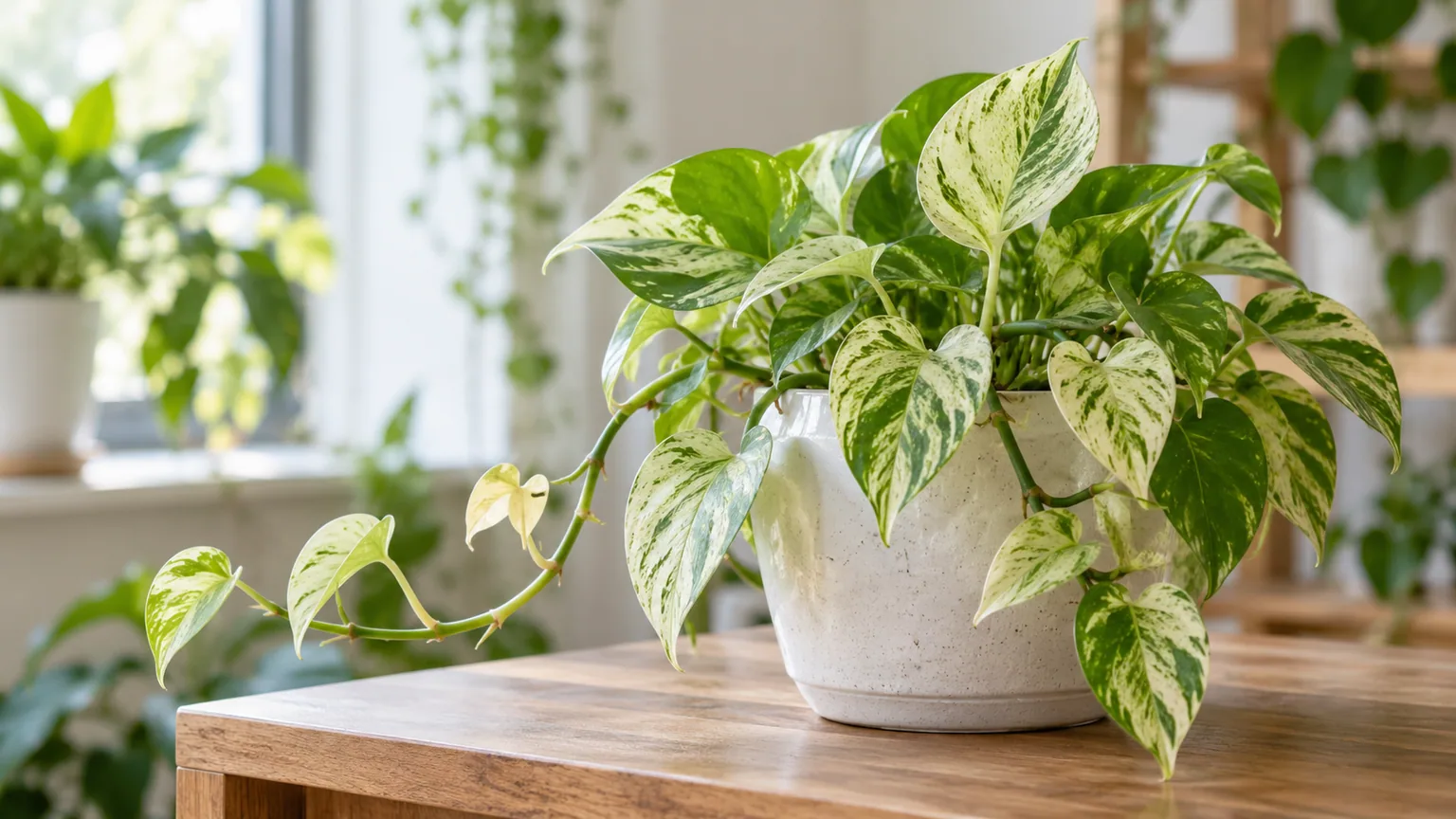
Poor Root Growth on Marble Queen Pothos: Causes, Checks & Fixes
This guide covers poor root growth on Marble Queen Pothos. See also the general Poor Root Growth guide, watering, and light pages for this plant.
Poor Root Growth on Marble Queen Pothos: Causes, Checks & Fixes
Quick answer
Poor root growth on Marble Queen Pothos (Epipremnum aureum ‘Marble Queen’) means the root system stays small, sparse, or fails to push new white tips even though the vines may look okay at first glance. Because the cream-and-white sections of each leaf carry little chlorophyll, this cultivar photosynthesizes and drinks more slowly than all-green pothos — so mix that stays wet for days suffocates the fine roots it needs to grow.
First step: slide the plant partly from its pot and inspect the roots before changing anything else. Firm pale roots point to a stalled but living system; brown mushy roots point to rot; a dense circling mat with almost no soil points to a pot-bound plant. Do not fertilize, repot blindly, or water more until you know which one you have.
What poor root growth looks like on Marble Queen Pothos
Above the soil, the early pattern is easy to miss. Vines keep their older leaves while new growth slows or stops for weeks. When new leaves do appear, they are often smaller than earlier ones and carry less white marbling — the plant cannot fund variegated tissue without an active root system and enough light. Stems feel thin and pliable rather than firm, and you may see scattered yellow leaves even though the surface mix feels damp, because damaged roots cannot move water upward.
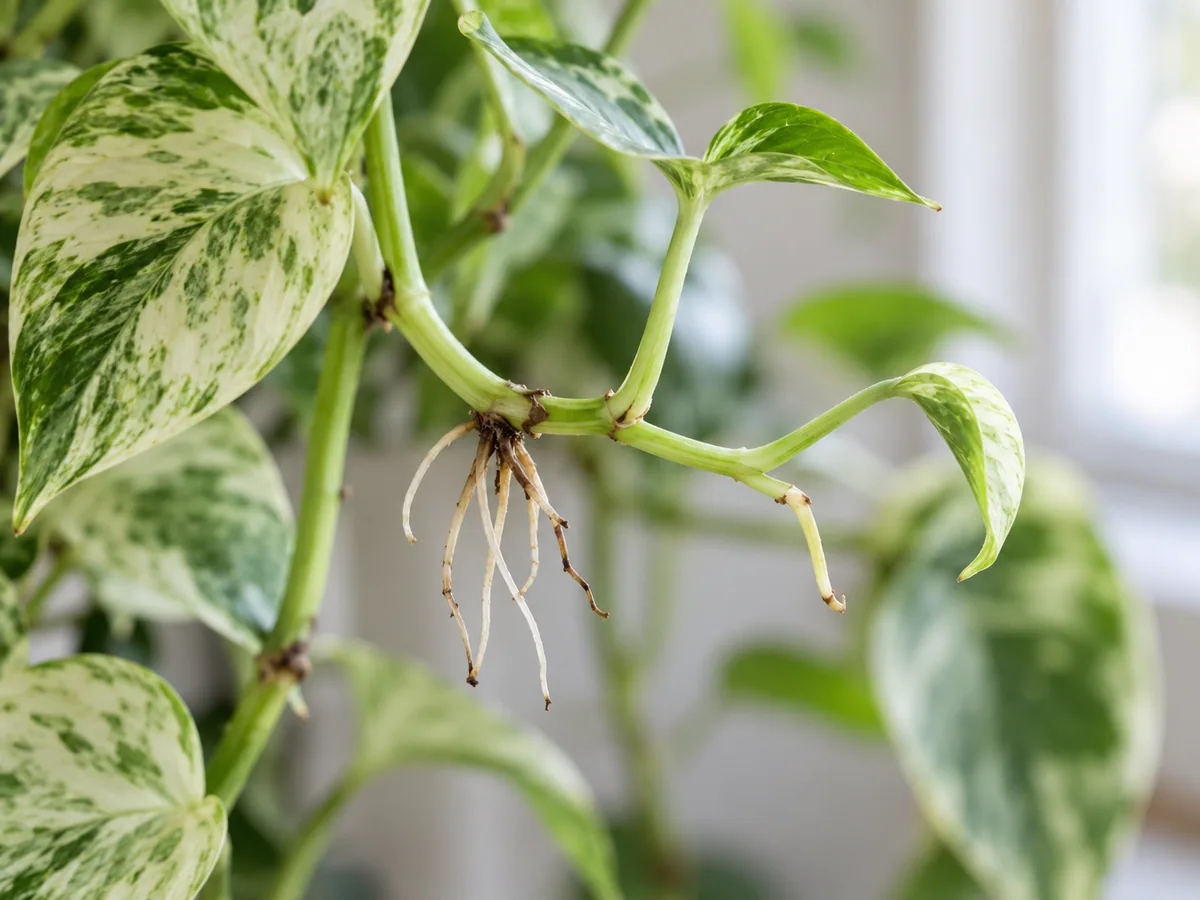
Sparse, discolored roots and stalled vine tips on Marble Queen Pothos — compare with firm white root tips on healthy growth.
Below the soil, healthy pothos roots are firm and pale with visible growing tips. Poor root growth shows up in three forms: short wiry roots that never reach the pot walls, brown or blackened sections that pull away when rinsed, or a tight circling mat with almost no mix left between the strands. Water may run straight through the pot without wetting anything — a sign there are too few functioning roots for the container. A sour smell from a drainage hole points to decay rather than simple stunting.
Why Marble Queen Pothos roots stall
Marble Queen is an aroid vine that prefers bright, indirect light and a well-drained potting medium that dries between waterings. Its heavy white variegation is the whole story: less chlorophyll means slower photosynthesis, slower water uptake, and a pot that stays wet far longer than the same pot holding a Golden Pothos. Root rots with brown or absent roots are most often due to overwatering, and on this cultivar even a normal-looking weekly drink can be overwatering in a dim room.
For how constantly wet mix damages roots in general, see our poor root growth guide. On Marble Queen, the pattern usually shows up as stalled vines in a heavy pot: the grower waters on schedule, the slow variegated plant cannot use the water, and fine roots die back from lack of oxygen until the vine has almost nothing feeding it.
Three Marble Queen–specific traps cause most cases:
A pot sized to the vines, not the roots. A long trailing plant in a large container looks balanced, but the small root ball cannot drink the surrounding soil dry. That unused ring of mix stays anaerobic, and roots never grow into it — they stall at the original root-ball boundary instead.
Peat-heavy mix with no perlite. Fine potting soil compresses after months of watering until air pockets collapse. Pothos needs an open, moisture-retentive but well-drained compost, and without roughly a fifth perlite or bark, a Marble Queen pot turns into a wet brick that new root tips cannot penetrate.
Cold, dark corners on a winter schedule. Pothos prefers average room temperatures around 60 to 80°F, and growth naturally pauses in cool short days. A plant near cold glass or a drafty door in winter stops extending roots — which is rest, not failure — but the same conditions plus continued watering tip rest into rot.
How to confirm the cause
Work through these checks in order, changing nothing until you finish:
- Moisture history — Has the top 3–5 cm stayed damp for five or more days after your last watering? Persistent dampness in your light level is the strongest predictor.
- Light reality — Is the plant more than a couple of meters from a bright window, or in a spot where new leaves come out mostly green? Fading variegation plus wet mix is the classic Marble Queen stall.
- Pot-to-root ratio — Tip the plant out and compare: a root ball swimming in unused mix means oversized; a solid circling mat with no soil means pot-bound.
- Root texture and smell — Rinse a section and squeeze gently. Firm and pale means alive; translucent, brown, or slimy with a sour odor means decay.
- Node condition — Press the stem bases and aerial-root nubs at each node. Firm nodes can regrow roots; soft blackened nodes cannot and need cuttings instead.
- Recent events — A repot within the last month, a cold snap, or a fertilizer spike can pause root activity temporarily without meaning the root zone has failed.
Underwatering on Marble Queen Pothos looks opposite: a very light pot, thin crispy leaf edges, and firm white roots when you check. Stunted leaves on pothos may also trace to low light or pests, so scan leaf undersides for mealybugs and scales while the plant is out of its pot.
First fix for Marble Queen Pothos
Unpot, read the roots, and match the next step to what you see.
If roots are firm but sparse in dense or oversized mix, move the plant into fresh airy mix in a pot only slightly larger than the root mass. If roots are brown and mushy, trim back to firm tissue first, then repot. If roots circle into a solid mat, tease the mat open and step up one pot size. One inspection, one matched correction — then leave the plant alone to respond.
Step-by-step recovery
- Slide the plant out onto a towel and shake or rinse away old mix so the whole root system is visible.
- Cut brown, black, or mushy roots back to firm pale tissue with sterilized scissors, wiping blades between cuts.
- Choose a clean pot with open drainage holes, sized to the remaining roots rather than the length of the vines.
- Fill with fresh standard potting mix blended with 20–30% perlite, planting at the same depth as before.
- Water once lightly to settle the mix, then empty the saucer completely — never leave the pot standing in runoff.
- Place in bright indirect light for Marble Queen Pothos so the mix dries predictably between drinks.
- Hold fertilizer until new leaves unfurl with clean marbling; feeding stressed roots burns more than it builds.
- Restart watering only when the top 3–5 cm of mix feels dry — the rhythm in the Marble Queen Pothos watering guide.
If you removed more than half the root mass, take 10–15 cm stem cuttings with at least one node from healthy variegated vines as insurance. Pothos cuttings easily root in water within a few weeks at warm room temperature, so a jar on a bright sill preserves the cultivar even if the mother plant struggles.
Recovery timeline
Mild stunting with mostly firm roots usually shows new white root tips within two to four weeks in warm bright conditions. The first new leaf is the report card: crisp white marbling at normal size means light and roots are both recovering, while tiny all-green leaves mean the plant still needs more light rather than more food.
Severe rot that cost most of the root mass needs six weeks or longer, and some vines may never rebound — judge by fresh stems and new tips, not by old yellow leaves greening up again. When node bases soften despite a repot, stop nursing the base and commit to the cuttings.
Lookalike symptoms
| Pattern | Tells | Next step |
|---|---|---|
| Normal slow variegated growth | Occasional new leaves in spring, firm stems, roots fill the pot without circling | No rescue needed — see slow growth on Marble Queen Pothos |
| Chronic overwatering without rot yet | Heavy pot, yellow lower leaves, limp vines on wet mix | Dry-down correction → overwatering on Marble Queen Pothos |
| Advanced root rot | Sour mix, mushy nodes, stems blackening upward | Trim and repot now → root rot on Marble Queen Pothos |
| Pot-bound stall | Roots circle densely, water races through, plant wilts days after drinking | Step up one size → pot too small on Marble Queen Pothos |
| Oversized-pot stall | Small root ball in a sea of wet mix, no new tips growing outward | Downsize to root mass → pot too large on Marble Queen Pothos |
| Compacted mix | Surface crusts, water pools or channels, roots stop at the boundary layer | Refresh airy mix → compacted soil on Marble Queen Pothos |
| Repot shock | Temporary wilt within days of repotting, roots firm a week later | Steady care → repotting stress on Marble Queen Pothos |
Mistakes to avoid
Do not water limp vines without checking the pot first — adding water to an airless root zone deepens the exact condition that stalled it. Do not jump several pot sizes, use garden soil, or bury stems deeper than they grew before. Do not feed a struggling plant hoping fertilizer will force new roots; dissolved salts can injure tissue that is already compromised. And do not prune every vine back on the same day as repotting — the plant needs its remaining leaves to fund new root tips. Wear gloves when handling cut stems: like all golden pothos types, Marble Queen is toxic to cats and dogs.
How to prevent it next time
Water the pot you have, in the light you have. Water pothos when the soil is dry, since too much water will lead to root rot — on Marble Queen that means confirming dryness 3–5 cm down, roughly every 7–10 days in summer and every 10–14 days in winter in bright indirect light. Build the mix for air from day one with perlite or bark, keep drainage holes and saucers clear, and repot every two to three years into a pot one size larger before roots mat or the mix collapses. Full placement and substrate detail lives in the Marble Queen Pothos soil guide.
Marble Queen Pothos care cross-check
Root vigor on this cultivar is mostly a light-and-air equation. A variegated pothos parked in weak light with a summer watering habit stays wet and stalls even in decent mix, so move dim plants closer to an east window or a sheer-filtered south window before watering more often. Pair that with the Marble Queen Pothos overview rhythm — dry-top watering, airy mix, warmth above 10°C — and inspect nodes each time you water so small stalls never become root emergencies.
When to worry
Move quickly if nodes soften, vine bases darken from the soil line upward, or several leaves collapse within days of staying wet — early stunting still allows a repot rescue, but advancing stem-base decay means taking variegated cuttings before every vine is affected. A firm plant that simply rests through winter needs patience, not surgery.
Conclusion
Poor root growth on Marble Queen Pothos almost always starts above the roots: light too weak for a low-chlorophyll cultivar, a pot larger than the root ball, or mix that compacts into a wet brick. Confirm by inspecting roots, refresh the airy mix they actually need, and water only after the top 3–5 cm dries. Size pots to roots, keep light bright enough to hold the marbling, and this slow grower will push white-tipped roots and crisp new leaves again.
When to use this page vs other Marble Queen Pothos guides
- Marble Queen Pothos watering guide — Use for routine moisture checks before assuming poor root growth is the main issue.
- Marble Queen Pothos problems hub — Browse all common issues on this species when symptoms overlap.
- Root Rot on Marble Queen Pothos — Use when roots are already mushy with sour soil and soft nodes.
- Overwatering on Marble Queen Pothos — Use when the watering habit itself needs diagnosis before root damage is confirmed.