Salt Build-Up on Marigold: Signs, Checks & Fixes
Quick answer
Salt build-up is plausible when a potted marigold has a dry white crust on the mix or pot rim, browned leaf edges, and a history of repeated fertilizer or mineral-rich irrigation. First, flush a freely draining container slowly with clean water and discard the runoff; do not flood a pot that stays soggy or has blocked drainage.
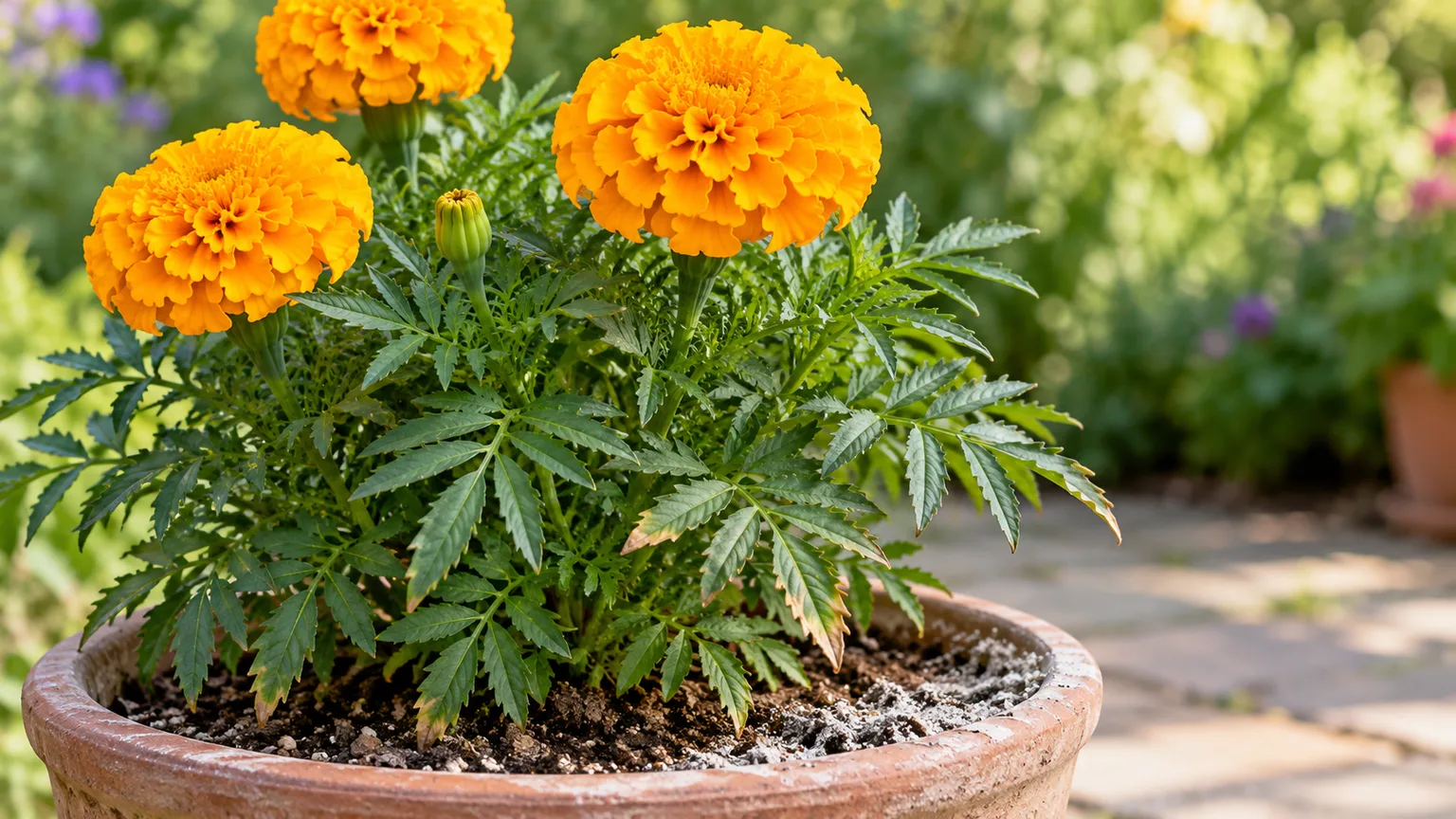
Salt Build-Up on Marigold: Signs and Safe Fixes
This guide covers salt build-up on Marigold. See also the general Salt Build-up guide, watering, and light pages for this plant.
Salt Build-Up on Marigold: Signs and Safe Fixes
Quick answer
A dry white crust on a potted marigold, especially alongside brown leaf edges after repeated feeding, can point to salt build-up; The Spruce lists those signs while noting that brown edges also have other causes. The first fix is to flush a freely draining pot slowly with clean water and discard the runoff, as described in this container-soil leaching guide. Do not flush a mix that is already waterlogged or a pot with blocked drainage; repair the drainage or replace failing mix instead. A crust alone is a clue, not a diagnosis, so compare it with the plant’s recent care and the condition of the root zone. The general salt build-up guide explains the broader soil chemistry; this page focuses on African marigold, Tagetes erecta. If you are unsure whether this is salt injury or a wider care problem, compare the plant’s setup with the Marigold care overview.
What salt build-up looks like on African marigold
Inspect more than one marigold leaflet and the pot surface. Note whether the deposit is dry and crusty rather than fuzzy, whether several leaves are developing fresh dry edges, and whether you recently fed the plant; treat these as clues to compare, not as proof from one mark.
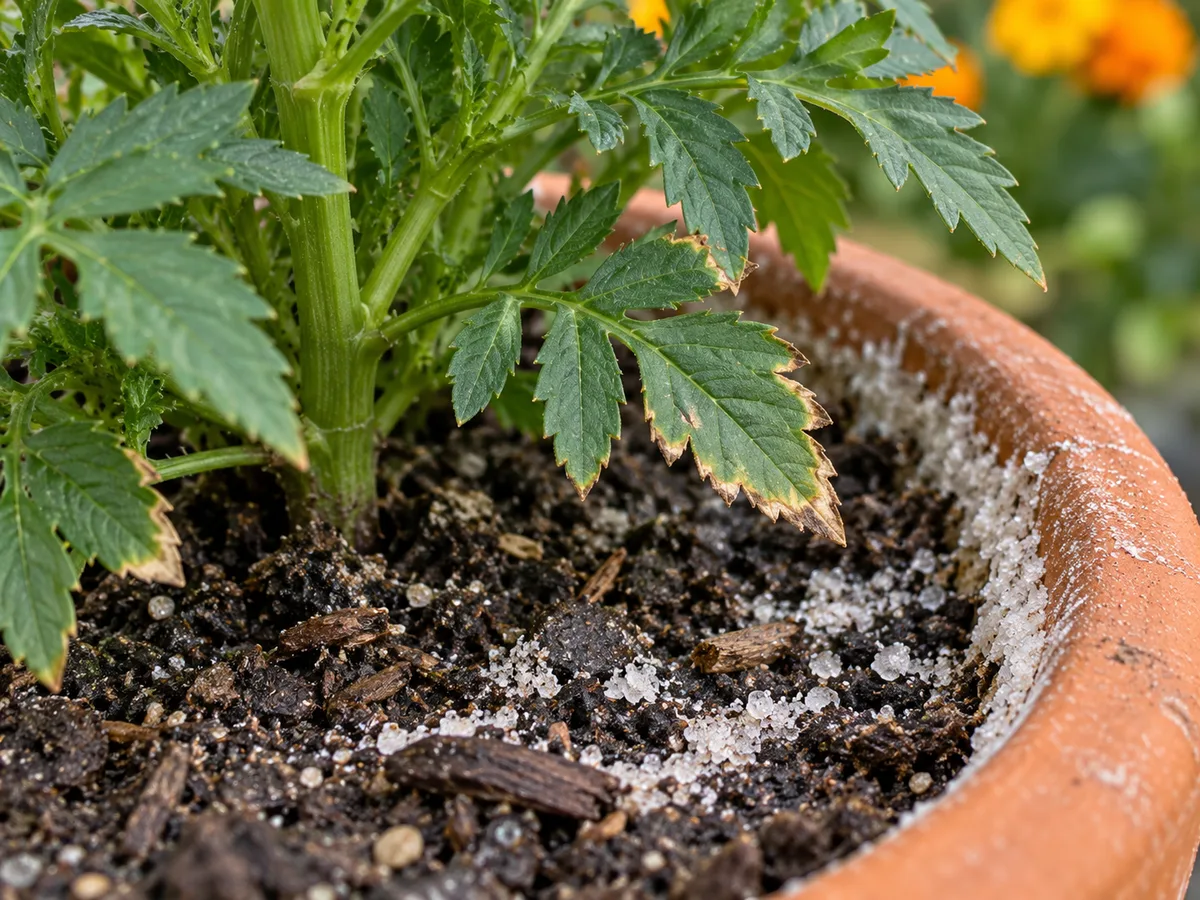
On a container-grown African marigold, a dry pale crust plus crisping leaf edges is a salt build-up clue; recent feeding and drainage history help confirm it.
Do not expect the damaged edges to recover their green color. The useful sign is that fresh leaves and buds emerge without new burn, while the existing marigold foliage stays firm rather than progressively wilting.
Confirm salts before you flush a marigold pot
Check the history first: note the last fertilizer application, whether you have been using full-strength feed, and whether water has been draining from the pot at ordinary waterings. Notice whether residue returns after feeding or during repeated dry-downs; one white mark cannot identify the source or the amount of soluble salts, so do not use color alone to decide that the plant needs a heavy rinse.
Check the marigold’s mix and pot before treating. If water runs straight through a cracked, shrunken root ball, the mix may be too dry or degraded; if it sits on the surface or stays heavy and wet, a blocked hole or compacted mix makes flushing risky. A plant that droops when its soil is dry fits water stress on Marigold better, while a soft stem base and a persistently wet root zone call for the Marigold root-rot guide. Brown tips without crust or a recent feed are less specific; use the brown-tips checks before assuming salts.
Why African marigold can be harmed by excess salts
In a small container, repeated feeding or frequent watering without drainage can leave soluble fertilizer and irrigation salts in the mix as water evaporates, as described in the Gardening Know How leaching guide. In a controlled study of Tagetes erecta, growth and several morphological and physiological traits declined under saline treatments of 100 and 150 mM sodium chloride; those experimental concentrations show that salinity can stress African marigold, but they are not a home-pot threshold or a way to diagnose a white crust.
Marigold’s modest feeding needs make extra fertilizer a poor first response to weak flowering. University of Wisconsin Horticulture lists marigolds as low feeders and recommends full sun, well-drained soil, and even moisture without waterlogging. For this plant, a bloom slump can also come from shade, wet soil, or seasonal decline; check the Marigold light guide before adding feed.
The first fix: flush only a freely draining Marigold container
If the marigold is in a pot with open drainage and the mix is not soggy, slowly water the root ball with clean water until it drains freely, then empty the saucer or cachepot. Do not leave the pot standing in the leachate, and do not keep repeating the rinse if water cannot escape. The Spruce also recommends draining thoroughly after a flush.
Pause fertilizer while you watch the plant. If drainage is blocked, the mix is compacted, or the roots are already in wet, sour-smelling soil, clear the outlet or move the marigold into fresh, well-drained mix rather than forcing more water through it. The Marigold soil guide covers the potting mix and drainage checks that matter for this annual.
For a marigold growing in a garden bed, do not try to leach the whole bed based only on a crust at the soil surface. Have the soil or irrigation water checked if salt injury keeps returning, and address drainage before applying large amounts of water; waterlogged soil can create a separate root problem.
Why Marigold’s full-sun habit can mimic salt stress
African marigolds grow best in full sun and well-drained soil with moderate fertility. In shade, a plant may flower poorly even when its root zone is healthy; in an overwatered or compacted pot, leaves can wilt despite damp soil. These checks help separate a light or drainage mismatch from salt injury; do not treat every yellowing or slow-flowering marigold as a fertilizer problem.
Penn State Extension describes marigolds as annuals, notes the African type matures more slowly, and reports that plants typically begin flowering around two months after sowing in its marigold growing guide. That seasonal pace matters when you judge recovery: a marigold near the end of its growing season may not have enough time to replace a lost flush of leaves or buds, even after the salt source is corrected.
When to use this page vs other Marigold guides
| What you see | More likely route |
|---|---|
| Dry crust on the mix or pot rim, with browned edges after repeated feeding or mineral-rich water | Follow this salt build-up guide and correct the source before feeding again. |
| Sudden edge burn soon after a strong or accidental dose of fertilizer | Check fertilizer burn on Marigold; concentrated feeding can be the source of a salt problem. |
| Wilting with dry mix, without a crust or recent fertilizer history | Check water stress on Marigold and the plant’s watering pattern. |
| Soft stem base or persistently wet mix, especially with a sour smell | Use the Marigold root-rot guide and address the wet root zone. |
| Brown tips but no crust or recent feed | Compare heat, water, and root conditions using the Marigold brown-tips guide. |
Recovery: watch Marigold’s next leaves and buds
A flush removes soluble residues; it does not repair leaves whose edges have already dried. Over the next few weeks, look for new leaflets and buds that are not browning, steady posture between waterings, and no fresh crust returning at the pot rim. If the marigold continues to wilt while its mix is moist, stop adding water and inspect drainage and roots; salt injury may have exposed a second problem.
Weigh the remaining growing season against the damage. If most roots are dead or the season is nearly over, replacing the plant may be more practical than repeated flushing and repotting.
Prevent salt build-up in Marigold pots
Use fertilizer sparingly and follow the product label; marigolds are low feeders, so extra doses are unlikely to solve a shade or drainage problem. In containers, water the soil thoroughly and let excess drain, then wait until the upper mix begins to dry before watering again. The Marigold fertilizer guide explains a modest feeding schedule, while its watering guide gives the plant-specific dry-down checks.
Use a free-draining mix, keep drainage holes open, and avoid letting a pot sit in runoff. If white deposits keep returning despite less fertilizer, check your water source or ask a local extension office for a soluble-salts test instead of repeatedly changing the Marigold’s feeding schedule.
Related tool
Use the Plant Problem Diagnosis Tool to compare salt symptoms with watering, soil, and fertilizer problems before changing several parts of Marigold’s care at once.
Related Marigold guides
- Marigold overview — use this for its full-sun annual care pattern and general growing conditions.
- Marigold problems hub — use this to compare other symptoms and follow the plant’s problem cluster.
- Marigold watering — use this when the mix is drying too quickly or the plant wilts without salt deposits.
- Marigold soil — use this when drainage is poor or the potting mix is compacted.
- Marigold fertilizer — use this to choose a modest feeding routine after the plant has recovered.