Marigold Sunburn: How to Identify Scorched Leaves
Quick answer
If pale, dry patches appear on Marigold leaflets soon after a move into stronger sun, first shift the pot to bright shade or cast temporary shade over a garden plant. Marigolds need full sun once acclimated, so return them gradually after fresh damage stops. Water only if the mix is dry at root depth; scorched tissue will not turn green again.
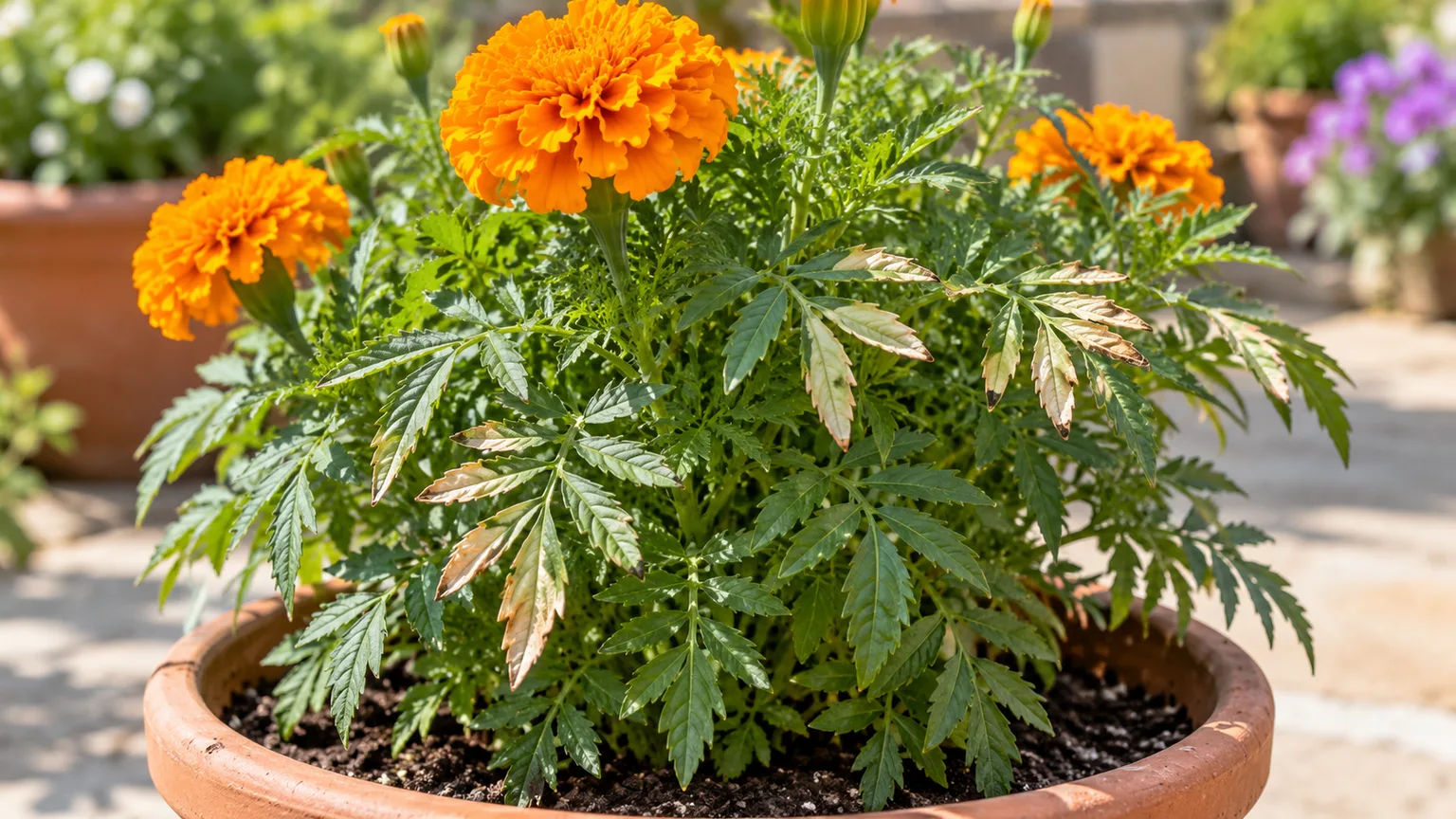
Sunburn on Marigold: How to Diagnose Scorched Leaves
This guide covers sunburn / scorched leaves on Marigold. See also the general Sunburn / Scorched Leaves guide, watering, and light pages for this plant.
Sunburn on Marigold: How to Diagnose Scorched Leaves
Quick answer
Sunburn on Marigold is most likely when irregular pale or tan patches appear on leaves soon after a plant moves from protected light into stronger direct sun. First move the pot into bright shade; for a garden plant, give it temporary midday shade. Do not leave Marigolds in deep shade permanently: NC State lists Tagetes as needing six or more hours of direct sun, and full sun supports flowering.
Use this guide when damaged leaves line up with a recent exposure change. For the general symptom pattern across plants, see the sunburn and scorched-leaf guide; for Marigold placement and sun-hour targets, see the Marigold light guide.
What sunburn looks like on Marigold
On African Marigold (Tagetes erecta), sunburn usually marks the most exposed upper and outward-facing leaflets first. The affected tissue looks washed out or pale, then dries to tan or brown and becomes papery; foliage sheltered inside the bush may stay green. A recent move into direct sun makes that uneven pattern more persuasive than brown tips appearing gradually across the whole plant. General plant-scorch guidance describes the same exposure-side bleaching and crispy brown progression.
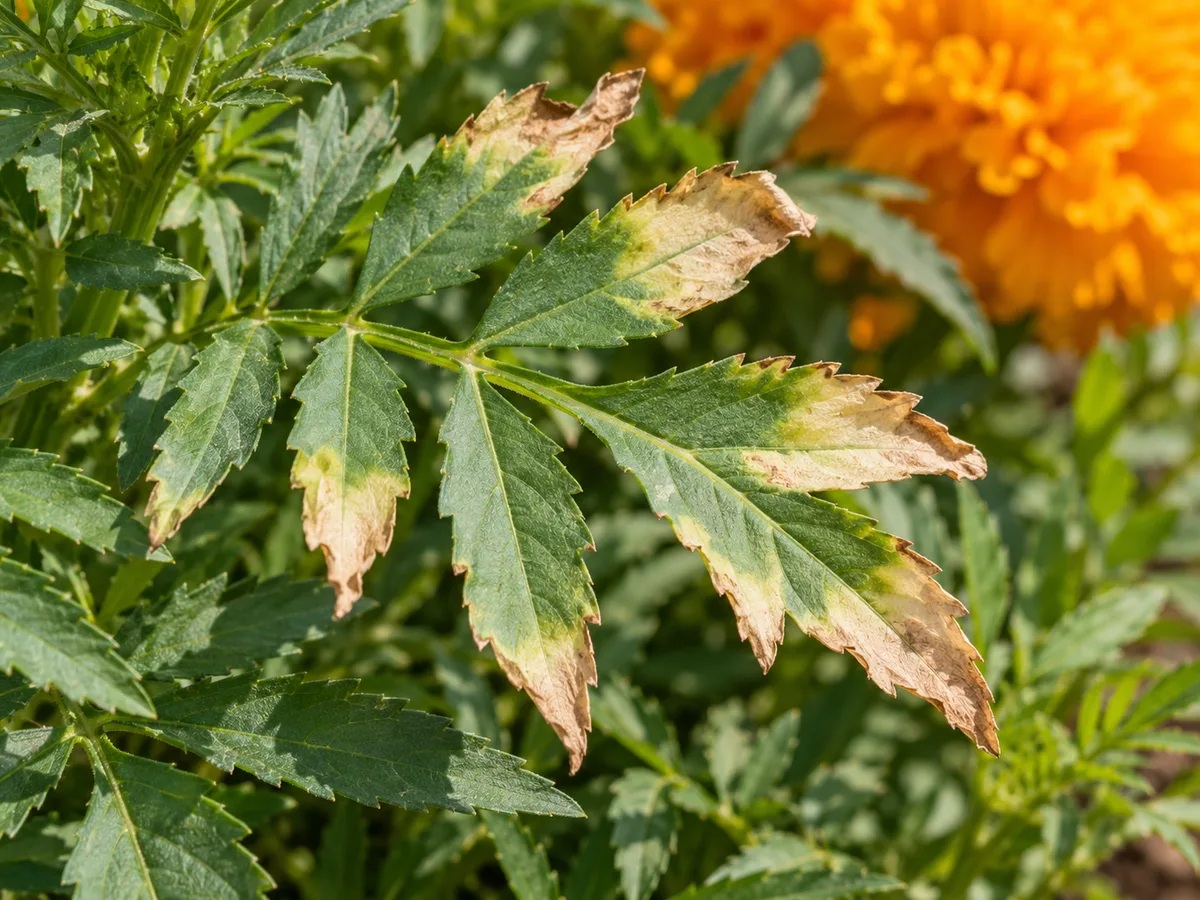
Sun-facing leaflets show dry, bleached scorch while the sheltered foliage remains green. Compare both sides of the plant before treating every brown leaflet as sun damage.
Confirm the exposure history on African Marigold
Before changing water or fertilizer, reconstruct what changed in the week before the first pale patch. Did an indoor seedling move outdoors, did a nursery pot leave a shaded bench, or did a Marigold move from a porch to an exposed balcony? Also note whether the pot was turned, moved beside a south- or west-facing wall, or uncovered after a neighboring plant was removed. These details help distinguish a sharp increase in direct rays from the slow decline that comes from a root-zone problem.
Compare the damaged side with the opposite side and with the younger leaflets near the growing tips. Sun scorch is a stronger match when the exposed canopy has bleached areas and leaves inside the Marigold still look normal. If every side is affected equally, or fresh marks are appearing on newly shaded leaves, stop treating exposure as confirmed and check the other causes below.
Finally, check soil moisture at root depth rather than judging from the dry-looking leaf. For a container, lift the pot and feel the mix; in a bed, probe a few centimeters down instead of inferring root moisture from the leaf surface. Record the location, time of day, and condition of the newest growth; a quick photo from the same angle tomorrow makes it easier to see whether new tissue is being affected.
Why a heat-tolerant Tagetes can still scorch after a move
Marigolds are sun-loving warm-season annuals, and Penn State Extension notes that they usually tolerate very hot summers. That makes permanent shade the wrong response. The Marigold-specific inference is that scorch follows a sudden jump in direct sun: nursery-grown stock, indoor seedlings, or a pot kept under a porch can receive several stronger afternoon hours at once. The change in exposure matters more than the fact that the plant is outdoors.
The plant’s shape helps you read the damage. NC State describes Tagetes as upright with compound, often pinnate foliage; compare leaflets at the top and outer edge with those inside the same Marigold, rather than judging from one brown tip. If only the surfaces facing the new sun are bleached and sheltered growth is clean, exposure is a stronger fit. If fresh marks keep appearing on protected leaves, reconsider pests, disease, or root stress.
Check for Marigold lookalikes before changing care
Sunburn is not the only reason a Marigold can look dry or brown. Check the plant and its root zone before deciding that light is the cause:
- Whole-plant droop with dry mix: Check the Marigold watering guide and feel the soil a few centimeters down. Penn State recommends letting soil dry slightly between thorough waterings, then watering more often in hot weather; a dry pot needs water, while a damp one does not.
- Persistently wet mix with a soft base: Do not add water or move straight to pruning. Marigolds need moisture without waterlogging; NC State lists stem rot among Tagetes diseases, so compare the Marigold root-rot guide if the base is soft.
- Spots that do not follow sun exposure: Check the Marigold black-spots guide instead of assuming every brown mark is scorch.
- Broad wilting after a hot day, without bleached patches: Compare the symptoms with heat stress on Marigold before treating it as leaf sunburn.
Inspect for Marigold pests and leaf disease
Turn a few compound leaves over and look along the leaflets and stems before you call speckling or scattered brown marks sunburn. Penn State Extension lists aphids and spider mites among pests that can affect Marigolds; if you find insects or webbing, use the general aphids guide or spider-mites guide to confirm that problem before treating it. The location of damage matters: scorch follows the plant’s exposure, while pests or disease may show up on sheltered growth too.
NC State lists leaf spots, stem rot, and botrytis blight among potential Tagetes diseases. If spotting continues to appear across leaves that never faced the sun, compare the Marigold powdery-mildew guide or the black-spots guide rather than applying a sunburn fix. These checks are especially useful after wet weather, when a damaged Marigold may have more than one stress at the same time.
The first fix for scorched Marigold leaves
Keep the plant in bright shade until no new pale patches appear. For a pot, move it out of the harshest direct rays; for a garden bed, use temporary light shade during the hottest part of the day. Leave healthy leaves on the plant, and do not fertilize or repot solely because the visible tissue is brown. Those extra changes make it harder to tell whether the exposure correction worked.
Once the plant is stable, trim only fully dry or broken leaves if they obscure new growth. Do not cut back every leaf with a small scorched edge: green tissue can still support an annual that is trying to make new shoots.
For the next few days, keep the Marigold in one place and watch the newest leaflets rather than making another adjustment each afternoon. If no new pale areas form, the temporary shade is doing its job; if damage continues on the protected side, return to the soil, pest, and disease checks. Keep its recovery spot bright rather than moving it from bright shade straight into a dark room; return to the full-sun site gradually.
Reacclimate a Marigold seedling to its full-sun site
Return the plant to sun in stages after the spread has stopped. Epic Gardening’s Marigold hardening-off guidance starts seedlings outdoors in shade, then increases their light and time outside daily over about a week. For a plant that has already scorched, use the slower end of that approach: start with bright shade, add gentle morning sun, and increase exposure only while the newest leaflets remain unmarked.
A simple Marigold acclimation sequence is:
- Start in bright outdoor shade. Keep the plant out of the strongest afternoon rays while it adjusts to outdoor temperature and air movement.
- Add morning sun in short increments. Morning exposure lets you increase direct light without moving straight to the hottest part of the day.
- Extend the sunny period gradually. Add time outside each day, but pause at the current stage if a fresh pale patch appears on a new leaflet.
- Return to the full-sun site once new foliage stays clean. Marigolds need that light to flower well, so keep the goal of a sunny bed or pot rather than permanent shade.
Use the calendar as a guide, not a deadline. The ideal starting stage depends on how much outdoor light the Marigold received before you got it. If you do not know, begin with shade and gentle morning sun, then let clean new leaflets show when it is ready for more exposure. If the weather turns unusually hot during the process, hold at that gentler stage and resume increasing exposure when the plant is no longer developing fresh scorch.
Do not aim for a permanent low-light position. Marigolds need full sun for strong flowering, and too much shade can leave plants leggy (Epic Gardening). The goal is to restore the bright site gradually rather than trade scorch for stretched growth and fewer blooms. The Marigold overview covers its seasonal outdoor habit, while the Marigold light guide explains how to judge the final placement.
Water and soil checks for a sun-exposed Marigold
After moving the plant, check the mix before watering and use its actual moisture rather than yesterday’s calendar. Penn State recommends allowing the soil to dry slightly between thorough waterings and watering more often during hot weather; when the mix has begun to dry, water thoroughly at the base and let excess water drain. Use the Marigold soil guide if water remains in the pot or the mix stays heavy.
For a container Marigold, feel the mix a few centimeters below the surface and lift the pot if you are unsure whether it has dried. For a planted Marigold, probe the soil near the root zone instead of watering just because the exposed leaves feel hot. Let extra water drain from a pot before returning it to a decorative cover.
If the soil is already damp, do not compensate for brown leaf tissue with another soak. Keep a note of the new placement and check the moisture again before the next watering. Make one exposure adjustment first, then let the new growth show whether the diagnosis was right.
Recovery and when to stop trying to save the plant
Bleached and crispy patches will not turn green again; recovery means the damage stops spreading and new leaflets emerge clean. Keep the remaining green foliage while the plant stabilizes and judge progress over the next few weeks by its growing tips, not by old marks. If the stems remain firm and new growth is healthy, keep the Marigold in its staged light routine.
Expect the old leaflets to remain marked even after the exposure is corrected. The first encouraging sign is that damage stops expanding onto nearby leaflets; the next is a new set of leaves that develops without pale edges. Do not cut back healthy stems just to make the plant look tidy, and do not feed it to force faster replacement growth. Marigolds are grown for a season, so preserving healthy foliage and flowers is more useful than trying to restore every scorched leaf.
Penn State describes Marigolds as annuals (Penn State Extension). If the main stems have died, the growing tips are gone, or the season is ending and there is no healthy new growth, replacing the plant or saving seed may be more realistic than an extended rescue. If collapse is rapid or the stem base softens, use the Marigold problems hub to check for a more serious cause.
When to use this page vs other Marigold guides
Use this page for dry, bleached patches on sun-facing leaflets after a change in exposure. Use the Marigold heat-stress guide when broad wilting is the main sign, the black-spots guide for marks unrelated to the sun-facing side, and the root-rot guide when wet soil and a soft base point below the leaves. If you cannot match the pattern to one cause, start from the Marigold problems hub and compare the symptoms before making another care change.
Related tool
Use the Plant Problem Diagnosis tool to compare sun-facing scorch with Marigold heat, water, or root-zone symptoms before changing more than one condition.
Related Marigold guides
- Marigold overview — use it for seasonal care and the plant’s normal full-sun habit.
- Marigold watering guide — use it when the plant droops or the pot dries quickly in hot weather.
- Marigold soil guide — use it when the mix stays damp or drains poorly.