Water Stress on Marigold: Causes, Checks & Fixes
Quick answer
Water stress on African marigold can come from a dry root zone or roots kept wet too long. First check the soil 2–3 cm deep and lift the pot: water at the base only when that root zone is dry; if it is still damp, do not add more.
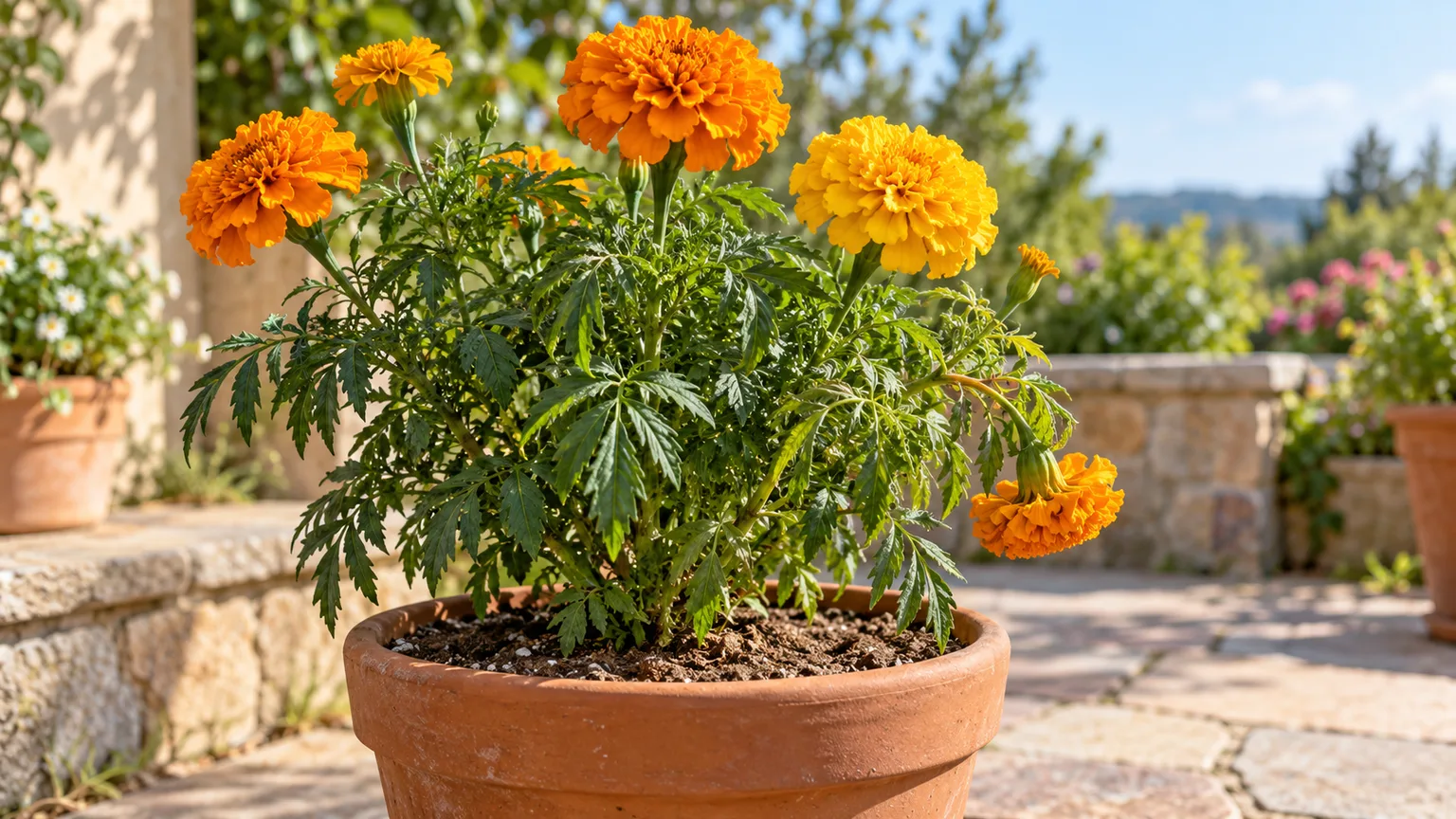
Water Stress on Marigold: Causes, Checks & Fixes
This guide covers water stress on Marigold. See also the general Water Stress guide, watering, and light pages for this plant.
Water Stress on Marigold: Causes, Checks & Fixes
Quick answer
Water stress on African marigold can mean a root zone that has dried too far or one that has stayed wet long enough to impair roots; Iowa State Extension flags root rots in moist soil. First, check the soil about 2–3 cm below the surface and lift the pot. If the root zone is dry and the container feels light, water slowly at soil level until excess drains; if the mix is still damp, wait rather than adding water. A drooping plant is a signal to inspect, not proof that it needs another drink.
This distinction matters especially for African marigold (Tagetes erecta), an outdoor, warm-season annual that is commonly grown in full sun, as described in Wisconsin Horticulture’s marigold guide. Sun and heat can make a container dry quickly, but wet, poorly drained soil also puts this species at risk. For the general mechanics of too much or too little moisture, see our water-stress guide; the steps below focus on how to read and correct the pattern on Marigold.
What water stress looks like on African marigold
When the root zone is too dry, the plant may lose firmness through the leaves and shoot tips; UF/IFAS guidance for African marigold describes water-related wilting in this plant. The strongest clue is the combination of a limp plant and dry soil at root depth, often with a noticeably lighter container. A dry-looking surface by itself is not enough, because the lower mix may still hold moisture.
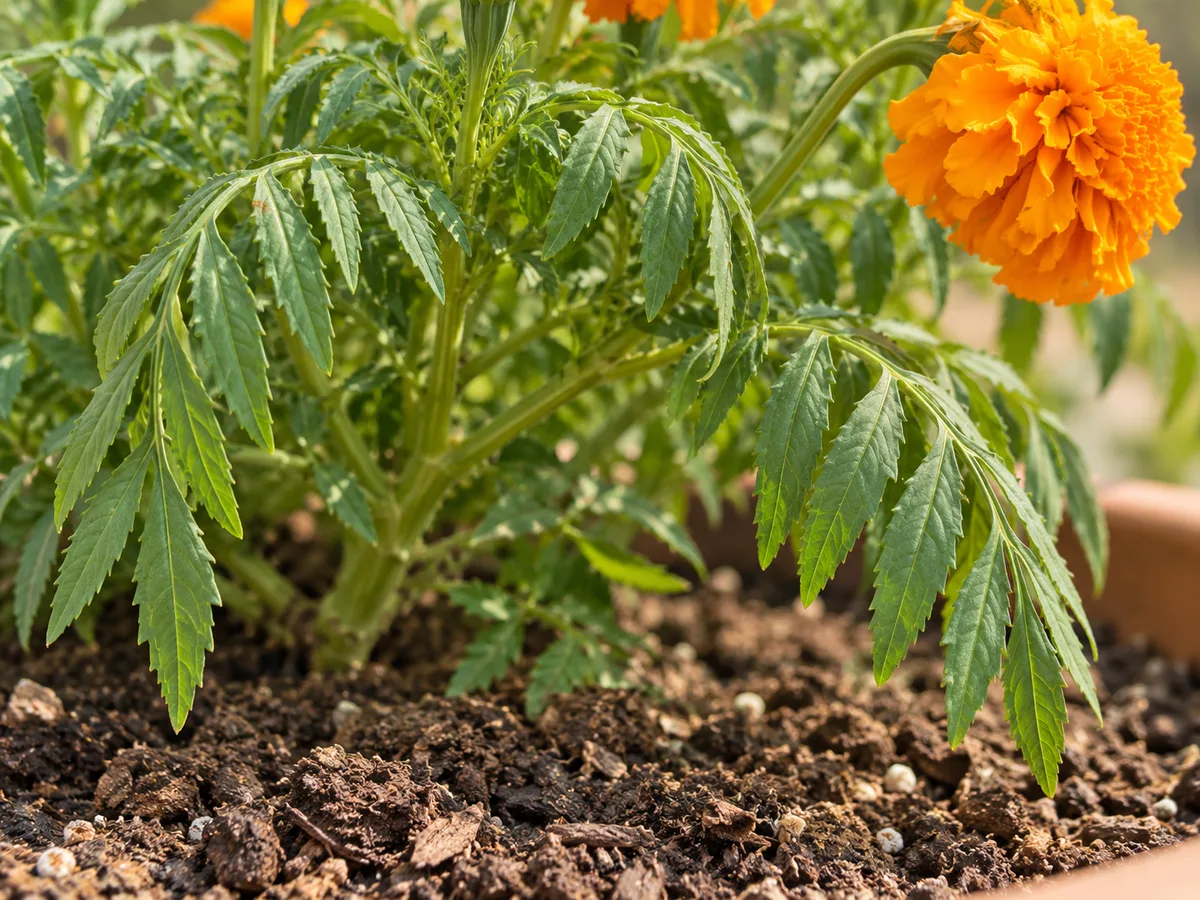
Mild underwatering can leave African marigold leaflets and flower stalks slack. Check the mix below the surface before watering; the same droop can occur when heat or damaged roots limit water uptake.
When the mix remains wet, a Marigold can also look wilted or generally tired. Yellowing that starts on lower foliage, a softening stem base, or an unpleasant smell from the pot makes chronic wetness more concerning than a short dry spell. Iowa State Extension notes that African marigolds are particularly vulnerable to root rots in moist soil, so a limp plant in a heavy, damp pot should not be treated as thirsty by default.
Why African marigold gets water stress
A full-sun annual can dry quickly, especially in a pot
African marigolds are grown for a single outdoor growing season and perform best with strong sun. Once an established plant is in active growth and flowering, a small container on a hot balcony can lose water much faster than a garden bed. Wind, a dark pot, terracotta, a small root volume, and several days of hot weather can all shorten the time between checks; University of Minnesota Extension’s Marigold guidance emphasizes adjusting care to growing conditions. These are reasons to inspect the root zone more often, not reasons to water every day without checking.
The same calendar interval will not fit every Marigold. A large container in a partly shaded spot may stay damp after the same amount of rain that leaves a small pot dry. In a bed, surrounding soil and rainfall buffer moisture changes; in a container, the plant depends on a limited volume of mix. The Marigold watering guide explains how to adjust checks for containers versus garden beds.
African marigold is less forgiving of wet soil than its French cousin
“Marigold” can refer to several Tagetes species. For this guide, the focus is African marigold, Tagetes erecta, rather than compact French marigold (T. patula) or Signet marigold (T. tenuifolia). That difference matters when the leaves droop: a persistently wet root zone is a stronger warning for T. erecta than a quick glance at the foliage suggests.
A container that holds water for days, a blocked drainage hole, or dense mix can keep roots wet even when watering was not frequent. The surface may dry first while the bottom stays heavy. Read the Marigold soil guide if water drains slowly, pools on top, or runs down the pot edge without soaking the root ball; do not add water just because the top looks pale.
Midday wilt can be heat, not thirst
African marigold often grows outdoors in direct summer sun, when leaf water loss rises during the hottest hours. N.C. Cooperative Extension’s heat-wilt guidance explains that plants can droop temporarily in heat even when soil is moist, then recover as temperatures ease. A Marigold that flags in the afternoon but firms up by evening or the next morning may be showing a heat response. If the soil is damp at root depth, watering again can leave the roots short of air while the actual trigger remains high heat.
Use the time-of-day pattern as supporting evidence, not a diagnosis by itself. Compare the plant before the hottest period, late in the afternoon, and the following morning. Also note whether the pot is in full sun, whether hot pavement reflects heat toward it, and whether neighboring Marigolds show the same short-lived slump. The Marigold light guide covers placement and sun exposure; changing the location and watering routine together makes it harder to tell which correction helped.
How to confirm the cause before you water
Start with the root zone. Press a finger about 2–3 cm into the mix near the plant, not only at the pot edge. In a larger container, check more than one spot because the surface can dry unevenly. If the soil feels dry at that depth and the pot is much lighter than it was after watering, underwatering is plausible. If it feels cool or damp and the pot is still heavy, hold off.
Next, reconstruct the last few days rather than relying on a vague sense that you watered “recently.” Record when the plant was last watered, whether there was rain, and whether the weather turned hotter or windier. A pot that was adequately moist yesterday may be dry today after a heat wave; a bed that received rain may still be wet below the surface. Do not use a fixed interval from another Marigold as a substitute for checking your own soil.
Then check how water moves through the container. When the root zone is genuinely dry, pour slowly at soil level and watch the drainage holes. If water immediately races down the inside edge or exits while the central root ball remains dry, the mix may have pulled away or become difficult to rewet. Water in several slow passes, allowing each to soak in. If water stands on top or the container stays heavy for days, inspect drainage and mix instead of increasing the amount.
A dry pot with drooping leaves points toward a shortage; a wet pot with yellowing or a soft stem base points toward root trouble. A moist pot with afternoon-only wilt points more toward temporary heat stress. These clues can overlap, so use the pattern across soil, stems, timing, and recent care. If leaflets have stippling, webbing, or distorted new growth, water may not be the main problem; use the Marigold problems hub to compare other causes.
Do not unpot a Marigold because it wilted once. Check roots only when the soil stays wet, the stem base softens, the smell turns sour, or the plant continues to decline despite a corrected watering pattern. If you do lift it out, healthy roots should feel firm; dark, mushy roots that slough when handled support root rot. For that specific diagnosis, use the Marigold root-rot guide.
The first fix for Marigold water stress
Make one moisture-based correction first. If the root zone is dry and the pot feels light, water the soil slowly at the base until it is evenly wet and excess drains from the bottom. Empty standing runoff, then let the plant use the available moisture before checking again. Do not splash the flowers and foliage as a substitute for wetting the root ball.
If the root zone is still damp, do not water. Move a container out of a heat-trapping cachepot, clear the drainage holes, and let excess water escape. Keep the plant in bright conditions appropriate for Marigold; do not move it into deep shade solely because it wilted at noon. A heavy pot that remains wet for several days needs attention to drainage and mix, but that is a separate step from the first moisture check.
For a garden-bed Marigold, confirm dryness below the surface before irrigating. UC IPM’s Marigold culture guidance lists moderate to regular water; apply it at soil level so it reaches the roots instead of repeatedly wetting flower heads.
Recovery: what can improve and what cannot
After a short dry spell, leaves and stems that are still supple may regain firmness once water reaches the root ball. Watch the whole plant over the next several checks rather than expecting every leaf to look perfect immediately. The first useful signs are that the slump no longer worsens between mornings, the root zone dries at a more predictable pace, and fresh leaves or buds continue to develop.
A heat-only wilt should ease when the day cools if the roots still have access to moisture. If the Marigold remains limp the next morning, recheck the soil rather than repeating a night-time watering. Conversely, if the soil is dry again quickly in a small pot during hot weather, the container may simply need more frequent inspection while the annual is growing strongly. Penn State’s Marigold guidance notes that established plants can tolerate drought-like conditions, but that does not mean a plant in a small pot can be left to collapse repeatedly.
In a plant that has sat wet, recovery depends on how much of the root system remains firm. Stop adding water while the mix is damp and remove trapped runoff. If the stem base is firm and the soil drains normally after drying, avoid unnecessary repotting; a stressed annual has limited time to re-establish. If roots are mushy or the base is collapsing, trim away only clearly rotted tissue with clean scissors and move the plant into a draining mix and a pot with open drainage. A severely rotted crown may not recover.
Previously damaged leaves, crispy edges, and spent flowers do not turn fresh again. Remove only dead or mushy material once the plant has stabilized; avoid stripping green foliage that still supports growth. Marigold is an annual, so the realistic goal is continued healthy growth and flowering through the remaining season, not indefinite recovery. If the plant is close to the end of its season and most roots or stems are lost, replacing it may be more sensible than repeated invasive treatment.
Lookalikes and mistakes to avoid
Heat stress: Afternoon droop with damp soil that clears by evening or morning is a reason to wait and observe, not to water automatically. If the plant remains wilted in the cool part of the day, continue checking the root zone and stem base. The Marigold heat-stress guide covers persistent heat damage and scorched foliage.
Root rot or waterlogged soil: Wilting while the pot remains heavy, especially with lower-leaf yellowing, sour smell, or a soft base, needs drainage and root checks. Do not answer this pattern with another soak. See the general overwatering guide for the broader wet-soil pattern.
Normal end-of-season decline: An annual may slow flowering and shed older lower leaves as its season winds down. If the upper growth remains firm and the root zone is neither bone dry nor persistently wet, do not assume a watering problem from one old leaf. Compare this pattern with wilting on Marigold when the whole plant is limp.
Avoid three common reactions: watering again without a soil check; repotting immediately after one hot afternoon; and moving the plant into deep shade while also changing the watering interval. Each can make the original pattern harder to interpret. Change one factor that matches the evidence, then observe the next soil dry-down and the plant at the coolest part of the day.
Prevent water stress through the Marigold season
Use the same check-first habit throughout the season, but increase how often you check during hot, windy weather or when a container is small. Water to moisten the root zone, not just the surface, and let excess drain. Do not interpret “drought tolerant once established” as “never check”: it means established plants can tolerate some drying between thorough waterings, while newly planted or container-grown Marigolds still need observation.
Keep African marigold in a well-drained mix and a container with clear drainage holes. Avoid oversized pots where a small root system sits in a large volume of wet mix. If you grow in a bed that stays soggy after rain, correct the drainage before planting more African Marigolds there. Iowa State’s warning about root rots in moist soil is a reason to choose the site and mix carefully, not a cue to keep the plant dry at all costs.
At each watering, note the pot weight or how the mix feels at 2–3 cm, then compare it with the next check. This simple record helps you spot whether the balcony pot dries in a day while the garden bed stays moist longer. It also makes seasonal shifts visible: warm sunny weather accelerates dry-down, while cool or rainy weather slows it. For a complete care picture, start with the Marigold overview and use the watering and soil guides when you need to adjust a specific part of the setup.
Related Marigold guides
Use this page when a Marigold is drooping and the root-zone moisture pattern is unclear. The Marigold watering guide covers normal checks and watering technique; the Marigold soil guide is the better next step when the mix stays wet or repels water. If the plant is limp over damp soil with soft roots, switch to root rot on Marigold; if wilt peaks in hot afternoons despite moist soil, compare heat stress on Marigold. The Marigold problems hub helps route symptoms that do not fit a clear dry-versus-wet pattern.
Related tool
Use the Plant Problem Diagnosis Tool to compare drooping, yellowing, and other visible symptoms with possible causes before making another care change.