Drooping Leaves on Neon Pothos: Causes, Checks & Fixes
Quick answer
Drooping leaves on Neon Pothos almost always mean the roots are not delivering water-check whether the top 1–2 inches (3–5 cm) of soil is bone-dry or still wet before you water, repot, or fertilize.
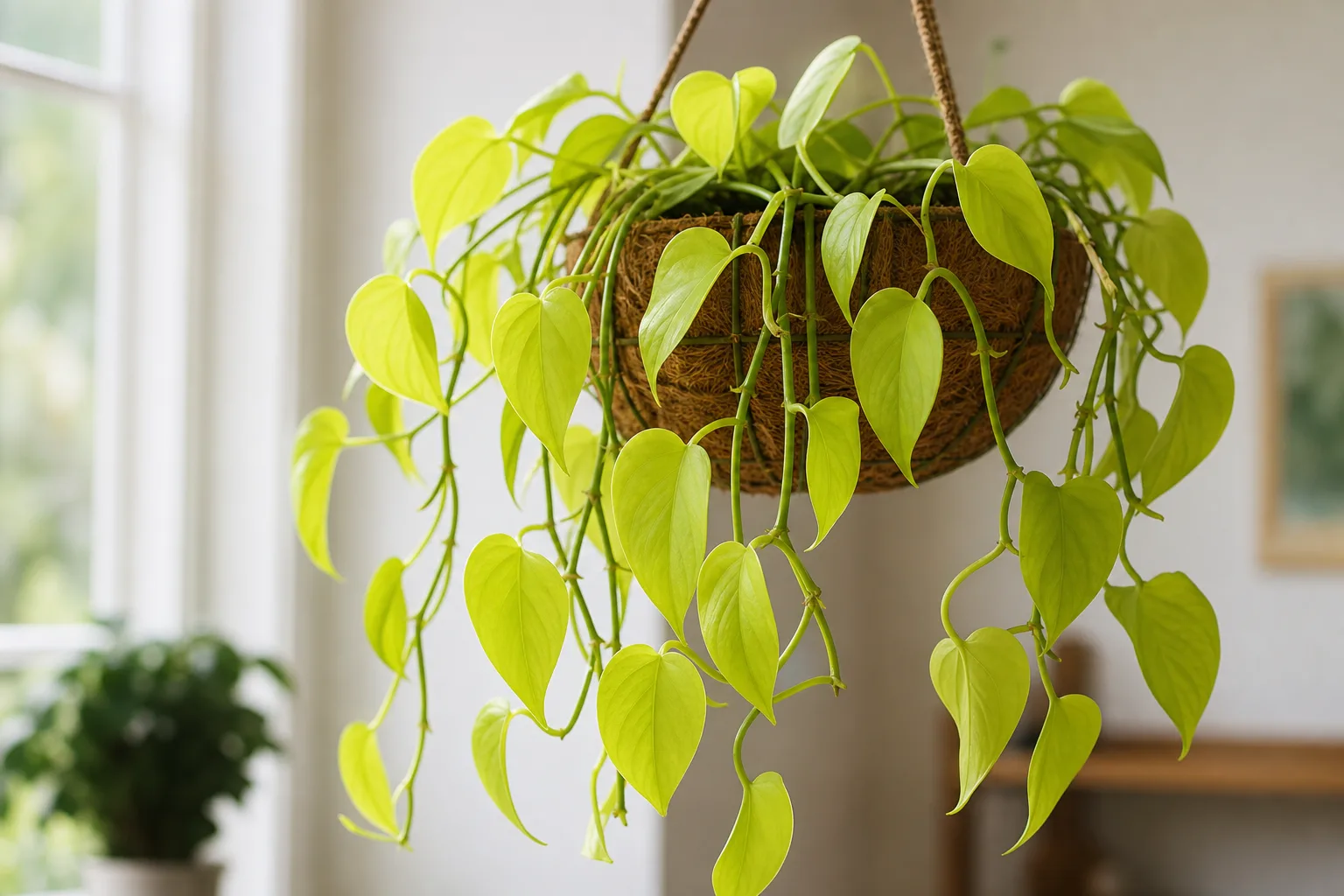
Drooping Leaves on Neon Pothos: Causes, Checks & Fixes
This guide covers drooping leaves on Neon Pothos. See also the general Drooping Leaves guide, watering, and light pages for this plant.
Drooping Leaves on Neon Pothos: Causes, Checks & Fixes
Quick answer
Drooping leaves on Neon Pothos (Epipremnum aureum ‘Neon’) mean the plant has lost turgor-the internal water pressure that keeps leaves stiff. That happens when roots cannot supply enough moisture, whether because the soil is too dry or because damaged roots in wet soil fail to absorb water.
First step: lift the pot and probe the top 1–2 inches (3–5 cm) of soil before you do anything else. A lightweight pot with dry mix and limp chartreuse vines usually needs water. A heavy pot with wet mix and soft drooping leaves usually needs less water and a root check-not another drink.
Neon Pothos is a fast communicator. Healthy vines perk up within hours after a proper soak when thirst is the cause. If leaves stay limp while soil stays wet for days, treat root stress as the working diagnosis and read our overwatering and root rot guides.
This page is the primary droop hub for Neon Pothos-trailing posture change, tip-heavy sag, and chronic slump patterns. For acute whole-plant collapse or heat wilt after a sudden move, start at wilting on Neon Pothos. New owners can anchor care context on the Neon Pothos overview.
Drooping vs wilting on Neon Pothos
Owners often land on the wrong guide because both involve limp chartreuse foliage. Drooping leaves here means a gradual hang or posture change-petioles angle down, one trailing vine sags while others stay firm, or the oldest leaves at vine tips droop from weight and transpiration. Wilting means a sharper turgor crash: multiple vines collapse at once, often after a skipped watering week, heat shock, or root failure on saturated mix.
| What you see | Pot signal | Soil at 1–2 inches | Leaf texture | Likely cause | Read next |
|---|---|---|---|---|---|
| One vine or tip-heavy sag | Light to moderate | Dry throughout | Thin, slightly papery | Drought droop | This page → underwatering |
| Whole plant limp on wet mix | Heavy | Wet, cool | Soft, not crispy | Root stress / rot | Root rot or wilting |
| Afternoon sag, firm by morning | Moderate | Appropriately moist | Firm overnight | Heat wilt | Wilting |
| Long bare vines, dull olive new growth | Moderate | Slow to dry in dim corner | Firm but faded | Low light + chronic wet soil | Not enough light |
| Mild slump 3–7 days after repot | Moderate | Evenly moist | Firm at stem base | Repot shock | Repotting guide |
| Droops again right after watering | Heavy | Stays wet | Soft lower leaves yellowing | Oversized pot / poor drainage | Overwatering |
The wilting guide defines the acute collapse patterns; this page covers slower droop, tip-heavy sag on long trailers, and the chronic slump cycles that build over weeks of watering mismatch.
What drooping leaves look like on Neon Pothos
On this cultivar, droop shows up clearly on long trailing stems. Heart-shaped chartreuse leaves hang downward instead of angling out from the vine. Petioles lose stiffness first, then the leaf blade folds slightly along the midrib. Neon foliage often shows droop earlier than golden pothos on the same watering mistake-the thinner chartreuse tissue loses turgor fast when roots fall behind.
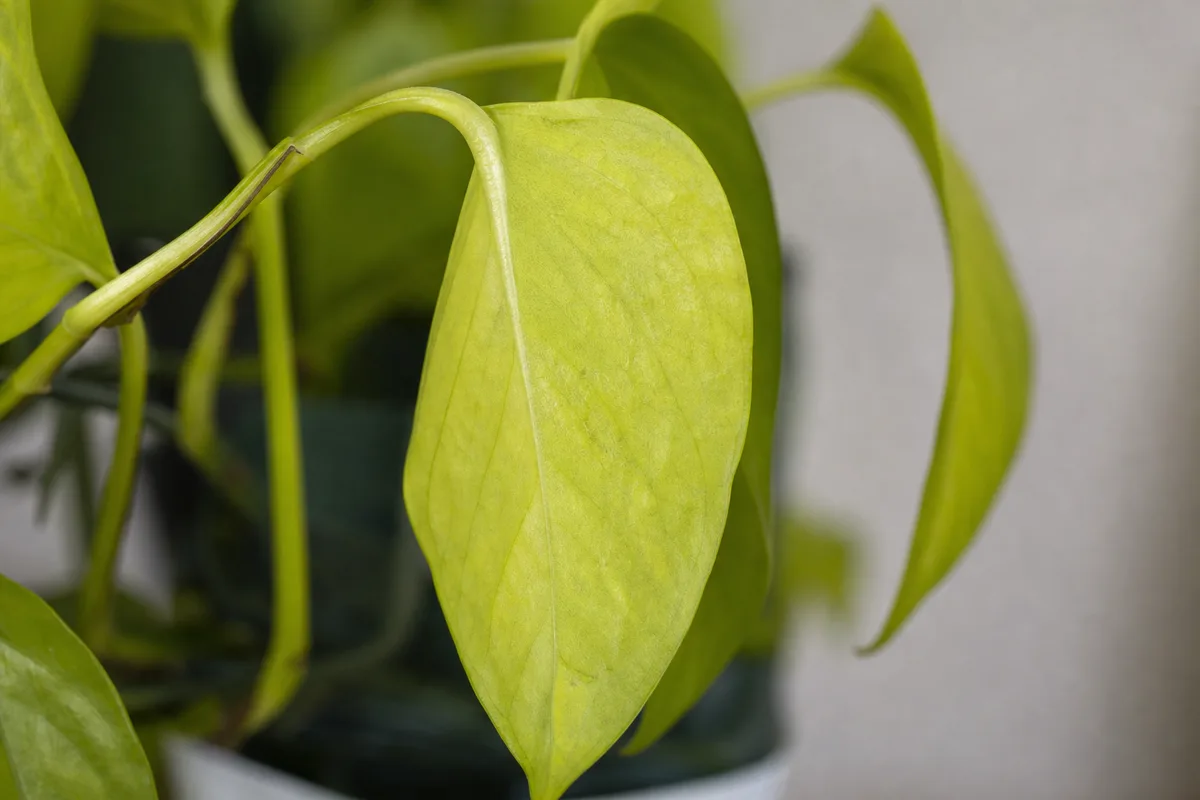
Drooping Leaves symptoms on Neon Pothos - compare with healthy tissue on the same plant.
Common patterns:
- Whole-plant droop - Every vine looks limp at once, often after the pot dried out or sat in wet mix too long.
- One-sided droop - The side nearest a heater, AC vent, or hot window wilts first while the rest still looks firm.
- Tip-heavy sag - The oldest leaves at the end of long vines droop most because gravity and transpiration pull hardest on the longest stems while upper vine tissue still looks firm.
- Soft vs crisp texture - Thirsty leaves feel thin and slightly papery; overwatered leaves feel soft and limp but not necessarily crispy yet.
Drooping alone does not tell you the cause. Color changes matter: yellow lower leaves with wet soil suggest root trouble; green limp leaves with dusty dry soil suggest thirst. A few bottom leaves yellowing slowly over months is often normal aging on pothos, not an emergency droop.
Photo callout: Compare a lightweight pot with limp chartreuse vines and dusty dry surface mix against a heavy glazed pot with limp lower leaves, yellowing tiers, and clinging wet mix at 1–2 inches depth. Pot weight and moisture depth matter more than the word “drooping” alone.
Why Neon Pothos gets drooping leaves
Neon Pothos is a vigorous trailing aroid that prefers bright, indirect light and evenly moist-but not constantly wet-soil. Drooping usually traces to one of these plant-specific triggers:
Underwatering and dry-down mismatch
In bright light, Neon Pothos uses water quickly. If you wait for a fixed calendar day instead of checking soil, the top 1–2 inches can go fully dry while roots still hold some moisture-or the entire root ball can desiccate during a hot week. Soil may pull away from the pot edges, and the lightweight pot is an obvious clue.
Pothos vines are known for drooping when they need water and perking up after a drink. That rapid response makes thirst the most common cause of sudden, dramatic sag on an otherwise green plant. Fear of overwatering after a past rot scare is a frequent reason growers wait too long-especially on fast-drying neon specimens in bright kitchens.
Overwatering and root damage
The same symptom-limp leaves-appears when roots sit in saturated mix. Oxygen drops, roots decay, and the plant cannot move water upward even though the soil feels wet. On Neon Pothos, lower leaves often yellow at the same time, and the mix may stay damp for a week or more after watering.
Heavy peat-rich mix without perlite, blocked drainage holes, and oversized decorative pots all keep the root zone wet longer than this species tolerates. Root rot can occur with overwatering on pothos-see our dedicated overwatering page when wet-soil droop is the pattern.
Hydrophobic dry pockets
If a pot dries completely and water runs down the sides without soaking the center, surface watering may not rehydrate roots. The plant droops despite your effort because the root ball stayed dry inside. Bottom-soaking for 30–45 minutes usually fixes this when stems are still firm and soil is bone dry throughout.
Environmental stress
Heat near a south window, dry winter air, or cold drafts from AC can increase water loss faster than roots replace it. Neon Pothos tolerates a wide temperature range indoors, but abrupt shifts after a move can cause temporary droop even when watering has not changed.
Recent repotting or root disturbance
Fine root hairs break during repotting. Temporary wilt for a few days is normal until roots re-establish-as long as the mix is lightly moist, not soggy, and stems stay firm at the base. Full repotting guidance lives on our repotting page.
Root-bound pots
When roots fill the container, the mix dries in a day or two. Chronic underwatering droop cycles appear unless you increase water checks or step up pot size in spring.
Low light and dull chartreuse stress
Unlike jade or golden pothos, Neon Pothos does not stay vibrant in dim corners-dull olive new growth is an early stress signal before full collapse. In low light the plant uses water slowly, so the same weekly schedule that works in a bright room leaves roots sitting wet while vines still look tired. That dim-corner chronic wet-soil droop pairs leggy stretch with limp chartreuse tissue; see not enough light when fade and stretch appear together.
How to confirm the cause
Work through these checks in order. The goal is to separate dry droop from wet droop before you act.
| Check | Dry-soil droop | Wet-soil droop |
|---|---|---|
| Pot weight | Light, easy to lift | Heavy, dense |
| Soil at 1–2 inches (3–5 cm) | Dry, dusty, may pull from walls | Cool, clinging, stays wet days |
| Leaf color | Limp chartreuse; may fade olive | Yellow lower leaves common |
| Leaf texture | Thin, papery, crisp edges possible | Soft, limp, not crispy |
| Smell | Neutral | Sour or musty from drainage hole |
| After one thorough soak | Perks within 6–24 hours | Stays limp 24+ hours |
| New growth at vine tips | Firm after rehydration | Stalled or soft on wet mix |
Inspection order:
- Pot weight - Lift the container. Light and dusty = dry. Heavy and cool = wet.
- Moisture at depth - Stick your finger 1–2 inches into the mix, or use a bamboo skewer. Dry throughout confirms thirst. Wet 3–5 cm down with limp leaves confirms impaired uptake.
- Leaf texture - Thin, slightly crispy edges suggest dehydration. Soft, limp blades with no crispness suggest oversaturation or root stress.
- Smell and drainage - Sour odor, mold on the surface, or water sitting in a closed saucer point to wet-root problems. Open drainage holes and confirm water exits freely.
- Recent history - Skipped watering during a heat wave? Overwatered on a schedule while the plant sat in dim light? Repotted last week? Match the timeline to the pattern.
- Stem base - Press stems where they enter the soil. Firm green tissue is reassuring. Soft, dark, or mushy tissue means escalate to root inspection.
If soil is dry and stems are firm, thirst is confirmed. If soil is wet and stays wet, unpot only when you are ready to trim decay and repot-do not keep adding water because leaves look wilted.
First fix for Neon Pothos
Determine wet versus dry, then make one targeted change.
- If the top 1–2 inches is dry and the pot feels light: Water thoroughly until excess runs from the drainage holes. For a completely desiccated root ball, bottom-soak the pot in a basin of room-temperature water for 30–45 minutes, then let it drain fully. Recheck in a few hours-vines should begin to stiffen by the next morning.
- If the mix is wet and has been wet: Stop watering immediately. Move the plant to bright indirect light with good airflow, empty any saucer water, and inspect roots within 24–48 hours if droop persists or lower leaves yellow.
Do not fertilize, mist heavily, or repot on the same day you first notice droop unless inspection shows active rot. One clear action beats stacking stress on an already struggling root system.
Step-by-step recovery
Path A - Thirst (dry soil, firm stems)
- Water until the entire root zone is evenly moist and excess drains out.
- If water ran straight through dry, cracked soil, bottom-soak instead of repeated top splashes.
- Place the plant back in bright indirect light-not harsh midday sun on stressed leaves.
- Wait 24 hours before judging. Most thirst droop on pothos resolves within that window.
- Resume checking the top 1–2 inches before the next drink per our watering guide; do not return to a blind calendar schedule.
Path B - Wet roots (soggy soil, soft leaves, or sour smell)
- Gently unpot and rinse roots with room-temperature water.
- Trim brown, mushy, or translucent roots back to firm white tissue with clean scissors.
- Discard saturated mix; scrub or replace the pot.
- Repot into fresh well-drained mix-standard potting soil with 20–25% perlite matches what Neon Pothos needs indoors.
- Water once lightly to settle the mix, then let the top few centimeters dry before watering again.
- Remove fully yellow or collapsed leaves that will not recover; they drain energy from regrowing roots.
- Hold fertilizer until new firm leaves appear at the vine tips-usually two to three weeks after the root zone stabilizes.
Full escalation steps: root rot on Neon Pothos.
Path C - Temporary shock (recent repot or move)
- Keep soil lightly and evenly moist-not wet-for the first week.
- Avoid direct sun and cold drafts while roots settle.
- Expect droop to fade within three to seven days if stems stay firm. If wilt worsens with wet soil, switch to Path B.
Recovery timeline
Simple underwatering: Leaves often perk within 6–24 hours after a thorough soak. Full turgor across long vines may take up to 48 hours.
Root stress after overwatering: Initial stabilization takes one to two weeks once wet cycles stop and damaged roots are trimmed. New firm growth at vine tips is the reliable success marker-not old leaves re-stiffening.
Repotting shock: Mild droop usually clears within a week in stable light and temperature.
Worsening signs: Continued collapse despite corrected watering, spreading stem softness, or widespread yellowing over three to five days means the root zone is still failing-re-inspect rather than wait.
Worked recovery examples
Summer drought-collapse: A bright kitchen Neon Pothos in a 6-inch hanging basket went fully limp after a sunny vacation week. The pot felt feather-light; soil pulled slightly from the walls. One 40-minute bottom-soak until the surface darkened, full drain, and placement back in bright indirect light produced noticeably firmer chartreuse vines within six hours-all without repotting or fertilizer.
Winter overwatering in a dim corner: A neon pothos in an oversized ceramic cachepot stayed wet for ten days after one watering in a north-facing room. Lower chartreuse leaves yellowed while the whole trailing mass looked thirsty. Stopping water, moving to a brighter indirect shelf, and waiting five days for the top 1–2 inches to dry firmed petiole bases before a single measured soak per the watering guide. New lime leaves emerged at vine tips within three weeks; old lower foliage stayed slightly angled but did not yellow further.
Lookalike symptoms
- Normal lower-leaf yellowing - One or two old leaves fade at the base over months while the rest of the vine stays firm. Trim and adjust watering checks; no emergency soak or root surgery needed.
- Leggy growth from low light - Long bare stems with small new leaves, but not necessarily limp tissue. Fix light first per not enough light; droop from thirst can overlap, so still check soil moisture.
- Heat wilt midday - Tips droop in afternoon sun but recover overnight. Move back from the glass or filter harsh sun rather than doubling water.
- Pest stress - Spider mites or mealybugs on undersides can weaken vines. Look for stippling, webbing, or white cottony clusters before assuming a water problem only.
Mistakes to avoid
Do not water automatically because leaves look limp-wet-soil droop gets worse with more water. Do not bottom-soak a rotting root ball without inspecting first; saturated decay spreads faster in standing water.
Avoid misting as a fix-surface moisture does not restore root-zone balance. Skip fertilizer on a drooping plant unless you have confirmed active growth and stable watering; salts stress damaged roots.
Do not repot into a much larger container when the only issue was one missed watering-extra wet soil volume increases rot risk. Do not move the plant repeatedly between rooms while you troubleshoot; stable light and temperature make recovery easier to read.
Neon Pothos care cross-check
Drooping often exposes a mismatch between how you water and how this cultivar actually grows:
- Light: Medium to bright indirect light keeps Neon Pothos compact and using water predictably. Dim corners slow growth but do not slow evaporation from an oversized wet pot-dull olive new growth means move toward brighter ambient light.
- Water rhythm: Allow the top 1–2 inches to dry between drinks in most homes per our watering guide. Fast-drying root-bound pots need more frequent checks, not bigger single doses.
- Mix and pot: Well-drained potting mix with perlite and a container with open drainage holes. Empty saucers after every watering.
- Season: Water less often in winter when growth slows; the same summer volume in a cool dim room keeps soil wet too long.
How to prevent drooping leaves next time
Learn your pot’s dry-down rate instead of a fixed schedule. In summer, many Neon Pothos pots need water every 7–10 days; in winter, every 10–14 days may suffice-but only if the top 1–2 inches is actually dry when you check.
Use a consistent finger test or skewer at the same depth before every watering. When trailing vines start to look slightly soft but before they fully collapse, that is often the best moment to water-Neon Pothos tells you early if you look at the vines, not only the soil surface.
Keep pots appropriately sized, refresh compacted mix every one to two years, and avoid letting plants sit in runoff water. After repotting or moving, expect a brief adjustment period and keep care boring until new growth looks firm.
When to worry
Escalate immediately if stems soften at the soil line, the mix smells sour, or the plant collapses over 48 hours despite wet soil. Those patterns suggest advanced root decay, not a simple missed watering-shift to root rot rather than repeated top watering.
Slow droop on one long vine after a dry week is low urgency-soak and observe. Rapid whole-plant collapse with blackening stem bases is high urgency-inspect roots the same day.
If more than half the root mass is mushy on inspection, take healthy stem cuttings with at least one node as backup before the last tissue fails. Pothos vines easily root in water when stems are still firm. Keep cuttings and trimmings away from pets-Epipremnum aureum is toxic to cats and dogs per the ASPCA, with insoluble calcium oxalate crystals that irritate the mouth when chewed.
Related Neon Pothos guides
- Overview - full indoor care hub
- Watering - top 1–2 inch dry-down protocol
- Wilting - acute turgor crash and heat wilt
- Overwatering - limp leaves on wet soil
- Underwatering - dry-side droop and bottom-soak recovery
- Root rot - escalation when stems soften
- Yellow leaves - lower-leaf yellowing with wet soil
- Spider mites - stippling and webbing on weak vines
- Not enough light - dull chartreuse and dim-corner wet soil
Conclusion
Drooping leaves on Neon Pothos are a water-delivery problem, not a mystery leaf disease. Confirm dry versus wet at the root zone, then either rehydrate thoroughly or stop watering and inspect roots. Thirsty Neon Pothos recovers fast when caught early; wet-root droop needs drainage fixes and patience judged by new firm growth at the vine tips-not by saving every old limp leaf. When collapse is sudden and plant-wide, start with the wilting guide; when yellow lower leaves dominate on wet mix, read overwatering next.