Underwatering on Neon Pothos: Causes, Checks & Fixes
Quick answer
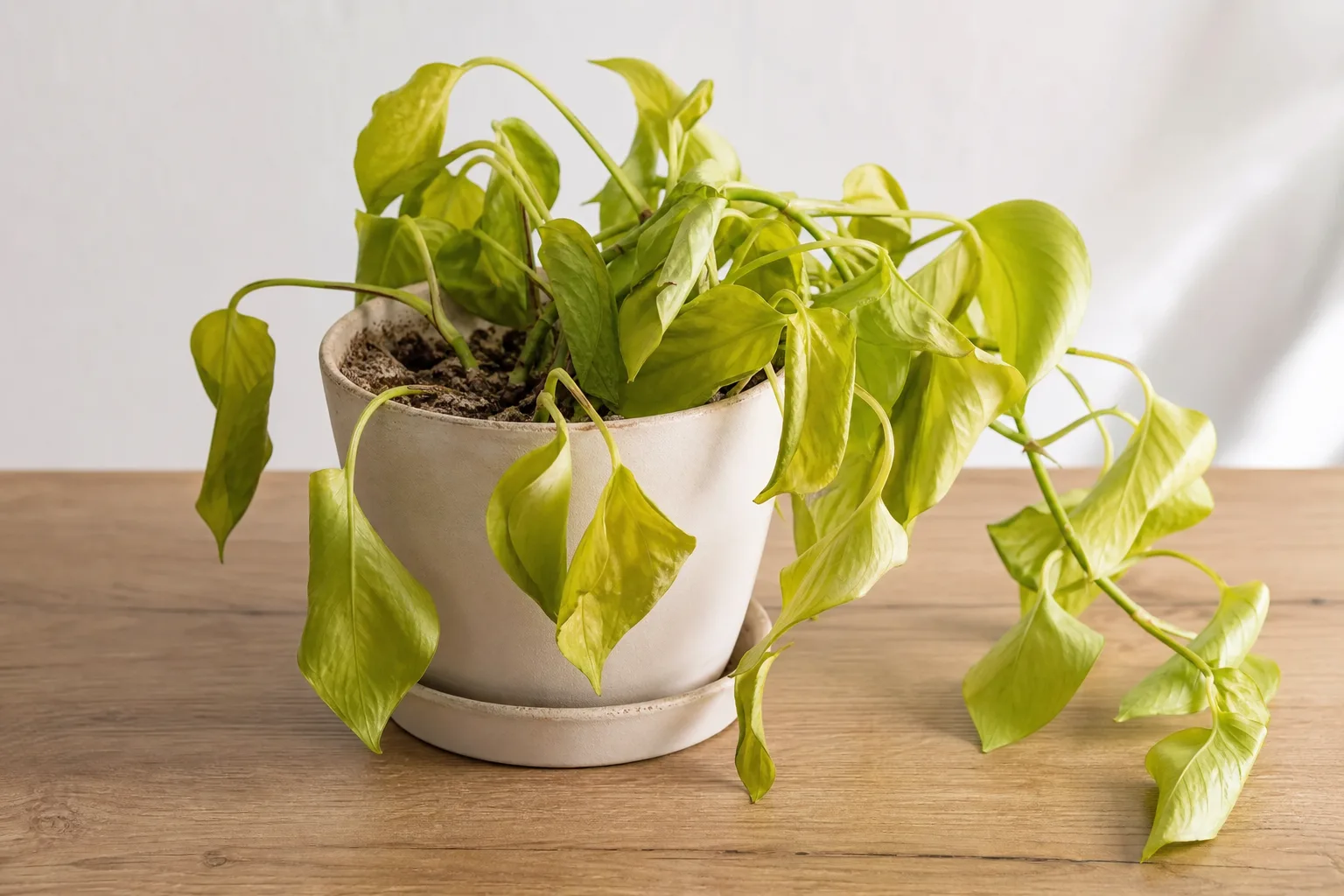
Underwatered Neon Pothos wilts with a light pot and dry mix-but unlike overwatering, chartreuse leaves usually perk within hours after a thorough soak. First step: check soil moisture 1–2 inches deep, then bottom- or top-water until the root ball is fully rewetted.
Underwatering on Neon Pothos: Causes, Checks & Fixes
This guide covers underwatering on Neon Pothos. See also the general Underwatering guide, watering, and light pages for this plant.
Underwatering on Neon Pothos: Causes, Checks & Fixes
Quick answer
Neon Pothos (Epipremnum aureum ‘Neon’) is a fast-growing chartreuse cultivar that dries out faster in bright light than jade or golden pothos in the same room. Underwatering shows up as limp lime-green vines, a very light pot, and dry soil 1–2 inches below the surface-not the yellow, mushy pattern that usually signals overwatering on pothos.
First step: check soil moisture at 1–2 inches depth before you pour anything. If the mix is dry throughout and leaves feel thin rather than yellow and soft on damp soil, give one slow, thorough watering until water runs from the drainage holes-or bottom-water 20–30 minutes if water races straight through dry, shrunken soil. Chartreuse leaves often perk within hours; if they stay wilted on moist soil, the problem is not simple thirst.
| Check | Dry soil (underwatering likely) | Wet soil (overwatering / rot likely) |
|---|---|---|
| Pot weight | Light, airy | Heavy, dense |
| Soil at 1–2 inches | Dry, crumbly | Cool, clinging |
| Leaf color on Neon | Limp chartreuse; may fade olive | Yellow lower leaves common |
| Leaf texture | Thin, papery, crisp edges | Soft, sometimes mushy stems |
| After one thorough soak | Perks within hours | Stays wilted 24+ hours |
| Smell | Neutral, dusty | Sour or musty |
When to use this page vs. the watering guide
This page is for diagnosing drought stress-limp chartreuse vines, dry lightweight pots, and soil pull-away from the pot wall. If you want a full watering rhythm, seasonal schedules, and the top-inch dry rule explained in depth, start with the Neon Pothos watering guide. Use this troubleshooting page when wilt has already happened and you need to confirm thirst versus rot before acting.
What underwatering looks like on Neon Pothos
On a healthy Neon Pothos, underwatering rarely starts with yellow leaves. On this cultivar, yellowing with wet soil more often means overwatering, while drought tends to look like this:
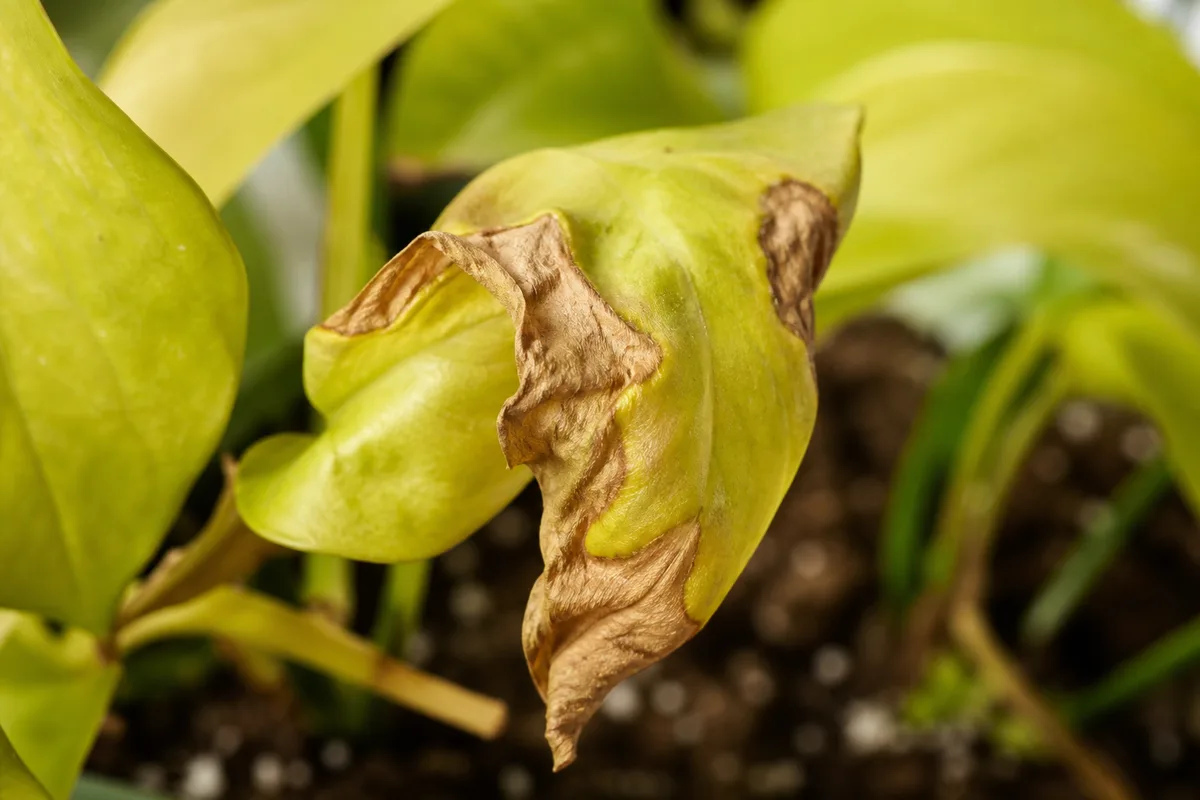
Underwatering symptoms on Neon Pothos - compare with healthy tissue on the same plant.
- Soft, limp chartreuse vines that hang straight down instead of holding their usual slight arch
- Leaves that feel thin and papery, sometimes with crisp brown edges on the oldest foliage
- Faded olive-green new growth when drought combines with insufficient light-the chartreuse pigment dulls before full collapse
- Dry potting mix that is light in color, dusty on top, or pulled away from the pot wall
- A pot that feels feather-light when lifted-a light pot signals dry soil
The signature pothos clue: wilting leaves that perk back up after watering. That rebound is one of the clearest signs you were dealing with drought, not rot.
Long trailing vines complicate the picture. A mature Neon Pothos in a hanging basket may look fine at the top while lower leaves wilt first-the longest stems lose water fastest. In a bright east or curtained south window, Neon often needs water twice as often as a jade pothos on the same shelf because brighter light drives faster growth and transpiration. Unlike jade pothos, Neon does not stay vibrant in dim corners; chronic drought in low light produces small olive leaves on long internodes-a pattern that overlaps with not enough light but still starts with a dry pot.
Why Neon Pothos gets underwatered
Pothos is better kept slightly too dry than too wet, which makes underwatering an easy mistake to dismiss until chartreuse vines collapse. Several Neon-specific factors push pots dry faster than a calendar schedule suggests:
Bright light demand. Neon Pothos needs bright indirect light to hold its chartreuse color. That same brightness accelerates dry-down-often every 7–10 days in summer versus 10–14 days or longer in winter for the same pot. A jade pothos in a dim hallway and a Neon Pothos in a bright kitchen are not on the same watering clock.
Top 1–2 inch dry rule. This species is normally watered when the top 1–2 inches of mix feel dry-let the well-drained potting medium dry between waterings. Waiting until every leaf droops means the root ball has already been dry too long-especially in a small or root-bound pot.
Root-bound containers. Neon grows quickly with slender chartreuse leaves. When roots circle the bottom and displace soil, water runs through in seconds without soaking the mass. Growers keep watering, see instant drainage, assume the plant is wet, and the vines wilt anyway-a pattern that mimics chronic underwatering even when you water often.
Hydrophobic, aged peat mix. Peat-heavy potting soil that stays dry for weeks can repel water on the surface while the interior root ball stays bone dry. Neon Pothos in old mix may get a splash on top every few days while the center never rehydrates.
Environmental pull. Heat vents, sunny south windows, and low winter humidity increase transpiration. A Neon that thrived on a 14-day rhythm in October may need water weekly by June without any change in your habits-especially in a hanging basket exposed to air on all sides.
Fear of overwatering. Because yellow leaves on pothos usually mean too much water, cautious growers sometimes skip drinks until vines wilt-swinging past the safe dry side into real drought after a root-rot scare.
How to confirm the cause
Use this order so you do not treat rot with more water or drought with a dry wait:
- Pot weight - Lift the container. Light and airy means dry; heavy means moisture remains.
- Finger or skewer test - Push into the mix 1–2 inches deep (the usual check depth for Neon Pothos). Dry at that depth with limp chartreuse leaves supports underwatering.
- The wet-soil paradox - Dry soil + drooping = underwatering. Wet soil + drooping = overwatering or root rot. Wilted leaves may indicate soil that is too dry or too wet. This single pairing prevents most pothos watering mistakes.
- Drainage check - Pour a small amount of water. If it exits the bottom instantly and the top stays pale and dry, suspect hydrophobic mix or root binding-not adequate watering.
- Leaf color and texture - Soft limp chartreuse leaves on dry soil fit drought. Yellow lower leaves on damp soil with firm stems often fit overwatering on pothos.
- Chartreuse fade check - New leaves emerging olive-green on a light, dry pot suggest drought stress. Olive new growth on a heavy, wet pot in dim light points to low light instead.
- Recent history - Travel, moving to a brighter window, or switching to a smaller decorative cache pot without checking dryness all raise underwatering risk.
- Root spot-check (if still unsure) - Slide the plant out. Healthy pothos roots are firm and white or tan. Mushy brown roots on wet soil mean root rot; a dense dry root ball in a light pot means binding or drought.
If soil is moist 1–2 inches down and leaves remain wilted after 24 hours, stop adding water and inspect roots for rot or binding.
Pet safety note: All Epipremnum aureum cultivars, including Neon, are toxic to cats and dogs. Keep trailing vines out of reach when you lift a collapsed plant for inspection.
First fix for Neon Pothos
Rewet the entire root ball with one slow, thorough watering session.
Take the pot to a sink or tub. Water evenly across the surface until water runs freely from the drainage holes-then wait two minutes and water once more so dry pockets absorb moisture. If water channels through immediately without darkening the mix, switch to bottom watering: set the pot in 3–5 cm of room-temperature water for 20–30 minutes until the top inch feels moist, then lift it out and let it drain completely.
Do not fertilize, repot, or prune heavily on day one. One proper soak solves most mild Neon Pothos drought. After draining, return the plant to its usual bright indirect spot and recheck leaf turgor in a few hours.
Step-by-step recovery
If a single soak does not fully rehydrate the plant, continue in this order:
- Repeat bottom watering once if the mix still feels dry at depth after top watering-especially when soil has shrunk from the pot edge.
- Break surface tension on hydrophobic mix - After bottom watering, poke a few shallow holes in the dry crust with a chopstick so the next drink penetrates. If water still will not absorb, plan to refresh the mix within the next week; do not leave the root ball permanently dry inside wet-looking surface crumbs.
- Trim only fully crisp leaves - Brown dead edges will not recover. Removing them reduces stress but is optional cosmetic work, not the primary fix.
- Repot if root-bound - If roots fill the pot and water never lingers, move to a container one size up with fresh well-draining potting mix and perlite. Water once after repotting, then resume the top-1–2-inch-dry rhythm.
- Adjust placement temporarily - Move severely wilted plants out of hot direct sun until turgor returns; bright indirect light reduces further water loss while roots catch up.
- Hold fertilizer - Wait until leaves firm up and new chartreuse growth appears before feeding. Salts on drought-stressed roots can burn tender tissue.
Recovery timeline
Mild drought: Chartreuse leaves often regain turgor within 2–4 hours of a thorough watering and look normal by the next morning.
Moderate drought (dry several days, some crisp edges): Vines stabilize in 1–3 days. Old damaged margins stay brown; watch for firm leaf blades and upright petioles.
Severe or repeated drought: Fine root tips may die back. New chartreuse leaves at vine nodes may take 1–3 weeks to resume. Full lush trailing appearance rebuilds over the growing season as you replace damaged leaves through normal growth.
Signs recovery is working: Leaves feel thick again, stems lift without flopping, and new unfurling leaves at tips are glossy chartreuse and turgid.
Signs the problem is worsening: Continued collapse after properly moist soil, spreading yellow leaves on damp mix, sour smell, or soft stems-these point to rot or binding, not ongoing underwatering.
Lookalike symptoms
- Overwatering / root rot - Wilt on wet soil, yellow lower leaves, mushy stems, fungus gnats. Root rot and blackening leaf margins occur with overwatering on pothos. Opposite fix: dry down and inspect roots. See overwatering and root rot.
- Low-light olive reversion - Dull olive new growth with firm, turgid leaves and evenly moist soil; often a dim north room. Move brighter per the light guide-not more drenching.
- Direct sun scorch - Bleached or brown patches on leaves facing the window; soil may be either wet or dry. Move out of direct sun.
- Root-bound thirst - Wilt returns every two to three days despite frequent watering and instant drainage. Repot, do not simply water more often.
- Drooping from other stress - Recent repotting, cold drafts, or pest pressure can mimic wilt. Pair droop with a moisture check; see drooping leaves and wilting when the pattern is unclear.
What not to do
Do not water a little every day after one dry spell-that shallow sips pattern never rewets a dry root ball and can invite fungus gnats on surface moisture.
Avoid drenching daily for a week after drought-that swings to overwatering and yellow leaves on pothos.
Do not assume all drooping is underwatering without checking soil depth-the most common pothos killer is still too much water.
Skip fertilizer on a collapsed plant until it rehydrates.
Do not mist instead of watering soil-roots need moisture in the mix, not a brief leaf surface film.
Avoid leaving the pot in a full saucer after recovery watering; empty standing water once drainage finishes.
Use room-temperature water on smooth aroid foliage-cold water can shock tropical roots without benefiting Neon Pothos leaves.
How to prevent underwatering next time
Build a rhythm around how the pot dries in your home, not a generic weekly alarm:
- Check the top 1–2 inches of mix before every major watering-roughly 7–10 days in bright light, 10–14 days in cooler winter rooms, faster in summer hanging baskets and slower in dim corners.
- Weigh the pot when freshly watered versus dry; the difference becomes obvious within a few weeks.
- Refresh peat-heavy mix that will not absorb water instead of fighting it with daily splashes.
- Repot when roots circle the bottom and water races through-typically every one to two years for fast-growing Neon Pothos.
- Keep trailing plants in pots with drainage holes; cache pots should be emptied after watering.
- Place Neon where light is bright enough for chartreuse color-that brighter spot will dry faster than a jade pothos nearby, so check it more often, not less.
When to worry
Treat same-day if the entire plant is flat, soil has been bone dry for two weeks or more in active growth, or vines feel brittle rather than soft. Pothos rarely dies from one missed week, but repeated drought in summer can strip a hanging basket faster than you expect.
Escalate to root inspection if leaves stay wilted 24 hours after the mix is evenly moist-persistent wilt on wet soil is not underwatering.
If more than half the vines are crisp and brown with a dry, dense root ball that smells stale, take healthy stem cuttings from firm upper growth as backup while you rehydrate the parent.
Conclusion
Underwatering on Neon Pothos is a dry-soil problem with a fast fix when you catch it early: confirm dryness at depth, rewet the whole root ball once, and wait for chartreuse leaves to firm up. The cultivar forgives drought more willingly than soggy roots, but bright-light placement, long bare vines, hydrophobic mix, and root-bound pots can keep it thirsty no matter how often you splash the surface. Check weight, water when the top 1–2 inches dry, and let new vivid chartreuse growth-not old crisp edges-tell you recovery worked. If wilt persists on wet soil, switch to the overwatering guide instead of adding more water.
Related Neon Pothos guides
- Overview - full indoor care hub
- Watering - top-inch dry rhythm and seasonal schedules
- Light - chartreuse color and bright-window placement
- Overwatering - wilt-on-wet-soil lookalike
- Root rot - when drought treatment fails on damp mix
- Yellow leaves - wet-soil yellowing vs dry crisp edges
- Drooping leaves - mixed-cause wilt patterns
- Wilting - urgency and escalation paths
- Not enough light - olive reversion lookalike