Okra Fertilizer Guide for Pots and Garden Beds
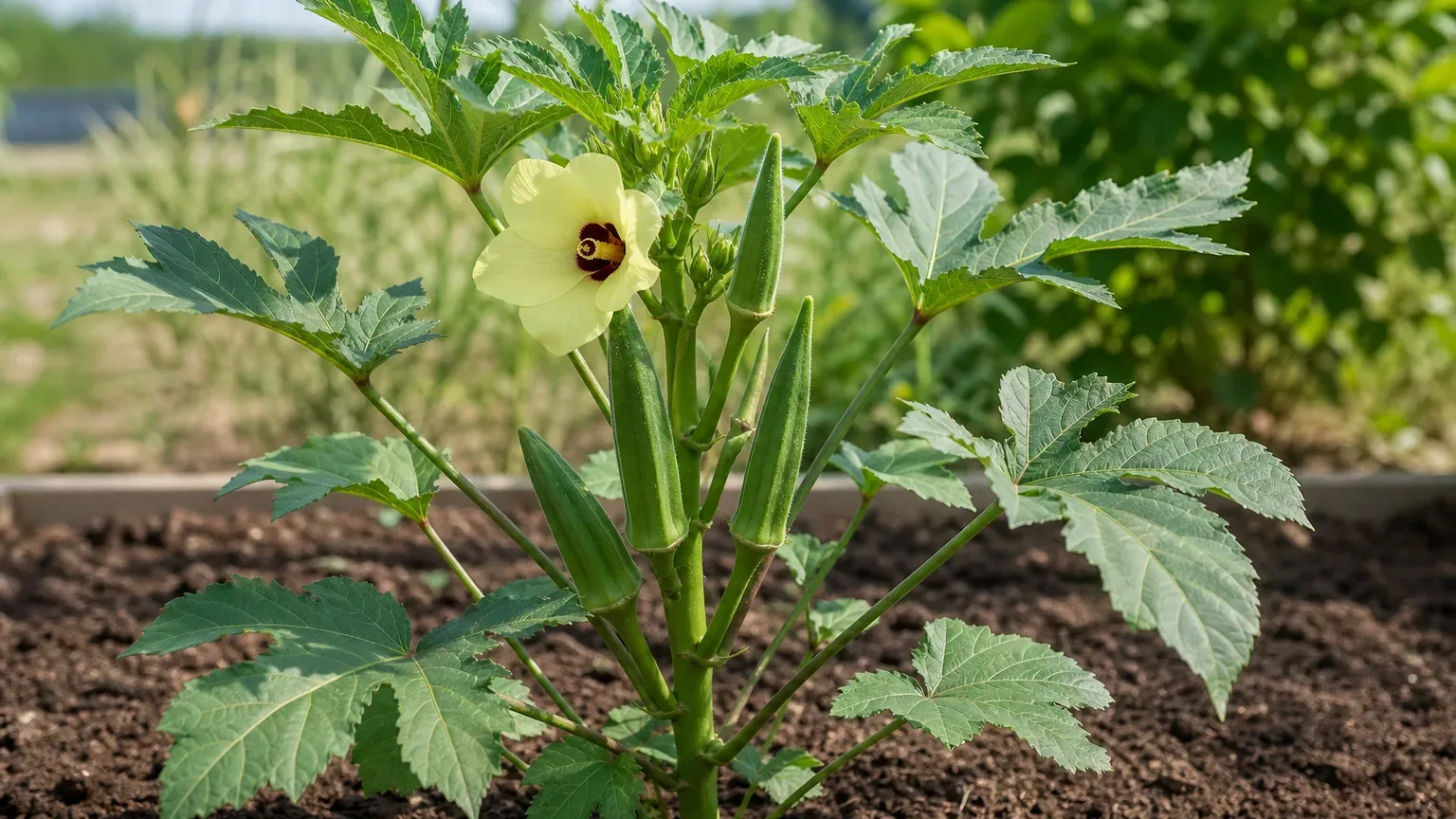
Okra Fertilizer Guide for Pots and Garden Beds
Okra Fertilizer Guide for Pots and Garden Beds
Okra (Abelmoschus esculentus), or bhindi, grows fast once heat and direct sun arrive, but fast growth does not justify constant feeding. The useful goal is a sturdy plant that moves from establishment to flowers and repeated tender pods—not the largest possible canopy.
This guide does not give a universal spoonful-per-pot dose. Fertilizer products have different analyses and release patterns, garden soils hold different nutrient reserves, and containers may already contain starter or controlled-release fertilizer. Use the evidence available for your root zone, then follow the edible-crop label rather than converting farm rates into guesses.
The quick answer: feed okra by evidence and stage
Test a garden bed before planting when that service is available. Clemson Extension calls a soil test the most effective way to determine okra’s needs and warns that excess nitrogen early in the season can produce leafy growth instead of pods. Oklahoma State likewise bases nitrogen, phosphorus and potassium decisions on soil results and cautions that high nitrogen can delay flowering and fruit set.
Think in stages rather than fixed weekly feeds. Prepare the root zone, let seedlings establish, reassess during active vegetative growth, then protect the transition to flowers and pods from an unnecessary nitrogen surge. A long-harvesting plant may need measured replenishment later, especially in a container or after heavy rain, but only when the plant and root zone can use it.
Choose fertilizer from the root zone, not the front label
A complete fertilizer labelled for edible vegetables can be suitable when the soil or potting mix needs it. Mature compost also contributes organic matter and some nutrients, but neither “organic” nor a balanced NPK printed on a bag proves that a particular okra plant needs another application.
Check what has already been added. Fresh commercial potting mix may contain a starter charge or controlled-release granules, while a compost-enriched bed may already have substantial fertility. Stacking a liquid feed, granular fertilizer, manure and homemade tonic makes the total nutrient supply impossible to judge.
Test garden soil before adding nutrients
A soil test can show pH and whether phosphorus, potassium or other measured nutrients are low, adequate or excessive. Oklahoma State’s okra guidance changes phosphorus and potassium additions according to test levels and subtracts soil nitrate from the crop’s initial nitrogen requirement. That is strong evidence against using one “best NPK” in every bed.
Use a representative sample and follow the laboratory’s sampling directions. The USDA advises growers to test soil and amendments so nutrient source and quantity can be chosen from evidence. If testing is unavailable, use the conservative vegetable-bed rate on a locally registered product label; do not translate an acre or row recommendation into a pot dose.
Read the analysis and edible-crop directions
The NPK numbers state percentages of nitrogen, phosphate and potash. They do not mean that a high middle number automatically creates flowers or that a high first number is always useful. Choose a product labelled for edible vegetables and follow its directions for the specific growing system, application method and interval.
The USDA nutrient-management framework emphasizes the right source, rate, time and place. At home, that means measuring rather than estimating, keeping dry fertilizer away from stems and leaves, and applying it to the active root zone. Do not use lawn “weed-and-feed” products around an edible crop.
A stage-aware okra feeding plan
Extension schedules differ in exact timing and amount because soils, climates and production systems differ. They agree on the useful principle: okra nutrition changes across establishment, vegetative growth and harvest. The stage should trigger a reassessment, not an automatic dose.
Before any application, confirm that the plant is actively growing, receives enough direct sun, and has a moist but aerated root zone. Fertilizer cannot restart cold-stalled seedlings, repair compacted soil or make saturated roots absorb nutrients.
Seedlings and newly established plants
A seedling in nutrient-free propagation mix may need a gentle complete feed after true leaves expand, using a product labelled for seedlings. A seedling in charged potting mix may need none. Do not push a compact, healthy green seedling simply because it has reached a particular age.
After transplanting, wait for normal posture and new leaf expansion if the bed or mix was already prepared. Concentrated granules touching young roots can injure them, while immediate extra nitrogen can create soft top growth before the root system has occupied its new soil.
Established vegetative growth
Once okra is rooted and adding leaves steadily, compare growth with what the root zone already contains. The University of Georgia’s okra schedule places measured side-dressing after plants are established and repeats it later, while still warning not to overuse nitrogen because vegetative growth can come at the expense of yield.
Treat that timing as a checkpoint, not a command to feed every plant. Dark-green, rapidly enlarging okra in compost-rich soil may need no extra nitrogen. A pale plant in cold, wet or compacted soil needs its root problem diagnosed before fertilizer is added.
Flowering and first pod set
When buds appear, stop using leaf size as the main success measure. Oklahoma State reports that excessive nitrogen can cause excess growth and delayed flowering and fruit set. If the plant is tall, dark green and leafy but slow to flower, pause nitrogen-led feeding and check the Okra light guide before buying a bloom booster.
Flower and young-pod performance also depends on steady moisture and healthy roots. Use the Okra watering guide when flowers or tiny pods drop, because drought, saturation and heat stress can resemble a nutrition problem. Do not try to correct one unconfirmed nutrient with a concentrated single-element product.
First harvest and continued picking
Okra keeps making flowers and pods while conditions remain warm, so a productive plant may need later replenishment. Texas A&M places a later application after the first harvest, while Clemson and Oklahoma State use other staged side-dress or top-dress checkpoints. The variation shows why local guidance and the product label matter more than a universal online calendar.
Reassess after early pickings: Is new growth still healthy? Is the plant continuing to flower? Has heavy rain leached a free-draining bed, or does the potting-mix label say its initial charge has ended? Apply only the measured, warranted feed, then keep harvesting tender pods regularly.
Feeding okra in garden beds
Prepare a bed before sowing or transplanting instead of trying to fix infertile soil with frequent surface feeding. Incorporate mature compost in moderation, correct only the nutrients indicated by a soil result, and use the Okra soil guide to keep drainage and pH suitable for root uptake.
For a later side-dress, place fertilizer beside the root zone rather than against the stem, keep granules off foliage, and water according to the label. Georgia Extension prioritizes a pre-plant soil test and notes that additional feeding after heavy rain may sometimes be needed. That is a conditional response to leaching, not permission to feed after every shower.
Feeding okra in containers
A container holds a finite nutrient reserve, and repeated watering can carry soluble nutrients through the drainage holes. First check the potting-mix bag for added fertilizer and its expected feeding period. When that charge has run down and the plant is still growing and cropping, use one complete edible-vegetable fertilizer at the labelled container rate.
Do not combine controlled-release granules with routine liquid feeding unless both labels explicitly account for the combination. Container media can also accumulate fertilizer salts: the University of Connecticut notes that excessive soluble salts are commonly associated with overfertilization, poor drainage or inadequate leaching and can injure roots, scorch leaf margins or cause wilting.
Apply feed evenly to a moist root ball and allow drainage to leave the pot; never leave okra standing in fertilizer runoff. If a vigorous cultivar is cramped, dries severely every day or topples in wind, follow the Okra repotting guide rather than treating restricted root volume with stronger fertilizer.
Adjust feeding for heat, rain and monsoon conditions
Hot weather increases water demand, but it does not automatically shorten the fertilizer interval. Keep moisture steady enough for active roots, follow the product label, and separate plain watering from feeding when the label requires it. Feeding a wilted, bone-dry pot exposes stressed roots to a concentrated solution.
During sustained monsoon rain, pause feeding if soil is saturated. Restore drainage and wait for renewed growth before reassessing. In a genuinely free-draining bed, heavy rain can leach mobile nitrogen; Oklahoma State explains that smaller applications through drip can reduce overapplication and leaching risk, but home fertigation should still use equipment and products explicitly labelled for that method.
Excess nitrogen: big leaves can mean fewer pods
The clearest fertilizer-specific warning pattern is a lush, dark canopy with vigorous stem growth but delayed flowering or weak pod set. Clemson describes a sensitive balance between vegetative growth and reproduction in okra, and advises avoiding additional nitrogen on vigorous plants until fruiting begins.
Stop nitrogen-rich feeds when that pattern appears. Do not counter it with an unmeasured phosphorus or potassium dose, and do not strip healthy leaves in an attempt to “redirect energy.” Give the plant full sun, stable moisture and time to use the nitrogen already present; use the Okra pruning guide only for plant-specific structural decisions.
Diagnose deficiency and fertilizer burn before feeding
Pale older leaves and weak growth can fit nitrogen shortage, but waterlogging, root damage, low light, pests and an exhausted or unsuitable mix can look similar. Interveinal yellowing may involve another nutrient or a pH-related availability problem. Check recent weather, moisture, drainage, light, root space and previous products before choosing a correction.
Fertilizer injury is more likely when edge scorch, sudden wilt or a surface crust follows a recent application. Remove visible granules, stop feeding and, if the pot drains freely, water thoroughly with plain water and let all runoff escape. Do not flush a saturated pot; correct drainage first, then wait for healthy new growth before considering another labelled application.
When to use this page vs other Okra guides
Use this page to decide whether, when and how to feed. Start with the Okra overview for the whole warm-season crop cycle, use the soil guide for pH, organic matter and drainage, and consult the watering guide when wilt or flower drop makes diagnosis uncertain.
Fertilizer cannot compensate for too little direct sun, cold soil, a waterlogged root zone or an undersized container. Those constraints belong in the light, soil, watering or repotting guide even when the first visible symptom is slow growth.
Related Okra guides
- Okra light guide — confirm the direct sun needed to use nutrients and flower well.
- Okra watering guide — coordinate feeding with a moist, aerated root zone.
- Okra soil guide — set drainage, organic matter and pH before adding fertilizer.
- Okra repotting guide — correct limited root volume in container-grown bhindi.
- Okra propagation guide — establish seedlings without overfeeding young roots.
- Okra pruning guide — manage structure without using pruning as a nutrient correction.
Conclusion
A sound okra fertilizer plan starts with evidence, not a bottle schedule. Test a garden bed where possible, account for nutrients already present in compost or potting mix, and use a product labelled for edible vegetables at its measured bed or container rate.
Feed by stage: establish roots first, support active growth without forcing leaves, protect flowering and pod set from excess nitrogen, then reassess during repeated harvest. When a plant stalls, check sun, warmth, water, drainage and root space before adding more. Fertilizer supports a functioning okra plant; it cannot replace the conditions that let that plant use nutrients.