Okra Propagation Guide: Sow, Transplant, Save Seed
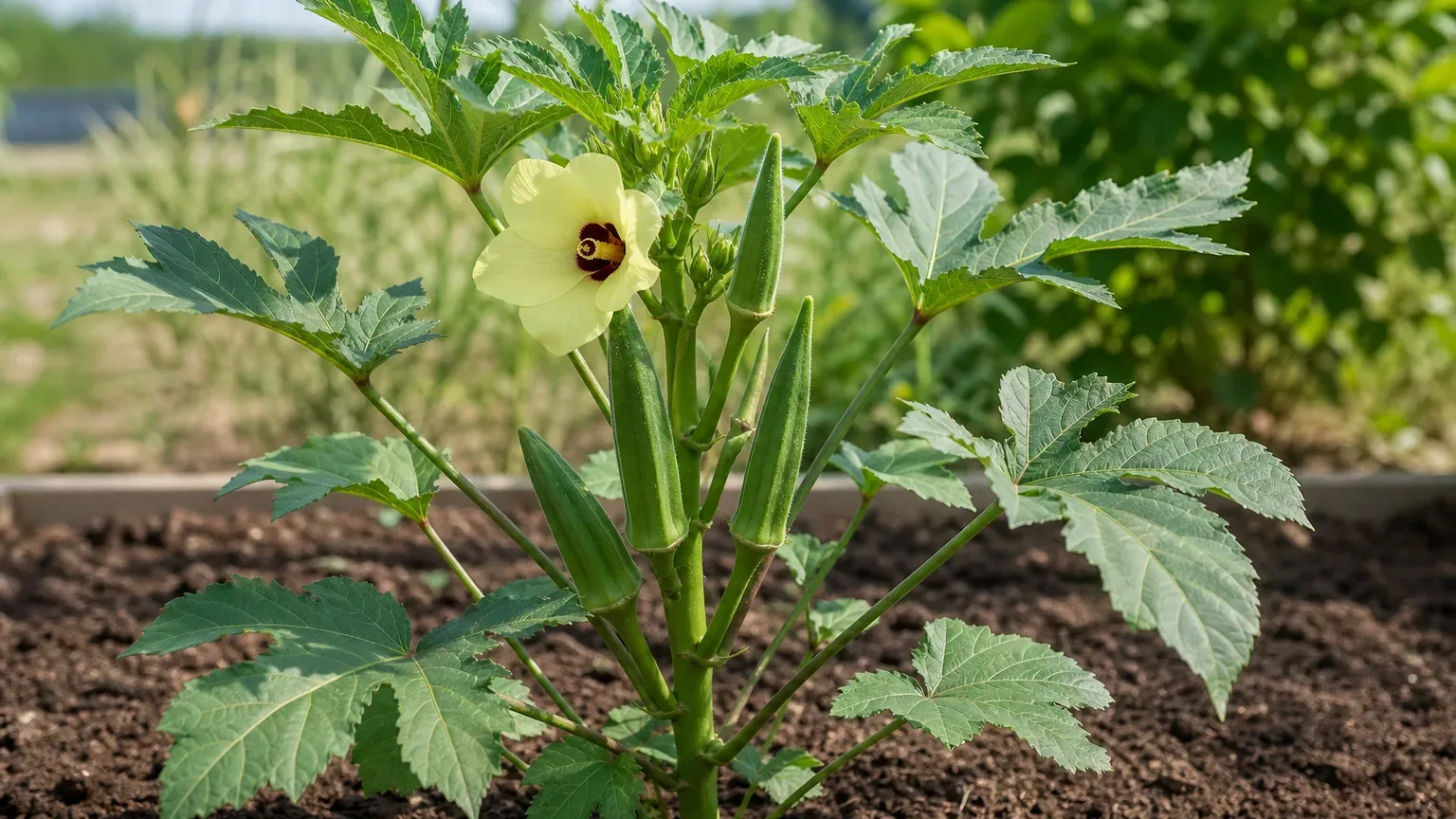
Okra Propagation Guide: Sow, Transplant, Save Seed
Okra Propagation Guide: Sow, Transplant, Save Seed
Okra is propagated most reliably from seed, not from stem cuttings. The plant is a fast-growing warm-season annual, so a rooted cutting offers little advantage over a seedling and does not match the crop’s normal life cycle. NC State Extension identifies seed as the recommended propagation strategy for Abelmoschus esculentus.
The difficult part is not persuading okra to grow in heat. It is avoiding a premature sowing into cool, wet soil, then mistaking slow emergence or seedling disease for poor seed. This guide takes you from sowing bhindi seed through establishment and explains how to leave selected pods for next season’s seed.
Best propagation method for Abelmoschus esculentus
Sow okra from seed into its final bed or container whenever the soil is already warm. Direct sowing avoids disturbing a young root system and works especially well across India’s hot plains, warm coastal districts, and other regions with a long frost-free season. Transplants are a useful second choice when the outdoor season is short, nights are still cool, or you need to protect the first few weeks from heavy rain.
Do not plan to divide an okra plant: it grows from one crown rather than a clump of separable offsets. Stem cuttings are also an experiment rather than a practical crop method. If the goal is another productive bhindi plant, fresh seed gives a simpler, stronger start.
When to propagate okra
Use soil warmth and the coming weather, not the calendar alone. Clemson Extension places optimum okra seed germination at 21–35°C (70–95°F) and advises waiting when soil at about 10 cm depth is below 18°C (65°F). A soaked seed can still rot or emerge weakly in cold ground, so seed treatment never replaces correct timing.
Sow when days are reliably warm, nights are mild, and the site will receive full sun. In a temperate climate that means after frost risk has passed. In a tropical climate it means avoiding a spell when saturated monsoon soil, standing water, or unusually cool nights will hold seedlings back.
Reading the season in India
In hot northern and central plains, sow with the established warm season once cold nights have ended; a second sowing may fit after the heaviest rain where local crop calendars support it. In humid coastal or southern regions, okra may have a much wider window, but drainage becomes the deciding factor during wet months. At elevation, delay sowing until the bed warms rather than copying lowland dates.
Treat these as decision rules, not one national schedule. Check your local agricultural sowing calendar, current rainfall pattern, and the seed packet’s days to maturity. The UF/IFAS okra guide similarly shows how a warm region can sustain a long planting season while still identifying temperature and soil moisture as limits on growth.
Direct sow or transplant okra?
Both methods work, but they solve different problems. The University of Maryland Extension recommends outdoor sowing once soil reaches about 18°C (65°F), while indoor sowing five to six weeks before safe planting can bring harvest forward in a cooler region. For a warm Indian garden, direct sowing is usually the lower-risk default.
Choose direct sowing in reliable heat
Direct sow if the bed or final container is warm, drains freely, and can be kept evenly moist during emergence. It removes the risks of root disturbance, seedlings stretching indoors, and a sudden move from protected conditions into strong sun. Iowa State University Extension confirms that okra can be established either by direct seed or transplants and recommends soaking seed for several hours or overnight to improve germination.
Sow more than one seed at each final station if the seed lot is old or conditions are imperfect, then retain the strongest seedling. Do not pull a spare that is tangled with the keeper; cut it at soil level so the remaining roots stay undisturbed.
Choose transplants to gain time
Start indoors when outdoor soil is not yet warm enough but will be ready within a few weeks. Use individual deep cells or small biodegradable pots, sow one or two seeds per cell, and transplant young. A compact seedling with only a few true leaves moves more cleanly than an older plant whose roots circle the cell.
Transplants do not make cold soil safe. Keep them protected until the final site is warm, then harden them over several days by increasing outdoor sun and wind gradually. Plant the intact root ball at its existing depth and water it in; do not tease apart the roots as you might with a tolerant bedding plant.
Prepare okra seed for even germination
Okra seed has a firm coat, so a short soak is optional but useful when seed is dry and sound. Soak it in room-temperature water for several hours or overnight, then sow promptly. UF/IFAS suggests a six-hour soak before planting, while other extension guidance permits a longer overnight soak; the shared point is to hydrate the coat, not leave seed submerged for days.
Discard seed that smells fermented or has become mushy. Nicking or lightly scarifying the coat can also speed water entry, but it is easy to injure the embryo, so soaking is the simpler home method. If seed is already treated by the supplier, follow the packet rather than soaking away or handling the treatment unnecessarily.
Step-by-step: sow okra seeds
- Choose a full-sun bed or the final large container and prepare loose, fertile, freely draining soil. Use the okra soil guide if heavy clay, collapsed potting mix, or standing water is the main concern.
- Wait until the root zone is warm. Do not judge only by one hot afternoon; cool nights can keep the soil below a useful germination range.
- Soak untreated seed for several hours if you want faster, more even water uptake, then drain it.
- Sow about 1–2 cm deep. Clemson’s crop-specific guidance uses approximately 2 cm (¾ inch), while Seed Savers Exchange uses 1.25 cm (½ inch); either is reasonable in a prepared seedbed, with shallower sowing favored in heavy soil.
- Water gently enough to settle soil around the seed without creating a crust. Keep the zone evenly damp, never continuously saturated.
- Mark the station and wait. Warm, viable seed commonly emerges within roughly one to two weeks, but cooler soil and a hard coat can extend the wait.
Germination, thinning, and early growth
Warmth, oxygen, and steady moisture must arrive together. Seed in dry soil cannot complete germination, but seed in waterlogged pores lacks oxygen and is exposed longer to decay. Once shoots appear, give them direct light promptly; weak seedlings grown in dim shelter are less prepared for outdoor heat and wind.
Thin after seedlings are established enough to compare vigor, keeping one upright, undamaged plant per station. Final spacing depends on cultivar and growing system, so use the packet rather than forcing every dwarf and tall bhindi into one scheme. Shift the surviving plant onto the routine in the okra watering guide once its roots begin exploring beyond the sowing pocket.
Prevent damping-off in okra seedlings
Damping-off is not simply “too much water.” It is seed or seedling decay caused by several soilborne pathogens, with weak plants especially vulnerable under unfavorable conditions. NC State’s damping-off guidance recommends clean trays, good drainage and aeration, correct sowing depth and temperature, uncrowded seedlings, sanitation, and a sterile soilless medium for flats.
For okra, prevention starts with refusing to sow into cold, wet ground. Use fresh mix for indoor starts, wash reused cells, provide strong light and air movement, and water when the surface is beginning to lose moisture rather than on an automatic frequent schedule. Clemson notes that okra seedling root-decay problems are more prevalent in cold, wet soil.
Recognize damping-off early
Pre-emergence damping-off looks like empty cells or gaps even though seed was sown. Post-emergence disease produces a water-soaked, brown, or pinched stem near soil level; the seedling collapses and usually does not recover. That differs from temporary midday wilt, which leaves the stem structurally intact.
Remove collapsed seedlings and nearby contaminated mix instead of keeping the flat wetter. Improve light, ventilation, and drainage for survivors, but do not expect a severed stem to heal. If losses continue, start again with sanitized equipment and fresh medium rather than adding more seed to the affected tray.
Move okra seedlings without stalling them
Transplant in the cooler part of a warm day after hardening, keeping the root ball whole. Make the planting hole before removing the seedling so roots are exposed for seconds, not minutes. Set it at the same depth, firm gently, water thoroughly, and protect it from extreme afternoon sun for a day or two if conditions are harsh.
A brief pause after moving is normal; continued collapse is not. Check whether the root ball is dry inside even when surrounding soil looks damp, or whether the bed is saturated. Do not try to force recovery with fertilizer—wait for new growth, then use the okra fertilizer guide for established feeding decisions.
Propagate okra in containers
Direct sowing in the final container is usually easier than potting up repeatedly. Choose a container sized for the cultivar, fill it with fresh free-draining mix, sow near the center, and thin to the strongest plant. A tall cultivar needs both root room and enough container weight to resist wind.
If you start in a cell, make the final move while the seedling is young and before roots form a tight spiral. The okra repotting guide covers final pot size and root-ball handling; propagation ends once the seedling is established in that final home.
How to save okra seed
Seed-saving pods are the opposite of eating pods. Reserve a healthy, true-to-type plant and leave several pods untouched until they pass well beyond tenderness. Seed Savers Exchange advises harvesting when pods become brown, dry, and brittle, then drying them further in a protected, ventilated place before breaking the pods and separating seed.
Choose pods from vigorous, disease-free plants, label the cultivar, and keep the seed completely dry before storage. Store it cool, dark, dry, and protected from insects. Do not use moldy seed or seed from pods that rotted during wet weather.
If more than one okra variety flowers nearby, saved seed may not remain genetically uniform. Okra often self-pollinates, but insect-mediated crossing can occur; Seed Savers Exchange recommends substantial separation between varieties when preserving varietal purity. A home grower who cannot isolate plants should label the seed as potentially crossed and expect variation.
Open-pollinated varieties and F1 hybrid limits
Save seed from a named open-pollinated variety when you want plants resembling the parent, while recognizing that isolation and selection still matter. University of Maine Extension explains that open-pollinated cultivars usually produce offspring close to their parents when protected from unwanted crossing.
Seed from an F1 hybrid may germinate, but it will not reliably reproduce the parent plant’s height, pod shape, yield, or disease response. The next generation segregates into a range of traits, as University of Maine Extension explains. Use fresh commercial F1 seed for predictable uniformity; save hybrid seed only as a breeding experiment.
Common propagation failures and first fixes
Nothing emerged: soil was too cool, the seed coat took up water slowly, seed was old, or the sowing pocket dried. Check temperature first, then resow fresh seed into warm soil; soaking helps hydration but cannot correct cold ground.
Seed rotted: the medium stayed saturated or poorly aerated. Improve drainage, use clean mix, and water less often. Do not bury replacement seed deeper to “protect” it.
Seedlings fell at the soil line: treat this as damping-off. Remove affected material, increase sanitation and airflow, and restart if the loss is spreading.
Transplants stopped growing: roots were disturbed, the plant moved before soil warmed, or hardening was too abrupt. Keep moisture even, avoid immediate feeding, and wait for new leaves before judging recovery.
Saved seed produced mixed plants: the parent was an F1 hybrid or another okra variety supplied pollen. Return to verified open-pollinated seed and isolate varieties if consistency matters.
When to use this page vs other Okra guides
Use this propagation guide for sowing, seedling establishment, damping-off prevention, transplant choice, and seed saving. Use the okra overview for the plant’s complete seasonal growth pattern and the okra light guide when seedlings stretch or the final site may not receive enough direct sun.
Once plants are established, move to watering, soil, and fertilizer for production care. Use repotting for a container move and pruning for branch or height management rather than propagation.
Related Okra guides
- Okra care overview — seasonal expectations, mature size, and whole-plant care
- Okra light needs — direct sun for compact seedlings and productive plants
- Okra watering — moisture checks after emergence and transplanting
- Okra soil — drainage and structure that protect young roots
- Okra fertilizer — feeding after seedlings resume active growth
- Okra repotting — moving a young plant into its final container
- Okra pruning — managing established stems without confusing pruning with propagation
Conclusion
Propagate okra by sowing sound seed into warm, well-drained soil. Direct sow in a reliably hot season; use young, carefully hardened transplants only when they provide a real timing advantage. Keep seedling media clean and aerated, respond quickly to damping-off, and let selected pods become brown and brittle before collecting seed. For predictable plants next season, save an isolated open-pollinated variety rather than expecting seed from an F1 hybrid to grow true.