Okra Soil Guide: Mix, pH, Drainage & Fertility
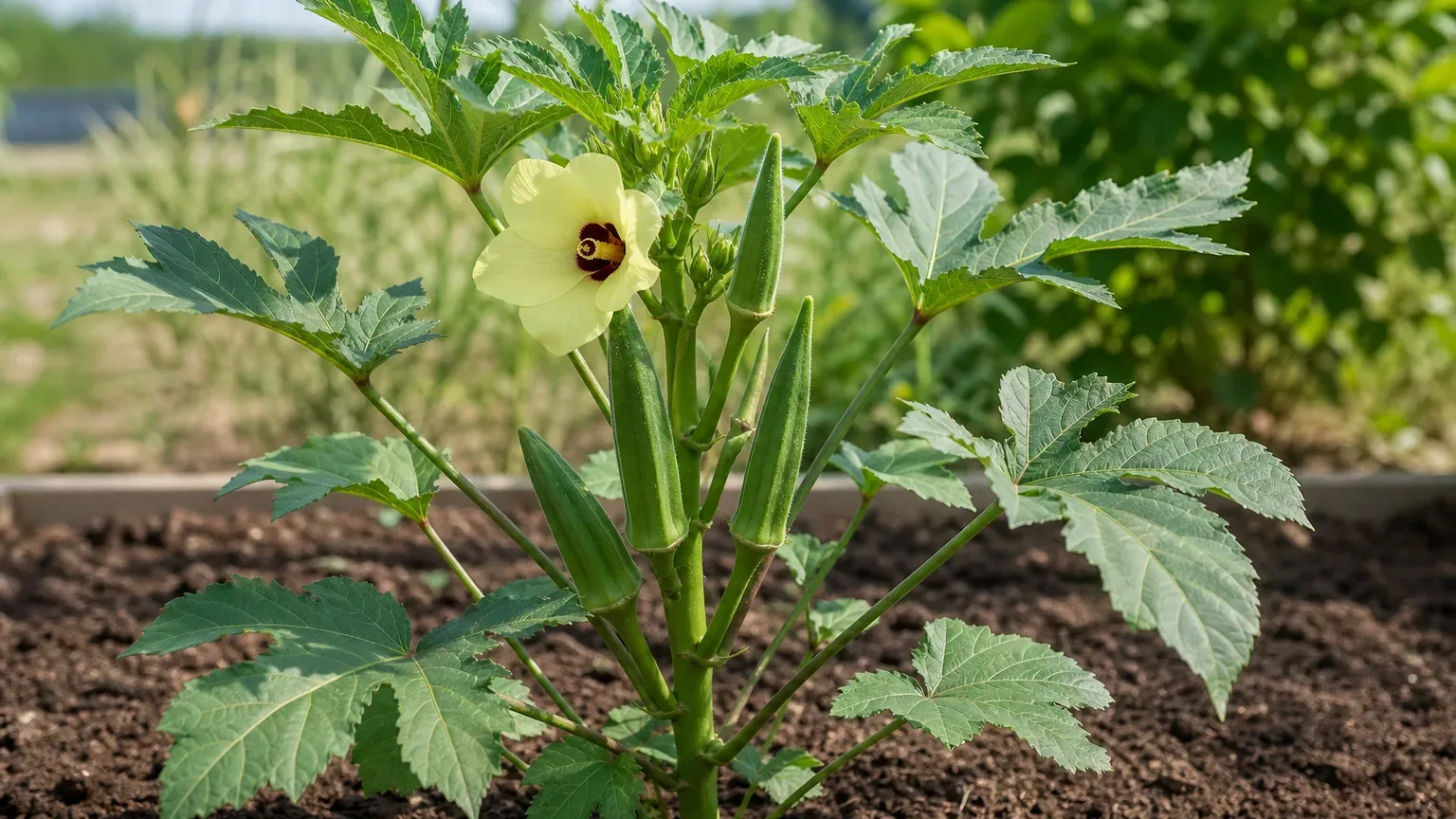
Okra Soil Guide: Mix, pH, Drainage & Fertility
Okra Soil Guide: Mix, pH, Drainage & Fertility
Okra (Abelmoschus esculentus), or bhindi, grows fast once heat arrives, so its soil has to do two jobs at once: hold enough moisture for flowering and pod growth while releasing surplus water quickly. The target is not permanently damp earth. It is a fertile, aerated root zone that can be watered deeply and then breathe.
This distinction matters in India and other monsoon climates. A bed that performs well in dry April weather may become saturated in July, while a terrace pot can swing from flooded to dry within days. Start with the structure and drainage described here, then use the Okra watering guide to manage moisture and the Okra fertilizer guide to adjust feeding without overloading the soil.
The short answer: fertile soil that drains promptly
The best okra soil is a well-drained loam or sandy loam enriched with mature organic matter. NC State Extension describes okra as needing moist, well-drained soil high in organic matter, while Clemson notes that the crop accepts several soil types but performs especially well in well-drained sandy loam. Those recommendations describe function more reliably than a rigid ingredient list.
In a bed, improve the soil you have rather than trying to replace it. In a container, use a manufactured potting mix rather than dense field soil, then add mature compost and a coarse aeration material if needed. In both settings, water should soak into the root zone without remaining in a puddle around the stem.
Why okra roots need both moisture and air
Okra makes a tall shoot and repeated pods in a single warm season. That growth benefits from steady access to water and nutrients, but roots also respire; when pore spaces remain filled with water, oxygen becomes limited. NC State specifically warns that poorly drained soil can lead to root rot.
Do not interpret “moist” as “wet all the time.” After irrigation or rain, a good root zone drains, leaving small pores with moisture and larger pores with air. If the surface stays slick, smells sour, or remains saturated long after nearby soil has drained, correct the site before adding more compost or fertilizer.
Best texture for okra beds
Loam is useful because it balances mineral particles, organic matter, water retention, and drainage. UGA Extension says okra prefers well-drained sandy soil high in organic matter but can grow in a wide range of soils. This means clay or sand is not an automatic failure; each needs a different correction.
Test structure with a moist handful. Soil that forms a weak ball but crumbles when pressed is workable. A hard ribbon that smears indicates substantial clay, while soil that will not hold together and dries very rapidly is sand-dominant. Make amendments across the future root area, not in one small planting pocket.
Improving heavy clay without creating a bathtub
Work several centimetres of finished compost into the broad bed when the soil is moist enough to crumble, never when it is sticky and waterlogged. Do not excavate a neat hole in clay and fill only that hole with loose mix; it can collect water like a basin around the roots. If rainwater commonly stands, plant on a raised bed or broad ridge and preserve an open route for runoff.
Avoid trying to transform clay with a token amount of fine sand. The safer home-garden approach is repeated organic-matter additions, minimal traffic on wet soil, and elevation where drainage is inherently slow. Never till saturated clay, because the resulting clods and compaction can last beyond the crop.
Managing very sandy ground
Sandy ground drains readily but loses moisture and soluble nutrients faster. Incorporate mature compost through the upper root zone, mulch after the soil warms, and divide nutrient applications according to soil-test and local extension advice rather than applying a large dose at planting. Oregon State’s okra guidance notes that nitrogen management changes with leaching risk, which is particularly relevant on sandy beds during heavy irrigation or rain.
The goal is not to make sand waterlogged. Add enough stable organic matter to improve moisture buffering, then observe how quickly the bed dries. If water disappears immediately and plants wilt despite deep irrigation, build organic matter over successive seasons rather than using a single extreme amendment.
Okra soil pH and when to test
A practical target for okra is mildly acidic soil around pH 5.8–6.8. UGA gives a tolerated range of pH 5.8–6.8, while Clemson recommends maintaining pH 5.8–6.5. The small difference is a reminder to use the local soil report, not to chase one decimal point.
Test before adding lime, sulfur, or concentrated fertilizer. A laboratory soil test can measure pH and nutrient status and provide amendment rates; Clemson’s soil-testing guidance also explains why sampling should represent the growing area rather than one unusual spot. In containers, begin with a reputable vegetable potting mix and avoid repeatedly adding pH modifiers unless a valid test identifies a problem.
Preparing an in-ground or raised bed
Clear perennial weeds, loosen compacted ground without pulverizing wet soil, and spread mature compost evenly across the bed. Blend it into the upper soil rather than leaving a thick, water-shedding layer. Shape the surface level in dry climates or slightly crowned where intense rain is expected.
Raised beds help when native soil drains slowly, but elevation alone is not magic. The bed must remain open at the bottom and have somewhere for water to move. If it sits over compacted clay, loosen the interface before filling so water does not stop abruptly at the old surface.
Prepare the bed before transplanting or direct sowing, then allow it to settle. Okra dislikes unnecessary root disturbance, so make the final soil correction first and follow the Okra propagation guide for sowing and transplant timing.
A reliable okra soil mix for containers
For a starting mix, combine roughly half quality vegetable potting mix, three-tenths mature compost, and two-tenths coarse aeration material such as perlite or pumice. Treat this as a functional recipe, not a laboratory formula: a bark-rich potting mix may need less aeration, while a fine, peat-heavy product may need more. The finished mix should accept water evenly and drain from the base within moments.
Do not fill an okra pot with garden soil alone. In a container, the same soil becomes denser because it has a short column, fixed walls, and no surrounding ground to receive water. Use a sturdy final container with unobstructed holes, keep it raised slightly above a flat terrace, and see the Okra repotting guide for final-pot timing and cultivar-based sizing.
Skip a gravel layer beneath the mix. It reduces usable root volume and does not repair a sealed or undersized drainage outlet. The solution is a free-draining mix throughout the pot and holes that remain open during a storm.
Drainage checks before planting
In beds, dig a small inspection hole, fill it with water, let the first filling soak away, then refill and watch what happens. This is a comparative home check rather than a universal laboratory standard. If water remains for a long period or the hole refills from the surrounding ground, move to a raised site or correct the broader drainage route.
In containers, wet the entire mix before planting. Water should emerge from several holes, not one narrow channel at the edge. If it pools on top, runs down a gap without wetting the centre, or leaves the pot heavy and saturated the next day in warm weather, adjust the mix before trusting it with an okra seedling.
Compost, fertility and the excess-nitrogen trap
Mature compost improves structure and contributes nutrients, but it is not a precise fertilizer prescription. Base lime and fertilizer decisions on a soil test whenever possible; Clemson calls testing the most effective way to determine crop fertility needs. This prevents adding phosphorus, potassium, or lime when the soil already contains enough.
Okra can respond to nitrogen with vigorous foliage, yet more leaf growth is not automatically more pods. Use modest, split feeding where local guidance calls for it and avoid repeatedly combining rich compost, manure, and high-nitrogen fertilizer. Clemson’s broader vegetable-fertilizing guidance emphasizes following soil-test recommendations because vegetable crops and soils do not all need the same analysis or rate.
Use only well-finished compost around an edible crop. Fresh manure, uncomposted kitchen waste, and half-decayed material can create sanitation, salt, heat, or nitrogen-immobilization problems. Keep those materials in a managed compost system until they are ready for the bed.
Monsoon soil management for bhindi
Before sustained rain begins, clear blocked terrace outlets, open shallow paths that carry runoff away from beds, and move pots off solid floors onto feet or racks. Do not place containers beneath a roof downpipe. In heavy ground, a broad raised ridge keeps the crown above the wettest soil while still allowing roots to explore below.
Pause routine irrigation when rain is meeting the crop’s need; the Okra watering guide explains how to judge the root zone rather than follow a fixed calendar. Also pause liquid feeding during saturated weather. Nutrients cannot compensate for oxygen-starved roots, and repeated heavy rain can wash soluble fertilizer beyond the active root zone.
After a downpour, inspect rather than immediately cultivate. Wait until the surface is friable before loosening crusts, because walking and hoeing wet soil cause compaction. If a container remains saturated, tip it only enough to release trapped runoff, verify every hole, and shelter it from the next storm while the root zone recovers.
Mulch without keeping the crown wet
An organic mulch can reduce evaporation and surface crusting in hot weather, especially on sandy soil. Apply it after the soil has warmed and keep a small clear ring around the stem. This prevents wet material from resting against tender tissue and makes it easier to see whether the crown is staying saturated.
Adjust mulch depth seasonally. A generous layer that is useful in a dry pre-monsoon spell may slow drying too much during weeks of rain. Pull it back temporarily if the bed remains wet, then restore coverage when drainage and heat return.
Crop rotation and end-of-season soil care
Do not automatically sow okra in the same patch every season. Clemson recommends rotating crops to reduce disease and nematode problems and lists okra with the mallow family for planning purposes. In a small garden, move it to a bed that did not recently hold okra or another mallow-family crop when space permits.
Rotation is not a cure for every soil problem, but it is more useful than merely changing cultivars in the same ground. Remove badly diseased roots and stems rather than composting them casually, control weeds that can host pests, and record where each crop grew. At season’s end, add finished compost according to the bed’s condition and protect bare soil with an appropriate cover or mulch.
Warning signs the soil setup is wrong
Water pools, lower leaves yellow, or growth stalls while the soil stays wet: drainage is the first suspect. Stop irrigation, open outlets, pull mulch back, and check roots before adding fertilizer.
The surface forms a hard crust and water runs away: compaction or low organic matter is limiting infiltration. Break only the surface crust once it is dry enough to work, then improve the bed with mature compost after the crop.
A pot dries within a day and wilts repeatedly: the container may be too small, root-filled, or excessively coarse. Check the Okra repotting guide before altering the mix, because adding water-retentive material cannot solve inadequate root volume.
Plants are dark green and leafy but pod production disappoints: do not assume the soil needs more feed. Review light, temperature, pollination, and nitrogen use with the Okra light guide and fertilizer guide before applying anything.
When to use this page vs other Okra guides
- Use the Okra overview for the whole seasonal growing plan and cultivar context.
- Use Okra watering to decide when and how deeply to irrigate the soil described here.
- Use Okra fertilizer for feeding timing, product choice, and deficiency versus excess.
- Use Okra propagation for sowing depth, germination, and transplant handling.
- Use Okra repotting when a seedling must move into its final container.
Related Okra guides
Continue with the Okra overview if you are planning a new crop, then match this soil setup with full-sun placement and root-zone checks from the watering guide. For established plants, the fertilizer guide helps separate genuine nutrient need from symptoms caused by saturated or compacted ground.
Conclusion
Good okra soil is defined by performance: it holds useful moisture, drains surplus water, contains mature organic matter, and stays open enough for roots to breathe. Aim for a mildly acidic pH around 5.8–6.8, confirm amendments with a soil test, and manage clay, sand, beds, and containers according to how each handles water.
Before monsoon rain, protect drainage routes and elevate vulnerable pots; after rain, avoid working wet ground. Rotate okra where practical, keep fertilizer proportional to tested need, and treat standing water as a soil emergency rather than a signal to feed. Build that root environment first, and the crop has a stable base for warm-season growth and pod production.