Mold on Soil on Parlor Palm: Causes, Checks & Fixes
Quick answer
White or gray mold on parlor palm soil is usually harmless surface fungus fed by damp organic mix. On Chamaedorea elegans the real risk is chronic wetness rotting fine roots in dim, slow-drying pots. First step: scrape the top quarter-inch and pause watering until the top inch of mix is dry.
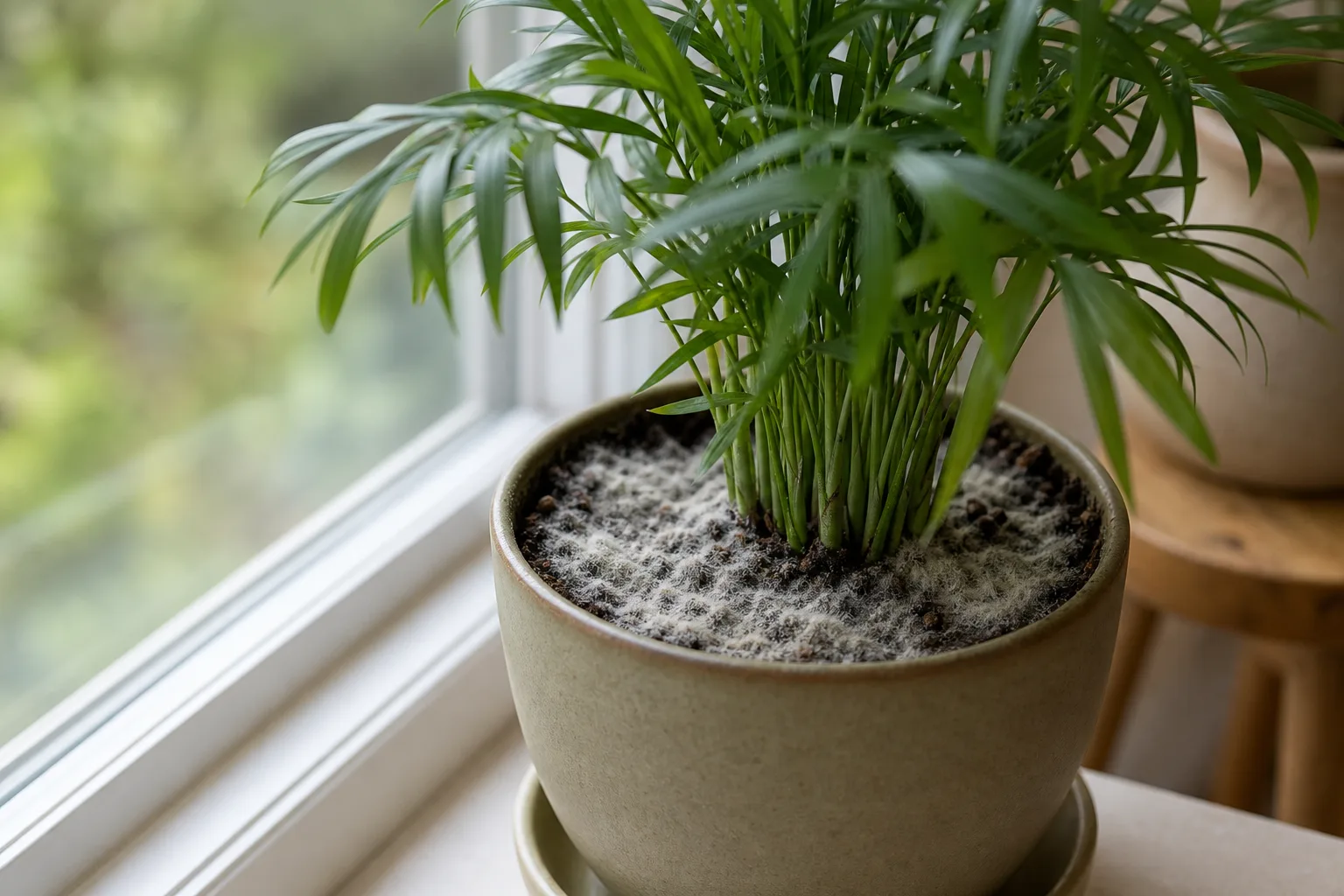
Mold on Soil on Parlor Palm: Causes, Checks & Fixes
This guide covers mold on soil on Parlor Palm. See also the general Mold on Soil guide, watering, and light pages for this plant.
Mold on Soil on Parlor Palm: Causes, Checks & Fixes
Quick answer
White or gray fuzz on your parlor palm pot looks alarming, but on Chamaedorea elegans it is usually saprophytic mold breaking down organic matter in a wet surface layer-not a fungus attacking the arching pinnate fronds. The mold itself rarely harms a healthy multi-stem clump with firm cane-like stems. What should worry you is the moisture that grows it: parlor palm wants evenly moist soil through its fine, fragile roots, yet a constantly wet surface in a dim office is how overwatering stress and root rot when soil stays saturated begin.
Before you scrape anything, press the base of each slender stem where it meets the soil. Firm stems with green new spears mean cosmetic mold; soft, dark tissue at the base means investigate rot, not just surface fungus.
First step: scrape off the top quarter-inch of moldy soil, discard it in the trash, and stop watering until the top inch of mix feels dry to your finger-the same dry-check standard in our parlor palm watering guide. That single action removes active spores and breaks the wet surface cycle. Only after the dry-down test passes should you water again-and only until a little runs from drainage holes, with the saucer emptied afterward.
What mold on soil looks like on parlor palm
Surface mold on parlor palm pots has a distinct look that differs from frond diseases:
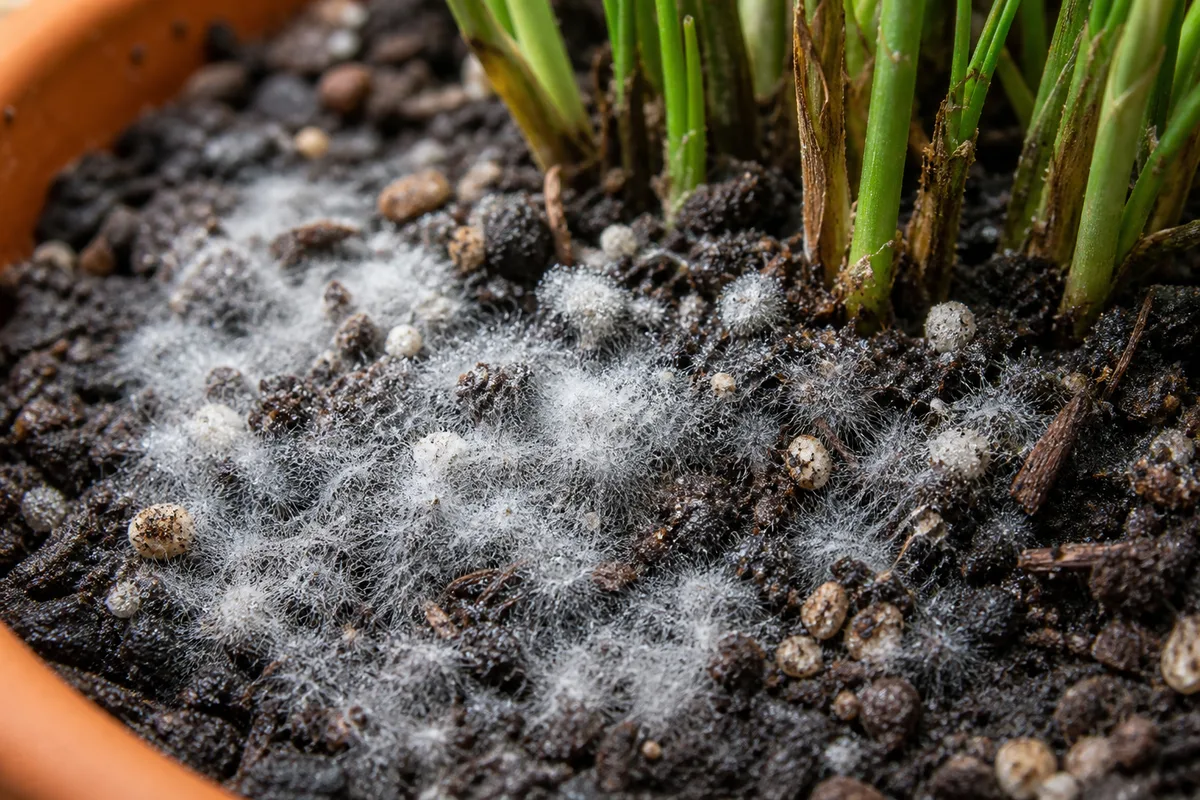
Mold on Soil symptoms on Parlor Palm - compare with healthy tissue on the same plant.
Typical surface mold:
- White, gray, or occasionally yellow-green fuzzy film across the top of the mix
- Cottony patches that spread after overhead watering or long rainy indoor stretches
- Soil surface that stays dark and wet for five or more days after one drink
- Musty smell when you lean near a tabletop pot tucked in a corner
- Arching pinnate fronds still look mostly green above the soil line
- Multiple slender stems firm where they emerge from the mix
When mold signals deeper trouble:
- Mold reappears within days of scraping
- Mix feels heavy and cool a week after you thought it dried
- Lower fronds yellow while the surface stays wet
- Central new spear fronds wilt even though soil looks merely damp
- Tiny dark flies rise when you water-fungus gnats sharing the same wet habitat
- Sour or rotten odor from drainage holes
- Soft, dark tissue at stem bases where canes meet soil
Parlor palm often keeps a composed appearance longer than fast-wilting houseplants when roots are stressed. One yellow lower frond can look like normal aging until yellowing spreads and new spears stall-so treat recurring mold as a root-zone warning, not just a cosmetic patch on a beginner-friendly palm.
Why parlor palm gets mold on soil
Chamaedorea elegans evolved on the rainforest floor in Guatemala and southern Mexico, where leaf litter and humidity keep the root zone steadily moist without standing water. Indoors, that translates to a preference for evenly moist soil with good drainage-but mold needs a persistently wet surface, while roots need air in the lower profile. That paradox trips up many growers.
Calendar watering in dim rooms. Parlor palm is shade-tolerant, which makes it popular in offices-but NC State Extension notes it grows best with good drainage and moist, occasionally dry soil. Less light slows transpiration. Watering every seven days year-round keeps the top layer stagnant through fall and winter when the palm barely drinks. Mold colonizes that surface while fine roots sit in mix that stays wet too long.
The “evenly moist” trap. Owners trying to keep this palm happy with frequent light sips often keep the surface damp without ever letting it breathe-perfect mold habitat, risky for roots. One thorough drink followed by a dry top inch works better than daily dribbles that never reach lower roots cleanly.
Multi-stem nursery clumps in large pots. Retail parlor palms usually contain several slender stems planted together. Combined root mass and soil volume hold moisture longer than a single-stem pot. The surface can stay wet even when you watered lightly.
Peaty, slow-draining mix and cachepots. Standard bagged potting soil without enough perlite holds water at the surface. A decorative cachepot trapping runoff keeps the upper layer damp in low light-exactly where mold and gnats start. See our soil guide if you repot into lighter mix.
Overhead watering on feathery fronds. Splashing water washes fallen pinnae and old leaflets onto the soil surface, where they decay and feed saprophytic fungi.
Cool winter rooms. When temperatures drop and growth slows, the same watering volume keeps soil wetter longer. Mold often appears in January or February on palms that were fine all summer-right when overwatering and root rot risk peak.
Poor airflow around crowded pots. Tabletop palms grouped on shelves or tucked into corners get less air movement at the soil rim than plants in open spots. Humidity trays can keep the surface humid exactly where mold starts.
Lookalike symptoms to rule out
Powdery mildew on fronds forms a dry white dust on leaflets, not fluffy growth confined to soil. It follows humid stagnant air on foliage, not overwatering alone.
Mineral crust on soil looks like white crystals, not cottony fuzz. It comes from hard tap water or excess fertilizer salts-not from saprophytic mold. Parlor palm is fluoride-sensitive; salt crust and tip burn can appear alongside moisture mistakes.
Green algae on the pot rim needs light plus constant surface moisture. It is slimy, not fluffy, and often rings the inner pot edge where water sits.
Post-repot mycelium can appear briefly on fresh organic mix without signaling chronic overwatering. If it fades after one dry cycle and stems stay firm, no action beyond normal dry-down is needed.
Root rot without visible mold can smell sour with mushy roots while the surface looks merely dark. Always check stem firmness and root health when soil odor is off, even if you see no white fuzz.
How to confirm the cause
Work through this checklist before Parlor Palm repotting guide or spraying anything:
- Surface moisture test - Push your finger one inch deep near the pot edge. If the top is wet but deeper mix is merely cool and damp, you likely have surface mold from splash watering or debris. If the whole profile feels cool and wet days after watering, overwatering is the main issue.
- Pot weight - Lift the pot by the rim. Heavy days after watering confirms saturation; light weight with mold still visible may mean only the surface layer is holding moisture from misting or a full saucer.
- Multi-stem firmness check - Gently press each slender stem at the soil line. Firm bases with green new spears point to environmental mold. Soft, mushy bases mean escalate to root rot care.
- Frond pattern - Green arching fronds with mold only on soil fit cosmetic fungus. Widespread yellow lower fronds plus wet mix suggest roots are already stressed.
- Spear check - New central fronds should stay upright and green. A wilting spear with wet soil is more serious than surface fuzz alone.
- Smell test - Musty surface odor fits saprophytic mold. Sour or rotten smell from drain holes means inspect roots regardless of visible fuzz.
- Gnat test - Tap the pot rim or water lightly. Clouds of tiny flies confirm fungus gnats sharing wet-soil conditions with mold.
- Light and season check - Note recent moves to dimmer spots or whether days are short and heating is on. Seasonal slow-down without watering adjustments is a common trigger-see not enough light when leggy growth accompanies mold.
- Drainage check - Confirm holes are open, saucers empty, and no decorative outer pot holds standing water.
If stems are firm, fronds are mostly green, and mold is limited to the surface after a single overwatering event, you are likely dealing with harmless saprophytic fungus on wet organic matter-not a pathogen infecting the plant.
Mold vs root rot vs fungus gnats
| Signal | Surface mold alone | Root rot developing | Fungus gnats present |
|---|---|---|---|
| Surface fuzz | White or gray cottony film | May or may not be visible | Often shares wet top layer with mold |
| Soil smell | Musty, earthy | Sour or rotten | Musty; larvae in wet mix |
| Stem bases | Firm and green | Soft, dark, or collapsing | Usually firm unless rot is advanced |
| Fronds | Mostly green | Yellow lower fronds spreading; spear may wilt | Green unless roots are damaged |
| First action | Scrape surface; dry top inch | Unpot; trim mushy roots; repot dry | Dry top inch; sticky traps; fix watering |
First fix for parlor palm
Scrape off the top quarter-inch of moldy soil with a spoon, discard it in the trash-not the compost pile-and pause all watering until the top inch of mix is dry to your finger.
This one action removes the active fungal mat and stops adding moisture while the pot dries. Do not mist fronds or top-dress with cinnamon as a substitute for dry-down. Do not water on schedule “just a little” to be safe-that keeps the surface hospitable to mold.
After the dry period, water thoroughly until a little runs from drainage holes, then empty the saucer within fifteen to thirty minutes. Parlor palm should dry down in the top inch between waterings; check soil every few days rather than assuming a fixed interval.
Step-by-step recovery
Once you have scraped and started the dry-down:
- Replace the scraped layer with a thin topping of dry, fresh potting mix if bare roots show at the surface. Do not pack it down hard.
- Move to brighter indirect light if the palm sits in a very dim spot. Faster dry-down prevents mold from re-colonizing before the next watering-without scorching sensitive fronds.
- Improve airflow around the pot base-not just around the fronds. Gentle room circulation helps surface soil dry without blasting cold AC directly on foliage.
- Remove surface debris - Pick off fallen fronds and broken pinnae weekly so fungi lose their food source.
- Address fungus gnats together - If flies appear, let the top inch dry between every watering and set yellow sticky traps near the pot rim. Wet soil fixes help both mold and gnats.
- Repot only if mold returns quickly - Chronic recurrence with heavy wet mix, sour smell, or degraded peat means repot into fresh well-draining mix sized to the root ball-not dramatically larger. Our soil guide covers perlite-heavy blends for this palm.
- Trim yellow fronds after stability - Once watering rhythm holds and new spear growth looks firm, remove fully yellow lower fronds at the stem. They will not re-green.
Do not repot on day one for a first mold sighting with firm roots. Scraping plus corrected watering resolves most cases without disturbing the fine root ball.
Recovery timeline
Surface mold should stop spreading within a few days once the top layer dries. After you resume watering correctly, new fuzzy growth typically does not return for weeks unless moisture habits slip again.
If fungus gnats were present, adult counts drop within one to two weeks of consistent surface dry-down. Larvae in the top inches of mix need repeated dry cycles to die off.
Yellow lower fronds from prior overwatering may take several weeks to be replaced by new growth. Judge success by firm stems, dry-down rhythm, and healthy new spears-not by old fronds re-greening.
Mold that reappears within five to seven days after scraping means the underlying wet condition is unchanged. Escalate to repotting or a lighter mix refresh rather than scraping repeatedly.
What not to do
Do not spray fungicide on soil mold as a first response. Saprophytic surface fungi are controlled by drying the mix, not chemicals-and sprays add unnecessary moisture.
Do not keep watering because arching fronds still look fine. Parlor palm foliage can lag behind root stress by weeks.
Do not leave decorative pot covers or full saucers under tabletop palms. Standing water keeps the bottom profile saturated while mold grows on top.
Do not scrape mold weekly without fixing dry-down. You remove symptoms while roots stay in saturated mix.
Do not repot into a much larger pot “to help drainage.” Extra wet soil volume makes both mold and rot more likely on fine palm roots.
Do not increase winter watering when growth slows. The same summer schedule in a heated but dim room keeps soil wet while the palm uses little moisture.
Do not let spent fronds pile on the soil surface in multi-stem palms. Decaying pinnae feed the same fungi that produce white fuzz.
How to prevent mold on parlor palm soil
Water when the top inch of mix is dry-roughly every 5–7 days in active summer growth, often every 10–14 days in winter, sometimes longer in cool dim rooms. Lift the pot to confirm weight, and check every few days rather than counting calendar days. Full technique lives on the watering guide.
Give bright to medium indirect light so pots dry predictably. A palm in a dim office may need fewer drinks and more time between waterings, not the same volume as a summer specimen near a window.
Keep soil surfaces clean. Remove fallen fronds before they decompose on wet mix.
Use pots with drainage holes and empty saucers within thirty minutes of watering. Never let a palm sit in a full catch tray or cachepot holding runoff.
Repot on the usual two-to-three-year cycle before thick roots crowd out soil entirely. Fresh mix dries more evenly than aged, broken-down peat.
Reduce watering when days shorten and new spear growth slows. Mold paired with yellow lower fronds in winter often means the calendar-not the plant-needs adjusting.
If mold was paired with gnats, maintain surface dry-down as the long-term habit-not just a one-time fix after scraping.
When to worry
Escalate beyond scraping when mold returns within a week despite dry surface intervals, soil smells sour or rotten, roots feel soft or hollow on inspection, many lower fronds yellow at once, or the central spear wilts while mix stays wet. Those patterns overlap with root rot and need unpotting, trimming mushy roots, and repotting dry-not repeated surface scraping alone.
Also act if fungus gnats persist for more than three weeks with sticky traps and dry-down, because larvae in wet top soil can damage fine roots on stressed palms.
Surface mold on a firm-rooted, green palm in an otherwise sound pot is not an emergency. Fix moisture, scrape once, and monitor.
Conclusion
Mold on parlor palm soil is usually a moisture signal, not a death sentence. Chamaedorea elegans tolerates brief dryness in the top inch but fails in chronically wet mix-exactly the environment surface fungi love. Scrape the top quarter-inch, let the pot dry before the next watering, and match your schedule to how fast the container actually dries in your light and season. Firm multi-stem bases, healthy new spears, and predictable dry-down tell you the fix worked; recurring fuzz, sour soil, or wilting spears mean go deeper than the surface.
This guide was written by sai-ananth, reviewed by the LeafyPixels Review Board on 2026-06-16, and checked against UF IFAS, NC State Extension, Missouri Botanical Garden, University of Maryland Extension, UMN Extension, and Colorado State Extension references plus our Parlor Palm care data. For baseline culture, see the Parlor Palm overview and watering guide.
When to use this page vs other Parlor Palm guides
- Parlor Palm watering guide - Use for routine moisture checks before assuming mold on soil is the main issue.
- Parlor Palm problems hub - Browse all 4 common issues on this species.
- Root Rot on Parlor Palm - Different entry point when symptoms overlap with mold on soil.
- Slow Growth on Parlor Palm - Different entry point when symptoms overlap with mold on soil.