Passion Fruit Propagation: Seeds & Cuttings
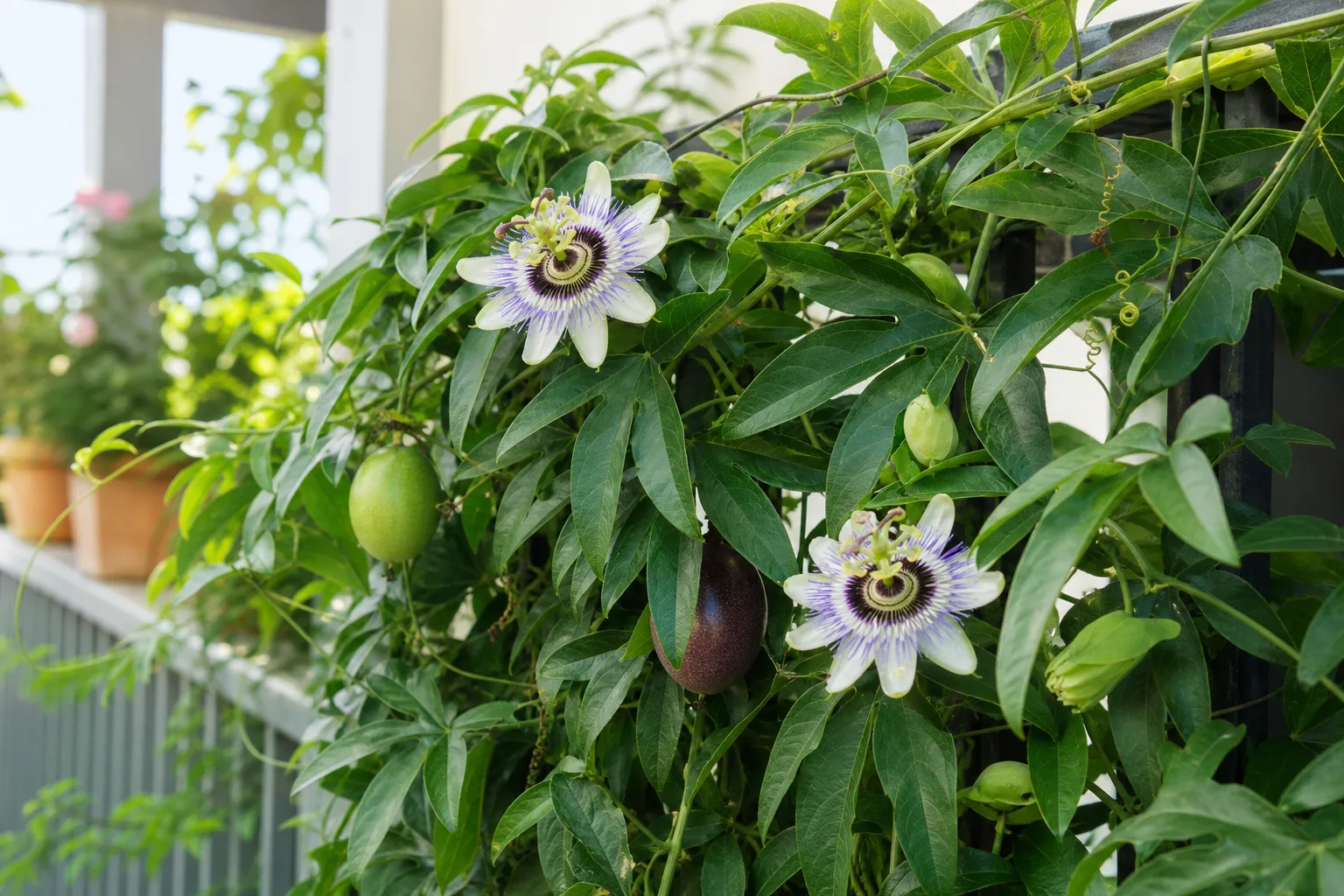
Passion Fruit Propagation: Seeds & Cuttings
Passion Fruit Propagation: Seeds & Cuttings
Passion fruit (Passiflora edulis) is a fast-growing tendril vine that you can start from fresh seed, stem cuttings, or—when root disease pressure is high—grafting a preferred purple-type scion onto a yellow-type rootstock. UF/IFAS notes that home and commercial growers use all three approaches, and that only disease-free planting material should be used because persistent viruses can travel with cuttings and, in some cases, seed (UF/IFAS passion fruit guide).
Purple and yellow passion fruit belong to the same species; taxonomic work treats yellow forms as P. edulis rather than a separate species (Bernacci et al. on P. edulis). That matters for propagation planning: yellow types are often better adapted to low, warm elevations and are used as rootstocks, while many purple selections are preferred for dessert fruit. Do not confuse edible P. edulis with cold-hardy ornamental maypop (Passiflora incarnata), which NC State lists as a different species with its own seed and root-cutting habits (NC State maypop profile).
Choose the method that matches your goal
If you want a genetic copy of a vine that already fruits well for you, take cuttings from healthy growth. If you want many plants cheaply—or you are experimenting with seed from ripe fruit—sow fresh seed and expect variation. Grafting is a specialist step for growers who need a purple canopy on a more root-tolerant yellow stock, not the first move for every balcony vine.
In India’s warm tropics and subtropics, warmth helps germination and rooting, but monsoon humidity raises damping-off and stem-rot risk if containers stay saturated. Plan for bright light after establishment, a trellis from day one, and soil that drains while staying evenly moist—details that sit next to this page in the Passion Fruit soil guide and Passion Fruit watering guide.
Seeds vs cuttings vs grafting
Seed is accessible and produces vigorous vines, but seedlings do not reliably reproduce a named cultivar’s fruit quality, peel color, or disease behavior. UF/IFAS reports that even fresh seed has relatively low germination compared with many crops, though scarification and warm, humid conditions improve results.
Cuttings clone productive vines and are the usual vegetative path when commercial growers lock in a superior seedling selection. Cuttings also carry the highest risk of moving viruses if the mother vine is infected.
Grafting purple types onto yellow rootstock is used to reduce some fungal and nematode problems that hit purple roots harder. It requires matching stem diameters and careful cambium alignment—worthwhile when you already have healthy stock and scion seedlings, not when you are still learning to keep one vine alive.
Start with disease-free planting material
Passion fruit woodiness disease and related potyviruses (including CABMV) are major limits worldwide. UF/IFAS emphasizes that viruses are noncurable in the field, move with aphids and infected cuttings, and that some viruses may be seed-transmitted. Rogue mosaic, distorted leaves, and woody deformed fruit before you take any cutting; prefer clean nursery plants or seed from healthy fruit when local virus pressure is high.
Sanitize pruning tools between vines (UF/IFAS suggests a 10% bleach solution or quaternary ammonium for pruning hygiene on established plantings). Keep cuttings insect-free during rooting so aphids do not introduce virus while tissue is soft. If a mother plant shows sudden canopy wilt with basal canker or girdling, do not propagate from it—root and collar pathogens such as Fusarium and Phytophthora complexes can destroy vines, and water stress can worsen Fusarium risk in seedlings (Fusarium wilt seedling study).
Propagating passion fruit from seed
Seed suits growers who want volume, rootstock seedlings for later grafting, or a low-cost start from ripe fruit. Treat market fruit as an experiment: the pollen parent is often unknown, and yellow types are not self-fertile, so open-pollinated seed can be highly variable.
Preparing fresh seed
Scoop black mature seeds from fully ripe pulp. Rinse until the gelatinous aril residue is gone, then surface-dry in shade—do not bake seed in harsh midday sun. Use seed as fresh as possible; UF/IFAS notes fresher seed germinates better than older lots, even though rates remain modest compared with many vegetables.
To improve germination, lightly scarify or nick the hard seed coat with a sharp blade, then soak overnight in water before sowing. Work carefully so you nick the coat without destroying the embryo. Label purple-type, yellow-type, and hybrid lots separately if you know the fruit identity—self-compatibility and climate adaptation differ among them.
Sowing, warmth, and germination
Sow in clean flats or individual pots filled with fresh, free-draining seed-starting medium—not garden soil lifted from a wet bed. Keep the medium moist, not waterlogged, and cover pots with a humidity dome or clear plastic to hold warm, humid air. UF/IFAS reports germination typically in about one and a half to three weeks when kept near 85°F (about 29°C).
NC State Extension explains that damping-off fungi attack germinating seed and soft stems at the soil line especially under unfavorable moisture and sanitation, and recommends clean trays plus soilless media (damping-off guidance). In humid Indian weather, that means washing reused pots, avoiding standing water in trays, and removing covers once seedlings emerge so air can move.
Young passion fruit seedlings show oval juvenile leaves before adult lobed foliage appears (heteroblasty). Keep new seedlings in partial shade; UF/IFAS warns that direct sun burns young plants. Harden them for several days in partial sun before moving to the full-sun site adult vines need. Pair seedling placement with the Passion Fruit light guide once vines begin rapid climbing.
Propagating passion fruit from cuttings
Cuttings are the practical path when you already have a healthy, productive vine and want the same fruiting behavior. Commercial Florida producers commonly root cuttings or graft scions from superior seedlings for that reason.
Taking and planting stem cuttings
Select a portion of healthy vine with active foliage and no mosaic, mottling, or stunting. UF/IFAS recommends at least two nodes and up to four nodes per cutting. Remove all but the top leaf, and mark polarity carefully—plant the basal end down, following the direction of vine growth.
Dip the basal end in rooting hormone if you use it, then plant about 2–4 inches (5–10 cm) deep in clean growing media. Firm lightly so nodes below the surface contact the mix. Deep, well-drained cells or pots work better than shallow community trays that stay wet at the base.
Rooting conditions and readiness to plant
Hold cuttings in indirect light with high humidity (dome, bag, or intermittent mist) and evenly moist medium. Under good conditions, UF/IFAS reports cuttings may be ready for planting in about three to four months. Do not rush a soft cutting into full monsoon exposure or a hot west-facing wall until roots fill the pot enough that the vine does not wilt within hours of watering.
Keep the nursery insect-free. A rooted cutting that looks green but carries virus will look “successful” for months, then deliver distorted leaves and woody fruit later. If you must choose between a pretty unknown cutting and a slightly slower seed batch from clean fruit, prefer clean material over speed.
Grafting purple types onto yellow rootstock
UF/IFAS describes grafting purple passion fruit onto yellow rootstock to reduce some root-system disease and nematode pressure that hit purple types harder. Raise stock and scion seedlings until both are about 18 inches (45 cm) tall with stems near ¼ inch (6 mm) diameter. Cut the stock 10–12 inches (25–30 cm) above the soil; prepare a scion about 3–4 inches (8–10 cm) long with at least two nodes.
Align the vascular cambia using cleft, whip-and-tongue, saddle, or veneer grafts, then wrap firmly with grafting tape or parafilm. Keep the plant watered in warm, indirect light for 10–14 days or until the union takes, then remove wraps after healing. Grafting does not replace drainage, clean planting sites, or virus hygiene—it only shifts part of the root-risk profile.
Aftercare for new passion fruit plants
Once a seedling, cutting, or graft is ready for its permanent pot or bed, train a main stem onto a trellis immediately. Tendrils will grab wires, fences, and neighboring plants; a curtain-style canopy (one leader to the top wire, laterals draping down) keeps fruiting wood accessible. Do not leave a new vine sprawling on wet ground where collar pathogens thrive.
Water frequently enough to keep the shallow root zone moist without saturation—passion fruit has limited drought and flood tolerance. Delay strong fertilizer until growth resumes; the Passion Fruit fertilizer guide covers first-year feeding once roots are active. Move containers up only when roots circle or dry-down becomes extreme; see the Passion Fruit repotting guide before upsizing a stressed starter plant.
Remember fruit set is a separate problem from propagation success. Many purple types can self-pollinate; yellow types generally need compatible pollen from a genetically different vine, and carpenter bees are important pollinators where they occur. A cloned yellow vine alone still needs a pollinizer for reliable fruit.
Common propagation failures and first fixes
No germination after three warm weeks: seed may be old, unsacrified, too cool, or kept saturated. Try a fresh lot, nick and soak, raise temperature toward ~29°C, and improve drainage.
Seedlings collapse at the soil line: treat as damping-off until proven otherwise—remove affected pots, reduce humidity covers, increase airflow, and restart in clean soilless mix (damping-off guidance).
Cuttings blacken and smell sour: too wet, too dark, or planted upside down. Take new cuttings, correct polarity, and use a freer mix with humidity that does not leave the stem base swampy.
Mosaic, mottling, or woody fruit later: virus risk from the mother plant or insects. Remove infected vines; do not propagate from them; start clean seed or certified plants in a new location when pressure is high.
Graft fails to leaf out: poor cambium contact, movement in the wrap, or dry air on the scion. Re-graft only with matched diameters and stable humidity for the first two weeks.
When to use this page vs other Passion Fruit guides
Use this page when you are starting new vines—choosing seed vs cuttings, rooting steps, grafting basics, and nursery aftercare. Use the Passion Fruit overview for species identity, climate fit, and the full care map. Use watering, soil, light, and fertilizer guides when an established vine’s moisture, mix, exposure, or feeding is the question—not when the plant is still a seedling or unrooted cutting. Use the Passion Fruit pruning guide once a trellised vine needs canopy renewal, not while you are still inducing roots.
Related Passion Fruit guides
- Passion Fruit overview — habit, climate fit, and where each care topic fits
- Passion Fruit watering — moisture rhythm for shallow roots after planting out
- Passion Fruit soil — drainage and mix choices for pots and beds
- Passion Fruit light — hardening seedlings and full-sun placement for fruiting vines
- Passion Fruit fertilizer — first-year feeding after roots establish
- Passion Fruit repotting — container upsizing without stalling a young vine
- Passion Fruit pruning — training and winter cleanup on mature canopies
Conclusion
Passion fruit propagation rewards clean material and method choice. Use fresh, prepared seed when you want many plants and can accept variation; use 2–4 node cuttings when you need a clone of a healthy producer; use yellow rootstock grafts when purple-type root problems justify the extra skill. Keep starters warm, humid but not swampy, shaded until hardened, and trained to a trellis as soon as they leave the nursery tray. If leaves show virus symptoms or the crown rots, stop multiplying that line and restart from clean stock—speed never outruns a diseased mother vine.