Passion Fruit Watering Guide: How Often & How Much
Passion Fruit Watering Guide: How Often & How Much
Passion Fruit Watering Guide: How Often & How Much
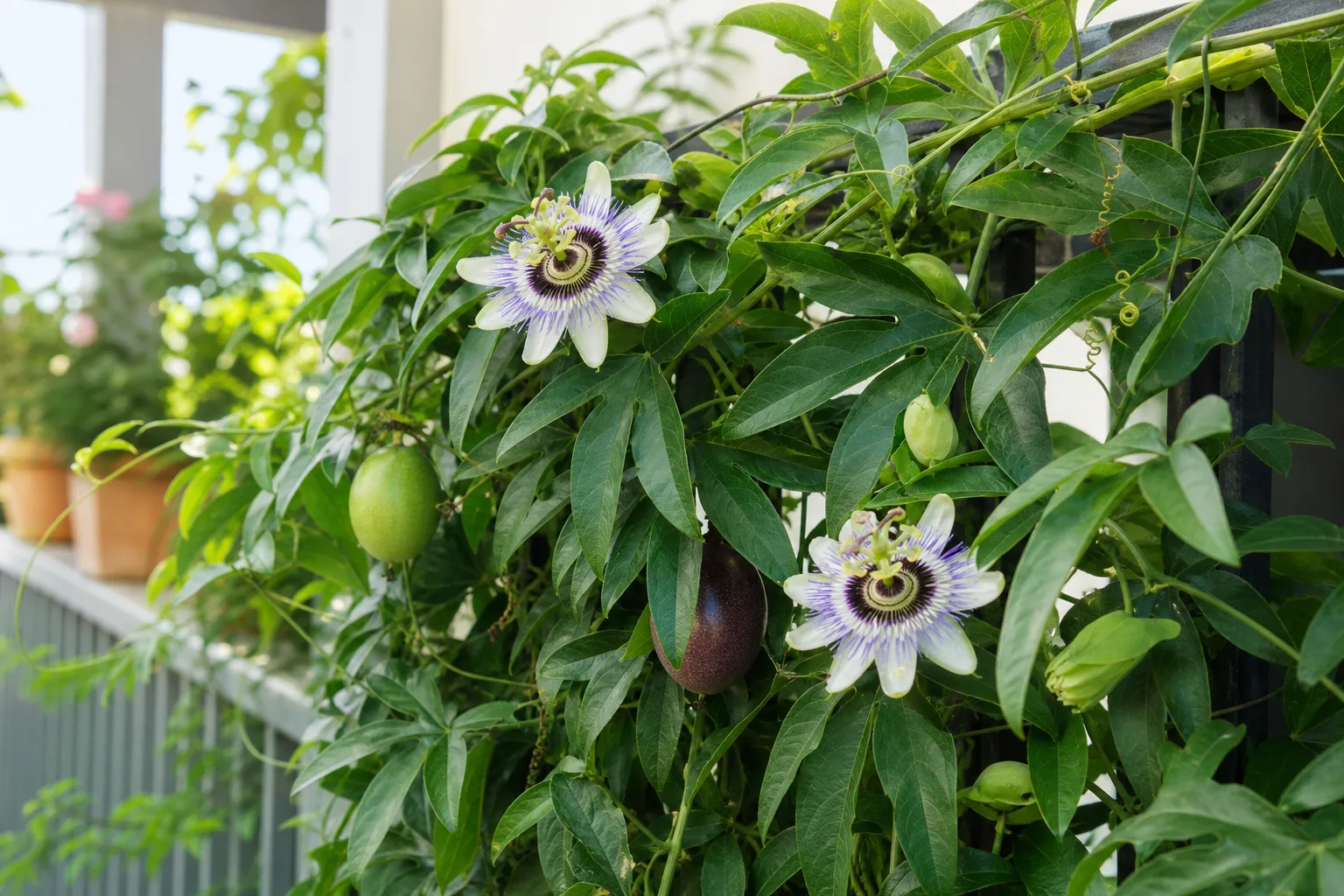
Passion fruit watering is a narrow balance, not a “wet tropical vine” free-for-all. Passiflora edulis — purple passion fruit and its yellow forms — grows as a fast climbing vine with a shallow root system. Those roots want steady moisture, but they have limited drought tolerance and limited flood tolerance at the same time. Keep the root zone evenly moist and well aerated, and the vine can flower and set fruit for long stretches. Let it dry hard during fruit swell, or leave it sitting in soggy mix, and you get wilt, fruit drop, or soilborne disease.
This guide covers how often to water, how to check dryness at root depth, what overwatering and drought look like on passion fruit, and how to adjust for hot Indian summers, monsoon weeks, pots versus beds, and the high-water window when fruits are sizing up. Pair watering with the right light for Passion Fruit and a draining soil mix for Passion Fruit — light and media decide how fast the same pot dries.
What Passion Fruit Roots Actually Need
Passion fruit is a tropical to subtropical vine, not a cactus and not a bog plant. Commercial and home guidance converge on the same target: soil that stays moist but not saturated, with free drainage so oxygen returns between irrigations. Shallow roots mean the plant draws most moisture from the upper soil layers. A dry crust over wet clay — or a wet rim over a dry core in a pot — both mislead you.
Authoritative crop summaries note that passion fruit culture usually assumes substantial rainfall (often cited around 35 inches / 90 cm annually or more in productive regions, with Indian growing areas historically associated with higher ranges), yet still depends on regular watering to keep vines flowering and fruiting. Rainfall alone is not a schedule. Your microclimate, pot size, and trellis exposure matter more than averages.
Two disease links make the moisture target non-negotiable. Drought stress cuts vine growth, flowering, fruit set, and fruit size, and research cited by UF/IFAS links dry soil to higher susceptibility to Fusarium soilborne disease. Poor drainage raises risk of Phytophthora crown and root problems and collar-related decline — classic when water sits around the stem base. The practical rule: never let passion fruit swing between bone-dry and swampy.
How Often to Water Passion Fruit
There is no honest universal “every X days” for every vine. Frequency is the result of how fast the top several centimeters of root-zone mix dry in your light and heat. Use these starting ranges, then tighten them with the check method below.
In active warm growth (most of the year in frost-free Indian climates), many container vines need water every 1–3 days in peak heat, sometimes daily for small terracotta pots in full sun. In cooler, cloudy spells, the same plant may stretch to every 4–7 days. In-ground vines with mulch often go longer between irrigations than pots, but still need small, frequent applications rather than rare deep floods that leave the crown wet for days (UF/IFAS passion fruit production).
Treat calendar reminders as prompts to check, not orders to water. A passion fruit that still feels cool and damp at finger depth should wait. One that feels dry in the upper root zone should be watered the same day — especially when flowers or immature fruit are on the vine.
Pots and grow bags
Containers dry faster and punish mistakes harder. Choose pots with open drainage holes, and elevate grow bags or pots so runoff can escape rather than re-soak the base — UF/IFAS notes container culture on stands specifically to improve drainage and reduce soil contact (UF/IFAS passion fruit production). Water until excess exits the holes, then empty saucers within 15–30 minutes.
In Indian balcony heat, a 12–16 inch pot of passion fruit in full sun can need water once a day during May–June. A larger plastic tub in partial afternoon shade may need water only every other day. If the mix is peat-heavy and stays dark for four days after watering while leaves yellow, the problem is drainage or light, not “not enough water.” Fix the soil for Passion Fruit or placement before adding more volume.
In-ground vines on a trellis
Bed-grown vines still have shallow roots. Prefer drip lines or low microsprinklers that wet the root zone without constantly soaking foliage and the crown. UF/IFAS recommends small but frequent irrigation so moisture stays adequate without saturation, and notes that mulch or ground cover helps maintain soil moisture while suppressing weeds (UF/IFAS passion fruit production).
Water the root circle under the canopy, not only the stem base. During dry weeks without rain, irrigate often enough that the top soil does not bake hard. During multi-day monsoon downpours, pause irrigation entirely and improve surface drainage if water ponds around the plant.
How to Check Soil Moisture Before You Water
Surface color lies. Use at least one depth check every time you are tempted to water.
Finger test: Push a finger 3–5 cm into the mix (deeper in large beds). Water when that layer feels dry or only faintly cool. If it feels wet or muddy, wait. Passion fruit wants the zone to return toward “just moist,” not to stay swampy.
Pot weight: Lift the container after a full watering and again when you suspect it is dry. A sharp drop in weight is often clearer than looking at the surface.
Wooden skewer: Push a dry stick toward the root ball. Soil clinging or darkening means moisture remains. Clean, dry wood means it is time to water.
Do not water because leaves wilt at noon in blazing sun if the mix is still wet — temporary midday wilt can recover by evening. Missouri Botanical Garden’s overwatering guidance warns that plants in waterlogged soil lose root function and then look thirsty while drowning (Missouri Botanical Garden — overwatering). Confirm the root zone before you add another drink.
Watering Technique That Matches Shallow Roots
When you water, wet the whole root zone, not just a cup on one side of the pot. Apply water slowly across the surface until drainage runs clear. That flushes air pockets and reaches fine roots near the wall of the pot.
Avoid daily misting of leaves as a substitute for soil irrigation. Passion fruit drinks through roots. Overhead spray can leave foliage wet longer and does little for deep dryness. Drip or careful hand watering at soil level is cleaner.
After watering, the mix should feel evenly moist, then gradually dry toward the next check. If water sits on the surface for minutes, the mix is compacted or hydrophobic — loosen the surface gently and revisit your repotting plan for Passion Fruit if roots are circling or the media has collapsed.
Signs You Are Overwatering Passion Fruit
Overwatering on passion fruit often looks like a vine that “won’t perk up.” Watch for yellowing leaves that are not limited to one old leaf, soft or collapsing growth near the base, a sour smell from the pot, fungus gnats, and soil that stays cold and dark for many days. Wilt with wet mix is a classic root-oxygen failure pattern (Missouri Botanical Garden — overwatering).
Species-specific disease notes matter here. Sudden canopy wilt with chlorotic leaves that stay attached, stem-base cankers, and root or collar decay are linked to soil pathogens such as Fusarium and Phytophthora, especially where drainage is poor (UF/IFAS passion fruit production). If the crown is thickening, blackening, or girdling at soil level, stop irrigation, improve drainage, and treat it as a root-environment emergency — not a fertilizer problem.
First action when you suspect overwatering: stop watering, empty saucers, move the pot into brighter airflow if light is weak, and check roots if decline continues. Do not “give it a little more water to revive it.”
Signs Your Passion Fruit Is Too Dry
Drought announces itself more cleanly. Leaves may dull, curl, or droop while the pot feels light and the top centimeters are powdery. New growth stalls. Flowers abort. Immature fruit may shrivel and drop when soil dries as fruits approach maturity — crop literature flags high water need in that stage and premature drop when the soil is dry. Severe drought can defoliate vines and kill them (UF/IFAS passion fruit production).
First action for underwatering: give one thorough soak until drainage runs, mulch the surface if bare, and resume frequent light checks. Do not compensate with three days of flooding. Return to moist-not-soggy as soon as the vine rehydrates.
If leaves wilt and the mix is wet, you are not dry — you are in the overwatered / root-damaged pattern. Treat those opposite problems as opposite fixes.
Seasonal Watering in Hot and Monsoon Climates
In warm Indian regions, passion fruit often grows year-round with only mild winter slowdowns. Summer heat raises water use sharply: check pots daily, water when the upper root zone dries, and use mulch to slow evaporation. Afternoon shade on containers can reduce how often you need to irrigate without starving the vine of the sun it needs for fruiting — see Passion Fruit light needs.
Monsoon flips the risk. Pause scheduled irrigation when rains keep soil wet. Ensure pots cannot sit in trays of rainwater. In beds, divert runoff so water does not pool at the crown for days. Collar rot and Phytophthora pressure rise when “good rain” becomes standing water (Purdue Morton passionfruit).
In cooler months or brief dry winters, reduce frequency but do not force a desert dry-down if the vine is still leafed and flowering. Keep the root zone lightly moist. Only cut hard if temperatures are low enough that growth has truly stalled and mix stays wet for a week after a light watering.
Fruit Set, Fruit Fill, and Why Timing Matters
Regular watering supports near-continuous flowering in good climates. The highest stakes window is fruit fill: as fruits approach full size, inconsistent moisture shows up as shriveling, drop, or small fruit. Drought also suppresses flowering and fruit set earlier in the cycle (UF/IFAS passion fruit production).
That does not mean keep the pot flooded while fruiting. It means never skip checks during hot, windy weeks when a loaded vine is transpiring hard. If you must travel, arrange drip on a timer or ask someone to check depth — missing three dry days at fruit swell costs more than missing fertilizer once. Feeding still matters for yield, but water mistakes show up faster; use the Passion Fruit fertilizer guide only after moisture is stable.
Drainage, Mulch, and Container Choices
Watering skill cannot save a vine in a sealed decorative pot or a clay depression that holds a puddle. Use free-draining media and open holes. Mulch with compost, leaf litter, or clean organic mulch to buffer moisture swings, keeping mulch a few centimeters back from the stem so the crown stays drier than the surrounding soil (Missouri Botanical Garden — overwatering).
Terracotta dries faster and forgives overwatering; plastic and glazed ceramic hold moisture longer and need stricter checks in monsoon. Upsize pots gradually — a huge volume of unused wet mix around a young vine is a rot trap. When roots fill the pot and water races through in minutes, you are due for repotting Passion Fruit, not endless daily flooding.
When to Use This Page vs Other Passion Fruit Guides
Use this page when the question is moisture rhythm: how often, how to check, seasonal shifts, and over- vs under-water symptoms. Switch to Passion Fruit soil when water sits on the surface, mix smells sour, or drainage fails even with careful irrigation. Use Passion Fruit light when a shaded vine stays wet for days and yellows despite “correct” watering intervals. Use Passion Fruit fertilizer when growth is pale but roots and moisture checks look healthy. Use Passion Fruit overview for a full-plant care map, and Passion Fruit propagation when you are rooting cuttings that need high humidity without drowning the media.
Related Passion Fruit Guides
- Passion Fruit overview — full care context and where watering fits
- Passion Fruit light — sun exposure that drives how fast pots dry
- Passion Fruit soil — mixes and drainage that make watering forgiving
- Passion Fruit fertilizer — feeding after moisture is under control
- Passion Fruit repotting — when rapid dry-down or soggy oversized pots need a reset
- Passion Fruit propagation — moisture for cuttings and seedlings
- Passion Fruit pruning — canopy management once the vine is hydrated and growing
Conclusion
Passion fruit (Passiflora edulis) wants consistently moist, well-drained roots — frequent enough to avoid drought stress and fruit drop, never so constant that the crown sits anaerobic. Check the upper root zone before every watering, soak thoroughly when it is dry, drain freely, mulch, and adjust hard for summer heat and monsoon saturation. Get that rhythm right and the vine can keep flowering; get it wrong and no trellis or fertilizer schedule will save the crop.