Underwatering on Passion Fruit: Causes, Checks & Fixes
Quick answer
Underwatering on passion fruit shows as a light pot, dry soil 3-5 cm down, dull drooping leaves, stalled tendril tips, and dropped flower buds or shriveled young fruit. Give one thorough soak until water drains freely, then return to small but frequent watering that keeps the shallow root zone evenly moist.
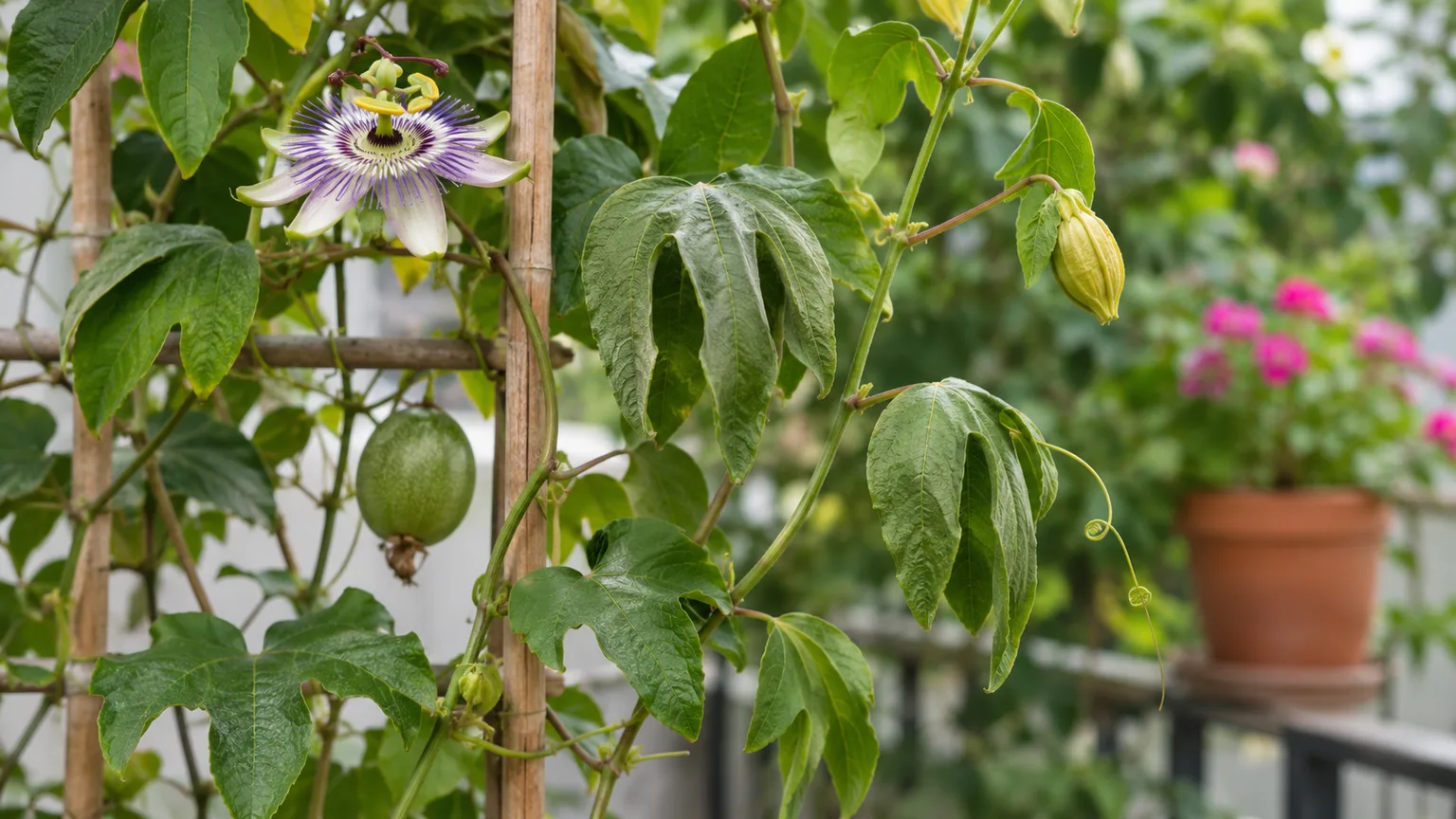
Underwatering on Passion Fruit: Causes, Checks & Fixes
This guide covers underwatering on Passion Fruit. See also the general Underwatering guide, watering, and light pages for this plant.
Underwatering on Passion Fruit: Causes, Checks & Fixes
Quick answer
An underwatered passion fruit vine looks tired from the tips inward: leaves dull and droop even though stems stay firm, new tendril tips stall, flower buds yellow and drop, and young fruit shrivel instead of swelling. The pot feels light and the top 3-5 cm of mix is powdery dry.
First step: give one thorough soak until water runs freely from every drainage hole, then empty the saucer. Do not follow it with days of flooding. Resume the vine’s normal rhythm of small but frequent watering once the leaves perk back up.
For how chronic dryness damages roots in general, see our underwatering guide. On passion fruit, the pattern usually shows up as stalled tendril tips, bud drop, and fruit shrivel on a fast-growing vine with shallow roots — not just crispy houseplant leaves.
What underwatering looks like on Passion Fruit
Passion fruit (Passiflora edulis) is a fast climbing vine that pushes new growth from shoot tips, where flower buds form alongside young leaves and tendrils. When soil moisture runs short, the vine sacrifices the newest, most water-hungry tissue first — which is why drought on this plant looks different from drought on a succulent or fern.
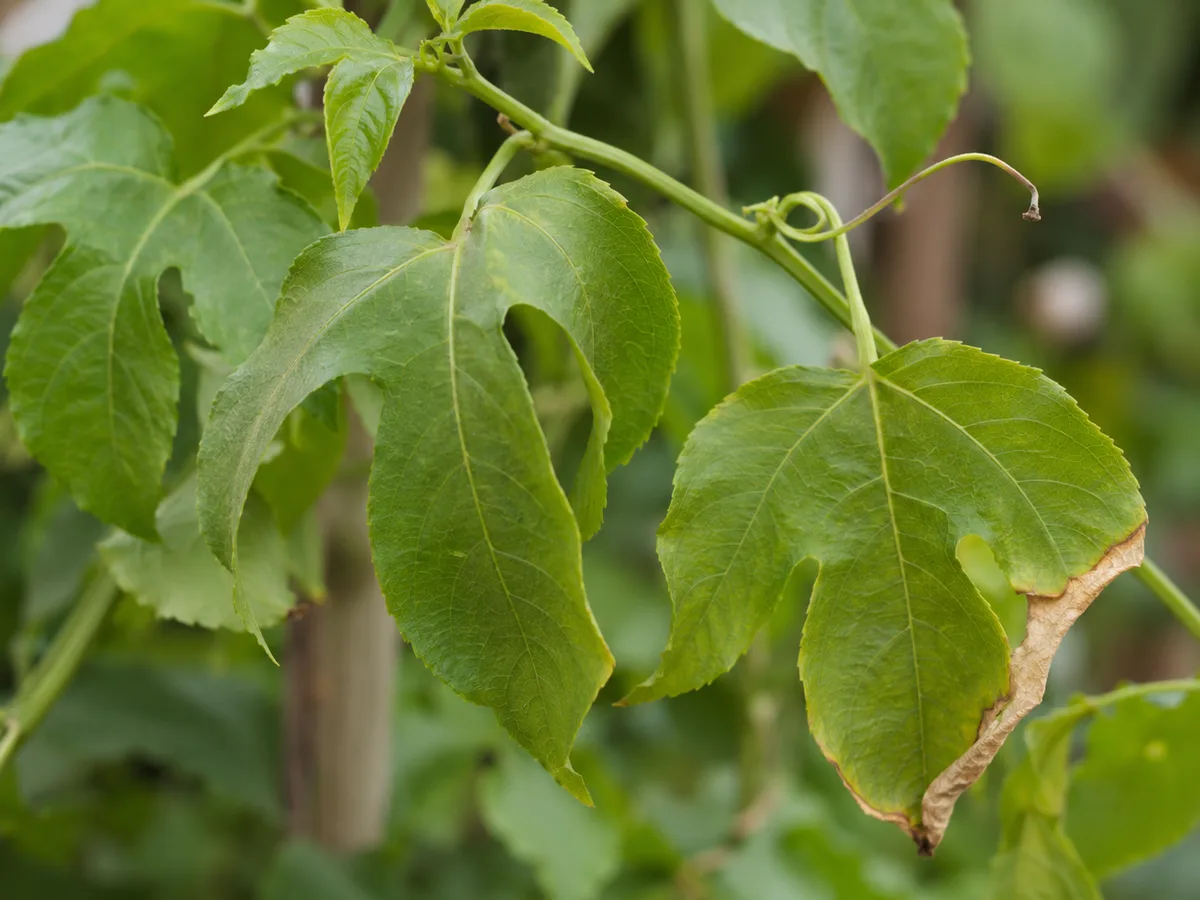
Drought stress first shows on tender passion fruit growth: leaves lose gloss, shoot tips stall, and flower buds may drop while the stems remain firm.
Typical underwatering signs on a Passion Fruit overview:
- Pot feels markedly lighter than after the last full watering; in-ground soil is dusty and hard in the top few centimeters
- Leaves lose gloss, dull to grey-green, then droop while stems and the stem base stay firm
- New tendril tips stop extending and growing shoot tips look stunted
- Flower buds yellow and drop if the soil becomes too dry and the plant wilts
- Immature fruit stall, wrinkle, and may fall early instead of filling out
- Leaf edges turn brown and papery after repeated dry cycles; older leaves may yellow and shed
- In pots, the mix may shrink from the pot wall so poured water races down the gap and out the hole without wetting the root ball
Because this vine has shallow root systems with limited drought and flood tolerance, symptoms can arrive fast in hot weather — a container vine in full terrace sun can swing from fine to wilted within a day or two of missed checks at fruit-fill stage.
Why Passion Fruit gets underwatering
Three vine-specific traits make passion fruit thirstier than its tough-looking foliage suggests.
Shallow roots in a fast canopy. Most of the feeder roots sit in the upper soil layers, so the vine draws from exactly the zone that sun and wind dry first. A big leafy canopy on a trellis transpires hard on hot afternoons while the root volume stays small — especially in pots. UF/IFAS notes these shallow root systems alongside the need for small but frequent irrigation that keeps moisture adequate without saturation.
Fruit-fill water demand. Regular watering keeps a vine flowering and fruiting almost continuously, and the water requirement peaks as fruits approach maturity. If the soil is dry, fruits may shrivel and fall prematurely. A vine carrying a heavy crop in May-June heat can need daily checks; missing three dry days at that stage costs more than missing a fertilizer dose.
Terrace-container dry-down. Small terracotta pots, grow bags on hot slabs, and black plastic tubs in full sun lose moisture far faster than mulched beds. Wind across an exposed trellis adds to the loss. Growers who water in-ground vines and containers on the same schedule almost always underwater the containers.
Common non-vine causes still apply: calendar watering without soil checks, hydrophobic peat or cocopeat mix that sheds water, and underwatering-by-fear after a previous overwatering scare. But on passion fruit, heat plus shallow roots plus fruit load is the usual trio.
How to confirm underwatering
Work through these checks in order before you pour:
- Pot weight or bed depth. Lift the container — a sharp weight drop since the last soak points to drought. In beds, push a finger or trowel 3-5 cm in; dry and dusty means thirsty.
- Skewer test. Push a dry wooden skewer toward the root ball. Clean dry wood confirms dryness at depth; soil clinging to it means moisture remains and wilt has another cause.
- Stem-base firmness. Squeeze the lower stem where it meets the soil. Firm tissue with dry soil means drought. Soft, swollen, or blackening tissue at the soil line means collar or root trouble — do not add more water.
- Wilt timing. Leaves that droop at noon but recover by evening with moist soil are riding out heat. Wilt that persists overnight means roots are not delivering — with dry soil that confirms drought; with wet soil it points to damaged roots.
- Bud and fruit pattern. Buds dropping and young fruit shriveling alongside dry soil fit underwatering on a fruiting vine. Buds dropping with wet, heavy soil fit overwatering or poor pollination instead.
- Hydrophobic check. Pour slowly and watch: water that beads, races down the pot sides, and exits within seconds while the pot stays light means the mix has gone waxy and sheds water past a dry root ball.
Confirmed underwatering needs dry soil at depth, a light pot, firm stems, and limp foliage — ideally with perk-up after one good soak. Wet soil plus wilt means you are in the opposite problem; see Overwatering on Passion Fruit before pouring anything.
The first fix to try
Soak the whole root zone once, slowly, until drainage runs clear — then stop and let the surface begin drying again.
Water across the entire surface, not one cup on a single side, so fine roots near the pot walls get wet. For containers, water until excess exits every hole, wait ten minutes, then repeat once if the pot still feels light. Empty saucers within half an hour. For in-ground vines, soak the root circle under the canopy rather than just the stem base, and pull mulch back from the crown so the stem itself stays drier than the surrounding soil.
If the mix is hydrophobic, poke several shallow holes with a chopstick first, or bottom-water the pot for twenty to thirty minutes until the surface darkens, then drain fully. One proper rewetting beats three days of anxious flooding.
Do not fertilize, repot, or prune hard on the same day. Rehydrate first and read the vine’s response over the next twenty-four hours.
Step-by-step recovery
After the first soak:
- Watch for perk-up. Limp leaves on firm stems usually firm up within a few hours; allow a full day before judging.
- Re-soak only if the core stayed dry. If the skewer still comes out clean and dry from mid-depth, water slowly in two passes or bottom-water again.
- Mulch the surface. A thin layer of leaf mold or compost slows evaporation for shallow roots. Keep it a few centimeters back from the stem so the collar stays inspectable.
- Move heat traps if possible. Shift black plastic pots off scorching slabs or give containers brief afternoon shade during extreme spells — but keep the vine itself in the strong light it needs to fruit. If shade seems to be the issue instead, check the Passion Fruit light guide.
- Hold fertilizer. Drought-stressed roots take up salts poorly. Resume the Passion Fruit fertilizer routine only once new tendril growth looks healthy and moisture checks are stable.
- Refresh mix that will not rewet. If repeated soaks fail because old peat has collapsed or turned water-repellent, repot into fresh free-draining mix following the Passion Fruit repotting guide and the drainage structure in the Passion Fruit soil guide.
Track one variable at a time. If leaves perked after one soak, the job is preventing the next dry-down, not adding treatments.
Recovery timeline
Mild drought — one missed watering with dull drooping leaves — usually reverses within hours of a proper soak, with tendril tips resuming growth within days. Moderate stress with bud drop and some crispy edges needs one to two weeks of steady moisture before new shoots look normal, and the vine may skip that flush of flowers entirely.
Brown crispy margins, aborted buds, and shriveled young fruit do not heal. Judge recovery by firm new tendril extension, glossy new leaves, and buds that stay attached — not by old damage turning green again.
If the vine stays limp after two genuine soaks with soil that actually rewets, stop assuming drought. Inspect roots for rot or desiccated fine roots, and consider that severe drought stress results in defoliation, fruit drop, and vine death — a vine pushed that far may need cutting back to live wood or replacing.
Lookalike symptoms
| What you see | More likely | How to tell |
|---|---|---|
| Wilt with heavy, wet, sour-smelling soil; soft stem base | Overwatering / root rot | Pot stays heavy for days; see Overwatering on Passion Fruit and Root Rot on Passion Fruit |
| Sudden canopy wilt with yellowing leaves stuck on, stem-base canker or girdling | Fusarium / collar disease | Drought makes vines more susceptible to Fusarium, but canker with stem swelling or bark splitting is disease, not thirst alone |
| Uniform yellowing starting on older leaves with moist soil | Nutrient shortfall or natural aging | Drought yellowing follows dry cycles and hits with wilt; steady-moisture yellowing points to feeding — see Yellow Leaves on Passion Fruit |
| Drooping with dry soil but only at midday, recovering by evening | Heat wilt | Soil still moist at depth; increase mulch and check timing rather than flooding |
| Whole-vine limp, dry, brittle stems after weeks bone-dry | Advanced drought with root dieback | Skewer stays dry even after soaking; some roots may have desiccated beyond rescue |
| Tender shoots drooping with stippled leaves and fine webbing | Spider mites in dry heat | Mites surge in dry weather — inspect leaf undersides; see Spider Mites on Passion Fruit |
Note the disease overlap: dry stress does not just wilt the vine, it weakens its defenses. Research cited by UF/IFAS links water deficit to higher Fusarium wilt susceptibility, so a vine that has been repeatedly droughted and then collapses with stem-base symptoms needs a disease assessment, not just a bigger watering can.
Mistakes to avoid
- Pouring without checking depth. Surface crusts dry faster than root zones and vice versa. Always confirm 3-5 cm down.
- Answering drought with permanent sogginess. Overcorrection into constantly wet mix invites collar rot and Phytophthora on a plant with limited flood tolerance. Moist, not swampy.
- Misting leaves instead of soaking roots. Passion fruit drinks through its shallow root mat; overhead spray does little for a dry root ball and keeps foliage wet.
- Small daily sips. Teaspoon watering wets the surface while the core stays dry. Soak fully, then wait for the next check.
- Fertilizing a wilted vine. Salts on dry stressed roots burn; rehydrate and stabilize first.
- Ignoring the hydrophobic pot. If water channels down the sides, repeat “watering days” fail until you bottom-water or refresh the mix.
- Blaming drought when soil is wet. Wilt above soggy soil means oxygen-starved roots, not thirst — more water makes it worse.
Passion Fruit care cross-check
Drought fixes only hold if the setup matches a shallow-rooted fruiting vine:
- Water rhythm — small but frequent irrigation that keeps moisture adequate without saturation, tightened to daily checks for pots in peak heat and during fruit fill. Full method in the Passion Fruit watering guide.
- Soil structure — sandy-loam-style mix that drains within minutes yet holds even moisture; sealed pots and clay pockets recreate flood stress while pure grit recreates drought.
- Light load — full sun drives both fruiting and water use; a shaded vine that stays wet for days while yellowing has a light problem, not a drought problem.
- Pot size — a huge volume of unused wet mix around a young vine rots; a tiny pot around a big trellis canopy dries by noon. Step up gradually.
- Canopy density — an unpruned thatch of dead stems traps humidity and disease while the roots run dry; renew flowering wood per the Passion Fruit pruning guide.
Environmental stress is usually the first domino: as Missouri Botanical Garden notes, decline often starts with environment and only then invites pests and disease. Fix moisture rhythm before reaching for sprays.
How to prevent it next time
Learn your pot’s personal dry-down rhythm rather than copying a schedule. Lift the container after every watering until “light enough to water” is a felt memory, and check beds with a finger every couple of days in warm growth.
Water when the top 3-5 cm dries, soak until runoff, and empty the saucer every time. Mulch containers and beds to buffer the shallow root zone, keeping mulch off the stem. In hot pre-monsoon weeks and whenever fruit are sizing, check pots daily — a loaded vine transpires far more than a young cutting. In monsoon or cool cloudy spells, lengthen the interval and prioritize drainage instead; drought prevention must not become flood damage.
When growth stalls despite steady moisture, or leaves droop without dry soil, switch guides: Drooping Leaves on Passion Fruit and Wilting on Passion Fruit cover the non-drought paths, and Slow Growth on Passion Fruit helps separate water rhythm from feeding and light limits.
When to worry
Underwatering on passion fruit is more urgent than on a fleshy houseplant because the vine fruits on new growth and carries real disease risk when stressed. Act the same day when:
- A fruiting vine wilts with dry soil in hot wind — fruit may start shriveling within days
- Young fruit wrinkle or drop after a dry spell at fruit-fill stage
- Sections of canopy defoliate or shoot tips die back after repeated dry-downs
- The vine stays limp forty-eight hours after two genuine soaks with soil that actually rewets
- Wilt comes with stem-base swelling, bark splitting, or a girdled collar — possible Fusarium or collar rot needing disease diagnosis, not more water
Drought stress reduces vine growth, flowering, fruit set, and fruit size, and chronic underwatering is a yield problem long before it is a survival problem. Treat repeat drought as a schedule failure worth fixing, not background noise.
Conclusion
Underwatering on passion fruit is a moisture-timing failure on a shallow-rooted, fast-fruiting vine: light pot, dry soil at finger depth, dull drooping leaves on firm stems, stalled tendril tips, dropped buds, and shriveling young fruit. One slow thorough soak, full drainage, then small but frequent checks tuned to heat and fruit load is the whole rescue. Get that rhythm right — with mulch, right-sized pots, and free-draining mix behind it — and the vine keeps pushing the new growth that flowers and fruit depend on.
When to use this page vs other Passion Fruit guides
- Passion Fruit watering guide — routine moisture rhythm, seasonal shifts, and over- vs under-watering diagnosis before assuming drought.
- Passion Fruit problems hub — browse all 16 documented issues on this vine.
- Wilting on Passion Fruit — when wilt is the entry symptom and soil moisture is still unclear.
- Drooping Leaves on Passion Fruit — when droop overlaps with pests, heat, or root trouble.
- Yellow Leaves on Passion Fruit — when yellowing dominates and moisture checks look normal.
- Brown Tips on Passion Fruit — when scorched margins persist after watering stabilizes.