Drooping Leaves on Passion Fruit: Causes, Checks & Fixes
Quick answer
Drooping leaves on Passion Fruit usually mean trilobed blades lost turgor from dry shallow roots, oxygen-starved wet soil, temporary midday heat load, or transplant shock. First step: finger-test the top 2–3 cm of mix and note whether limp shoots recover overnight before you water.

Drooping Leaves on Passion Fruit: Causes, Checks & Fixes
This guide covers drooping leaves on Passion Fruit. See also the general Drooping Leaves guide, watering, and light pages for this plant.
Drooping Leaves on Passion Fruit: Causes, Checks & Fixes
Quick answer
Drooping leaves on Passion Fruit (Passiflora edulis) are a turgor problem on a fast tendril vine with a shallow root system. Glossy trilobed blades hang when cells lose water pressure. That can come from true drought, from midday heat that briefly outruns root supply, from roots sitting in oxygen-starved wet mix that can no longer take up water, or from transplant shock after the root ball was disturbed.
For the general mechanics of limp foliage across plants, see our drooping leaves hub. On Passion Fruit, the useful tells are trilobed leaf angle on new vs older shoots, overnight recovery, and whether the pot or bed is dry versus waterlogged—read those against a finger-test of the top 2–3 cm before you tip the can.
First step: finger-test the top 2–3 cm of mix (or bed surface) and note whether limp shoots recover overnight. Do not water from leaf drama alone. Wilted leaves may mean soil is too dry or too wet—damaged roots cannot move water even when the root zone feels damp.
What drooping leaves look like on Passion Fruit
A healthy Passion Fruit vine holds deeply 3-lobed, glossy adult leaves on firm petioles while tendrils grip the trellis. When turgor drops, petioles soften and leaf planes fold or hang like wet cloth along the shoot.
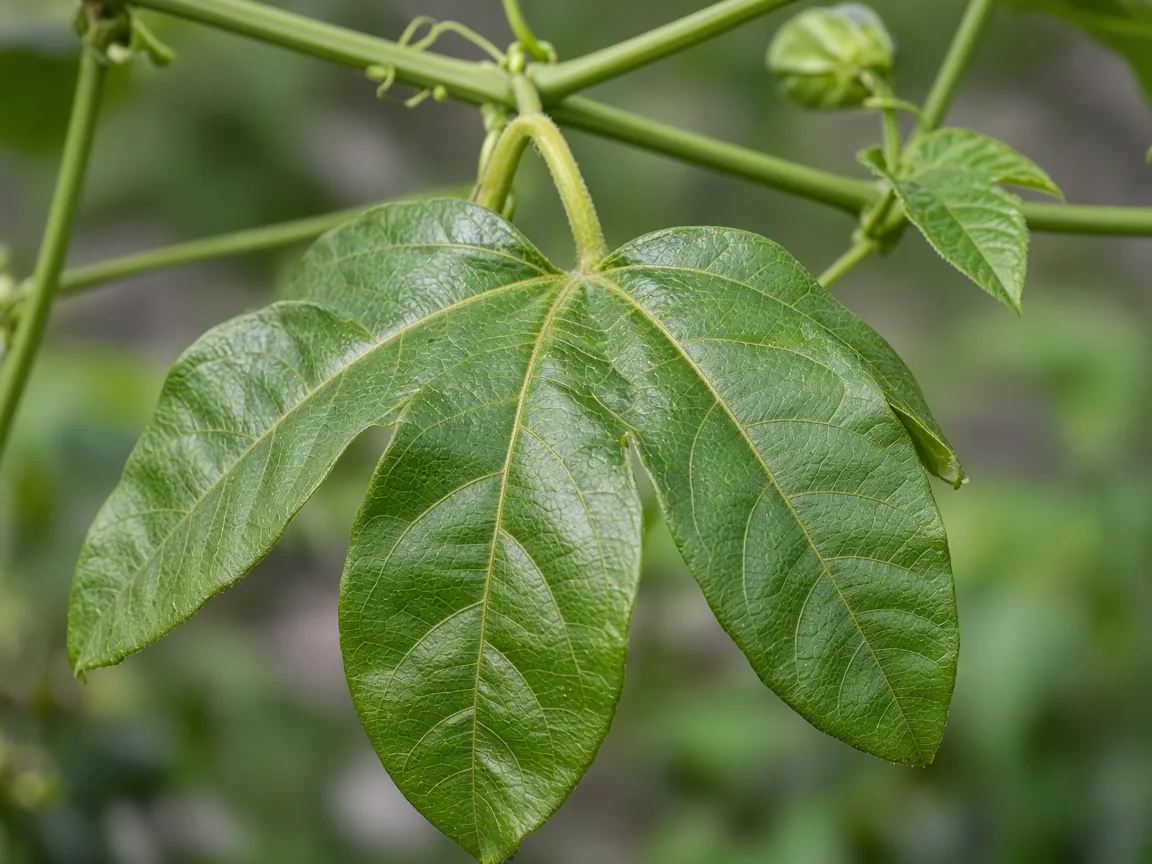
Drooping leaves on Passion Fruit — soft petiole collapse with still-green trilobed blades; compare overnight recovery and soil moisture before watering.
Typical patterns on this species:
- Shoot-wide limpness — Several nodes along a leader hang at once after missed watering, a heat spike, or chronically wet roots.
- Soft petioles, still-green blades — Early droop often looks limp rather than crispy; edges crisp later if drought continues.
- Newest soft growth first in heat — Soft tip shoots sag in midday sun before woody older stems look stressed.
- Midday sag that recovers by evening — Temporary heat wilt; overnight recovery with moist (not flooded) soil is reassuring.
- Overnight persistent droop — Still limp at dawn means moisture failure, root hypoxia, transplant setback, or disease—not a brief sun spike.
Not the same as normal posture: A brand-new expanding leaf can look soft for a day or two. True droop affects established open trilobed leaves that previously held their angle on the vine.
Drought vs waterlogged roots vs midday heat wilt on Passiflora
These three Passion Fruit paths look similar from across the patio. Separate them before you treat.
Shallow-root drought (true thirst)
Passion Fruit prefers well-drained soil and has shallow roots with limited drought and flood tolerance. The canopy is large for the root mass, so the vine needs a very regular water supply—especially while fruiting. Drought stress reduces vine growth, flowering, fruit set, and fruit size; severe drought leads to defoliation, fruit drop, and vine death. In containers, the top few centimetres dry fast in full sun. Finger-test dry and a light pot confirm thirst.
Temporary midday heat wilt
In hot full sun, soft tip shoots can sag while roots still hold usable moisture. Many plants wilt in hot sun and recover later in the day if the root zone is not waterlogged. If trilobed leaves and tendril tips are upright again by morning and the mix is moist—not bone-dry or swampy—do not treat midday sag as an emergency flood cue.
Root hypoxia in soggy mix or poorly drained beds
Roots in waterlogged soil may die because they cannot absorb oxygen, so the vine shows drought symptoms while the pot stays heavy and cool. Passion Fruit cannot handle waterlogged soil; good drainage is essential to minimize collar rot. Epic Gardening likewise stresses consistent moisture without letting water pool or soak the ground. Cool cloudy weather makes overwatering worse because dry-down slows while you keep the hot-weather schedule.
Pot vs in-ground drainage checks
Container and bed vines fail in different ways even when leaf drama looks identical.
Containers: Confirm drainage holes are open, empty saucers and cachepots, and lift the pot. A light, dusty mix that pulls from the walls is thirst. A heavy, cool, sour-smelling mix that stays wet for days is hypoxia risk. Potted vines often need more frequent watering than in-ground plants in heat—but never standing water.
In-ground / raised beds: Dig beside the root zone (not into the stem). Puddling after rain or irrigation, hardpan under the planting hole, or a lawn timer that keeps the collar wet all favor Phytophthora crown and root problems. Mulch to hold moisture, but keep mulch away from the stem so bark stays dry.
Transplant shock on Passion Fruit vines
Passion Fruit roots are vulnerable; disturb them as little as possible when planting. After a move or pot-up, limp leaves for a few days can be temporary if the stem base stays firm and the mix is evenly moist. Purdue notes that transplanted seedlings need heavy watering and that taller plants may need tops cut back so demand matches the unsettled roots. Epic Gardening warns that established vines are poor candidates for later transplant—choose the final site carefully. Do not stack a large repot, hard prune, and heavy feed on the same day while diagnosing droop.
When to use this page vs other Passion Fruit guides
Use this page when trilobed leaves are limp and you need a same-day dry-vs-wet decision.
- Passion Fruit watering — routine evenly moist schedule after the emergency is sorted
- Underwatering — chronic dry-down, fruit drop, and missed drinks
- Overwatering — heavy wet pots, yellow leaves, and slow dry-down
- Root rot — mushy roots, sour smell, or soft collar at soil level
- Wilting — broader collapse language when stems and fruit also flag
- Passion Fruit soil — mix recipes when drainage keeps failing
- Passion Fruit light — full-sun placement that drives realistic water use
- Passion Fruit problems hub — other pests and nutrient issues
How to confirm the cause
Work these checks in order before you tip the watering can.
- Finger-test the top 2–3 cm — Dry and dusty with a light pot = thirst. Cool, clinging wet mix at that depth with a heavy pot = pause watering.
- Overnight recovery check — Mild midday sag that lifts by morning with moist (not flooded) soil is heat wilt. Persistent dawn droop needs moisture correction.
- Collar and stem-base firmness — Press gently near soil level. Firm woody tissue is good. Soft, water-soaked, swollen, or girdling bark with rapid canopy wilt is urgent—treat as possible crown/collar disease, not a simple drink.
- Pot vs bed drainage — Open holes, empty saucers, check for puddling or lawn-timer flooding on beds.
- Recent moves and weather — Heat wave, transplant, move into fuller sun, or a cool cloudy week with unchanged watering each change the dry-down rate.
- One-sided vine wilt — Progressive wilt on one leader with leaves yellowing yet attached, plus browning inside a cut stem, can point to Fusarium / sudden wilt disease—not thirst.
First fix for Passion Fruit
Finger-test the top 2–3 cm and check overnight recovery—then water or wait based on that reading, not on how sad the vine looks.
- If dry and the stem base is firm: Water thoroughly until excess drains (or soaks into a free-draining bed), then empty any saucer. Shelter soft tip growth from extreme afternoon blast for 24 hours while turgor returns.
- If wet and the stem base is firm: Do not water. Improve airflow and brightness if the vine is shaded; wait until the top 2–3 cm begins to dry before the next drink.
- If the collar is soft, swollen, or girdling: Stop watering and escalate to root rot triage the same day—moisture correction alone will not firm rotten stem tissue.
Do not fertilize, strip half the canopy, or jump to a much larger pot on day one. Those stack stress before you know whether the problem is thirst, heat, hypoxia, or disease.
Step-by-step recovery
Thirst recovery (dry mix, firm collar)
- Soak thoroughly once; if hydrophobic mix sheds water, bottom-soak a container 20–30 minutes, then drain fully.
- Keep the vine in the warm full sun it already tolerates, but filter extreme afternoon blast for a day while leaves refill.
- Recheck in 12–24 hours—petioles and tendril tips should lift if thirst was the only issue.
- Resume an evenly moist rhythm per the watering guide: small, frequent irrigations that keep soil moist but not saturated.
Heat-wilt management (firm collar, overnight recovery)
- Confirm the mix is not bone-dry at 2–3 cm; if it is, treat as thirst.
- If moisture is adequate, leave watering alone and improve wind shelter so soft shoots are not sandblasted.
- Mulch outdoor vines away from the stem to buffer surface heat without burying the collar.
Wet-root recovery (heavy wet mix, firm collar)
- Stop watering until the top 2–3 cm dries.
- Clear drainage holes; lift pots out of water-holding cachepots; improve bed runoff if water ponds.
- If droop persists after appropriate dry-down, inspect roots and follow the root rot and overwatering guides—use a freely draining mix from the soil guide.
- Hold fertilizer until new shoot tips look firm.
Soft-collar or sudden wilt emergency
Phytophthora pathogens feed on roots and the basal stem, causing crown or collar rot, wilt, and death—especially where drainage fails. Fusarium solani canker can cause sudden canopy wilt with chlorotic leaves remaining attached and dying tissue around the stem base. Severely affected vines are often best removed; do not replant Passion Fruit in the same infected hole without improving drainage and disease management.
Recovery timeline
Simple thirst: Petioles and tip shoots often firm within 12–48 hours after a proper soak and drainage.
Heat wilt only: Leaf angle should look normal again by the next morning.
Wet mix without major rot: Firmness may return over three to seven days as oxygen returns and surface dry-down resumes.
Root or collar damage / vascular wilt: Expect weeks—or no recovery of old tissue. Judge by firm new growth and a stable stem base, not by collapsed blades snapping back perfectly.
Worsening signs: Overnight limp canopy after you corrected moisture, spreading yellow leaves on wet soil, sour smell, softening collar, or one-sided progressive wilt mean the root zone or vascular system is still failing.
Lookalike symptoms
| What you see | Likely issue | Next page |
|---|---|---|
| Limp green shoots, dry light pot | Thirst / underwatering | Water once, then set a dry-down rhythm |
| Limp canopy, heavy wet pot or puddling bed | Overwatering / hypoxia | Stop water; check drainage |
| Soft or swollen collar + rapid wilt | Root rot / Phytophthora | Same-day collar and root triage |
| One-sided wilt, brown streaking in stem | Fusarium / sudden wilt | Remove badly infected vines; improve drainage |
| Crispy brown tips with mild sag | Edge scorch / uneven moisture | See brown tips after moisture is stable |
| Stretched weak growth in shade | Not enough light | Fix light; shade vines use water slowly and stay wet longer |
Mistakes to avoid
Do not water every time soft tip shoots sag at noon—confirm overnight recovery and the 2–3 cm finger-test first. Do not flood a cool-weather vine on a hot-weather calendar; dry-down slows while root-disease risk rises.
Do not bury the stem deeper when you repot, pile mulch against the collar, or leave pots in saucers of water. Skip fertilizer and hard pruning while diagnosing turgor. Avoid transplanting large established vines unless you accept weeks of limp recovery.
How to prevent it next time
Match watering to how fast your container or bed dries in full sun. UF/IFAS recommends small but frequent irrigation so soil stays moist, not saturated, ideally guided by soil moisture rather than a fixed calendar. Regular watering supports continuous flowering and fruiting; dry soil near fruit maturity can shrivel and drop fruit.
Use fertile, free-draining soil, open drainage on pots, a sturdy trellis in full sun with wind shelter, and mulch kept off the stem. Recheck the top 2–3 cm after heat waves, monsoon rains, cloudy cool weeks, and any pot-up. Keep the Passion Fruit overview care pattern—even moisture, never swamp—and most droop stays brief and reversible.
When to worry
Low urgency: Mild midday sag that lifts overnight, firm collar, dry-to-moist mix on schedule.
Medium urgency: Dawn droop after a missed drink or a heavy pot that will not dry—correct moisture within a day.
Urgent same day: Soft, swollen, or girdling stem base; sour soil with collapsed canopy; limp leaves that never recover after you fixed dry versus wet; or progressive one-sided wilt. Those patterns outgrow a simple watering tweak.
Conclusion
Passion Fruit advertises water stress loudly because a shallow root system must support a large, fast-growing canopy of trilobed leaves. Finger-test the top 2–3 cm, separate temporary midday heat wilt from overnight collapse, and check pot versus bed drainage before you water. Water only when thirst is confirmed; wait and aerate when the mix is wet; escalate the same day if the collar softens or wilt turns one-sided. Steady moisture in a free-draining root zone keeps shoots upright more reliably than any calendar.
Related Passion Fruit guides
- Passion Fruit overview — habit, trellis needs, and why this vine needs both moisture and oxygen
- Passion Fruit watering — evenly moist dry-down checks after recovery
- Passion Fruit light — full-sun placement that sets realistic water use
- Passion Fruit soil — freely draining mixes that prevent hypoxia
- Passion Fruit problems — full symptom index for this plant
- Overwatering on Passion Fruit — wet-pot patterns behind limp canopies
- Underwatering on Passion Fruit — chronic drought signs
- Root rot on Passion Fruit — soft roots and collar salvage steps
Related tool
Use the Plant Watering Calculator to estimate a Passion Fruit watering interval from pot size, light, and season—then still confirm with the 2–3 cm finger-test before every drink.